Calibration Management in FMCG: Ensuring Measurement Accuracy for Quality & Compliance

By Jonas on March 2, 2026

calibration-management-in-fmcg-ensuring-measurement-accuracy-for-quality-&-compliance

In 2024, a major FMCG beverage manufacturer discovered that a single uncalibrated flow meter had been overfilling bottles by 2.3% for six weeks — a drift so small it escaped manual QC checks but large enough to waste 41,000 liters of product worth $187,000. The filling line's calibration certificate had expired 14 days before the drift began. The root cause was simple: a calibration schedule tracked in spreadsheets, managed by memory, and verified by nobody. When the FDA audit followed three months later, the company couldn't produce calibration records for 38% of its critical measurement instruments. The resulting 483 observation triggered a $2.1 million recall, halted production for 9 days, and required a complete revalidation of every measurement point across four production lines. The corrective action — implementing a digital calibration management system — cost $34,000 annually. Across FMCG manufacturing, calibration failures account for 23% of all quality deviations, and 67% of FDA warning letters in food and beverage cite inadequate calibration programs. Organizations deploying structured calibration management platforms reduce measurement-related quality events by 74% within the first year. Start your free trial today and bring every critical instrument under systematic calibration control. Schedule a 30-minute demo with our FMCG calibration specialists to see how digital calibration management eliminates compliance gaps.

Stop tracking calibrations in spreadsheets. Start managing them with intelligence. Oxmaint connects calibration schedules to real-time instrument data — generating work orders before certificates expire.
Sign Up Free

Manual vs. Digital Calibration Management

How systematic calibration intelligence transforms FMCG quality from reactive firefighting to proactive precision.

Manual / Spreadsheet-Based
Calibration Compliance Rate62–78% On-Time Completion
Out-of-Tolerance DiscoveryAfter Product Release
Audit Preparation Time40–80 Hours per Audit
Measurement-Related Deviations18–32 Events per Year
Digital / Automated Platform
Calibration Compliance Rate96–99% On-Time Completion
Out-of-Tolerance DiscoveryImmediately at Calibration Point
Audit Preparation Time2–4 Hours (Auto-Generated)
Measurement-Related Deviations3–6 Events (74% Reduction)

Critical Measurement Points That Demand Calibration Excellence in FMCG

Not every instrument on the production floor carries equal calibration risk. But the measurement points that directly affect product safety, fill accuracy, label claims, and regulatory compliance absolutely require systematic calibration programs. These six instrument categories account for 89% of measurement-related quality deviations in FMCG and 91% of FDA calibration citations. FMCG manufacturers deploying calibration management through Oxmaint target these high-impact instruments first.

01
Weighing & Scales
34%
  • Checkweighers and batching scales
  • Ingredient dosing systems
  • Fill weight compliance
02
Temperature Sensors
28%
  • Pasteurizers and retorts
  • Cold chain monitoring
  • CIP system validation
03
Pressure Gauges
18%
  • Sterilization validation
  • Boiler systems
  • Pneumatic line controls
04
pH & Conductivity
Critical
  • Beverage acidity control
  • Cleaning agent concentration
  • Water quality monitoring
05
Flow Meters
$187K+
  • Filling line accuracy
  • Ingredient dosing precision
  • Product giveaway prevention
06
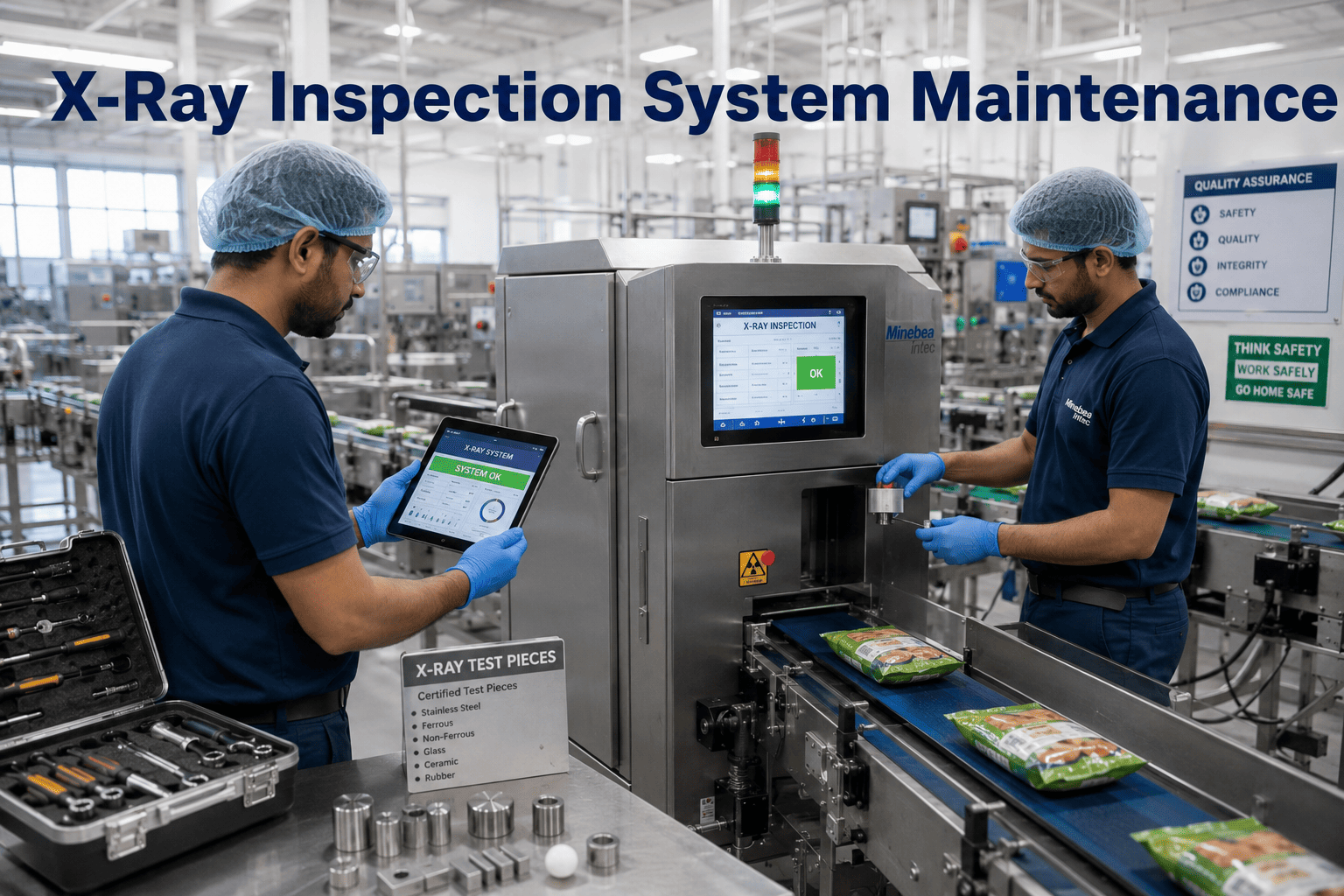
Metal Detectors & X-Ray
Recall Risk
  • Foreign body detection sensitivity
  • Test piece validation
  • Rejection confirmation

How Digital Calibration Management Works for FMCG Operations

Effective calibration management is not simply tracking due dates on a calendar — it is a structured quality intelligence system that ensures every critical measurement point operates within validated tolerances, with complete traceability from calibration standard to finished product. FMCG manufacturers implementing this pipeline through Oxmaint digitize their entire calibration program without disrupting current production schedules.

01
Instrument Registry
  • Complete asset inventory with criticality rating
  • Risk-based calibration intervals per instrument
  • Reference standard traceability chain documented
Foundation: Full Visibility
02
Automated Scheduling
  • Auto-generated calibration work orders
  • Technician skill-matching and assignment
  • Production-aligned timing to minimize downtime
Compliance: 96–99%
03
Digital Execution
  • As-found / as-left readings captured digitally
  • Pass/fail auto-determined against tolerances
  • Out-of-tolerance triggers impact assessment
Accuracy: Audit-Ready
04
Drift Analytics
  • Measurement trend analysis across cycles
  • Predictive drift detection before tolerance breach
  • Interval optimization based on performance data
Intelligence: Predictive

Calibration Requirements and Compliance Impact by Instrument

Each critical FMCG instrument category has distinct calibration requirements, regulatory expectations, and failure consequences. Schedule a demo to see these calibration workflows applied to your specific instrument portfolio.

Instrument
Calibration Standard & Tolerance
Frequency
Checkweighers & Scales
NIST-traceable, daily verification, ±0.1% tolerance, legal metrology
Monthly
Temperature Probes
Ice/boiling point verification, multi-point calibration, HACCP CCP docs
Quarterly
Pressure Gauges
Deadweight tester, ±1% FS tolerance, sterilization/retort validation
Semi-Annual
pH Meters
Buffer solution verification pre-use, full calibration weekly, electrode tracking
Weekly
Flow Meters
Gravimetric or master meter comparison, ±0.5% accuracy
Quarterly
Metal Detectors
Test piece validation (Fe, Non-Fe, SS), sensitivity verification per shift
Per Shift
Every measurement instrument affecting product quality, safety, or label claims requires documented calibration with NIST-traceable standards. FDA 21 CFR 117, FSMA, and GFSI schemes (SQF, BRC, FSSC 22000) all mandate calibration programs with complete traceability records.
Eliminate calibration gaps before your next audit finds them. Automate scheduling, capture digital data, and generate audit-ready reports in minutes.
Book a Demo

ROI of Digital Calibration Management for FMCG Manufacturers

The financial case for digital calibration management is arithmetic rooted in prevented quality events, eliminated product giveaway, reduced audit costs, and avoided regulatory actions. Every prevented out-of-tolerance event avoids the 12–15x cost multiplier of product holds, investigations, and potential recalls.

Category
Calculation Basis
Annual Value
Product Giveaway Reduction
Eliminates 1.8–2.5% overfill from drifted checkweighers and flow meters
$340,000
Quality Event Avoidance
8 prevented OOT events × $45,000 avg investigation cost per event
$360,000
Audit Preparation Savings
Auto-generated certificates, reports, and dashboards — 90% time reduction
$85,000
Recall Risk Elimination
Traceability links calibration status to production batches instantly
$280,000
Technician Productivity
Automated scheduling and digital forms eliminate 35% of admin time
$95,000
Total Annual Value Delivered
$1.16M
Platform investment: $28K–$55K/year. Net ROI: $1.1M–$1.13M. Return: 20–40x in first year.

Implementation Roadmap: From Spreadsheets to Calibration Intelligence

Deploying digital calibration management follows a structured path that delivers measurable compliance improvement at each phase. Start with the critical measurement points that carry the highest regulatory and quality risk. Schedule a demo to design a phased deployment plan for your facility.

01
Week 1–2: Inventory
  • Audit all calibrated instruments across facility
  • Assign criticality ratings (A/B/C) by quality impact
  • Import instrument data into Oxmaint platform
Output: Full Registry
02
Week 3–6: Automate
  • Configure calibration intervals and tolerances
  • Auto-schedule work orders with technician routing
  • Deploy mobile calibration execution forms
Output: Zero Overdue
03
Month 2–4: Integrate
  • Link calibration status to production batch records
  • OOT alerts trigger automatic impact assessments
  • First audit passed with auto-generated reports
Output: Audit-Ready
04
Month 5+: Optimize
  • Drift trend analysis optimizes calibration intervals
  • Predictive replacement before instruments fail
  • Continuous improvement driven by calibration data
Output: 20–40x ROI

Real-World Calibration Catches: What Digital Management Reveals

The most compelling evidence for digital calibration management comes from what it catches — measurement drifts, expired certificates, and out-of-tolerance conditions that would have caused quality events but didn't because systematic monitoring flagged them first.

Catch 1: Checkweigher Drift — Snack Food Line
What System Detected0.8% progressive drift over 3 calibration cycles
Lead Time4 Weeks Before Out-of-Tolerance
Correction Cost$1,800 (Load Cell Replacement)
Avoided Impact$215,000 (Hold + Customer Complaints)
Catch 2: Pasteurizer Temp Probe — Dairy Plant
What System DetectedRTD probe reading 1.2°F low — below safety threshold
Lead TimeCaught During Quarterly Calibration
Correction Cost$420 (Probe Replacement + Verification)
Avoided Impact$1.8M (Potential Recall + FDA Action)

Overcoming Common Calibration Management Barriers in FMCG

Every FMCG facility faces obstacles when transitioning from spreadsheet-based calibration tracking to digital management. None of these challenges are insurmountable — every one has been solved by manufacturers already operating digital calibration programs.

01
Incomplete Records
Solved
  • Platform imports existing data
  • Guides physical audit process
  • Complete registry in 1–2 weeks
02
Technician Resistance
Solved
  • Mobile-first interface
  • Guided calibration procedures
  • 50% less paperwork
03
Multiple Standards
Solved
  • Pre-built FDA, BRC, SQF templates
  • FSSC 22000, ISO 17025 support
  • All standards from one platform
04
No Traceability Chain
Solved
  • Automatic NIST traceability
  • Standard-to-instrument linking
  • Instrument-to-batch records
05
Downtime Fear
Solved
  • AI-optimized scheduling
  • Aligned to changeovers
  • Uses sanitation breaks
06
External Lab Coordination
Solved
  • Manages internal + external
  • Tracks send-outs and due dates
  • Certificate upload management

Frequently Asked Questions

Which instruments should be prioritized first for digital calibration management?
Start with instruments that directly affect product safety and regulatory compliance — HACCP critical control point sensors (pasteurization temperature probes, metal detectors), checkweighers and filling line flow meters (fill accuracy and legal metrology), and pH meters used for product formulation or CIP verification. These instruments carry the highest consequence of calibration failure: product recalls, FDA warning letters, and consumer safety events. Deploy digital calibration management on these first, prove compliance improvement within 30 days, and expand to remaining instruments from there. Sign up free to start building your critical instrument registry.
How does digital calibration management help with FDA and GFSI audits?
Digital calibration management transforms audit preparation from a multi-week scramble into a one-click report generation. The platform maintains complete calibration histories with as-found/as-left readings, tolerance specifications, technician signatures, reference standard traceability, and out-of-tolerance investigation records — all in a single searchable database. Compliance dashboards show real-time calibration status across all instruments, overdue percentages, and trending data.
What is the difference between calibration and verification?
Calibration compares an instrument's readings against a known reference standard and adjusts the instrument if necessary — it produces as-found and as-left data. Verification is a simpler check confirming the instrument reads within acceptable limits without adjustment — like checking a thermometer against an ice bath before each shift. Oxmaint manages both: full calibration events with multi-point data capture, plus routine verification checks with pass/fail determination and escalation triggers.
How does calibration management connect to batch traceability?
When an instrument is found out-of-tolerance, every batch produced since the last good calibration is potentially affected. With a digital platform, the system automatically links calibration status to production batch records. When an OOT condition is discovered, it immediately identifies every affected batch, the degree of measurement error, and whether the error impacted product quality — enabling rapid disposition decisions within hours instead of days.
What is the typical implementation timeline for a mid-size FMCG facility?
Most mid-size FMCG facilities (200–600 calibrated instruments) achieve full digital calibration management within 6–8 weeks. Week 1–2: Instrument inventory audit and data import. Week 3–4: System configuration. Week 5–6: Training and parallel operation. Week 7–8: Full digital cutover. By week 10, you'll have your first complete calibration cycle digitally documented and audit-ready. Book a demo to map implementation timing for your facility.
Your Instruments Are Drifting Right Now. Your Spreadsheet Won't Tell You.
Catch calibration drift before auditors do. Oxmaint digitizes your entire program with automated scheduling, drift analytics, and instant compliance reports.

Share This Story, Choose Your Platform!