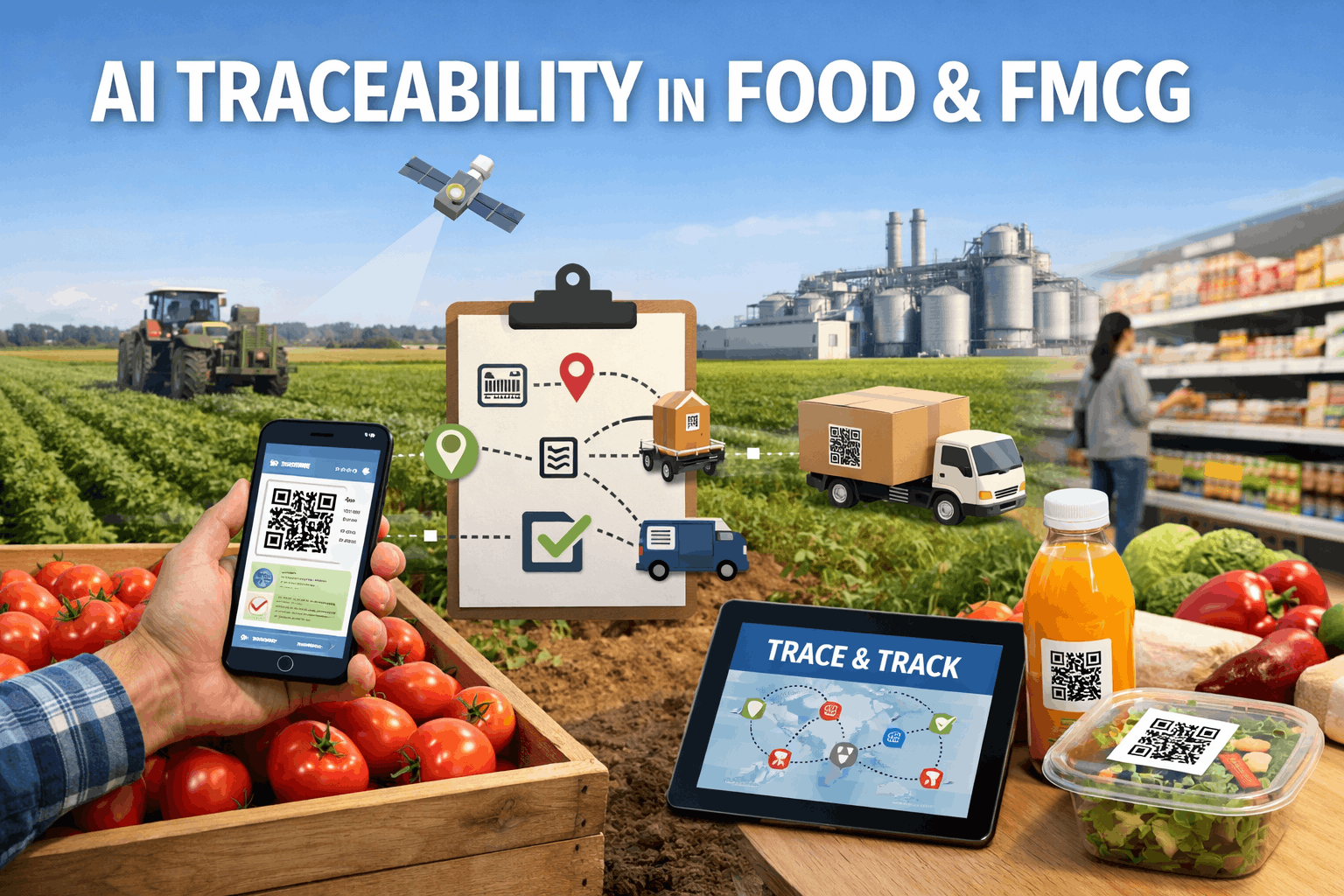
FMCG supply chains are among the most complex and fragile systems in global commerce — high velocity, thin margins, short shelf lives, and consumer demand that shifts faster than traditional planning cycles can absorb. The 2020–2022 period exposed systemic vulnerabilities that many operations leaders had papered over for years: single-source dependencies, opaque multi-tier supplier networks, and inventory management strategies built for predictable demand curves that no longer exist. According to Gartner, 89% of FMCG companies experienced a material supply chain disruption in the past two years — yet only 22% had digital systems capable of providing real-time supply network visibility when those disruptions hit. The gap between supply chain ambition and operational reality is costing FMCG manufacturers an estimated $1.6 trillion annually in lost revenue, excess inventory, and emergency logistics spend. If your supply chain still relies on manual tracking, reactive restocking, and fragmented supplier communication, your competitors are building structural cost advantages you cannot close without technology — start a free trial with Oxmaint to see how integrated asset and maintenance data transforms your supply chain resilience, or book a demo to walk through your specific supply structure with our team.
FMCG Supply Chain Technology
Identify Your Supply Chain Cost Leaks Instantly
See how much cost you can recover from reactive purchasing, unplanned downtime, and invisible supplier risk in your FMCG operations.
- Real-time asset and parts inventory visibility
- Predictive maintenance that prevents production stoppages
- 5–10 year CapEx planning to align supply and capital strategy
Used by operations teams managing 10,000+ assets across multi-site portfolios
What Is FMCG Supply Chain Complexity?
FMCG supply chains span farm inputs, contract manufacturers, primary and secondary packaging suppliers, third-party logistics providers, distribution centers, and retail shelf — often across multiple continents. Each node in this network introduces variability: weather disrupting agricultural inputs, geopolitical events closing ports, regulatory changes blocking ingredients, or demand spikes emptying safety stock faster than replenishment cycles allow.
Unlike automotive or electronics supply chains, FMCG operates under time pressure amplified by perishability. A delayed shipment of automotive components can be buffered. A delayed shipment of dairy ingredients during a seasonal promotion cannot. This temporal sensitivity means FMCG supply chain failures translate directly into revenue loss, retailer penalties, and brand credibility damage — not just operational inconvenience.
The technology response must be equally dynamic: AI-powered demand sensing, real-time supplier monitoring, automated reorder triggers, and maintenance systems that prevent production stops from compounding supply disruptions. The asset layer — production equipment, cold chain, packaging lines — is where supply chain risk meets maintenance risk, and it is exactly where most FMCG operations have the least digital visibility. Teams that start a free trial with Oxmaint close this visibility gap within the first month, or book a demo to see the asset-to-supply chain connection mapped to your environment.
8 Core FMCG Supply Chain Technology Domains
Modern FMCG supply chain resilience is built across interconnected technology layers. Each domain addresses a specific failure mode that leaves traditional operations exposed.
AI Demand Sensing and Forecasting
Machine learning models that ingest POS data, social signals, weather patterns, and economic indicators to forecast demand with 85–95% accuracy versus 60–70% for traditional methods.
Supplier Risk Intelligence
Real-time monitoring of supplier financial health, geopolitical exposure, and quality metrics. Automated alerts when secondary or tertiary suppliers show early distress signals before disruption occurs.
Inventory Optimization Engines
Dynamic safety stock calculation that balances holding costs against stockout risk using demand variability, supplier lead time reliability, and production schedule confidence as inputs.
Production Asset Reliability
CMMS-driven preventive maintenance that ensures production equipment does not become a supply chain bottleneck. Asset condition scoring predicts failures before they stop lines and miss shipments.
Cold Chain Monitoring
IoT temperature and humidity sensors across storage and transport, with automated alerts on excursions. Reduces product loss and regulatory exposure in chilled and frozen FMCG categories.
MRO and Spare Parts Management
Automated spare parts inventory tracking tied to asset maintenance schedules. Eliminates emergency procurement at 3× standard cost when critical components are consumed unexpectedly.
Logistics Network Optimization
Dynamic routing algorithms that respond to carrier capacity, traffic, weather, and customer delivery windows in real time. Reduces distribution cost by 8–15% while improving on-time performance.
Supply Chain Control Tower
End-to-end visibility platform aggregating data across all supply chain nodes into a single operational view. Exception-based alerts surface only what requires human decision — not information overload.
6 Critical FMCG Supply Chain Pain Points
The same pain points recur across FMCG operations regardless of category or geography. Identifying which ones are costing you most — start a free trial with Oxmaint to quantify the asset-side contribution — is the first step toward a targeted technology response.
Demand Forecast Inaccuracy
Traditional statistical forecasting averages 30–40% error rates in volatile FMCG categories. The result: simultaneous stockouts and excess inventory across the same SKU portfolio — both expensive outcomes.
Single-Source Supplier Dependency
Concentration in one supplier for critical ingredients or packaging creates catastrophic exposure. When that supplier faces capacity issues or quality failures, there is no fallback — and finding alternatives under pressure means paying premium rates.
Production Equipment as Hidden Bottleneck
When packaging lines, fillers, or conveyors fail unexpectedly, they stop supply chain output cold. Maintenance reactive cycles are not just a maintenance cost — they are a supply chain risk that misses retailer delivery windows and triggers financial penalties.
Cold Chain Integrity Gaps
Temperature excursions during storage or transport are frequently undiscovered until delivery or quality review. Product that ships compromised generates returns, write-offs, regulatory attention, and brand damage disproportionate to the original logistics failure.
Emergency Procurement at Premium Rates
Reactive purchasing — whether raw materials, packaging, or maintenance spare parts — consistently costs 2–5× standard procurement rates. Organizations without forward visibility into depletion patterns pay premium prices for urgency they could have avoided.
Siloed Planning and Execution Data
Supply planning, production scheduling, maintenance, and logistics operate from separate systems with no shared data layer. The result: planning assumptions that do not account for equipment downtime, and maintenance decisions blind to production commitments.
How Oxmaint Closes the Asset-Supply Chain Gap
The most underestimated supply chain risk in FMCG is internal: production equipment that stops lines, consumes emergency spare parts budgets, and misses shipment windows without warning. Oxmaint eliminates this risk category with purpose-built asset intelligence and maintenance automation designed for multi-site FMCG operations.
Predictive Maintenance Before Line Stops
Condition-based alerts from IoT sensors and SCADA integration trigger maintenance before failures occur. Production stoppages that cascade into missed shipments are replaced by planned downtime that supply chain planners can schedule around.
Spare Parts and MRO Inventory Control
Maintenance schedules automatically project parts consumption, triggering reorder before stockouts occur. Eliminates 3× emergency procurement rates by converting reactive parts purchases into planned, budget-rate orders.
Production Availability Reporting
Real-time OEE data shows supply chain planners which production lines are available, constrained, or at risk. Demand plans can be stress-tested against actual equipment availability — not theoretical capacity.
Multi-Site Visibility for Portfolio Resilience
When one facility faces equipment or maintenance challenges, portfolio dashboards immediately identify capacity at other sites. Supply chain rerouting decisions are made on real data, not delayed reports.
GMP Compliance Without Supply Disruption
Digital inspection workflows ensure regulatory compliance does not become a surprise production stop during audits. Pre-audit readiness is continuous — not a reactive scramble that pulls technicians off production-critical tasks.
5–10yr CapEx Aligned to Supply Strategy
Asset lifecycle forecasts feed capital planning with the same data supply chain uses to plan capacity investments. Equipment replacement, upgrade, and expansion decisions are aligned to demand forecasts — not made in isolation.
Reactive Supply Chain vs Technology-Enabled Resilience
| Supply Chain Area | Reactive / Traditional Approach | Technology-Enabled with Oxmaint |
|---|---|---|
| Demand Forecasting | Spreadsheet models, 30–40% error rates | AI demand sensing, 85–95% accuracy with real-time adjustment |
| Production Equipment Risk | Unknown until breakdown stops the line | Condition-scored assets with predictive alerts 2–6 weeks ahead |
| Spare Parts Availability | Emergency procurement at 3× standard cost | Consumption-predicted restocking, budget-rate procurement |
| Multi-Site Coordination | Phone calls and emails when problems occur | Real-time portfolio dashboard with instant capacity visibility |
| Compliance Disruption | Audit scrambles pull teams off production | Continuous digital compliance, instant audit-ready reports |
| CapEx and Capacity Planning | Equipment age guesswork, budget surprises | Condition-driven 5–10yr forecasts aligned to supply strategy |
Supply Chain Technology ROI: Measured Outcomes
FMCG operations that invest in integrated supply chain and asset management technology consistently report compounding returns. The asset-side contribution — preventing production stoppages that miss shipments — is frequently the fastest payback. Start a free trial to begin quantifying your baseline, or book a demo to see the ROI calculation on your specific operation.
Frequently Asked Questions
How does maintenance management connect to FMCG supply chain performance?
Can Oxmaint help with spare parts and MRO supply chain management?
How does Oxmaint handle multi-site FMCG supply chain complexity?
What FMCG industries does Oxmaint serve specifically?
Stop Losing Revenue to Supply Chain Gaps
Build Supply Chain Resilience From the Asset Layer Up
Oxmaint gives FMCG supply chain and operations teams the asset intelligence they need to eliminate unplanned production stoppages, optimize spare parts procurement, and deliver on every shipment commitment.
- Real-time production asset visibility and condition monitoring
- Predictive maintenance that prevents supply chain-disrupting breakdowns
- Spare parts optimization that eliminates emergency procurement costs
No heavy implementation · Works across multi-site FMCG portfolios · Measurable results in 30 days