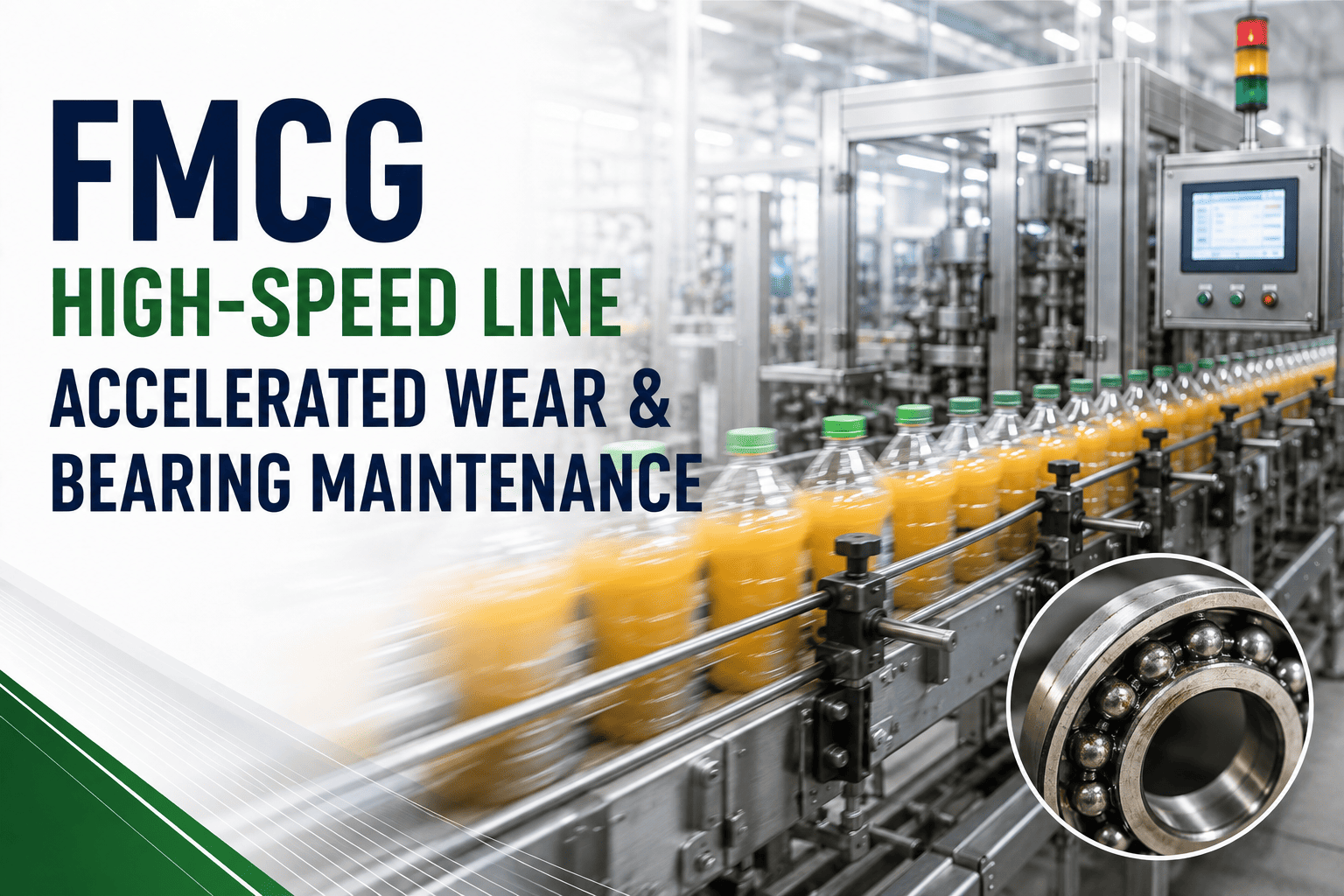
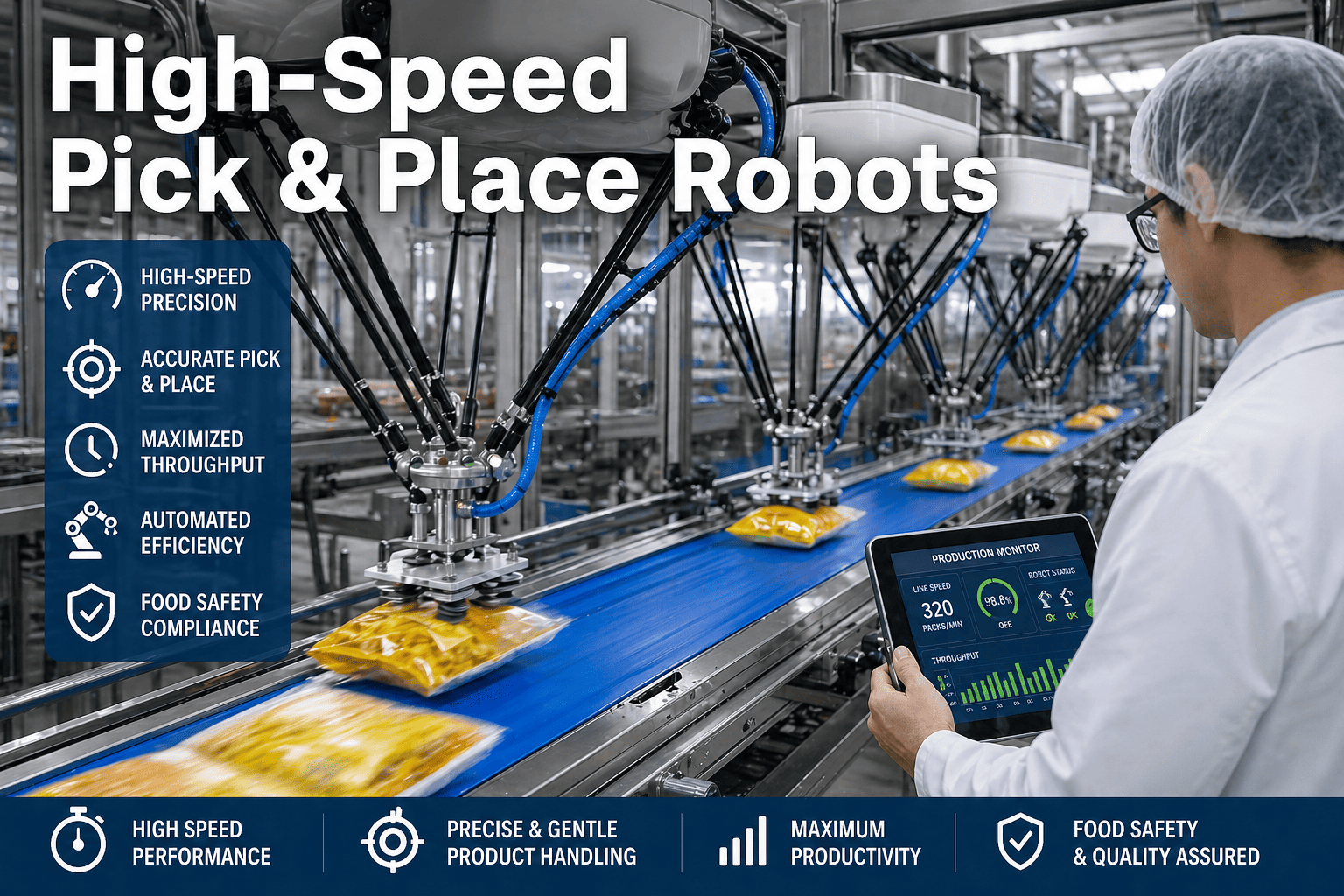
Your high-speed packaging line runs at 600 units per minute when it runs. But it only runs 67% of scheduled time. When it does run, it operates at 82% of design speed due to micro-stops you can't quite identify. And 4.5% of output gets rejected for quality defects traced to inconsistent equipment performance. Your OEE calculates to 50.7%—meaning you're losing 49.3% of potential production capacity to invisible waste. For FMCG manufacturers operating on 3-8% margins, a 50% OEE isn't just inefficient—it's the difference between profitability and loss. The facilities achieving 75-85% OEE aren't running faster equipment. They're systematically eliminating the four challenge categories that plague high-speed lines: downtime events, performance losses, quality defects, and data blind spots. Food and beverage manufacturers ready to break through OEE plateaus can start with OXmaint's integrated performance monitoring that connects equipment conditions, maintenance actions, and production output into unified OEE improvement workflows.
FMCG Average OEE
55-60%
Typical performance across food & beverage lines
World-Class Target
85%+
Only 6% of manufacturers achieve consistently
Lost Production Value
$2.4M
Annual capacity waste at 55% OEE (mid-size plant)
The Four OEE Challenge Categories
OEE losses in high-speed FMCG lines fall into four distinct categories, each requiring different improvement approaches. Understanding which category dominates your losses directs improvement efforts toward highest-impact interventions rather than generic "increase OEE" initiatives that spread resources thin.
1
Availability Losses
35-45% of total OEE losses
Primary Causes:
• Unplanned equipment breakdowns (bearings, motors, drives)
• Extended changeovers between products/SKUs
• Material shortages disrupting production flow
• Preventive maintenance performed reactively
OXmaint Solution: Predictive maintenance triggers prevent unexpected failures. Automated changeover procedures reduce transition time 40-60%. Material tracking alerts prevent shortage-related stops.
2
Performance Losses
30-40% of total OEE losses
Primary Causes:
• Micro-stops (2-5 second jams, misfeeds, sensor trips)
• Reduced speed operation due to product variability
• Equipment wear causing gradual speed degradation
• Operator interventions slowing automated processes
OXmaint Solution: Continuous monitoring detects micro-stop patterns invisible to manual tracking. Equipment condition tracking identifies wear-related speed loss before catastrophic failure.
3
Quality Losses
15-25% of total OEE losses
Primary Causes:
• Equipment drift (temperature, pressure, alignment)
• Startup/shutdown scrap during line state changes
• Inconsistent raw material specifications
• Insufficient equipment calibration frequency
OXmaint Solution: Equipment-to-quality connections identify when maintenance issues cause defects. Automated calibration schedules prevent drift-related quality failures.
4
Data Blind Spots
Amplifies all other losses
Primary Causes:
• Manual downtime tracking missing micro-stops
• Delayed data entry creating stale metrics
• Inconsistent reason code application
• No connection between maintenance and production data
OXmaint Solution: Automated data capture from equipment PLCs eliminates manual logging. Real-time dashboards show OEE impact as events occur, not days later.
Identify Your Highest-Impact OEE Improvements
OXmaint's OEE analysis reveals which of the four challenge categories dominates your losses, directing improvement efforts toward interventions delivering 3-5x ROI rather than generic programs with unclear impact.
The Micro-Stop Problem: High-Speed Line's Silent Killer
Micro-stops—brief 2-30 second interruptions—account for 20-35% of performance losses on high-speed FMCG lines yet remain invisible to manual tracking systems. At 600 units/minute, a 5-second jam costs 50 units. Ten 5-second jams per hour equal 500 units lost—but operators log zero downtime because individual events seem insignificant. Over an 8-hour shift, these "invisible" micro-stops aggregate to 4,000 lost units. Manufacturers implementing automated micro-stop detection through OXmaint typically discover 15-25% more downtime than manual logs captured, revealing improvement opportunities previously unknown.
Micro-Stop Aggregation Impact
600 units/min line • 8-hour shift • 5-second micro-stops
Micro-stops per hour
10 events
50 units lost each
Total micro-stop time
50 seconds
500 units/hour lost
8-hour shift impact
400 seconds
4,000 units lost
Manual logs capture
0 minutes
Invisible to reporting
Moving From 55% to 75% OEE: The Improvement Path
Increasing OEE from typical 55-60% to 75%+ requires systematic attack on losses in priority order. Most facilities achieve fastest ROI by addressing availability first (eliminating largest downtime events), then performance (capturing micro-stops and speed losses), and finally quality (linking equipment conditions to defect patterns). OXmaint's platform guides this progression automatically, highlighting which improvements deliver maximum capacity gains for minimum investment.
Stage 1: 55% → 65%
Eliminate Major Downtime
✓ Implement predictive maintenance for top 5 failure modes
✓ Reduce changeover time through SMED methodology
✓ Establish real-time downtime tracking with reason codes
Result: 10-point OEE gain, 18% capacity increase, 6-9 month payback
Stage 2: 65% → 75%
Capture Performance Losses
✓ Deploy automated micro-stop detection
✓ Address speed degradation through equipment condition monitoring
✓ Optimize product sequencing to minimize speed adjustments
Result: 10-point OEE gain, 15% capacity increase, 12-15 month payback
Stage 3: 75% → 85%
Eliminate Quality Losses
✓ Link equipment maintenance to quality outcomes
✓ Implement continuous calibration monitoring
✓ Reduce startup/shutdown scrap through optimized procedures
Result: 10-point OEE gain, 13% capacity increase, world-class performance
Start Your OEE Improvement Journey
OXmaint's integrated platform addresses all four OEE challenge categories through predictive maintenance, automated monitoring, and equipment-to-quality connections. FMCG manufacturers increase OEE 15-25 points within 18 months while reducing improvement program costs 40-60% through data-driven prioritization.
Frequently Asked Questions
What's a realistic OEE target for high-speed FMCG lines?
Most FMCG manufacturers operate at 55-60% OEE currently. A realistic 18-month target is 70-75% through systematic availability and performance improvements. World-class FMCG operations achieve 80-85% OEE, though only 6% of manufacturers reach this consistently. The 85%+ target requires excellence across all three OEE components (availability, performance, quality) simultaneously—if you achieve 90% on each, your overall OEE is only 73%. Focus on reaching 70% first before targeting world-class performance.
How do micro-stops affect OEE on high-speed lines specifically?
Micro-stops have disproportionate impact on high-speed lines because brief interruptions waste more units. At 600 units/minute, a 5-second jam loses 50 units. Manual tracking typically misses micro-stops under 30 seconds, causing performance loss underreporting of 15-25%. OXmaint's automated monitoring captures all stops regardless of duration, revealing actual performance losses. Facilities addressing micro-stops see 8-12 point OEE improvements by identifying patterns (worn parts, material inconsistencies, environmental factors) causing frequent brief interruptions.
Should we focus on availability, performance, or quality losses first?
Start with availability—it typically offers fastest ROI because major downtime events are easiest to identify and address. Reducing top 5 breakdown causes through predictive maintenance delivers 5-8 point OEE improvement within 6 months. Next tackle performance losses (micro-stops, speed degradation) for another 5-10 points over 12 months. Address quality losses last because they often trace to availability/performance issues—fixing equipment reliability and speed consistency simultaneously improves quality. OXmaint's prioritization engine automates this sequencing based on your specific loss profile.
How does OXmaint connect equipment maintenance to OEE improvement?
OXmaint links maintenance actions directly to production outcomes: (1) Downtime tracking triggers maintenance work orders automatically when equipment fails, (2) Condition monitoring predicts failures before they cause availability losses, (3) Equipment degradation patterns correlate to performance losses (speed reduction, micro-stops), (4) Maintenance schedules align with production to minimize planned downtime impact. This integration eliminates the gap between maintenance and production teams—instead of operating separately, maintenance becomes OEE-driven with priorities set by production impact rather than arbitrary schedules.
Can we improve OEE without major capital investment in new equipment?
Yes—most OEE improvements come from better utilizing existing equipment rather than purchasing new machinery. Typical 55% to 75% OEE improvement requires minimal capital: predictive maintenance sensors ($5K-$15K per line), OEE monitoring software ($8K-$25K annually), and changeover optimization tooling ($10K-$30K). Total investment $25K-$70K delivers 30-40% capacity increase worth $500K-$1.5M annually for mid-size plant. New equipment only makes sense after reaching 80%+ OEE where existing assets approach physical capacity limits.