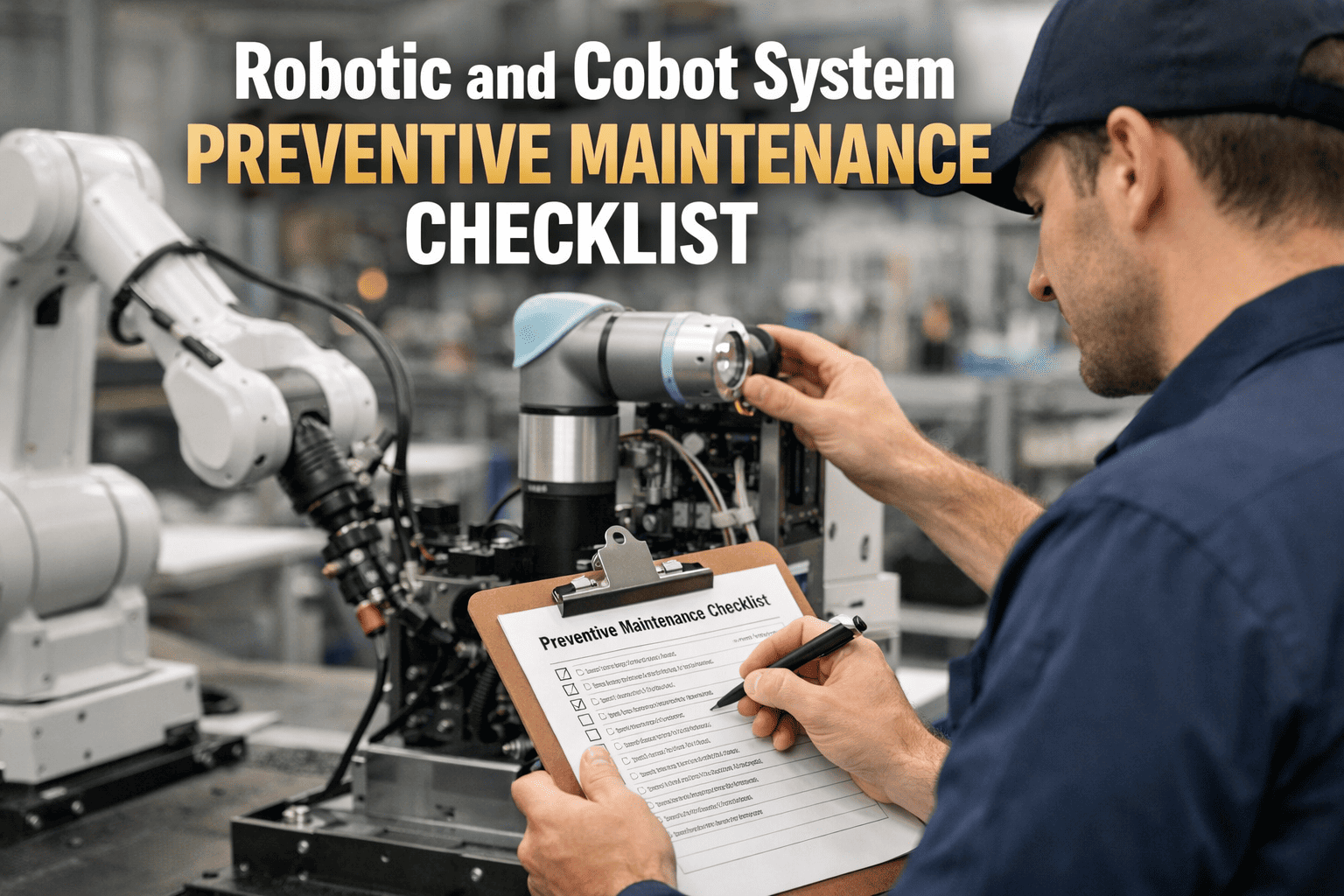
Robots and cobots don't announce when they're about to fail — they degrade gradually through joint wear, sensor drift, software decay, and safety system erosion until a cell stops, a product is damaged, or a person is hurt. OxMaint's Robotics & Cobot Maintenance Tracking automates every PM task across your robotic systems — joint inspections, sensor calibration, software checks, and safety system verification scheduled and logged so reliability never silently degrades. Book a free demo to see automated robot PM in action.
PM Coverage Across the 4 Robotic System Zones
Every zone on a robotic or cobot system generates maintenance data — torque readings, sensor logs, software version records, and safety test results. Without structured PM, performance degrades silently until a cell stops or a safety incident occurs. OxMaint captures every task at completion — traceable per robot, per shift, and per cell, instantly available for OEM, insurance, and compliance audit review.
Before You Start: Configure Your Robot PM Schedule
Effective robot PM starts before the first shift. Teams must register every robot, cobot, and AMR with asset IDs, configure PM intervals per system type and duty cycle, assign maintenance responsibilities, and record baseline performance readings — so every scheduled task is meaningful and every deviation from baseline is immediately actionable. OxMaint's setup wizard configures your full robot PM schedule in under a day.
| # | Task | Schedule | Acceptance Criteria | Sign-Off | |
|---|---|---|---|---|---|
| 1.1 | Joints moved through full range at shift start. Any grinding, clicking, or squealing noted and escalated before production. | Daily | Smooth, quiet motion through full range. Any abnormal noise triggers maintenance hold before production. Result logged. | ________ | |
| 1.2 | Arm and base structure inspected for cracks, chips, or dents that could affect structural integrity or create a contamination risk. | Daily | No cracks, chips, or structural damage. Any damage triggers immediate cell stop and engineering assessment. | ________ | |
| 1.3 | Tool changer or wrist flange checked for secure locking, correct seating, and absence of play or rocking that could indicate wear in the coupling mechanism. | Daily | No play, rocking, or incomplete locking detected. Any loose or suspect coupling triggers cell stop before production begins. | ________ | |
| 1.4 | All joint lubrication points serviced per OEM specification and cycle-count trigger. Type, grade, quantity, and technician ID logged. | Weekly | All lube points confirmed serviced with correct OEM-specified grade. Quantity within spec. Logged with cycle count. | ________ | |
| 1.5 | Power and signal cables inspected for chafing, kinking, or connector fretting. Cable clips and drag chain condition checked. | Weekly | No chafing, kinking, or visible wear on any cable. Drag chain intact and moving freely. Defective cables scheduled for replacement. | ________ | |
| 1.6 | Robot base mounting bolts checked for torque to specification. Vibration from the cell floor can loosen base fasteners over time, causing positional drift that is misdiagnosed as software or calibration issues. | Weekly | All base mounting fasteners at specified torque. Any loose bolt triggers TCP recalibration after re-torquing. Results logged per bolt position. | ________ | |
| 1.7 | Joint torque and backlash measured against OEM spec and baseline. Trended over time to catch progressive wear before positional errors occur. | Monthly | Torque and backlash within OEM limits. Trend increase above threshold triggers joint service before next production campaign. | ________ |
| # | Task | Schedule | Acceptance Criteria | Sign-Off | |
|---|---|---|---|---|---|
| 2.1 | Force/torque sensor zero-point checked at shift start via controller zeroing routine. Offset above threshold triggers recalibration before production. | Daily | Zero-point offset within ±2% of rated capacity. Offset above threshold triggers recalibration before production. Logged. | ________ | |
| 2.2 | End-effector inspected for wear, contamination, cracks, or missing components. Jaw alignment and closing force checked against specification. | Daily | Gripper components intact and clean. Jaw alignment and closing force within specification. Any worn component replaced before run. | ________ | |
| 2.3 | Gripper finger wear measured and compared against the replacement threshold defined in the application spec. Worn fingers cause pick failures and product damage before they are visually obvious. | Daily | Finger wear within replacement threshold. Fingers approaching limit flagged for scheduled replacement before the next shift. Measurement logged. | ________ | |
| 2.4 | Vision cameras and proximity sensors cleaned with approved materials. Checked for damage, loose mounts, or lens contamination. | Weekly | Lenses optically clear. Mounts secure. No physical damage. Detection verified against reference object after cleaning. | ________ | |
| 2.5 | Suction cup components — cups, valves, tubing, filters — inspected for cracking or blockage. Vacuum level measured against specification. | Weekly | Cups pliable with no cracking. Vacuum level within ±5% of specification. Filters clean. Blocked or hardened components replaced. | ________ | |
| 2.6 | Tool changer electrical and pneumatic connections tested for signal integrity and leak-free operation. Repeatability of tool change cycle verified with timed run of 5 consecutive exchanges. | Weekly | All signals confirmed. No pneumatic leaks. 5/5 tool change cycles completed without error or positional deviation. Results logged. | ________ | |
| 2.7 | Full calibration suite: force/torque against certified reference, vision system positional accuracy, and proximity sensors against known reference distances. Results archived. | Monthly | All sensors within OEM accuracy specification. Calibration results archived per sensor asset ID. Out-of-spec sensors replaced or returned to OEM for recalibration. | ________ |
| # | Task | Schedule | Acceptance Criteria | Sign-Off | |
|---|---|---|---|---|---|
| 3.1 | Controller error log reviewed for fault codes, current anomalies, or position errors from the previous shift. Recurring faults flagged even if production was unaffected. | Daily | No unreviewed fault codes from previous shift. Recurring faults trigger a work order even if production was unaffected. Log exported and archived. | ________ | |
| 3.2 | Path accuracy spot-checked with a test cycle. TCP position compared against programmed points. Deviation outside tolerance triggers recalibration before production. | Daily | TCP positional accuracy within ±defined tolerance for the application. Deviation above threshold triggers TCP recalibration before production continues. | ________ | |
| 3.3 | All programs backed up to designated location. File integrity verified and timestamp confirmed current. Previous version retained per change control. | Weekly | Current backup confirmed on designated server. File integrity verified. Previous version retained. Backup location and filename logged against robot asset record. | ________ | |
| 3.4 | Firmware and safety software patch status reviewed against OEM release notes. Pending patches assessed and scheduled for planned downtime installation. | Weekly | No unapplied safety patches outstanding beyond 30 days. Patch assessment documented. Installation schedule confirmed for pending updates. | ________ | |
| 3.5 | Joint mastering / zero-point calibration verified by running the robot to its mechanical zero position and confirming encoder values match the stored reference. Drift from reference indicates mechanical or encoder wear. | Weekly | Encoder values at mechanical zero match stored reference within OEM tolerance. Drift above threshold triggers full re-mastering before production. | ________ | |
| 3.6 | Cycle time trend reviewed against the baseline production cycle time. Increasing cycle time on a nominally healthy robot indicates joint friction, communication latency, or path execution issues before they surface as faults. | Weekly | Cycle time within ±3% of baseline. Consistent increase above threshold triggers a joint and software diagnostic before next planned maintenance window. | ________ | |
| 3.7 | Full TCP calibration using OEM method. World and user frame verified. All waypoints confirmed against physical reference points. Results archived in CMMS. | Monthly | TCP calibration within OEM positional accuracy specification. All waypoints confirmed. Calibration result and date archived per robot asset ID. | ________ |
| # | Task | Schedule | Acceptance Criteria | Sign-Off | |
|---|---|---|---|---|---|
| 4.1 | All E-stop buttons — robot, pendant, and cell perimeter — activated and confirmed to stop motion within required stop time. Reset procedure verified functional. | Daily | All E-stops trigger immediate motion stop. Reset confirmed requiring deliberate operator action. Any E-stop failure triggers immediate cell lockout. Result: Pass / Fail | ________ | |
| 4.2 | Safety scanners, light curtains, and area sensors tested by interrupting each detection zone. Robot confirms stop or speed reduction within validated response time. | Daily | All safety zones trigger correct protective response. Stop or speed reduction within validated response time. Failure triggers immediate cell lockout. Result: Pass / Fail | ________ | |
| 4.3 | Cobot speed and force limits verified against validated risk assessment values via controller diagnostic mode. Any deviation is a safety-critical non-conformance. | Weekly | Speed and force limits match validated risk assessment values exactly. Any deviation is a safety-critical non-conformance — cell isolated until corrected and re-validated. | ________ | |
| 4.4 | Safety scanner optics and light curtain emitters/receivers inspected and cleaned. Zone boundaries re-verified after cleaning. Alignment drift corrected before production. | Weekly | Optics clean and undamaged. Zone boundaries confirmed after cleaning. Any alignment drift corrected and re-tested before production resumes. | ________ | |
| 4.5 | Physical guarding — interlocked gates, fixed guards, and anti-restart devices — inspected for structural integrity, correct function, and absence of bypass attempts or damage. | Weekly | All guards intact and correctly positioned. Interlocked gates confirmed functional — opening stops robot. No evidence of bypass. Any damage triggers immediate cell isolation. | ________ | |
| 4.6 | Safety PLC or safety controller diagnostics reviewed for any internal faults, redundancy channel errors, or self-test failures logged since the previous check. Safety system self-diagnostics must be reviewed, not just cleared. | Weekly | No unreviewed safety controller faults. Any redundancy channel error treated as a critical finding requiring immediate investigation before production resumes. | ________ | |
| 4.7 | Full safety audit per ISO 10218 / ISO/TS 15066: all safety functions tested to specification, results documented, and signed off by a competent person independent of daily operations. | Monthly | All safety functions pass full specification test. Audit report completed and signed by independent competent person. Findings documented and corrective actions scheduled. | ________ |
PM Sign-Off — Issued When All 4 Zones Are Confirmed
PM Done ✓
Grippers ✓
Calibration ✓
Systems ✓
Sign-Off
Performance Metrics — Robotic System PM Programme
Percentage of scheduled production time the robot cell is available. AI tracking surfaces which cells show declining availability — correlating with overdue joint or sensor PM before a cell stop occurs.
Measured deviation from programmed TCP position during daily accuracy checks. Rising deviation is an early indicator of joint wear, cable fatigue, or base mounting shift before product quality is affected.
Percentage of safety function tests passing on first check. Any failure rate above zero requires an immediate investigation — safety function failures in robotic cells are never acceptable as routine events.
Percentage of scheduled PM tasks completed on time across all four zones. Target 100% — missed PM tasks are the leading predictor of unplanned robot cell downtime and safety incidents.