In 2026, the average North American FMCG plant is spending 18% more on labor than it did three years ago. Energy bills across the U.S. and Canada have surged past pre-pandemic benchmarks. Raw material volatility is no longer cyclical—it's structural. For Operations Directors and CFOs managing thin-margin consumer goods portfolios, the math is unforgiving: every dollar lost to downtime, every pallet mislabeled in the warehouse, every compliance audit that drags into its second week is a dollar that never reaches the bottom line. The old playbook—spreadsheets, reactive maintenance, manual traceability logs—can no longer keep pace with the cost pressures, regulatory mandates, and demand volatility defining this market. What follows is a blueprint for the FMCG operations leaders ready to close that gap. Request your Operational ROI Audit to see exactly where AI-driven operations recover margin.
The 2026 FMCG Pressure Map
North American FMCG companies are navigating a convergence of headwinds that no single initiative can solve. Rising input costs, FSMA 204 traceability mandates taking full effect, OSHA's tightening enforcement posture, and consumers who will switch brands over a single stockout—these forces demand a systemic response. Oxmaint's AI-driven platform addresses them not as isolated problems but as five interconnected operational pillars, each reinforcing the others.
The Old Way
✕
- Demand planning based on last quarter's spreadsheets and gut instinct
- Inventory counts done weekly by hand—stockouts discovered at the loading dock
- Equipment maintained on fixed schedules or after breakdown
- FSMA 204 traceability assembled manually across disconnected systems for each audit
- Quality defects caught at end-of-line inspection—entire batches scrapped
Reactive & Fragile
Operations held together by institutional memory and overtime
The Oxmaint Way
✓
- AI demand forecasting ingests POS data, seasonality, and macro signals in real time
- Automated inventory tracking with RFID/barcode integration—restocking triggered before gaps form
- Predictive maintenance monitors vibration, temperature, and load to prevent failures
- End-to-end traceability logs with robotic pallet labeling—audit-ready at all times
- In-line AI quality monitoring flags anomalies at the point of production, not the end of it
Predictive & Self-Healing
Operations driven by data, not by crisis
Five Pillars of AI-Driven FMCG Operations
Each pillar below maps directly to the cost levers and compliance mandates that Operations Directors and CFOs are accountable for in 2026. Together, they form a closed-loop system—agility feeds visibility, visibility protects uptime, uptime enables compliance, and compliance safeguards quality. Oxmaint connects these pillars through a single AI platform, eliminating the silos that bleed margin. See how these pillars map to your operation — Sign Up Free
01
Agility
Supply Chain · Demand Forecasting · Distribution
Consumer demand in North America no longer follows neat seasonal curves. Viral trends, regional weather events, and shifting retailer ordering patterns create whiplash that static supply chains cannot absorb. Oxmaint's AI forecasting engine processes point-of-sale feeds, weather data, and macroeconomic indicators to generate rolling demand signals—not quarterly projections, but daily recalibrations. Distribution route optimization layers on top, cutting last-mile costs by dynamically rerouting shipments around congestion, dock delays, and carrier disruptions. The result: products reach shelves when consumers want them, not when a planner's spreadsheet said they would.
Reduces stockouts and excess inventory simultaneously while cutting freight spend.
02
Visibility
Inventory Management · Data-Driven Decision Making
You cannot optimize what you cannot see. Most FMCG operations still rely on periodic cycle counts and disconnected ERP modules that show inventory positions hours or days out of date. Oxmaint integrates barcode and RFID scanning—including automated robotic pallet labeling at the pack line—into a real-time inventory nerve center. Every SKU, every lot, every pallet is tracked from production through warehouse to dispatch. AI analytics convert this data stream into actionable dashboards: where is working capital tied up in slow-moving stock? Which distribution center is trending toward a stockout three days from now? CFOs get the financial picture; Operations Directors get the operational one—from the same source of truth.
Eliminates blind spots that cause overstocking, write-offs, and missed shipments.
03
Uptime
Predictive Maintenance · OEE Protection
A single unplanned line stoppage on a high-volume FMCG filling line costs between $5,000 and $20,000 per hour in lost throughput alone—before you count the downstream effects on order fulfillment, retailer penalties, and overtime labor. Oxmaint's predictive maintenance engine monitors vibration signatures, thermal profiles, motor current draws, and historical failure patterns to flag degradation weeks before a breakdown occurs. Maintenance teams shift from firefighting to planned interventions scheduled during changeovers and off-peak windows. Overall Equipment Effectiveness climbs not because you bought a new line, but because the line you have runs closer to its design capacity.
Protects throughput and OEE without capital expenditure on new equipment.
04
Compliance
FSMA 204 Traceability · OSHA Safety · Regulatory Readiness
FSMA Rule 204 is no longer on the horizon—it is here, and FDA enforcement is ramping up across the U.S. food and beverage sector. The rule requires granular traceability records for foods on the Food Traceability List, with Key Data Elements captured at every Critical Tracking Event. Manual log assembly is not sustainable at scale. Oxmaint automates traceability capture at every node: robotic pallet labeling encodes lot, batch, origin, and timestamp data directly into machine-readable labels; barcode and RTLS integration links those labels to digital records throughout the supply chain. When an auditor or a recall event demands records, they are generated in minutes—not weeks. On the safety side, AI-driven hazard detection monitors production floors for gas leaks, temperature excursions, and unsafe equipment states, keeping OSHA incident rates low and audit findings clean.
Turns compliance from a cost center into an automated background process.
05
Quality
In-Line Quality Control · Brand Reputation
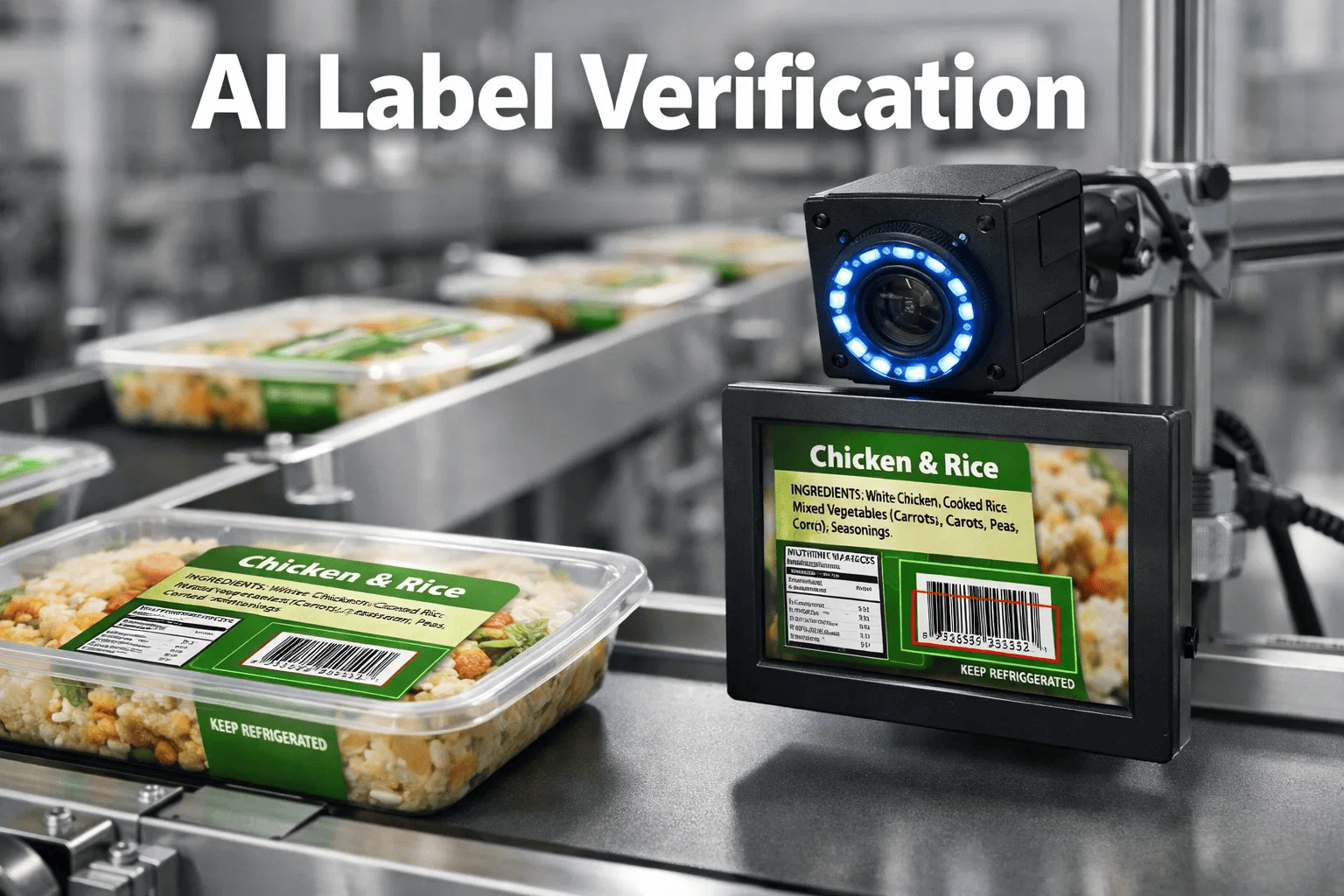
A single product recall can cost a mid-size FMCG brand between $10 million and $30 million in direct costs—and the reputational damage lingers far longer than the financial hit. Oxmaint deploys AI-powered visual inspection and sensor-based anomaly detection at critical production stages, catching fill-level deviations, label misalignment, seal integrity failures, and contamination indicators before defective product advances down the line. Meanwhile, customer sentiment analysis across social media, review platforms, and direct feedback channels gives brand managers an early warning system for quality perception issues that haven't yet escalated into formal complaints. The goal is simple: only product that meets spec leaves the facility, and any quality signal from the market triggers investigation within hours, not days.
Prevents recalls and protects brand equity through proactive quality assurance.
Robotic Pallet Labeling: The Traceability Backbone
Traceability in FMCG is only as strong as the data encoded at the pallet level. Manual labeling—handheld scanners, handwritten lot codes, operator-applied stickers—introduces error rates between 1% and 3% per pallet. At the volumes a typical North American CPG warehouse processes daily, that means dozens of pallets per shift carrying incorrect or incomplete traceability data. When a recall hits, those errors don't just slow the response—they expand the recall scope, because you can't confidently exclude what you can't accurately identify.
Robotic pallet labeling systems integrated with Oxmaint's traceability platform eliminate this failure mode. As pallets exit the pack line, automated label applicators encode GS1-128 barcodes or RFID tags with lot number, production date, batch ID, origin facility, and destination data—all pulled directly from the ERP and validated against production records in real time. No transcription errors, no missing fields, no operator variability. Each label becomes a digital anchor linking the physical pallet to its complete chain-of-custody record in the Oxmaint platform, from raw material receipt through final delivery.
Still assembling FSMA 204 traceability records manually? See how Oxmaint's automated labeling and traceability logs cut recall response time from weeks to hours.
Book a Demo
The Metrics That Matter
Operations Directors and CFOs don't need dashboards with fifty KPIs—they need three numbers that tell the truth about operational health. These are the metrics Oxmaint moves, and the ones your board will ask about. Want to see where your numbers stand? — Book a Demo
+12–18%
OEE Improvement
Predictive maintenance eliminates unplanned stops. AI scheduling optimizes changeovers. The combined effect lifts Overall Equipment Effectiveness by 12 to 18 percentage points within the first year—without new capital equipment. For a facility running at 65% OEE, that means recovering the equivalent output of an entirely new production shift.
35–50%
Stockout Reduction
AI demand forecasting paired with real-time inventory visibility closes the gap between what retailers need and what your warehouse holds. Stockouts—the silent margin killer that drives consumers to competitors—drop by 35 to 50 percent. That translates directly to recovered revenue and retained shelf space in a market where retailer patience for empty slots is near zero.
80% Faster
Compliance Audit Time
When traceability records are generated automatically at every critical tracking event—from raw material intake through robotic pallet labeling to final shipment—audit preparation collapses from weeks of manual record assembly to hours of automated report generation. FSMA 204 audits, OSHA inspections, and retailer compliance reviews all pull from the same verified data set.
Resource Efficiency: The Profit Case for Sustainability
Sustainability in North American FMCG is no longer a CSR talking point—it is a resource efficiency imperative with direct P&L impact. Energy consumption on a typical production floor represents 8 to 12 percent of operating costs. Packaging waste generates disposal fees, and increasingly, regulatory penalties. Water usage in food and beverage manufacturing faces tightening municipal allocation limits across the western U.S. and parts of Canada.
Oxmaint's AI platform monitors energy draw by machine and shift, identifies consumption anomalies that signal equipment inefficiency, and benchmarks resource usage against production output to surface waste that hides inside "normal" operations. Packaging waste tracking pinpoints where material is being lost—overwrap, label waste, damaged secondary packaging—and quantifies the dollar value of each waste stream. The result is not a sustainability report for the annual filing; it is a monthly cost-reduction playbook that pays for itself. Uncover hidden resource waste on your production floor — Sign Up Free
The FMCG companies that will lead in 2026 are not the ones with the biggest capex budgets—they are the ones that extract the most intelligence from the assets, data, and supply chains they already have. AI-driven operations are how you turn cost pressure into competitive advantage.
— FMCG Operations Strategy, Industry Analysis 2026
Get Your Operational ROI Audit
Oxmaint's team will map your current supply chain, maintenance, inventory, and compliance workflows against AI-driven benchmarks—and deliver a custom report showing exactly where you recover margin. No obligation. No generic decks. Just the numbers your CFO needs to greenlight the transformation.
Frequently Asked Questions
How does Oxmaint integrate with our existing ERP and WMS?
Oxmaint connects via API to major ERP platforms (SAP, Oracle, Microsoft Dynamics) and warehouse management systems. Data flows bidirectionally—production records, inventory levels, and traceability logs sync automatically. Most integrations are configured within two to four weeks without disrupting live operations.
Schedule a technical demo to see integration with your specific stack.
What does FSMA 204 compliance actually require from our operations?
FSMA Rule 204 mandates that companies maintain sortable, electronic traceability records for foods on the Food Traceability List. You must capture Key Data Elements at every Critical Tracking Event—receiving, transforming, creating, shipping—and produce those records within 24 hours of an FDA request. Oxmaint automates KDE capture at each CTE, including through robotic pallet labeling, so records are always audit-ready.
How quickly can we expect to see OEE improvements from predictive maintenance?
Most facilities see measurable OEE gains within 60 to 90 days of sensor deployment. The first 30 days establish baseline equipment health profiles; by day 60, the AI model is generating actionable failure predictions. Early wins typically come from catching bearing degradation and motor anomalies that would have caused unplanned stops within weeks.
Start your free trial to begin baselining your assets.
Is robotic pallet labeling viable for our production volumes?
Robotic pallet labeling systems scale from mid-volume operations (200+ pallets per shift) through high-volume lines processing thousands of pallets daily. Oxmaint supports integration with major label applicator OEMs and encodes GS1-128 barcodes or RFID tags directly from production records. The ROI threshold is typically reached when manual labeling error rates exceed 0.5% or when FSMA traceability demands make manual encoding unsustainable.
What makes Oxmaint different from other CMMS or MES platforms?
Most CMMS platforms manage maintenance work orders. Most MES platforms track production execution. Oxmaint connects both—and adds AI-driven demand forecasting, real-time inventory visibility, automated traceability, and compliance monitoring in one platform. The difference is not feature count; it is the closed-loop intelligence that ties supply chain, production floor, and warehouse into a single decision-making system.