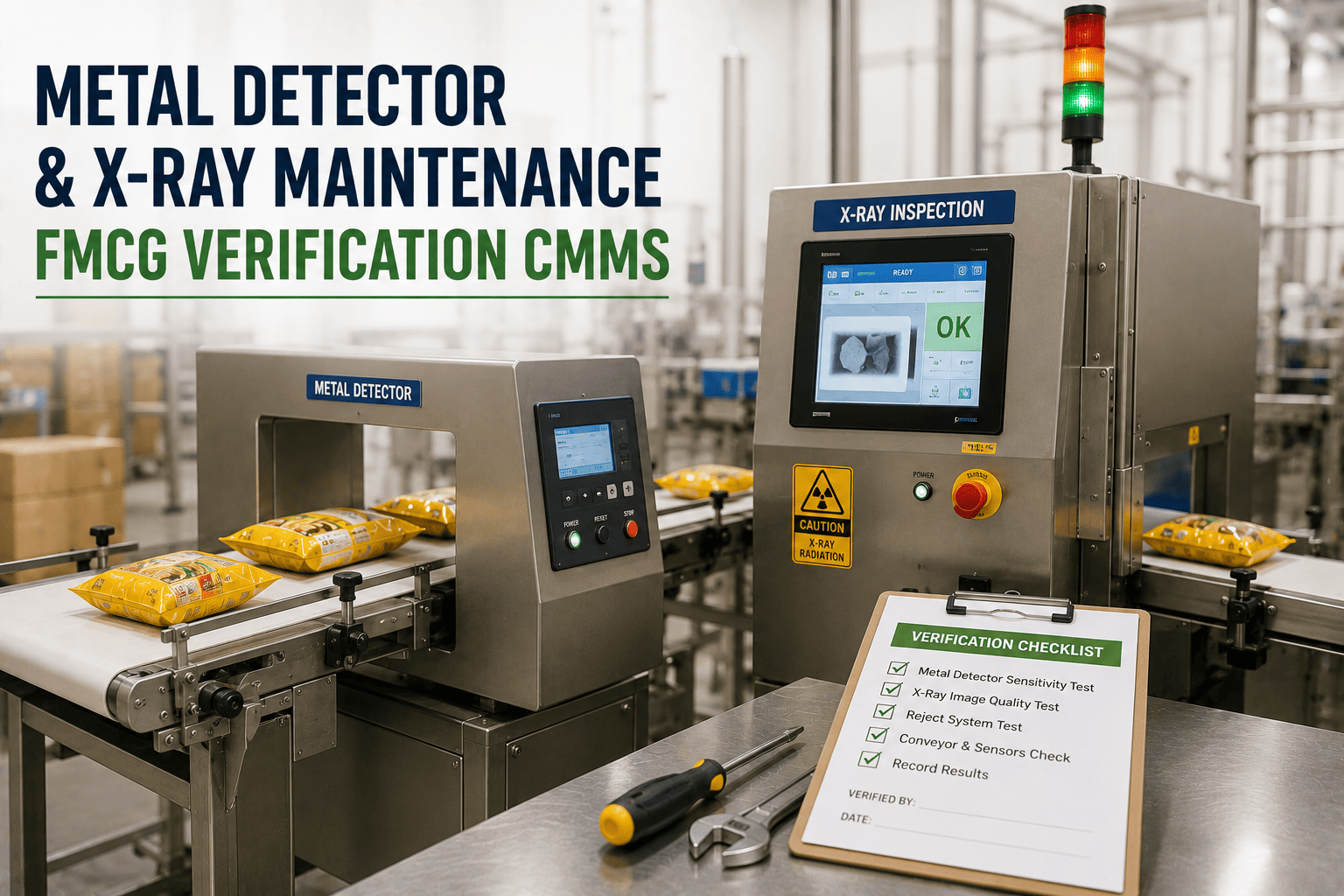
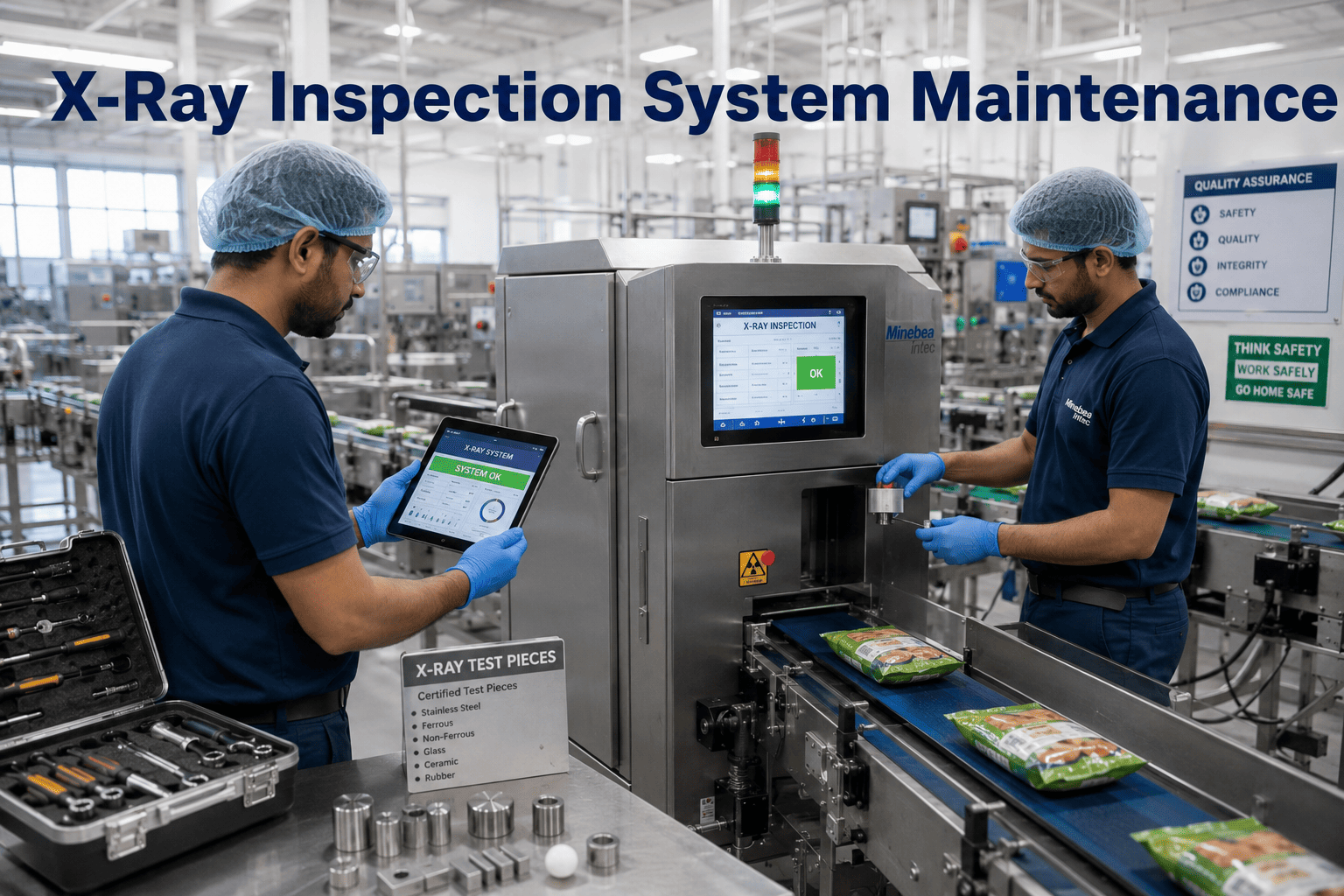
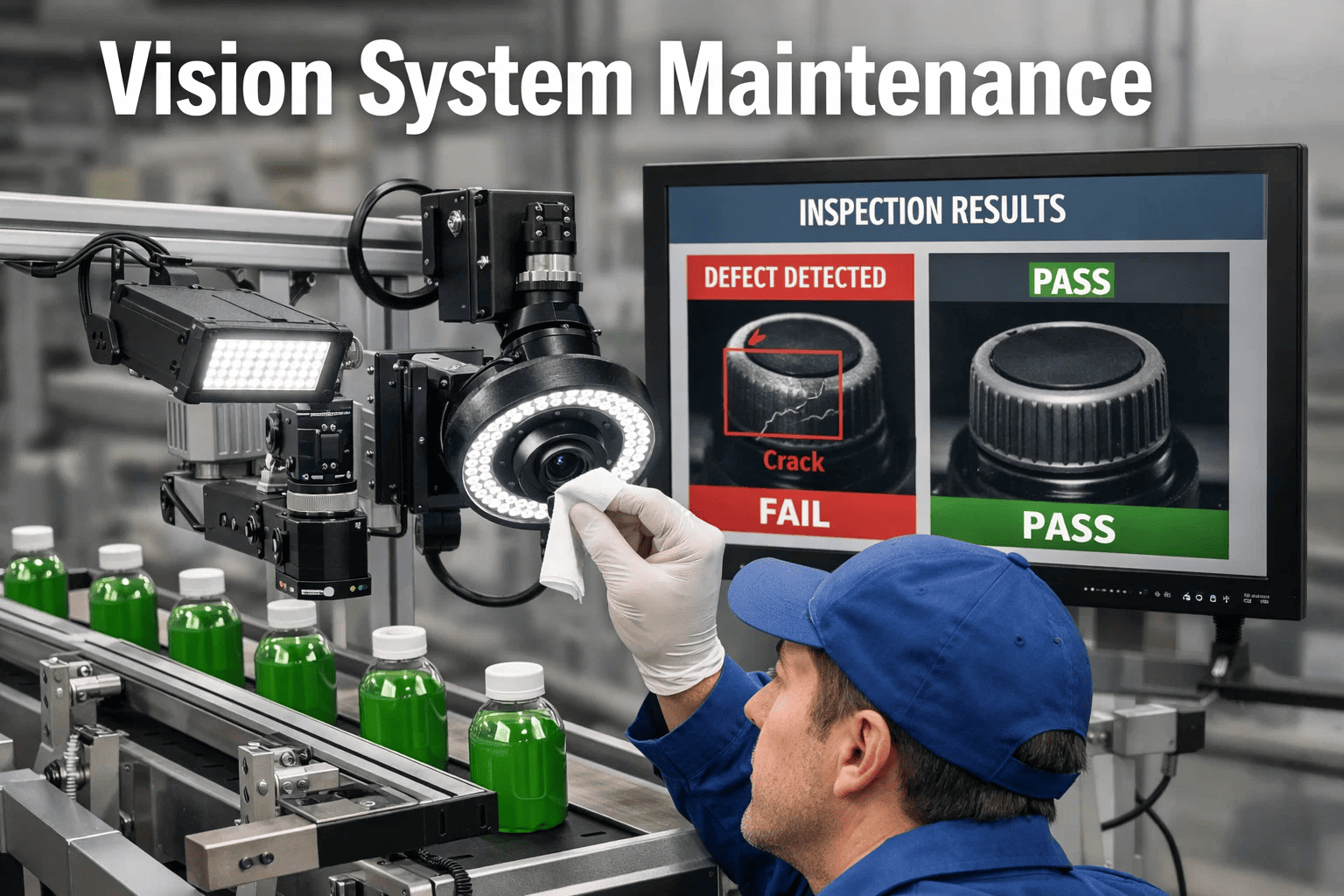
Food safety incidents caused by foreign object contamination cost the FMCG industry over $7 billion annually in recalls, liability, and brand damage — and the majority are preventable with properly maintained, correctly calibrated detection systems. X-ray inspection and metal detection are the last line of defense in most FMCG production lines, yet calibration schedules are routinely missed, challenge test records are incomplete, and sensitivity validation is performed inconsistently across shifts. A detection system that isn't maintained to specification provides false confidence — passing contaminated product while your QA team believes the line is safe. If your detection system maintenance records live in paper logbooks or disconnected spreadsheets, start a free OxMaint trial and bring your food safety equipment records into a single auditable system — or book a demo to see how OxMaint manages food safety equipment in FMCG plants.
Food Safety · Detection Systems
X-Ray & Metal Detection in FMCG: Safety, Calibration, and Compliance
Detection sensitivity, calibration schedules, challenge test protocols, and maintenance records — the operational framework that keeps your food safety equipment working at specification on every production shift.
$7B+
Annual FMCG industry cost of foreign object contamination events
0.3mm
Smallest detectable ferrous metal for modern FMCG metal detectors
34%
Of food safety audits identify inadequate detection equipment records
3x/shift
Minimum BRC-recommended frequency for detection system challenge testing
X-Ray vs Metal Detection: Which Technology For Which Application
Metal detectors and X-ray systems are not interchangeable — each has detection capabilities and limitations that determine which applications each technology suits. Many FMCG plants run both systems at different points in the production line.
Detects
All metal types and sizes
Glass fragments (2mm+)
Dense plastic and rubber
Bone and calcified material
Stone and mineral contaminants
Product integrity checks (fill level, missing components)
Best for: Canned products, foil packaging, meat, dairy, glass-packed
The 5-Point Detection System Maintenance Framework
A detection system is only as reliable as its last verified calibration. These five maintenance disciplines — when consistently executed and documented — constitute a defensible food safety detection program that satisfies BRC, SQF, and FSSC 22000 audit requirements.
01
Pre-Production Challenge Testing
Before every production run
Verify detection at defined sensitivity using certified test pieces. Document pass/fail result, test piece size, and operator name. Any failure must halt production until root cause is identified and sensitivity confirmed.
02
Mid-Shift Challenge Testing
Minimum 3x per 8-hour shift
Repeat challenge test at defined intervals during production. Define process for handling product produced since the last successful challenge test if a failure is detected mid-shift — this is the quarantine and disposition protocol.
03
Sensitivity Calibration
Per manufacturer schedule (typically monthly)
Full sensitivity calibration by qualified technician, resetting detection thresholds and verifying performance across all product programs. Calibration records must be signed and retained for minimum 12 months for audit purposes.
04
Reject System Verification
At every challenge test
Verify that the reject mechanism (air blast, pusher, divert arm) operates correctly and that rejected product is isolated from the production stream. A detector that detects but fails to reject correctly is a food safety failure — not a detection success.
05
Preventive Maintenance Service
Annual or per manufacturer recommendation
Full equipment service including aperture cleaning, conveyor inspection, belt replacement, electronics check, and performance verification. Includes certification document that confirms equipment meets manufacturer specifications.
06
Test Piece Management
Quarterly verification
Certified test pieces must be verified for integrity and traceability. Worn, damaged, or uncertified test pieces invalidate all challenge test results. Replace test pieces on schedule and maintain certificate of conformity records.
Common Detection System Failures and Their Causes
Most detection failures in FMCG production are maintenance-related, not technology limitations. Understanding the failure modes helps maintenance teams prioritize the right PM activities.
Sensitivity Drift
Cause: Vibration, temperature changes, belt wear affecting field uniformity
Result: System passes contaminants it should reject; false positives increase
Prevention: Monthly calibration + challenge testing before and after product changeover
Reject System Malfunction
Cause: Air supply pressure loss, solenoid wear, actuator misalignment
Result: Detected contaminants pass into packing — detection occurs but rejection fails
Prevention: Reject verification at every challenge test; air pressure monitoring
Product Effect Interference
Cause: High moisture products, conductive packaging, or product temperature variation
Result: Excessive false reject rate or forced desensitization to eliminate false alarms
Prevention: Product-specific programs with correct phase settings; X-ray for wet/foil products
Aperture Contamination
Cause: Product buildup in detector head, particularly with dusty or wet product
Result: Reduced sensitivity, increased false alarm rate, field distortion
Prevention: Regular aperture cleaning as part of production hygiene schedule
Before vs. After: Managing Detection Systems in OxMaint
Detection System Performance: What Good Looks Like
100%
Challenge test completion target
BRC Grade A requires no missed challenge tests — digital records prove compliance
34%
Of audits cite inadequate detection records
The most common food safety documentation gap — eliminated with digital management
0.3mm
Ferrous detection capability
Achievable sensitivity for properly calibrated metal detectors on suitable products
40%
Reduction in false reject rates
When product programs are properly calibrated and maintained vs. default settings
Frequently Asked Questions
How often should metal detector and X-ray challenge tests be performed in FMCG production?
BRC Global Standard for Food Safety requires challenge testing at the start of every production run, at defined intervals during production (typically every 2 hours or at shift changes, whichever is more frequent), and at the end of every production run. For high-risk products — particularly those with allergen declarations or products targeting vulnerable consumers — some retailers and certification bodies require challenge testing every hour. The minimum standard across all major food safety certifications is start-of-run and end-of-run, plus a mid-shift test. Any missed test requires documented justification and quarantine of the intervening product.
What is the quarantine protocol when a detection system fails a challenge test?
When a challenge test fails, the established protocol is: immediately stop production and secure all product produced since the last successful challenge test; investigate and resolve the detection system issue; re-challenge and confirm detection at the required sensitivity; make a disposition decision on the quarantined product (hold for re-inspection or reject). The product produced during the gap between last successful test and failure discovery is the quarantine scope. Without timestamped digital challenge test records, establishing this scope accurately is difficult — which is why documented, timed records are essential for both food safety management and cost control when determining the extent of a quarantine event.
Why do metal detectors have reduced sensitivity on some FMCG products?
Metal detection sensitivity is affected by product characteristics because the detection technology works by measuring electrical conductivity changes in the electromagnetic field. Products with high moisture content, high salt content, or conductive packaging materials (metallic films) all create a "product effect" that can reduce sensitivity or cause false rejects. The response is to set product-specific programs with phase adjustment to compensate for the product's natural electrical signature. This is why a metal detector achieving 0.3mm ferrous sensitivity on a dry biscuit may only achieve 1.5mm sensitivity on a wet, salt-heavy product — and why sensitivity must be verified for each specific product on each specific program, not assumed from a single calibration certificate.
How does OxMaint manage food safety detection equipment specifically?
In OxMaint, each metal detector and X-ray system is registered as an asset with its own PM schedule, calibration record history, and inspection checklist. Pre-production and mid-shift challenge tests become digital inspection steps that operators complete on mobile devices before line release is permitted. Any failed challenge test automatically generates a corrective action work order with the quarantine scope documented. The maintenance team's calibration schedule runs separately from the quality team's challenge test schedule — both visible on the same asset record, giving QA managers and food safety auditors a single source of truth for every detection system on the facility.
Food Safety Equipment Management
A Detection System Is Only Safe If Its Maintenance Records Prove It Is.
Challenge test completion records. Calibration schedules. Reject event logs. Corrective action work orders. Audit-ready documentation for every metal detector and X-ray system on your facility — managed in one platform your QA and maintenance teams share.