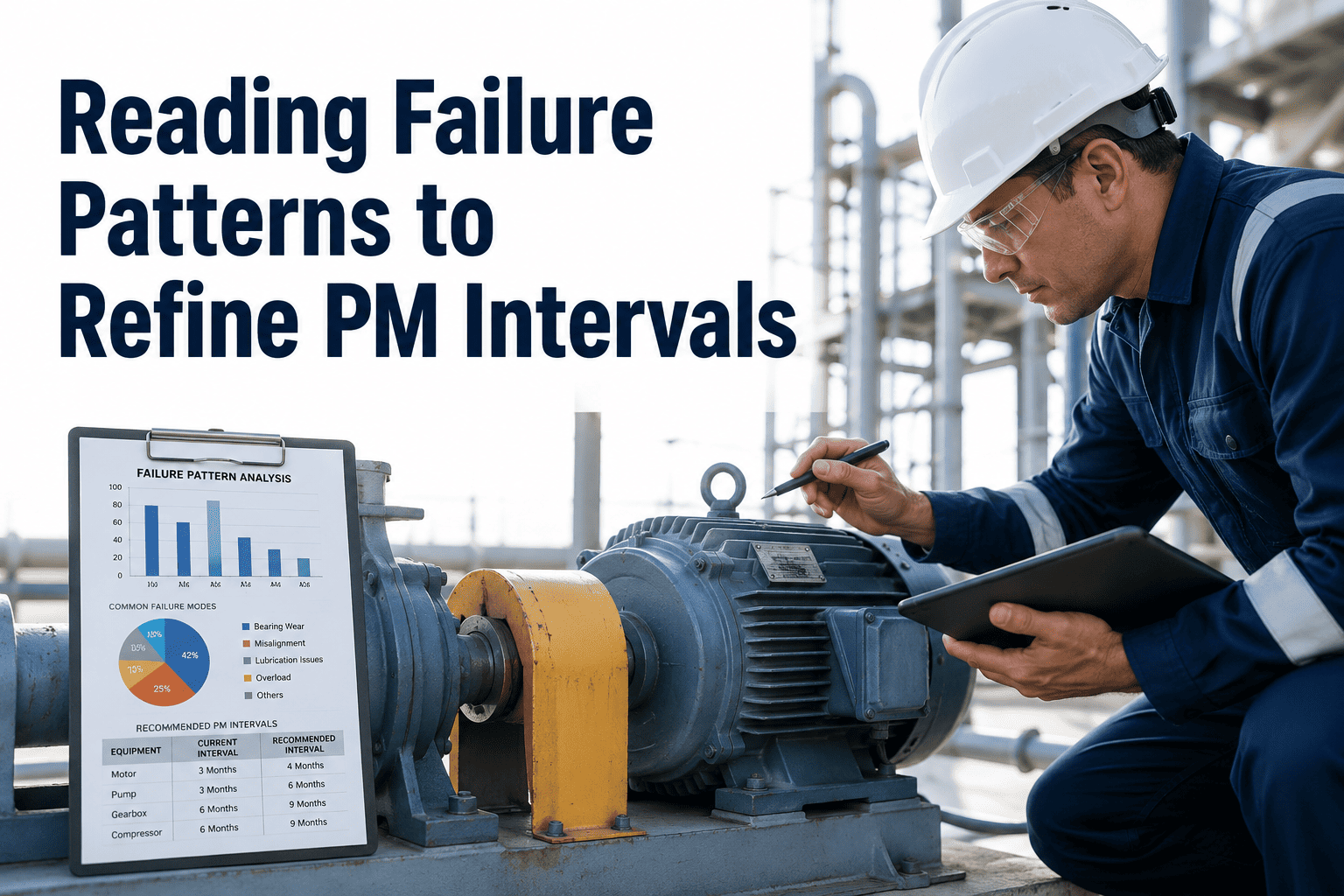
AI predicts equipment failures in food manufacturing before they happen — and for operations leaders managing high-value production lines, this shift from reactive to predictive maintenance is one of the most impactful technology decisions available today. Unplanned downtime in a food processing facility doesn't just mean a repair bill. It means halted production, spoiled raw materials, missed delivery windows, and in regulated environments, potential compliance violations. A proactive AI-powered maintenance platform removes the guesswork from asset management — giving your teams accurate, actionable failure warnings hours or days before a breakdown occurs.
Stop reacting to failures. Start predicting them.
OxMaint's AI-powered CMMS gives food manufacturers real-time equipment health monitoring, automated alerts, and predictive work orders — all in one platform.
Why Equipment Failure Prediction Matters in Food Manufacturing
Food and beverage production runs on tight margins, tighter schedules, and strict regulatory frameworks. A single conveyor failure during peak processing can cascade into hours of lost output. A compressor fault in a cold storage unit can render an entire batch non-compliant.
Traditional maintenance approaches — time-based servicing or waiting for equipment to show visible signs of wear — are no longer adequate. The complexity of modern processing lines, combined with rising energy costs and labour pressures in the US, UK, Canada, Germany, and the UAE, demands a smarter system.
AI-driven predictive maintenance closes this gap. By continuously analysing sensor data, operational patterns, and historical failure records, machine learning models identify the early signatures of equipment degradation — before any physical symptom is visible to a technician on the floor.
How AI Predicts Equipment Failures: The Core Mechanics
Machine Learning Models That Learn Your Equipment
At the heart of AI failure prediction is a machine learning model trained on your equipment's historical data — vibration readings, temperature cycles, pressure fluctuations, current draw, lubrication intervals, and past failure events. The model learns what "normal" looks like for each asset under varying production conditions.
Once trained, the model runs continuously against live sensor feeds. When incoming data begins to deviate from established normal ranges — even subtly — the system flags an anomaly and generates a maintenance alert. This allows your team to intervene during a planned window rather than responding to an emergency at 2am.
The most capable platforms combine several model types: regression models that predict remaining useful life, classification models that identify which failure mode is most likely, and anomaly detection algorithms that catch novel degradation patterns not seen during training.
What Data AI Systems Use for Food Processing Equipment
Effective failure prediction depends on the quality and breadth of input data. In food manufacturing environments, the most predictive data sources include vibration and acoustic emissions from motors and gearboxes, temperature gradients across heat exchangers and ovens, hydraulic pressure in filling and packaging lines, and electrical current signatures from compressors and mixers.
Production throughput data adds critical context — a motor running at 60% load behaves differently from the same motor at 95% capacity. AI systems that integrate production schedule data can adjust their failure thresholds dynamically, significantly reducing false positive alerts.
Key Equipment Categories Most Vulnerable to Unplanned Failure
Refrigeration and Cold Chain Systems
Cold chain integrity is non-negotiable in food processing. Compressor failures, refrigerant leaks, and condenser fouling can cause rapid temperature excursions — leading to product loss, regulatory non-compliance, and food safety incidents. AI systems monitoring compressor current draw and suction pressure can predict refrigerant depletion weeks in advance.
Conveyors, Fillers, and Packaging Lines
High-speed packaging equipment operates under constant mechanical stress. Bearing wear, belt tension drift, and seal degradation all follow detectable patterns. Predictive models trained on vibration signatures can distinguish healthy bearing noise from the early onset of race fatigue — providing a maintenance window before failure causes a line stoppage.
Mixers, Blenders, and Homogenisers
Heavy-duty process equipment in dairy, sauce, and bakery applications works under variable viscosity loads that stress gearboxes and drive motors. Lubricant degradation and gear tooth wear produce acoustic signatures that AI-powered condition monitoring systems can detect long before physical inspection would identify a problem. Sign up free to connect your process equipment to a predictive monitoring platform.
Boilers, Ovens, and Heat Processing Equipment
Thermal processing equipment involves multiple interacting failure modes — burner efficiency loss, heat exchanger fouling, and valve wear — each measurable through distinct sensor patterns. AI failure prediction on thermal assets also delivers direct energy savings: a boiler running at 94% efficiency instead of 96% may not trigger a manual alarm, but an AI model will flag the deviation and recommend corrective action.
How AI Vision Enhances Equipment Failure Prediction in Food Manufacturing
AI Vision — using machine learning models to interpret live camera feeds and imaging data — extends predictive maintenance into areas where sensors alone cannot reach. Visual inspection has historically been the most labour-intensive and subjective element of food plant maintenance. AI Vision automates it.
AI Vision systems trained on belt imagery detect surface cracking, edge fraying, and splice wear in real time — issuing replacement alerts before a belt failure halts the production line. Facilities in the UK and Germany are already deploying these systems as part of smart factory programmes.
Cameras positioned at filler heads and valve assemblies feed images into AI models that identify early-stage seal distortion, discolouration, or deformation — failure signatures invisible to scheduled inspection but consistently present 48–72 hours before a seal failure event.
Infrared camera feeds analysed by AI models identify thermal anomalies in electrical panels, motor housings, and heat exchangers — predicting insulation breakdown and overheating events that sensor-only systems frequently miss. Food plants in Canada and the UAE are integrating thermal AI Vision as a standard plant safety layer.
AI Vision simultaneously protects product quality and detects equipment degradation. Inconsistent fill levels or seal quality detected by vision systems upstream of QC often trace back to filler valve wear or dosing pump degradation — flagging equipment issues before they reach manual inspection.
As food manufacturers in Germany, Canada, and the UAE invest in Industry 4.0 infrastructure, AI Vision is moving from a competitive differentiator to an operational standard. The combination of sensor-based prediction and visual AI monitoring creates a comprehensive equipment health system that covers failure modes no single technology can address alone.
CMMS Integration: Where AI Prediction Becomes Maintenance Action
Predictive AI generates value only when its outputs trigger timely, coordinated maintenance action. A CMMS platform purpose-built for food manufacturing connects AI failure predictions directly to work order generation, parts procurement, and technician scheduling — closing the loop between insight and intervention.
When an AI model flags bearing degradation on a filling line motor, the CMMS automatically creates a prioritised work order, checks spare parts inventory, assigns the nearest available technician, and logs the intervention with timestamps. No manual handoff, no missed alerts, no post-failure scramble.
| Platform Feature | AI Prediction Role | CMMS Action Triggered | Business Outcome |
|---|---|---|---|
| Sensor data ingestion | Feeds ML model with real-time asset data | Continuous asset health score update | Live failure risk visibility |
| Anomaly detection | Flags deviation from normal operating range | Auto-generates priority work order | Faster response, less downtime |
| Remaining useful life (RUL) model | Forecasts days until failure threshold | Schedules PM within safe window | Planned vs. emergency maintenance |
| Failure mode classification | Identifies likely failure type | Triggers correct parts and skills requirement | First-time fix rate improvement |
| Production schedule integration | Context-adjusts alert thresholds | Times maintenance to lowest-impact window | Reduced production impact |
| Compliance documentation | Logs all AI alerts and model decisions | Creates audit-ready maintenance record | Regulator-ready evidence trail |
Operational Benefits and ROI of AI-Powered Failure Prediction
Facilities implementing AI predictive maintenance consistently report 30–50% reductions in unplanned downtime within the first year. For a mid-sized food processing plant, this translates directly into hundreds of additional production hours annually.
Emergency repairs carry 3–5× the cost of planned interventions. AI prediction shifts the maintenance mix from reactive to proactive — reducing emergency callout costs, overtime premiums, and expedited parts procurement.
Intervening at the optimal point in an asset's degradation cycle — neither too early nor too late — consistently extends equipment service life by 20–40%. This defers capital expenditure on compressors, mixers, fillers, and conveyor systems.
Degrading equipment draws more energy than healthy equipment. AI systems that flag efficiency losses in motors, compressors, and HVAC assets before human-visible failure enable corrective action that recovers 10–20% of wasted energy consumption.
Equipment failures that compromise temperature control, sealing integrity, or CCP monitoring create food safety risks. Predictive maintenance that prevents these failures is also a food safety investment — protecting brand reputation and regulatory standing across US, UK, and EU markets.
Maintenance technicians shifted from reactive firefighting to AI-directed planned work complete more tasks per shift, with higher first-time fix rates. AI-generated work orders arrive with diagnostic context — the technician arrives knowing what failed and what parts are needed.
Implementation Challenges and Practical Solutions
New facilities or recently upgraded lines may lack the failure history needed for robust ML model training. Solution: Begin with physics-based anomaly detection rules that don't require historical failure data, and run these in parallel with data collection. As 6–12 months of operational data accumulates, hybrid ML models can be introduced incrementally — improving prediction accuracy over time without waiting for a full dataset before deploying any capability.
Older processing equipment often lacks onboard sensors for vibration, temperature, or current monitoring. Solution: Retrofit IoT sensor packages — wireless vibration sensors, clip-on current transducers, and non-invasive temperature monitors — are now available at costs that deliver ROI within a single avoided emergency repair. Wireless installation avoids the disruption of retrofitting wired sensor infrastructure into operating food plants.
AI systems miscalibrated to flag too many anomalies erode technician trust — creating a boy-who-cried-wolf dynamic where genuine alerts are ignored. Solution: Implement alert confidence thresholds that require multi-sensor corroboration before generating a work order. Book a demo to see how OxMaint's AI alert tuning tools reduce false positives while maintaining genuine failure detection rates above 90%.
Food plants typically run multiple systems — SCADA, ERP, QMS, and energy management — that must share data for AI predictions to incorporate full operational context. Solution: Prioritise CMMS platforms with open API architecture and pre-built connectors for common food industry ERP and SCADA systems. A phased integration starting with the highest-value sensor feeds avoids the project risk of attempting full system integration at launch.
Best Practices for Deploying AI Failure Prediction in Food Plants
Don't attempt to instrument your entire facility on day one. Identify the five to ten assets whose failure would cause the greatest production impact or food safety risk — typically refrigeration compressors, primary conveyor drives, and filling lines. Deploy AI prediction on these assets first, measure outcomes, and expand coverage with demonstrated ROI data supporting internal investment cases.
AI anomaly detection requires accurate baselines for what normal looks like across different production conditions — at full capacity, during CIP cycles, at seasonal temperature extremes. Invest 4–8 weeks collecting baseline data across the full operational range before activating predictive alerts. Baselines built from too narrow a sample create high false positive rates that undermine technician confidence.
AI failure predictions are most valuable when maintenance interventions can be timed to production gaps — shift changeovers, scheduled sanitisation windows, or planned line changeovers. A maintenance management system with production schedule visibility can automatically slot predicted maintenance into the lowest-disruption window, making planned work genuinely invisible to production output.
AI prediction models drift over time as equipment ages, production mixes change, or new product lines are introduced. Establish a quarterly model review process where maintenance engineers validate prediction accuracy against actual failure events, update training datasets, and retune alert thresholds. Facilities in Germany and Canada operating under digital manufacturing standards are already building this model governance into their maintenance quality management systems.
AI-powered CMMS platforms automatically generate time-stamped logs of every prediction, alert, work order, and intervention — creating a comprehensive equipment maintenance history without manual record-keeping. In regulated food manufacturing environments in the US (FDA FSMA), UK (BRC), and EU (ISO 22000), this digital evidence trail supports audit readiness and reduces the documentation burden on engineering teams during inspections.
The Future of Predictive Maintenance in Food Manufacturing
The trajectory of AI failure prediction in food processing points toward tighter integration between operational technology and business systems — with AI models that don't just predict failures but recommend the optimal maintenance strategy accounting for parts availability, technician schedules, production commitments, and energy costs simultaneously.
Digital twin technology — virtual replicas of physical assets that run predictive simulations — is beginning to enter food manufacturing maintenance planning in larger facilities in Germany and North America. These systems allow engineers to test the impact of different maintenance intervals and asset configurations without touching a live production line.
For operations and technology leaders building their maintenance infrastructure today, the fundamental decision is not whether to adopt AI failure prediction — it is how quickly to deploy it, and which assets to prioritise first. The cost gap between planned and reactive maintenance grows wider every year. The facilities investing in AI-powered predictive systems now are building operational resilience that compounds over time.
Ready to predict failures before they cost you production time?
OxMaint combines AI-powered failure prediction, IoT sensor integration, and automated CMMS workflows — purpose-built for food and beverage manufacturing.
Frequently Asked Questions
AI systems ingest continuous data from equipment sensors — vibration, temperature, current draw, pressure — and run this data through machine learning models trained on historical operating patterns and failure events. When live sensor data begins deviating from established normal ranges, the model identifies the anomaly and generates a maintenance alert, typically 24–72 hours before a physical failure would occur.
The highest-value applications are on equipment whose failure causes the greatest production or food safety impact: refrigeration compressors, high-speed filling and packaging lines, conveyor drive systems, boilers and heat exchangers, and mixers and homogenisers. These assets share the characteristic of having detectable degradation signatures — measurable weeks or days before catastrophic failure.
A phased deployment focused on critical assets can be operational within 8–12 weeks — covering sensor installation, CMMS integration, baseline data collection, and initial model calibration. Full facility coverage across all monitored assets typically takes 6–12 months. Facilities using cloud-based CMMS platforms with pre-built IoT connectors achieve faster deployment than those requiring custom system integration.
Documented ROI metrics from food manufacturing deployments include 30–50% reduction in unplanned downtime, 20–35% reduction in total maintenance costs, 10–20% energy savings from early degradation detection, and 20–40% extension of average equipment service life. Payback periods for well-scoped deployments typically range from 12 to 24 months, with ongoing compounding benefits as models improve.
No. AI predictive maintenance is designed to work with existing equipment through IoT sensor retrofits — wireless vibration sensors, non-invasive current monitors, and clip-on temperature probes can instrument most legacy food processing equipment without modification. The CMMS platform connects these sensors to AI models via cloud infrastructure, requiring no changes to the equipment itself.