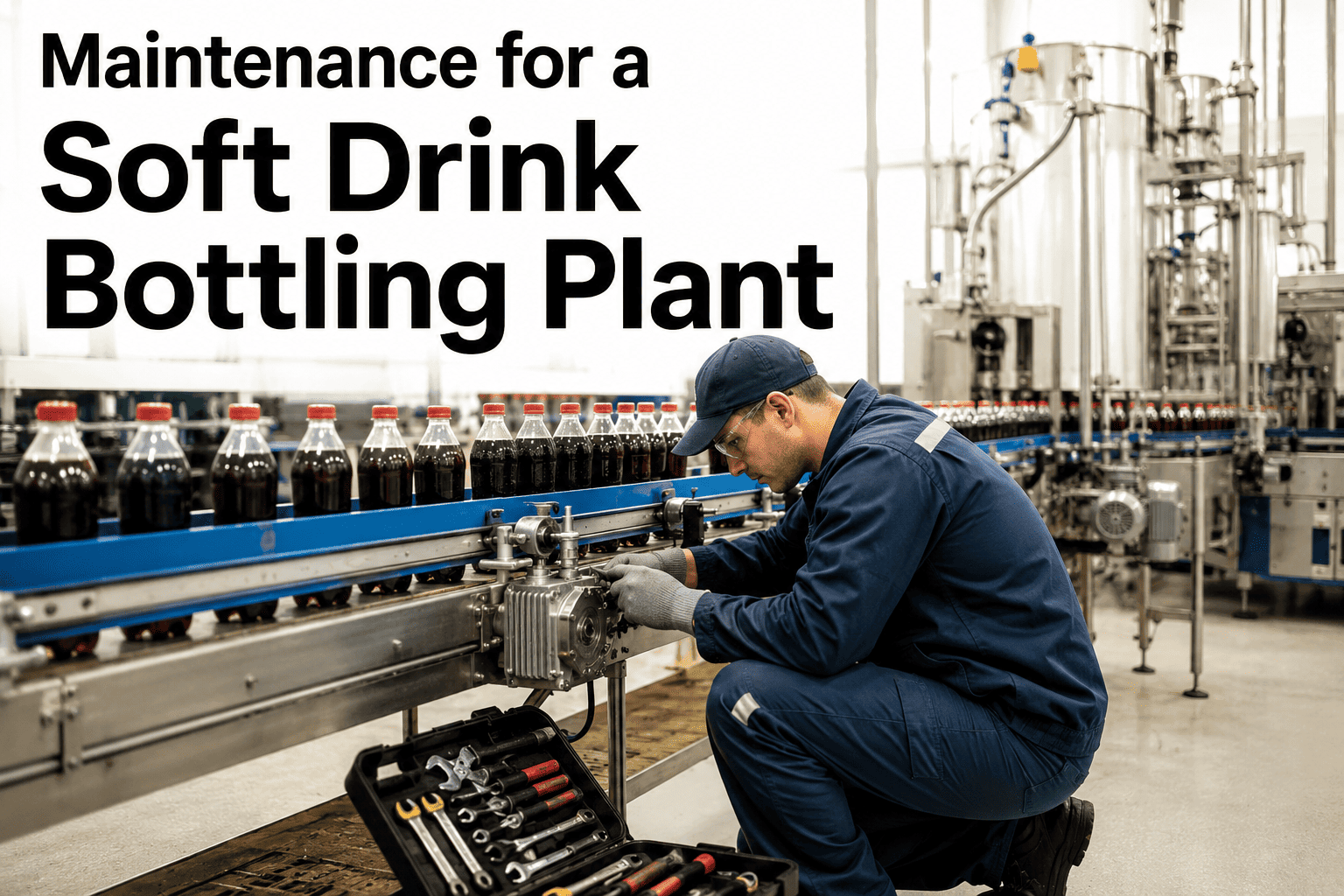
A soft drink line running at 1,200 bottles a minute has almost no room for error — a worn filler valve, a drifting carbonator, or a capper torque head out of spec can turn a shift into a quality hold before anyone notices. Most bottling plants are not fighting equipment failure so much as they are fighting invisible speed loss, the kind that never trips an alarm but quietly erodes output every single day. This guide walks through the maintenance program a modern soft drink bottling plant needs — filler and capper reliability, syrup room sanitation, carbonation control, high-speed labeling and packaging, and keg line upkeep — and how a connected CMMS keeps every one of those systems running in the healthy zone.
69%
Average OEE on a typical bottling line, against 85%+ for world-class plants
28%
Of total production loss comes from reduced running speed, not breakdowns
$20K–$30K
Cost of a single unplanned hour of downtime on a high-speed carbonated line
See Your Filler, Capper, and Carbonator Health in One Screen
Work orders, CIP logs, CO2 purity checks, and wear-part schedules — built for beverage plants, running from day one
Why a Bottling Line Loses Money Before It Ever Stops
A stopped line is obvious — alarms sound, a supervisor walks over, a work order gets written. A line running 6% slower than its rated speed all shift is invisible on the floor and devastating on the P&L. The gap between an average bottling plant and a world-class one is rarely the machinery itself; it is whether small deviations get caught before they compound into a full stop.
Reactive Plant
Filler valve replaced after a fill-weight complaint
Capper torque drift found during a customer audit
CO2 purity checked only when flavor tastes off
Line runs at 65–70% OEE, nobody sure why
CMMS-Driven Plant
Fill valve seals replaced on a defined wear interval
Capper torque head inspected on a fixed weekly check
CO2 purity logged against ISBT spec every batch
Line trends toward 82–88% OEE with a clear record
Six Systems That Decide Whether Your Line Holds Its Speed
Filler & Capper
Fill valve seals, bowl level sensors, and capper torque heads govern fill accuracy and closure integrity. A slip ring or worn seal rarely fails all at once — it drifts, and drift is what a scheduled inspection catches.
Carbonator & CO2
Carbonation is chemistry under pressure — CO2 must run at 99.9% purity and the product held near 1–4°C for consistent volumes of CO2. A mass flow meter out of calibration changes mouthfeel before it changes a number on a report.
Syrup Room & CIP
Residual sugar in an uncleaned syrup line is a growth medium for yeast and mold. CIP caustic concentration, temperature, and rinse conductivity need to be logged against a validated cycle every single time, not spot-checked.
Labeler & Packaging
High-speed labeling depends on web tension, glue temperature, and roll quality staying inside a narrow band. Vibration and current draw on the labeler drive motor tend to shift days before a visible misalignment shows up.
Keg Line
Keg washers, fillers, and racking heads run fewer cycles than bottle lines but carry higher per-unit downtime cost. Seal and valve wear tracked by cycle count, not calendar days, catches failure before a keg reaches a customer.
Pasteurizer & Cooling
Heat exchanger fouling and pump wear reduce pasteurization consistency long before a temperature excursion trips an alarm. Scheduled surface inspection protects both shelf life and energy cost.
A Maintenance Cadence Built Around Production, Not Around the Calendar
Daily
Chemical dosing performance, conductivity readings, fill-weight spot checks, and CO2 leak inspection on every shift changeover.
Weekly
Spray device and return piping inspection, capper torque verification, CO2 purity test against ISBT specification.
Monthly
Temperature and conductivity sensor calibration, proportioner drift check, filler bowl level sensor verification.
Quarterly
CIP pump performance review, heat exchanger surface inspection, chemical tank integrity check, wear-part stock audit.
Turn Your Cadence Into Templates That Run Themselves
Daily, weekly, monthly, and quarterly beverage checklists pre-built in OxMaint — assign, track, and prove compliance without a spreadsheet
What Changes When Maintenance Data Actually Gets Used
| Metric | Reactive Approach | CMMS-Driven Approach |
|---|
| Unplanned stoppages | Frequent, discovered at the line | Trending caught before failure |
| Fill & capper accuracy | Found via customer complaint | Verified on a fixed interval |
| CO2 & carbonation control | Checked when flavor is off | Logged against spec every batch |
| CIP compliance record | Paper log, hard to audit | Digital, timestamped, exportable |
| Line OEE | 65–70% average | 82–88% achievable |
99.9%
Minimum CO2 purity required to avoid off-flavors in finished product
1–4°C
Product temperature band that keeps carbonation absorption consistent
16 pts
Typical OEE gap between an average line and a world-class one
20 weeks
Time to get full predictive coverage running across a packaging line
We used to find out our capper was out of torque spec when a customer complained about a loose cap. Once we put fixed inspection intervals and CIP logging into OxMaint, our line OEE moved from the low seventies into the mid eighties within two quarters — and we finally have a clean audit trail to show it.
Plant Maintenance Lead, Regional Soft Drink Bottler
Frequently Asked Questions
Stop Losing Speed You Never See on a Report. Start Catching It Today.
Filler, capper, carbonator, and CIP checklists — pre-built for soft drink bottling plants, ready in one afternoon