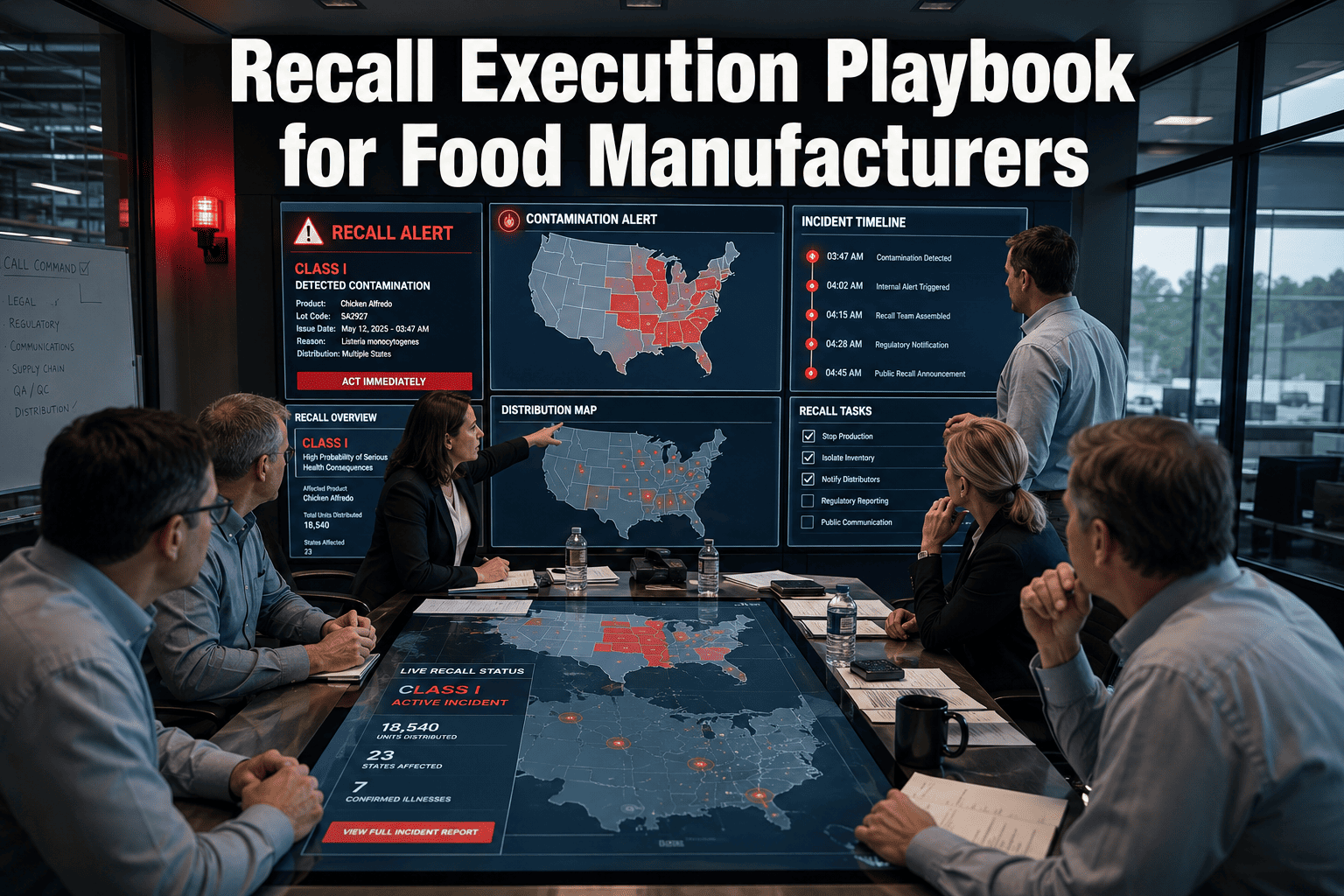
When a contaminated food product reaches consumers, the immediate question from regulators, retailers, and the public is identical: where did this ingredient come from, which batches were affected, and how fast can you pull it from shelves? For food manufacturers still relying on paper records, siloed ERP systems, and spreadsheet-based lot tracking, that answer takes days — and every hour that passes multiplies recall cost, consumer risk, and brand damage. Blockchain traceability is changing this equation. By creating immutable, distributed records of every transaction, handoff, and transformation in the food supply chain — from farm to processing facility to distribution center to retail shelf — blockchain gives food manufacturers and their supply chain partners a shared, tamper-resistant ledger that compresses recall investigation from days to hours and provides the transparency that increasingly demanding global food regulators and retail buyers require. start a free trial or book a demo to see how Oxmaint's CMMS connects maintenance data to your traceability infrastructure.
Connect Your Maintenance Records to Your Traceability Chain
Oxmaint's CMMS links equipment maintenance history, calibration records, and production work orders to your food safety and traceability infrastructure — giving you the complete picture of what happened on your equipment during every production batch.
What Is Blockchain Traceability in Food Manufacturing?
Blockchain traceability in food manufacturing is the application of distributed ledger technology to create a shared, immutable record of every ingredient origin, production step, quality checkpoint, and distribution handoff in the food supply chain. Unlike centralized databases that a single party controls and can alter, blockchain records are cryptographically linked and distributed across all supply chain participants — making the record of what happened to a food product at every step independently verifiable by any authorized party. start a free trial and see how Oxmaint's production data connects to your traceability chain.
The Farm-to-Fork Data Journey: What Blockchain Records at Each Stage
Why Current Food Traceability Systems Fail
7-Day Average Recall Investigation
FDA's 2019 CORE Network data shows the average traceback investigation for a multi-state foodborne illness outbreak takes 7–14 days using current industry traceability systems — far exceeding the 2-hour target that protects consumers and limits product scope. Paper-based and fragmented digital records are the primary cause.
Mutable Records and Data Gaps
Centralized database traceability records can be altered, accidentally or intentionally. Supply chain partners using incompatible systems create data gaps where the chain of custody is interrupted — forcing investigators to rely on reconstructed records that may not reflect what actually happened.
Multi-Party Visibility Gap
In a typical food supply chain, ingredient origin, transport, processing, and distribution records exist in separate systems operated by different companies — none of which have visibility into the others' data without a data-sharing agreement and technical integration that most supply chains have not built.
FSMA 204 and Global Regulatory Pressure
FDA's FSMA Rule 204 requires food manufacturers handling high-risk foods to maintain Key Data Elements and Critical Tracking Events in electronic, shareable formats by January 2026. UK, EU, and Australian regulators are advancing equivalent traceability requirements — creating a compliance deadline that most manufacturers are not yet positioned to meet.
The 6 Core Capabilities Blockchain Brings to Food Traceability
Immutable Audit Trail
Once recorded on a blockchain ledger, production records, test results, and supply chain events cannot be altered without leaving a cryptographic trace — creating a tamper-evident audit trail that satisfies regulatory requirements and is defensible in litigation.
Multi-Party Visibility
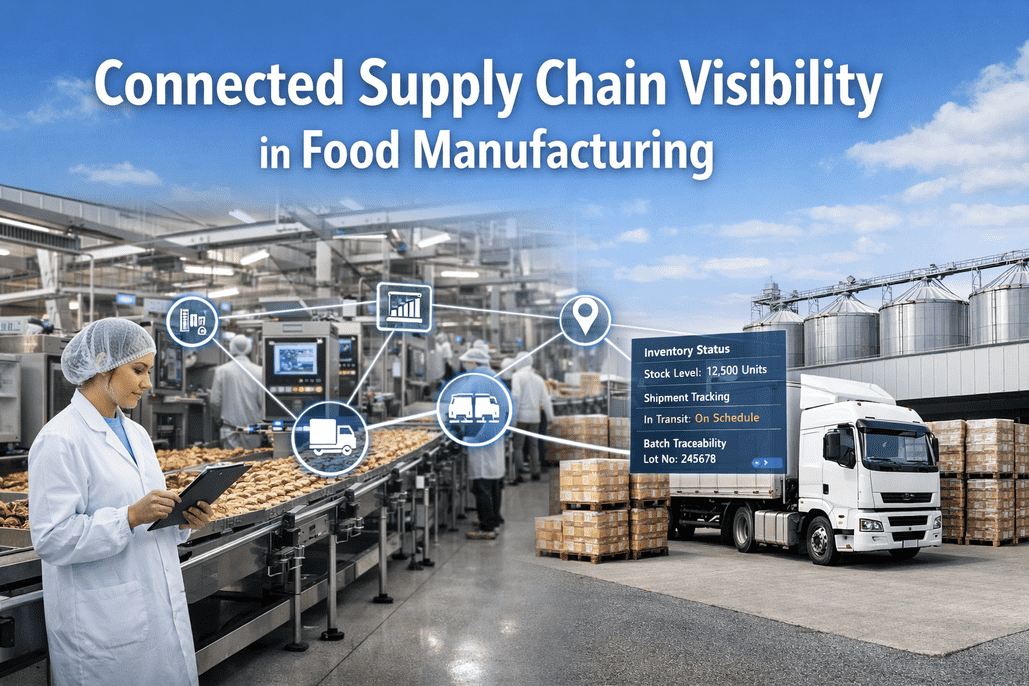
Authorized supply chain participants — farmers, processors, distributors, retailers — share a single version of the truth across the blockchain network, eliminating data reconciliation delays and enabling real-time supply chain visibility without requiring centralized data control.
Rapid Recall Precision
When a contamination source is identified, blockchain traceability narrows the affected product scope to the specific lots linked to the contamination event — reducing over-recall waste. Walmart's blockchain pilot with IBM reduced mango traceback from 7 days to 2.2 seconds.
Smart Contract Automation
Smart contracts on blockchain networks automate supply chain actions when defined conditions are met — automatically triggering QC hold notifications when incoming lot test results fail specification, or generating payment releases when delivery acceptance confirmation is recorded on-chain.
Consumer Transparency
QR codes on packaging link consumers to blockchain-verified product journey information — origin farm, production date, certification status, and cold chain history. This transparency capability commands 5–7% price premiums in premium consumer segments and significantly reduces brand damage during food safety events.
Maintenance Record Integration
Linking CMMS maintenance records to batch production data on blockchain creates a complete food safety evidence package — showing not just what ingredients were used, but what condition the equipment was in during production, including recent PM completion, calibration status, and any active work orders during the production run.
How Oxmaint Connects Maintenance to Traceability
Blockchain traceability records what happened to the product. Oxmaint's CMMS records what happened to the equipment during that production. Together, they create the complete food safety evidence package that investigators, regulators, and retailers demand during a food safety event. book a demo to see how Oxmaint's data integrates with food safety and traceability systems.
Production Batch to Equipment History
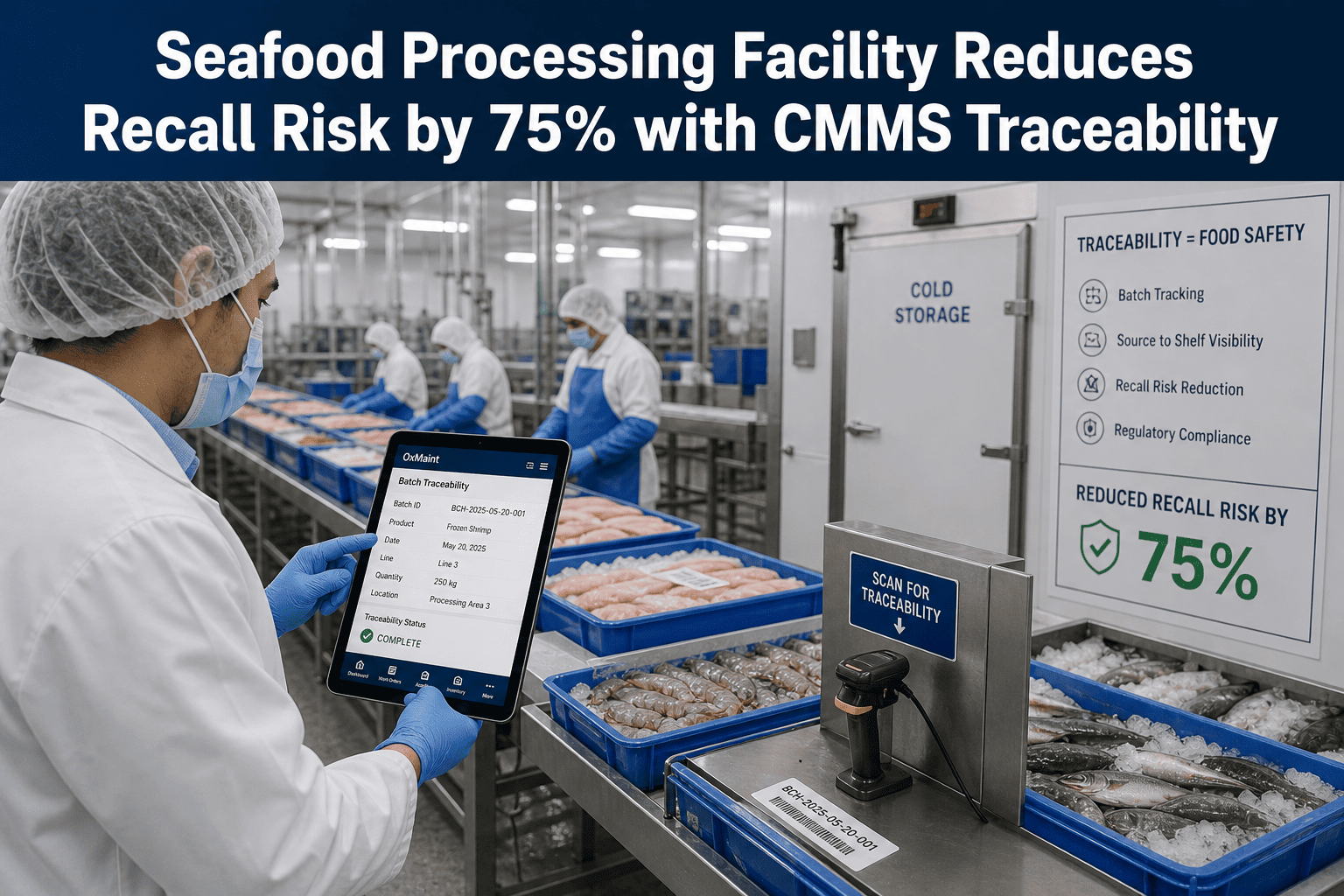
Link every production batch to the equipment used during that production run in Oxmaint — capturing PM completion status, open work orders, and calibration status at the time of production. If a batch is recalled, the equipment record provides the maintenance investigation context.
Instrument Status at Production Time
Calibration certificate status for every CCP instrument — temperature probes, flow meters, checkweighers — is maintained in Oxmaint and linkable to the production batch. A recall investigation can confirm whether calibration was current during the affected production period in seconds.
CMMS Data to Blockchain Systems
Oxmaint's API allows maintenance records, work order completion data, and asset condition information to be shared with blockchain traceability platforms — creating the maintenance-to-product chain connection that completes the farm-to-fork evidence record.
FSMA 204 Documentation Support
Oxmaint's digital work orders and asset records capture Key Data Elements required by FSMA Rule 204 in electronic, exportable format — supporting the enhanced traceability record requirements that apply to high-risk food categories by January 2026.
Traditional Traceability vs. Blockchain-Enhanced Supply Chain
The Numbers Behind Food Blockchain ROI
Frequently Asked Questions
Is blockchain traceability required by FDA or other food safety regulators?
No specific technology is mandated — but FDA FSMA Rule 204 (effective January 2026) requires food manufacturers handling high-risk foods to maintain Key Data Elements and Critical Tracking Events in electronic, shareable formats with defined retention requirements. Blockchain is the most robust technology meeting these requirements for multi-party supply chains, but compliant electronic recordkeeping systems that can share data with FDA and trading partners also satisfy the rule. UK, EU, and Australian regulators are advancing comparable enhanced traceability requirements — and major retail buyers including Walmart and Carrefour have mandated blockchain traceability participation for specific supplier categories regardless of regulatory requirements.
What food supply chain platforms are leading blockchain traceability implementation?
IBM Food Trust (built on Hyperledger Fabric) pioneered commercial food blockchain with Walmart's leafy greens mandate. SAP Logistics Business Network, Everledger, Ripe.io (acquired by GS1 US), and Te-Food are active platforms in food blockchain. GS1's EPCIS 2.0 standard provides the data exchange framework most blockchain food traceability systems are built on — enabling interoperability between different platform implementations. For manufacturers evaluating entry points, many start with GS1 EPCIS compliance before progressing to full blockchain platform participation.
How does maintenance data connect to food traceability and recall investigations?
During a food safety recall investigation, one of the standard questions regulators ask is: what was the condition of the equipment used to produce the affected lots? If a CCP instrument was out of calibration, a pasteurizer was under maintenance, or a packaging line had an active corrective action during the affected production period, that maintenance context is critical to the investigation. CMMS systems like Oxmaint that link production batch records to equipment maintenance history provide investigators with immediate access to this context — demonstrating that maintenance was current (exonerating the manufacturer) or identifying maintenance-related contributing factors (enabling rapid corrective action and recall scope definition).
What is the realistic implementation timeline for blockchain traceability in a food manufacturing facility?
A pilot blockchain traceability implementation for a single product line or supply chain tier typically requires 3–6 months — covering platform selection, GS1 identifier setup, data mapping, supplier onboarding, and system integration testing. Full multi-product, multi-tier implementation across a food manufacturer's portfolio typically takes 12–24 months depending on supply chain complexity, ERP integration requirements, and supplier readiness. The critical parallel investment is ensuring that internal production data — lot records, QC results, equipment maintenance history — is captured in electronic, exportable formats in systems like CMMS and LIMS before attempting blockchain integration. Blockchain amplifies data quality; it cannot compensate for poor underlying data systems.
Build the Maintenance Data Foundation Your Traceability Program Needs
Blockchain traceability is only as strong as the data it records. Oxmaint gives food manufacturers the digital maintenance records, batch-linked asset history, and calibration documentation that complete the production evidence chain — making your traceability program genuinely defensible from farm to fork.