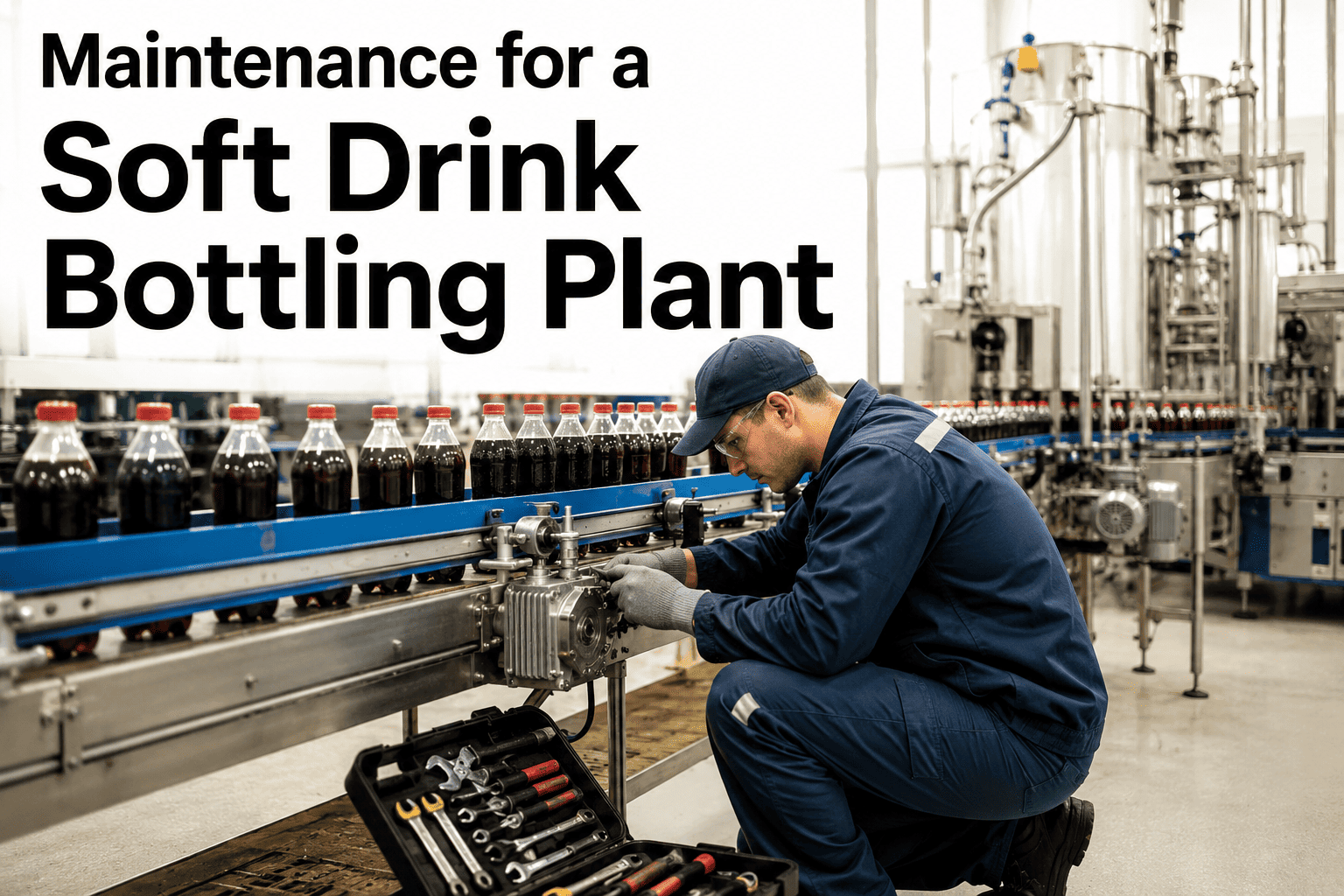
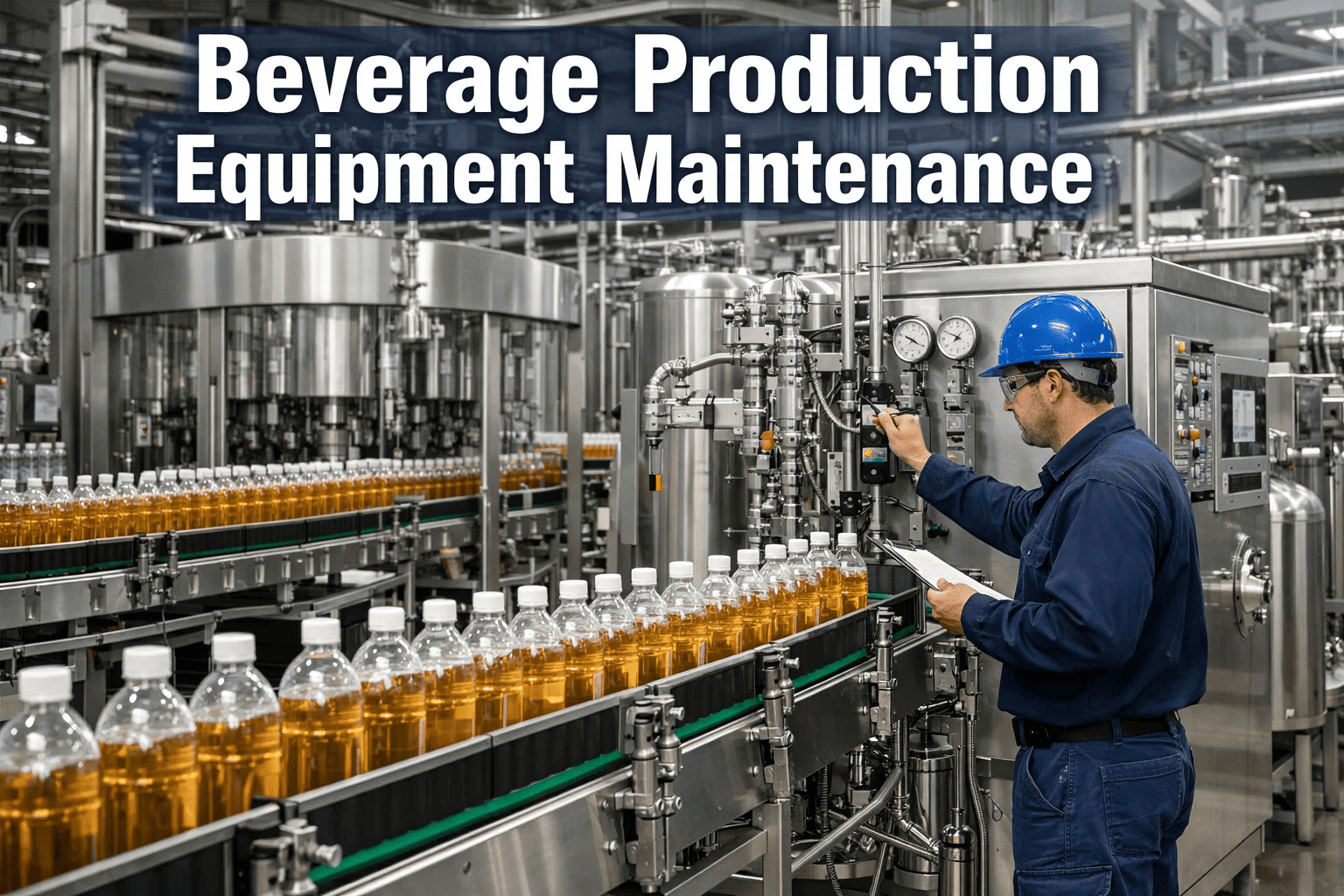
Modern CSD Plant operations demand maintenance programs that are as disciplined as the production processes they support. Equipment failures in food and beverage manufacturing do not just create downtime — they create regulatory exposure, product loss, and audit findings that shut down bonded production faster than any mechanical issue alone. Facilities that centralise their preventive maintenance, calibration records, and sanitation documentation in a single CMMS platform eliminate the fragmentation that turns minor maintenance gaps into major compliance events. OxMaint is built specifically for this challenge — giving maintenance and operations teams one platform that manages PM schedules, equipment records, and regulatory documentation simultaneously, accessible from the production floor on mobile devices. Ready to see what structured maintenance looks like for your operation? Book a demo to walk through a CSD Plant maintenance workflow, or start a free trial and register your first assets today.
Carbonated Soft Drink Plant Maintenance: CMMS for Proportioners, Carbonators, Syrup Rooms, and Filling Lines
Maintain beverage proportioners, carbonators, syrup rooms, and CSD filling lines with CMMS-tracked Brix and CO2 verification, CIP validation records, and FDA-compliant preventive maintenance schedules.
What Is CSD Plant Maintenance
Carbonated soft drink plant maintenance is defined by two non-negotiable requirements operating simultaneously — product quality consistency and food safety compliance. Proportioners delivering off-spec Brix measurements produce consumer-detectable quality failures within hours. Carbonators delivering out-of-tolerance CO2 volumes create flat product that fails shelf-life expectations. Both systems require calibration verification on every production run with records that satisfy both quality assurance and FDA audit requirements. The syrup room adds a third dimension — sugar solution handling equipment and concentrate lines must be sanitised on validated schedules, with conductivity verification at every CIP cycle confirming residue removal before production restarts. OxMaint manages all three simultaneously — start a free trial and configure your first CSD asset registry today.
High-speed CSD filling lines represent the largest maintenance engineering challenge in beverage manufacturing — filling valve seals, star wheel bearings, conveyor chains, and inspection equipment all degrade on different cycles at different rates across a machine with 50-100 individual serviceable components. Without a CMMS tracking count-based and calendar-based PM triggers simultaneously, maintenance teams inevitably fall behind on some components while over-servicing others. The result is predictable: seal failures during production runs, rejected product from carbonation loss, and line stoppages that cascade into shift-level OEE impacts. Teams that implement OxMaint for their filling lines recover those OEE points within the first quarter — book a demo to see filling line PM management in action.
See How OxMaint Manages Every CSD Plant Asset — From PM Schedules to Compliance Records
Configure your asset registry, set up maintenance schedules, and generate your first compliance report in under 30 minutes. No implementation project. No consultant. Just results.
Core CSD Plant Maintenance Concepts
Where CSD Plant Maintenance Programs Break Down
How OxMaint Manages Your CSD Plant Equipment
Reactive vs. Planned: The CSD Plant Maintenance Comparison
The difference between reactive and planned maintenance in a CSD Plant operation is not just downtime — it is the difference between producing a regulatory audit trail that satisfies inspectors and producing findings that halt production. Every row below represents a decision point that separates high-performing maintenance programs from facilities that manage compliance by accident rather than design.
| Maintenance Activity | Reactive / Paper-Based | Planned / OxMaint |
|---|---|---|
| Proportioner Brix records | Shift log, often incomplete | Digital record per run with deviation alerts |
| Carbonator plate cleaning | When efficiency visibly drops | Volume-triggered PM with water hardness factor |
| Filler valve seal tracking | Replaced after failure | Count-based PM before failure risk threshold |
| Syrup room CIP records | Handwritten log with gaps | Complete digital record with conductivity validation |
| FDA audit package prep | 2-4 days assembling paper records | Compiled in under 10 minutes from CMMS |
| Filling line OEE correlation | No PM-to-OEE linkage | Maintenance history linked to OEE data by line |
ROI and Results: What CSD Plant Teams Achieve with OxMaint
These are not projections from a vendor brochure — they are outcomes reported by food and beverage operations teams that implemented structured CMMS-based maintenance programs. The facilities that achieve these numbers share one characteristic: they stopped managing maintenance reactively and built PM programs that run automatically, document themselves, and alert teams before failures occur. Ready to put a number on your own opportunity — start a free trial and begin tracking your baseline, or book a demo to see the ROI calculation for your specific operation.
Frequently Asked Questions
Does OxMaint track Brix and CO2 verification records for FDA compliance
Yes — OxMaint maintains complete records for every Brix and CO2 verification event, linked to the production batch, proportioner or carbonator asset, timestamp, and technician sign-off. When an FDA inspector requests calibration and quality verification records for a specific production date or product line, you generate the complete documentation instantly. The system also flags out-of-tolerance readings immediately and generates corrective action work orders — so deviations are documented, addressed, and closed within the same record chain rather than existing as undocumented verbal corrections.
How does OxMaint manage filling valve seal replacement programs
OxMaint tracks seal cycle counts on every filling valve against a configurable replacement threshold — typically set at 80% of manufacturer-rated seal life. When a valve approaches the threshold, OxMaint generates a replacement work order scheduled to the next planned maintenance stop. This prevents seal failures during production runs, which on a high-speed CSD line at 1,200 BPM create immediate product loss, foam overrun, and potential contamination events. Post-replacement leak tests document seal integrity before the line restarts, completing the maintenance record for that valve.
Can OxMaint handle CSD plants with multiple filling lines and product types
Yes — OxMaint is built for multi-line, multi-product CSD operations. Each filling line, proportioner, and carbonator is an individual asset with its own PM schedule, calibration records, and maintenance history. Product changeover checklists ensure that specification changes — different Brix targets, different CO2 volumes, different seal configurations — are documented as production transitions. Portfolio-level reporting shows OEE, PM compliance, and maintenance cost by line, by shift, and by product — giving operations managers the visibility to allocate maintenance resources where they have the highest production impact.
How quickly can OxMaint be live for a CSD plant operation
Most CSD plants complete their core asset registry — filling lines, proportioners, carbonators, syrup room, water treatment, and inspection equipment — within 2-3 weeks. Pre-built beverage PM templates accelerate the configuration of Brix verification schedules, CIP records, and filling valve programs. Your first FDA-compliant PM and calibration records begin accumulating from day one. By your next regulatory inspection, you will have a complete digital maintenance history covering the entire period since implementation — with no binder assembly required.
Stop Losing OEE Points and FDA Compliance to Deferred PM. OxMaint Puts Every Seal, Every Calibration, and Every CIP Cycle in One Auditable System.
Proportioner Brix tracking. Carbonator CO2 records. Filling valve seal programs. Syrup room CIP documentation. FDA-ready in one platform your plant team runs from the production floor.
- Count-based filling valve seal PM before failure risk accumulates
- FDA-compliant Brix, CO2, and CIP records compiled in minutes
- OEE and maintenance history linked by line for root-cause analysis
Used by beverage operations managing 500-50,000 asset records. Live in weeks, not months.