Modern Distillery operations demand maintenance programs that are as disciplined as the production processes they support. Equipment failures in food and beverage manufacturing do not just create downtime — they create regulatory exposure, product loss, and audit findings that shut down bonded production faster than any mechanical issue alone. Facilities that centralise their preventive maintenance, calibration records, and sanitation documentation in a single CMMS platform eliminate the fragmentation that turns minor maintenance gaps into major compliance events. OxMaint is built specifically for this challenge — giving maintenance and operations teams one platform that manages PM schedules, equipment records, and regulatory documentation simultaneously, accessible from the production floor on mobile devices. Ready to see what structured maintenance looks like for your operation? Book a demo to walk through a Distillery maintenance workflow, or start a free trial and register your first assets today.
Distillery Maintenance: CMMS-Managed PM for Pot Stills, Column Stills, Mash Tuns, and TTB Documentation
Keep pot stills, column stills, mash tuns, spirits receivers, and barrel programs running with documented PM schedules, copper care protocols, and TTB-compliant production records in a single digital platform.
What Is Distillery Maintenance
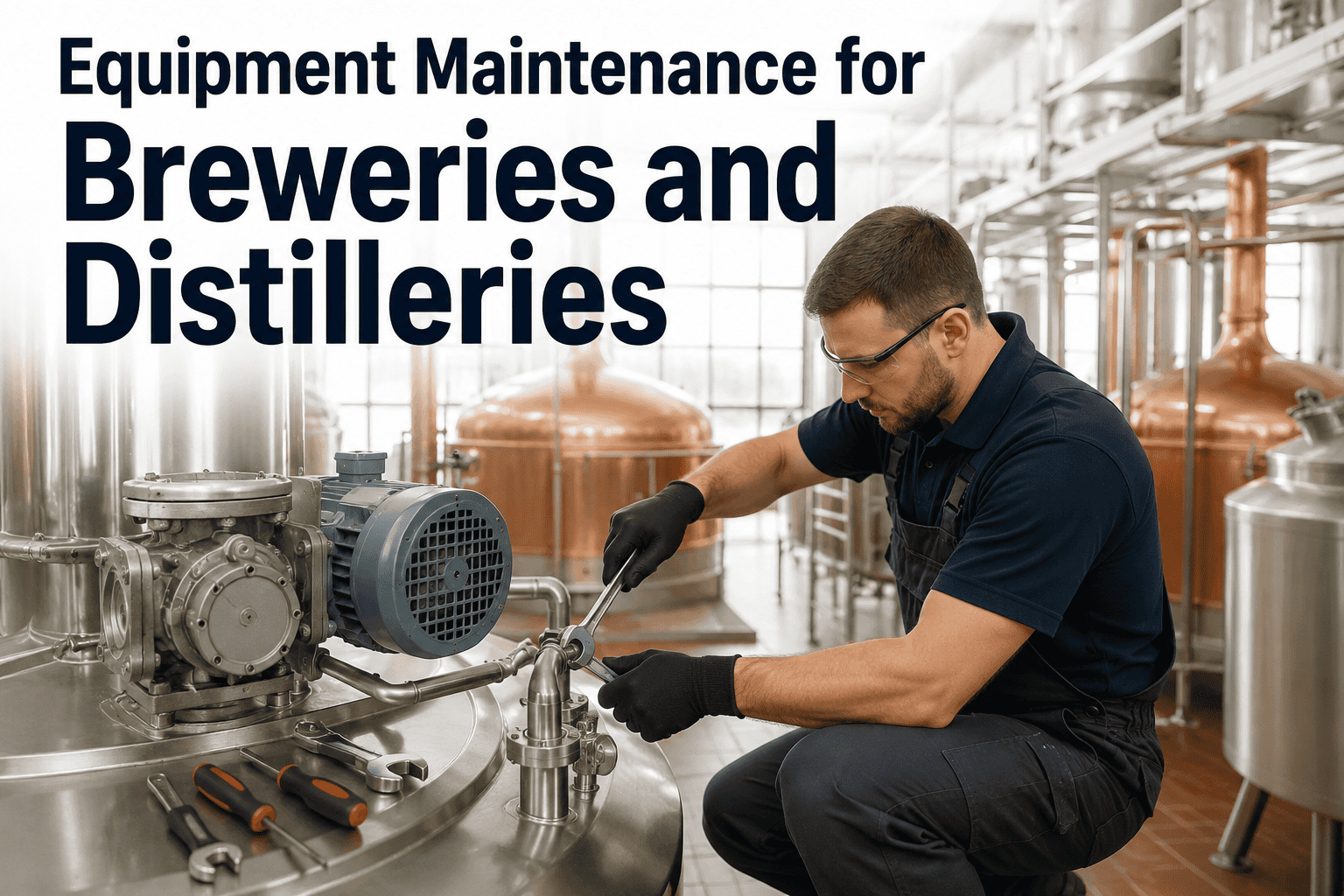
Distillery maintenance sits at the intersection of precision engineering and regulatory compliance — every piece of production equipment from grain intake through barrel filling must be maintained to manufacturer specification and documented to TTB requirements simultaneously. Pot still copper care is unlike any other food-plant maintenance task: copper wall thickness must be monitored, soldered seams inspected after every thermal cycle, and lyne arm alignment verified to ensure correct reflux ratios that define spirit character. Column still maintenance involves tray or packing condition inspection, downcomer clearance verification, and reboiler heat exchanger cleaning on cycles that directly affect distillation efficiency. Teams running OxMaint eliminate the disconnection between still performance and maintenance records — start a free trial and register your still fleet today.
Spirits receivers and intermediate vessels carry additional TTB significance — accurate calibration records, gauge table verification, and transfer documentation must be maintained for every production run. A spirits receiver with an undocumented calibration gap creates a TTB compliance problem regardless of how well the still was maintained. OxMaint links every calibration event, production transfer, and spirits gauge reading to the equipment record with timestamps and technician sign-offs that satisfy TTB audit requirements. Barrel program management — including fill records, warehouse location, and aging documentation — integrates into the same platform. Ready to see how it works across your operation — book a demo built around your specific still configuration.
See How OxMaint Manages Every Distillery Asset — From PM Schedules to Compliance Records
Configure your asset registry, set up maintenance schedules, and generate your first compliance report in under 30 minutes. No implementation project. No consultant. Just results.
Core Distillery Maintenance Concepts
Where Distillery Maintenance Programs Break Down
How OxMaint Manages Your Distillery Equipment Fleet
Reactive vs. Planned: The Distillery Maintenance Comparison
The difference between reactive and planned maintenance in a Distillery operation is not just downtime — it is the difference between producing a regulatory audit trail that satisfies inspectors and producing findings that halt production. Every row below represents a decision point that separates high-performing maintenance programs from facilities that manage compliance by accident rather than design.
| Maintenance Activity | Reactive / Paper-Based | Planned / OxMaint |
|---|---|---|
| Pot still copper inspection | Visual check, undocumented | Post-run checklist with wall thickness trend |
| Column tray condition | Inspected when fouling is obvious | Cycle-count PM with efficiency correlation |
| Spirits receiver calibration | Paper log, often incomplete | Digital TTB record with 30-day advance alert |
| Condenser fouling detection | Noticed when proof drops | Temperature differential trending — weeks early |
| Barrel fill records | Handwritten barrel cards | Digital records linked to TTB production lot |
| Audit package assembly | 3-5 days before TTB inspection | Compiled in under 10 minutes from CMMS |
ROI and Results: What Distillery Teams Achieve with OxMaint
These are not projections from a vendor brochure — they are outcomes reported by food and beverage operations teams that implemented structured CMMS-based maintenance programs. The facilities that achieve these numbers share one characteristic: they stopped managing maintenance reactively and built PM programs that run automatically, document themselves, and alert teams before failures occur. Ready to put a number on your own opportunity — start a free trial and begin tracking your baseline, or book a demo to see the ROI calculation for your specific operation.
Frequently Asked Questions
Does OxMaint support TTB documentation for spirits receivers and production records
Yes — OxMaint maintains the specific record types TTB requires for bonded distillery operations: spirits receiver calibration records with gauge table verification dates, dip rod calibration history, and transfer documentation linked to each production run. Every record carries a timestamp and technician sign-off that satisfies TTB audit requirements. When an inspector requests the calibration history for a specific receiver or the production documentation for a specific lot, you generate it instantly rather than compiling binders. The system also alerts 30 days before calibration due dates so no production run uses equipment with a lapsed calibration record.
How does OxMaint track pot still copper condition over time
OxMaint captures copper wall thickness measurements, soldered seam condition scores, and lyne arm alignment data as part of post-run inspection checklists. Each measurement set creates a data point that the system uses to trend copper condition over distillation cycles. When wall thickness readings begin declining at a rate that indicates fatigue development, OxMaint generates a priority work order for further assessment before the next run — converting a potential catastrophic failure into a planned inspection event. Photos of seam conditions attach to each inspection record, giving your coppersmith a complete visual history.
Can OxMaint manage a barrel program across multiple warehouses
Yes — OxMaint supports barrel program management across multiple warehouse locations with lot-level traceability. Fill records, barrel condition scoring, rotation schedules, and bung inspection history are all managed in the platform and linked to your TTB production records. When you need to trace a specific lot from grain delivery through distillation, barreling, aging, and bottling, OxMaint provides that complete chain. Multi-warehouse aging programs with hundreds or thousands of barrels particularly benefit from centralised tracking versus the barrel card and spreadsheet systems most craft distilleries use today.
How quickly can we configure OxMaint for our distillery
Most distilleries complete their core asset registry — stills, mash tuns, spirits receivers, fermenters, barrel program, and utility systems — within 2-3 weeks using pre-built distillery PM templates. Your first TTB-compliant calibration schedules and post-run inspection checklists are live within the first month. There is no heavy implementation project — your head distiller or maintenance lead configures the system directly. By your next TTB inspection, you will have a complete digital record for the entire period since implementation.
Every Still Run Documented. Every Calibration Verified. Every Barrel Traced. TTB-Ready Before the Inspector Calls.
Pot still copper condition trending. Column still tray PM. Spirits receiver calibration records. Barrel program traceability. All in one platform your distillery team runs from the production floor.
- Post-run still inspection records with copper thickness trends
- TTB-ready calibration and production records compiled in minutes
- Barrel program management from fill to bottling across every lot
Live in weeks, not months. No consultant required. Works across multi-site distillery portfolios.