Equipment Maintenance for Breweries and Distilleries
By Corin Hale on July 21, 2026
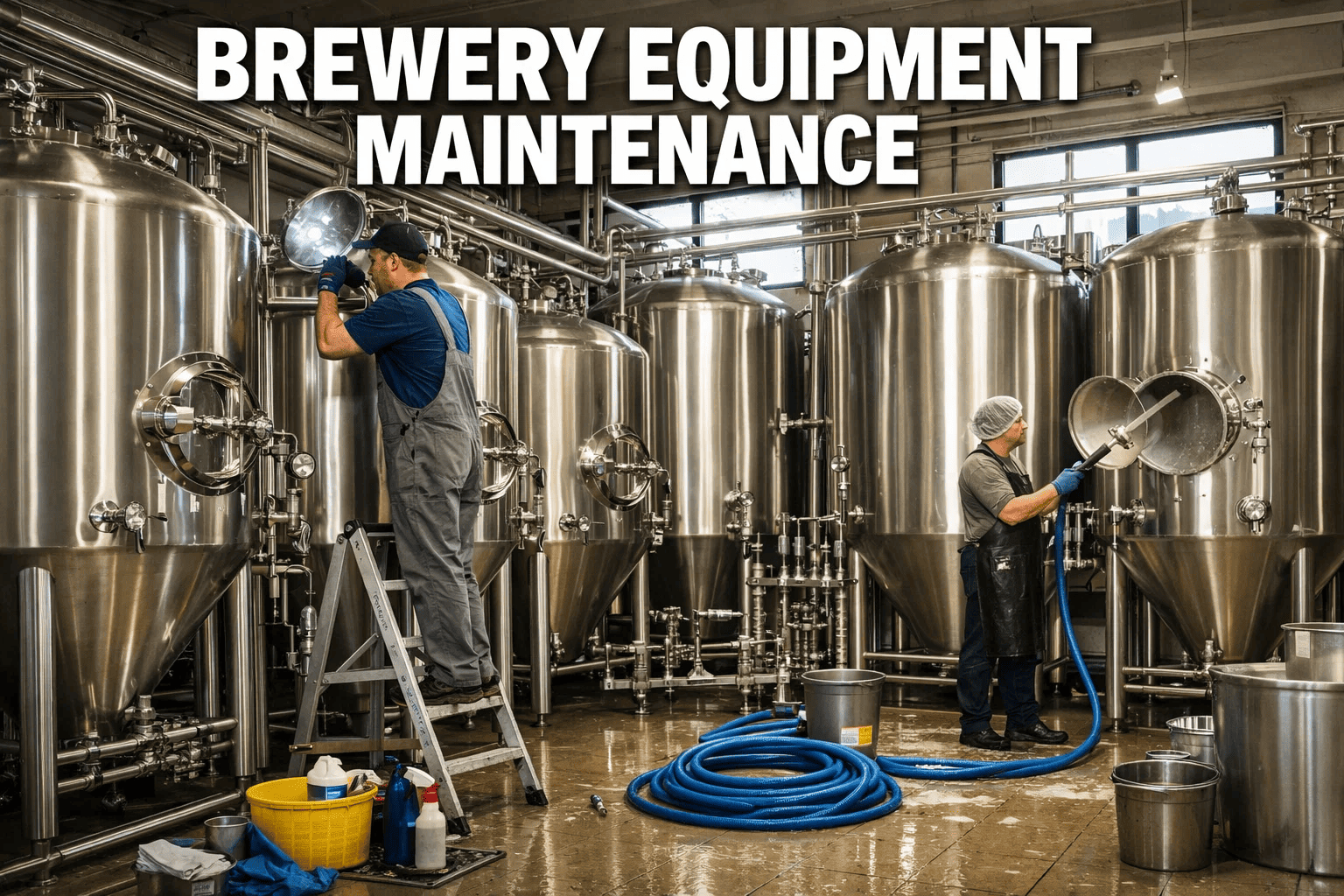
Breweries and distilleries run two very different processes under one roof — the biology of fermentation on one side, the thermal precision of distillation on the other — and a single missed maintenance task in either area can spoil a batch that took weeks to build. A stuck CIP cycle, a drifting thermometer, or a worn PRV gasket does not just cost downtime; it can trigger contamination, off-flavors, or a safety incident that shuts a tank down for days. This guide covers fermentation tank maintenance, mash tun and still upkeep, filtration and packaging reliability, and the maintenance program structure that keeps both sides of a beverage plant running batch after batch, and OxMaint builds PM schedules and CIP validation records for every fermenter, mash tun, still, and packaging asset on the floor.
Cellar to Still House, One Schedule
Stop Chasing CIP Records Across Paper Logbooks
Fermenter PM, mash tun descaling, still gasket tracking, and packaging line checks — mobile work orders for cellar and maintenance staff, built for the brewery and distillery floor.
Average cost of a single contaminated batch loss at a mid-size commercial brewery
34%
Of brewery quality defects trace back to CIP system failures or deferred sanitation maintenance
4.8x
Higher cost of reactive brewery and distillery equipment repair versus scheduled maintenance
The Logbook Blind Spot — Why Bad Cleans Look Identical to Good Ones
A paper logbook entry that reads "Tank 4 — cleaned Tuesday" looks the same whether the caustic wash hit temperature for the full cycle or whether someone cut it short because the next brew was waiting. Without a time-stamped record of temperature, concentration, and contact time, a cellar team cannot tell a validated clean from a rushed one until a batch comes back contaminated or a tasting panel flags an off-flavor weeks later.
What a Paper Logbook Shows
Tank 4 — cleaned Tuesday, initialed
Still #2 — rinsed after run
Mash tun — descaled, no date logged
No temperature, no concentration, no contact time, no proof the clean actually validated.
>
What a CIP Validation Record Shows
Tank 4 — caustic 68°C, 22 min, conductivity confirmed
Still #2 — rinsed 80°C, PRV checked, gasket logged OK
Mash tun — acid descale, ATP swab passed
Every value time-stamped, every asset traceable, audit-ready in one export.
Four Equipment Areas That Decide Batch Quality
Brewery and distillery maintenance is not one program — it is four distinct disciplines running in parallel, each with its own failure modes, cleaning chemistry, and inspection points. Miss any one of the four and the other three cannot save the batch.
Cellar
Fermentation Tank Maintenance
Cellar tanks should be cleaned within 24 hours of emptying and sanitized within 4 hours of product contact. The validated CIP sequence runs pre-rinse, caustic wash at 60–85°C for 15–30 minutes, intermediate rinse, an acid pass for mineral scale, and a no-rinse sanitizer before refill. PRV and VRV testing on a documented schedule prevents the vacuum implosions that follow rapid crash-cooling.
Brewhouse / Mash
Mash Tun Preventive Maintenance
Beer stone and mineral buildup on the mash tun's heating jacket reduce heat transfer long before anyone notices lower extraction rates. An acid-based descale on a schedule tied to local water hardness, plus routine checks on the agitator drive and jacket seals, keeps starch conversion consistent from batch to batch.
Still House
Still Equipment Upkeep
Stills should be rinsed with hot water immediately after each run, followed by a caustic cycle to break down residual proteins. Copper stills need a citric acid or diluted PBW pass to clear copper salts and prevent the sulfur off-notes that build up on a dirty surface — never a chlorine-based cleaner, which pits stainless steel and etches copper. High-heat gaskets on the pot and column are wear items worth replacing on an annual schedule.
Packaging
Filtration & Packaging Reliability
Filter differential pressure trending signals membrane life long before a catastrophic blow-through mid-run. On the bright tank side, carbonation stone condition and pressure transducer calibration protect finish quality. At the filler, dissolved oxygen pickup, CO2 counter-pressure, capper torque, and seal integrity are the four variables that decide whether a clean beer or spirit survives packaging without oxidizing.
The Maintenance Cadence — Daily to Quarterly
A brewery or distillery maintenance program only works when tasks are tied to a fixed rhythm instead of "whenever there's time." The cadence below reflects how cellar, brewhouse, still house, and packaging tasks stack across a typical production week.
Daily
Rinse, Sanitize, Visual Checks
Empty tanks rinsed within 24 hours, sanitized within 4 hours of product contact. Stills rinsed hot immediately after each run. Visual PRV, gauge, and thermometer spot checks logged on every active vessel.
Weekly
CIP Validation Review
ATP swab and conductivity results reviewed against target ranges. Elastomer and gasket condition inspected on every vessel that ran a CIP cycle that week, with wear items flagged before failure.
Monthly
Full Sanitize & Descale
Acid descale cycle run on schedule tied to water hardness. Still cooling fans and electrical connections inspected. All fluid-contact surfaces on commercial lines get a full sanitize pass regardless of run frequency.
Quarterly
Calibration & Compliance Export
PRV and VRV load testing, thermometer and pressure transducer calibration, coolant and CIP line descale. Compliance record package exported for FSMA or TTB audit readiness.
The Three Variables Every CIP Cycle Depends On
A clean-in-place cycle validates or fails based on three interacting variables — temperature, time, and chemical concentration. Get any one wrong and the cycle either leaves soil behind or damages the vessel it was meant to protect.
Under 60°C
Under-Clean Risk
60–85°C, 15–30 min
Validated Range
Above 85°C
Surface Damage Risk
Under-Clean Risk
Low temperature or short contact time leaves organic soil and biofilm behind. Shows up as failed ATP swabs and, eventually, an off-flavor complaint or contaminated batch.
Validated Range
The documented target for most fermenter and mash tun caustic cycles — stable temperature, correct concentration, and full contact time, confirmed with conductivity or ATP verification.
Surface Damage Risk
Extended exposure above the validated range accelerates gasket wear, degrades seals, and wastes chemical and energy without improving the clean.
Reactive Repair Costs 4.8x More
Turn CIP Cycles Into Time-Stamped, Audit-Ready Records
Temperature, concentration, and contact time logged automatically against the validated range for every tank, tun, and still — no more guessing which clean actually held.
Recommended cellar tank cleaning window after emptying
4 hrs
Maximum window between clean and sanitize before refill
We used to find out a CIP cycle had run short when the next batch came back cloudy. Now every wash on every fermenter, mash tun, and still is logged against the validated range automatically, and the compliance export that used to take a full day of digging through logbooks takes about five minutes.
Cellar best practice is cleaning within 24 hours of emptying and sanitizing within 4 hours of product contact. Waiting longer lets residue harden and increases contamination risk on the next fill.
Chlorine-based cleaners are the leading cause — even small amounts trigger pitting corrosion that permanently damages the surface. Chlorine-free sanitizers like peracetic acid protect the vessel over its full service life.
Copper reacts with chlorine and acidic residue left too long, causing etching and sulfur off-notes in the next run. A citric acid or diluted PBW pass after every run keeps copper clean without damaging the surface that gives spirits their character.
FSMA classifies breweries as food facilities requiring timestamped PM, CIP validation, and sanitation records, while distilleries need still gasket integrity and thermometer calibration logs for TTB. Book a demo to see the compliance export built for both.
Brewery & Distillery Maintenance — OxMaint
Protect Every Batch From Mash to Bottle
Fermenter PM, CIP validation, still gasket tracking, and packaging line reliability — one system for cellar, brewhouse, and still house.