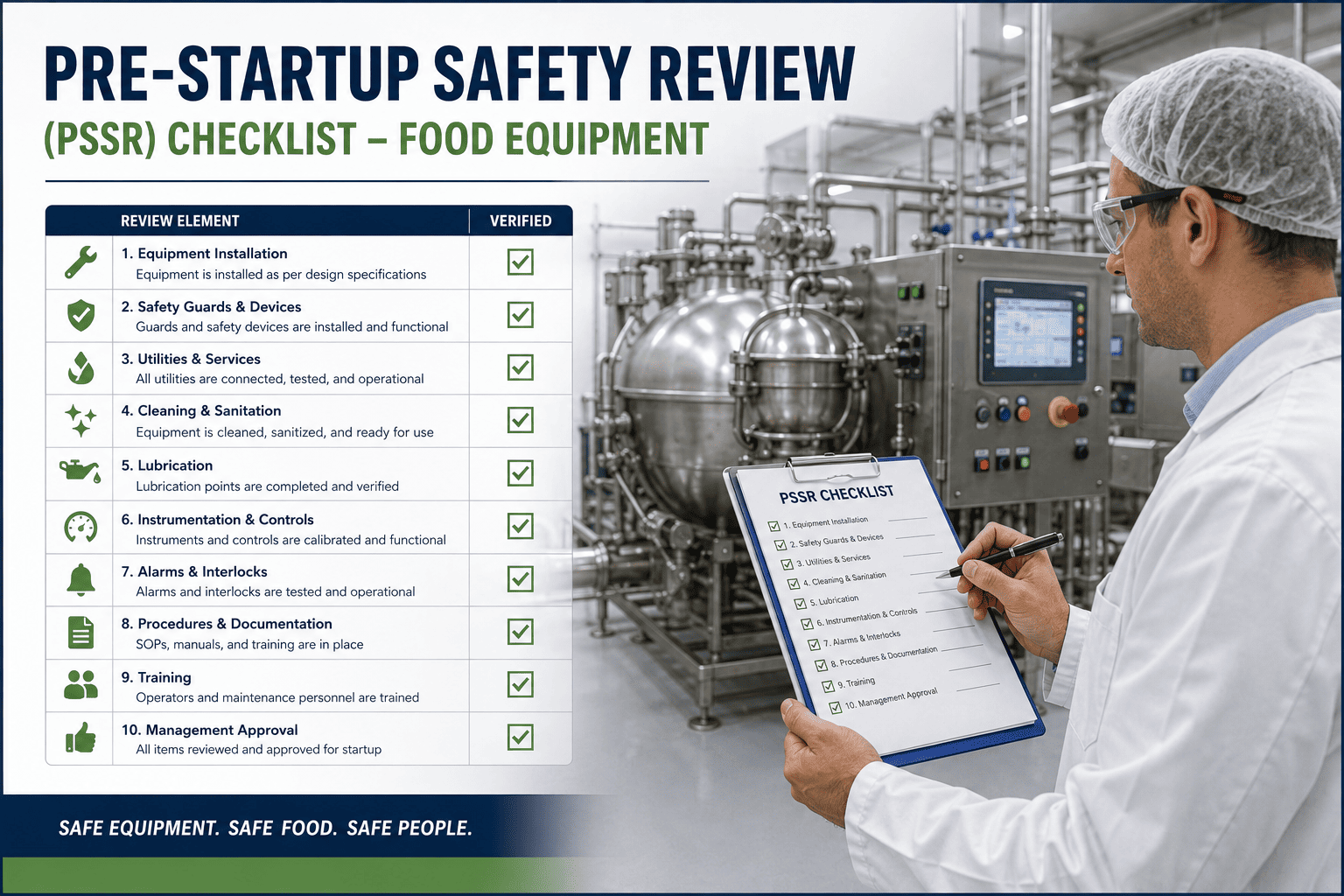
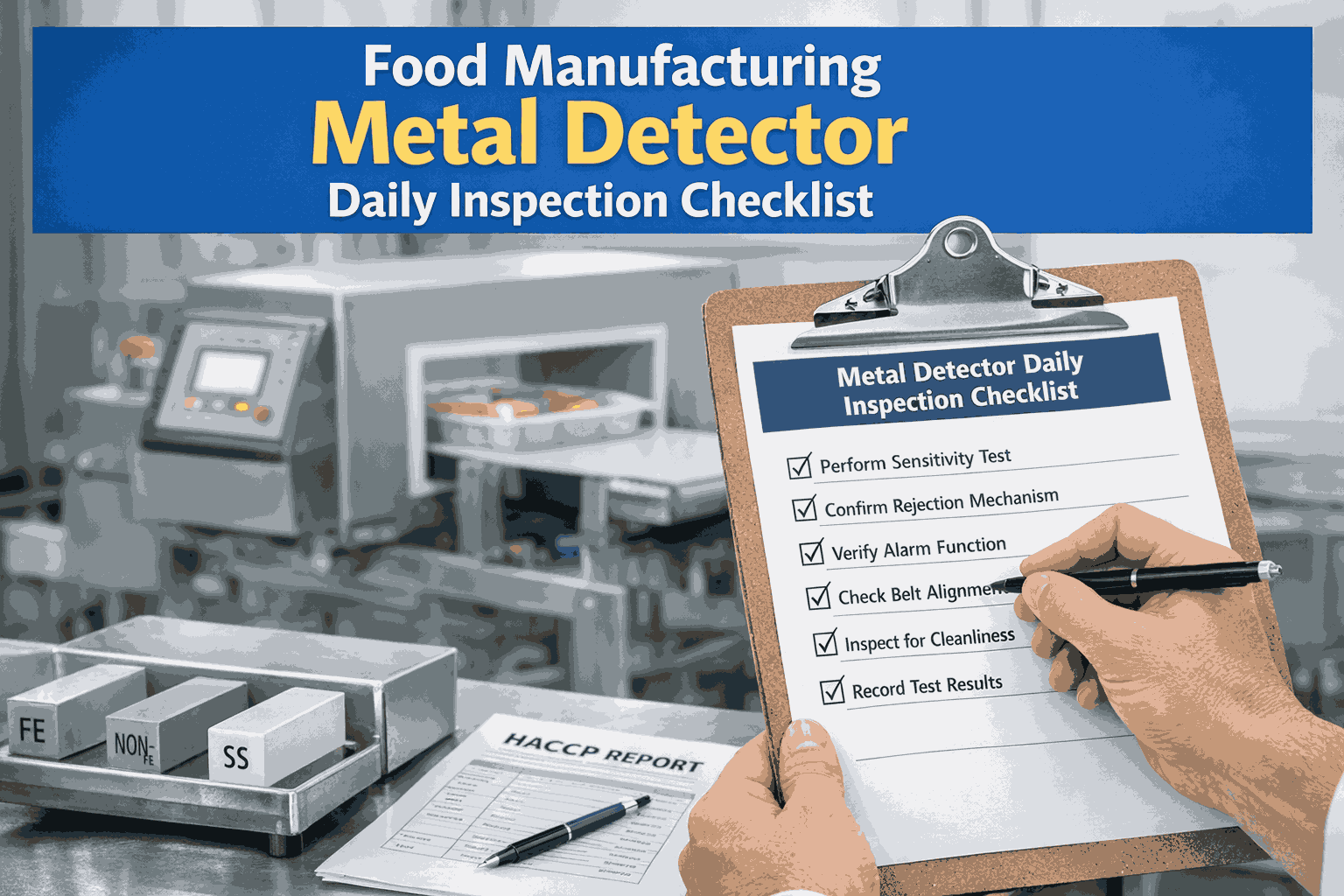
Food manufacturing facilities operate under constant scrutiny — every production shift begins and ends with the condition of equipment, surfaces, and processing zones. A structured food plant sanitation pre-operational inspection checklist gives QA teams a repeatable, defensible process to verify that sanitation has been performed correctly before any food is processed. From visual surface inspections and equipment disassembly verification to ATP bioluminescence testing and authorized production release sign-off, each step in the pre-op process protects product integrity and helps facilities maintain compliance with FSMA, SQF, BRC, and customer food safety requirements.
Automate your sanitation pre-op inspection programSchedule pre-operational checks, capture ATP results, manage QA sign-offs, and generate timestamped audit-ready records — across every line, zone, and shift.
Before beginning the physical inspection, verify that the inspection team is equipped, zones are properly staged, and all sanitation activities have been completed and documented.
Improperly reassembled equipment is one of the most common sources of pre-op failures and foreign body contamination risk — verify disassembly records and physical reassembly status before inspecting surfaces.
3. Visual Surface Inspection — Food-Contact Zones
Visual inspection of food-contact surfaces is the primary method for detecting residue, soil, and cleaning failures before production begins. Inspect systematically and document all findings with specific location references.
4. Non-Food-Contact Surface & Environmental Zone Inspection
Non-food-contact surfaces and the surrounding production environment contribute to cross-contamination risk — especially in facilities subject to environmental pathogen monitoring programs.
5. ATP Bioluminescence Testing & Microbiological Verification
ATP testing provides rapid, objective verification that sanitation has achieved acceptable cleanliness levels on food-contact surfaces — results must be recorded before production release authorization.
6. QA Inspector Sign-Off & Production Release Authorization
The pre-operational inspection is only complete when a qualified QA inspector has reviewed all findings, confirmed acceptability, and formally authorized production to begin — this authorization must be documented.
Pre-operational inspection data becomes a powerful quality management tool when trended over time — patterns in failures, recurring deficiencies, and ATP result trends all signal systemic sanitation issues that require corrective action at the program level.
Ready to streamline your food plant pre-op inspection process?OxMaint auto-schedules pre-operational inspections at the correct frequency, captures ATP results digitally, enforces QA sign-off workflows, and generates complete timestamped audit records — across every shift and production line.
Frequently Asked Questions About Food Plant Sanitation Pre-Operational Inspections
1. What is a pre-operational inspection in a food manufacturing plant?
A pre-operational inspection is a systematic verification process performed by a qualified QA inspector before each production run to confirm that all food-contact and non-food-contact surfaces have been properly cleaned, sanitized, and are free of residue, chemical contamination, pest activity, and equipment deficiencies. Successful completion and QA sign-off is required before production is authorized to begin.
2. How does ATP testing support pre-operational inspection programs?
ATP bioluminescence testing provides an objective, rapid, and quantitative measure of organic residue on food-contact surfaces — detecting adenosine triphosphate present in food residues, bacteria, and other biological material. When ATP results exceed the facility's established action limits, corrective re-sanitation is required before production release, providing an evidence-based gatekeeping mechanism that complements visual inspection.
3. Who is responsible for authorizing production release after a pre-op inspection?
Production release authorization must be granted by a qualified QA inspector who has personally verified all pre-op criteria — visual inspection, ATP testing, equipment reassembly, and zone clearance. The inspector's signature and timestamp on the pre-op record serves as the documented authorization. Production personnel must not begin operations until this release is formally issued and documented.
4. What records must be maintained for pre-operational inspections?
Required pre-op records include the completed inspection checklist with all item outcomes documented, ATP test results with surface locations and RLU readings, equipment disassembly and reassembly logs, any corrective action documentation for deficiencies, and the QA inspector's signed production release authorization. Records must be retained for a period meeting applicable regulatory and food safety certification requirements — typically one to two years minimum.
5. How can a CMMS improve pre-operational inspection management?
A computerized maintenance management system (CMMS) like OxMaint centralizes pre-op inspection scheduling, dispatches inspection tasks automatically at the correct frequency, captures digital results with timestamps and operator identification, enforces QA sign-off workflows, and generates audit-ready reports — eliminating paper-based gaps and providing management with real-time visibility into sanitation performance across all lines and shifts.