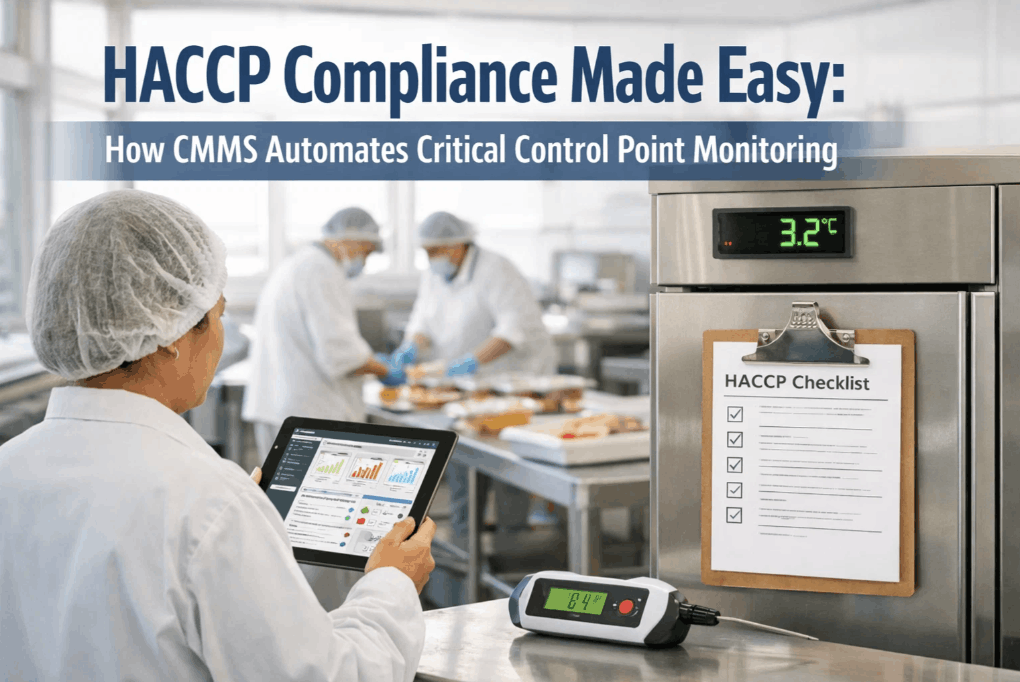
A cold storage facility received 847 temperature alerts last month—most were sensor glitches, brief door openings, or defrost cycles that self-corrected. But buried in that noise was one genuine compressor failure that went unaddressed for 6 hours because staff had become desensitized to constant alerts. The result: $180,000 in spoiled frozen seafood. After implementing robotic alert validation, every temperature excursion triggers an autonomous robot to physically verify conditions, capture thermal images, and confirm whether the alert requires human response. False alarms dropped 94%, and the one real issue that month was escalated within 8 minutes. All verification data flows into Oxmaint Sign Up Now into CMMS for automatic HACCP compliance logging.
IoT temperature monitoring generates valuable data—but also alert fatigue. When sensors flag every minor fluctuation, operators learn to ignore them, and real problems get missed. Robotic alert validation solves this by dispatching autonomous robots to physically verify temperature excursions before escalating to humans. The robot confirms actual conditions, captures evidence, and logs findings for HACCP compliance—all automatically. This guide covers the integration of IoT temperature sensors with robotic validation systems for food safety in 2026. Book a demo to see how Oxmaint orchestrates IoT sensors, robots, and compliance documentation.
PLC Sensor Integration / Safety & Compliance
IoT Temperature Monitoring + Robotic Alert Validation
Eliminate false alarms while ensuring real temperature excursions get immediate verified response and HACCP-compliant documentation.
The Alert Fatigue Problem
Traditional IoT temperature monitoring creates more alerts than humans can meaningfully process. Understanding this problem is essential to appreciating the robotic validation solution.
500-1000+
Monthly alerts typical for mid-size cold storage
85-95%
Alerts that are false positives or self-correcting
6-12 min
Average human response time to investigate
$50K-500K
Cost of single missed genuine excursion
Key Insight
When 90% of alerts don't require action, operators learn to delay or ignore them. Robotic validation filters noise so humans only respond to verified issues—improving both response time and compliance.
How Robotic Alert Validation Works
The system combines IoT sensors, autonomous robots, and CMMS integration to create a closed-loop validation and documentation workflow. Sign Up to Oxmaint that orchestrates the entire process.
1
IoT Sensor Detects Excursion
Temperature sensor detects value outside acceptable range. Alert includes sensor ID, location, current reading, threshold violated, and timestamp.
Data: Zone A-3, 42°F (threshold: 38°F), 14:23:07
2
CMMS Receives & Evaluates
Oxmaint receives alert, checks against rules (duration threshold, time of day, known events like defrost cycles), determines if validation needed.
Rule: Validate if excursion persists >3 minutes
3
Robot Dispatched to Location
Autonomous robot receives mission with alert location coordinates. Robot navigates to zone, avoiding obstacles and other equipment.
Mission: Navigate to Zone A-3, ETA 2.5 minutes
4
Onsite Verification
Robot captures thermal image, takes independent temperature reading, photographs area conditions, checks for visible issues (door ajar, ice buildup, equipment status).
Captures: Thermal image, spot temp, RGB photo, status
5
Validation Decision
Robot data compared against IoT sensor. If confirmed excursion: escalate to human. If false alarm: log and close. If inconclusive: flag for review.
Result: Confirmed (robot reads 43°F), escalate
6
HACCP Documentation
Complete record created: original alert, robot verification data, images, validation result, response actions, resolution. Audit-ready documentation automatic.
Record: Timestamped, with images, HACCP-compliant
Automate Alert Validation & Documentation
Oxmaint integrates IoT sensors and validation robots to eliminate false alarm fatigue while maintaining complete HACCP compliance records.
IoT Temperature Sensor Options
These sensor types integrate with robotic validation workflows. Selection depends on environment, accuracy requirements, and existing infrastructure.
Range: -40°C to +85°C
Accuracy: ±0.3°C typical
Battery: 3-5 year life
Protocol: LoRaWAN, Bluetooth, Zigbee
Best for: Retrofit installations, flexible placement
Brands: Monnit, Onset HOBO, Tive
Range: -200°C to +500°C
Accuracy: ±0.1°C achievable
Power: 24VDC, PoE options
Protocol: Modbus, 4-20mA, Ethernet/IP
Best for: Critical control points, high-accuracy needs
Brands: Emerson, Endress+Hauser, Honeywell
Range: -30°C to +70°C typical
Accuracy: ±0.5°C typical
Connectivity: Cellular, WiFi
Protocol: REST API, MQTT
Best for: Multi-site monitoring, transport tracking
Brands: Sensitech, Controlant, Emerson Go Real-Time
Validation Robot Requirements
Robots performing temperature alert validation need specific capabilities for food environment operation. Schedule a consultation for robot selection guidance.
Thermal Imaging
FLIR or equivalent thermal camera with radiometric output for temperature measurement, not just imaging. Range must cover expected temperatures.
Visual Documentation
High-resolution RGB camera for capturing evidence of conditions: door status, ice buildup, equipment indicators, product condition.
Autonomous Navigation
SLAM-based navigation to reach alert locations without human guidance. Must handle cold storage environments, wet floors, and changing obstacles.
Cold Environment Rating
IP rating for washdown, operating range for cold/frozen environments. Battery performance degrades in cold—ensure sufficient runtime.
API Integration
REST API or ROS 2 interface for receiving dispatch commands, reporting validation results, and streaming data to CMMS.
Response Time
Must reach any location within validation window (typically 3-5 minutes). Consider fleet size for large facilities to ensure coverage.
Integration Architecture
Successful deployment requires integration across sensors, robots, and CMMS. Sign Up to Oxmaint that provides the integration hub.
Sensor Layer
Temperature Sensors
Humidity Sensors
Door Contacts
Equipment Status
Oxmaint CMMS Hub
Alert Processing
Rule Engine
Robot Dispatch
Compliance Logging
Validation Layer
Mobile Robots
Thermal Cameras
Spot Sensors
Image Capture
Build Your Validation System
Oxmaint integrates with leading IoT sensors and robot platforms to create automated alert validation with complete HACCP documentation.
HACCP Compliance Benefits
Robotic alert validation strengthens HACCP compliance beyond what manual monitoring achieves.
Verified Response Times
Robot timestamps prove how quickly excursions were investigated. No more relying on operator memory or manual log entries.
Objective Evidence
Thermal images and independent sensor readings provide objective verification that auditors can review—not just operator attestations.
Complete Audit Trail
Every alert, validation, and response automatically documented. No gaps in records, no missing entries, no incomplete documentation.
Consistent Monitoring
Robots don't get busy, forget, or cut corners. Every alert gets the same thorough validation regardless of time or staffing levels.
Frequently Asked Questions
Will regulators accept robot-validated temperature records?
Yes—FDA and USDA accept automated monitoring data when properly validated and documented. Robot validation actually provides stronger evidence than manual checks because it includes timestamped images and independent sensor readings.
Sign Up to Oxmaint that creates audit-ready documentation that meets regulatory requirements.
What happens if the robot is unavailable when an alert occurs?
The system falls back to human notification with appropriate escalation. For facilities with high alert volumes, deploying multiple robots ensures coverage. Oxmaint tracks robot availability and adjusts routing automatically.
How accurate is robot temperature validation compared to fixed sensors?
Robot thermal cameras typically achieve ±1-2°C accuracy, which is sufficient for validation purposes. The goal isn't to replace fixed sensors but to confirm whether they're reading correctly and whether conditions actually warrant response.
Book a consultation to discuss accuracy requirements.
What's the typical ROI for robotic alert validation?
Most facilities see ROI within 12-18 months from reduced false alarm response time, prevented product losses from faster verified response, and reduced labor for manual monitoring rounds. A single prevented spoilage event often covers the entire system cost.
Eliminate Alert Fatigue, Ensure Compliance
Join food manufacturers using Oxmaint to integrate IoT sensors with robotic validation for reliable temperature monitoring and automatic HACCP documentation.