A regional dairy processor discovered their equipment was failing 40% more often than industry benchmarks—but they only learned this after losing $180,000 in spoiled product during a single refrigeration failure. The problem wasn't the equipment; it was the absence of structured maintenance KPIs for food manufacturing. Without measurable performance indicators, their maintenance team operated blindly, unable to identify deteriorating assets before catastrophic failure. After implementing a CMMS with automated KPI tracking, they reduced unplanned downtime by 67% and cut emergency repair costs by half within eight months. Sign up for Oxmaint to start tracking the metrics that matter most for your food manufacturing operation.
Why Maintenance KPIs Matter in Food Manufacturing
Food manufacturing operates under unique pressures that make maintenance performance measurement critical. Temperature-sensitive products, strict regulatory requirements, and tight production schedules mean that equipment reliability directly impacts product safety, compliance status, and profitability. Yet many food plants still manage maintenance reactively—addressing problems only after they cause production disruptions or quality failures.
Structured food plant maintenance metrics transform maintenance from a cost center into a strategic advantage. When you can measure Mean Time Between Failures, track planned maintenance percentage, and monitor Overall Equipment Effectiveness in real time, you gain the visibility needed to prevent costly breakdowns, optimize resource allocation, and demonstrate compliance during audits. Book a demo to see how Oxmaint's maintenance analytics dashboard makes KPI tracking automatic.
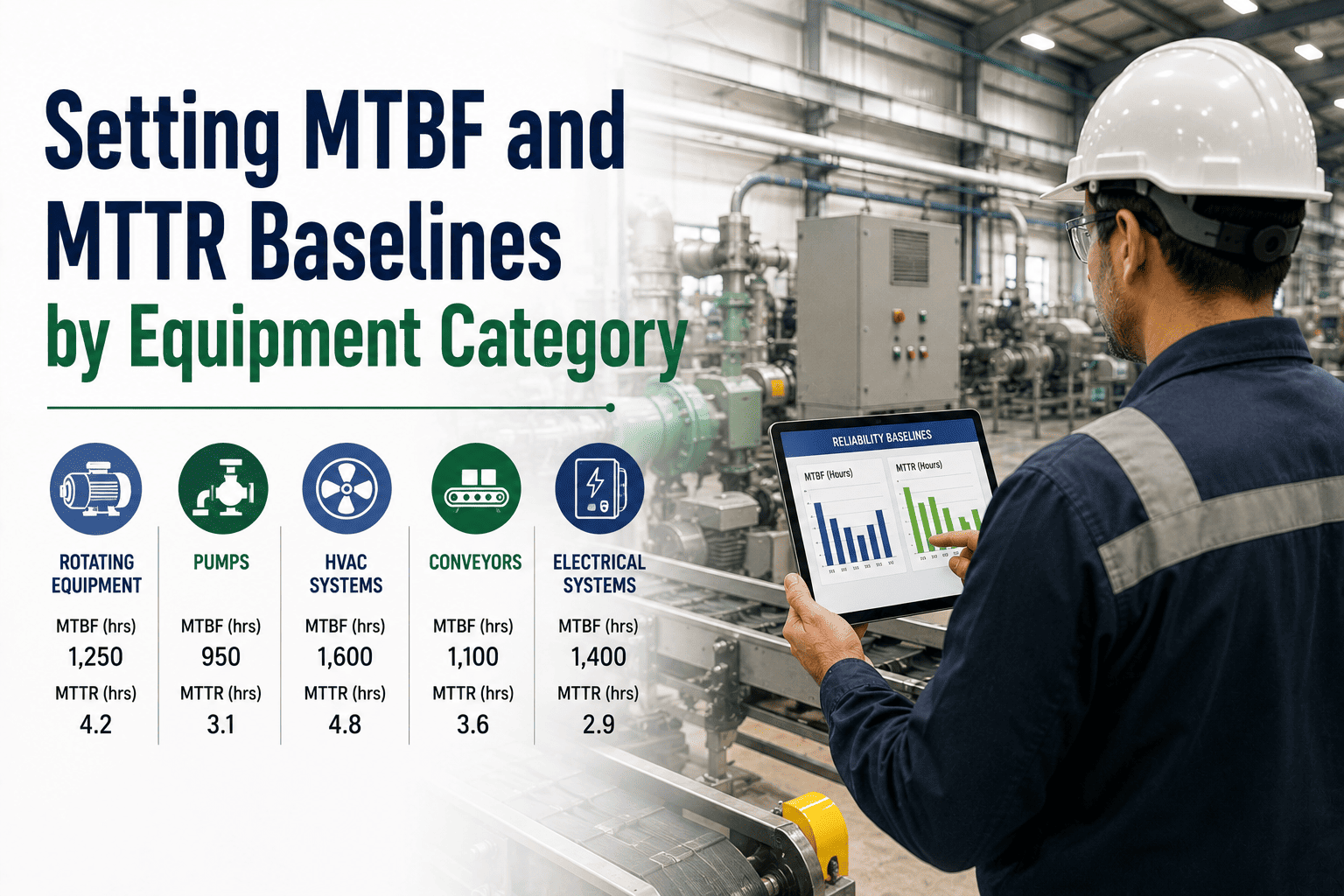
Mean Time Between Failures measures the average operating time between equipment breakdowns. Higher MTBF indicates more reliable equipment and effective preventive maintenance programs.
Mean Time To Repair tracks how quickly your team restores failed equipment to operation. Lower MTTR reduces production losses and indicates well-organized repair processes with available parts.
Overall Equipment Effectiveness combines availability, performance, and quality into a single metric showing how effectively equipment produces good product during scheduled time.
Planned Maintenance Compliance measures the percentage of scheduled preventive tasks completed on time. High compliance correlates directly with fewer emergency breakdowns.
Wrench Time measures the percentage of technician hours spent on actual repair work versus administrative tasks, travel, and waiting. Higher wrench time means more efficient labor utilization.
Emergency Work Percentage tracks how much maintenance is reactive versus planned. Lower percentages indicate mature maintenance programs that prevent rather than respond to failures.
KPI Categories for Food Manufacturing Excellence
Effective maintenance performance dashboards organize KPIs into logical categories that align with operational priorities. Each category reveals different aspects of maintenance effectiveness and equipment reliability. Sign up for Oxmaint to access pre-built dashboards covering all these categories.
Equipment Reliability Metrics
Reliability metrics quantify how consistently equipment performs its intended function. For food manufacturing, these metrics directly correlate with production consistency and product quality.
- MTBF by asset class — Track failure intervals for refrigeration, processing, packaging, and utility systems separately
- Failure frequency trends — Monitor whether failures are increasing, stable, or decreasing over time
- Availability percentage — Measure actual uptime against scheduled production hours
- Critical asset health scores — Combine multiple indicators into single health ratings
Workforce Efficiency Metrics
Workforce metrics reveal how effectively your maintenance team utilizes available time. Improving these metrics often delivers immediate cost benefits without capital investment.
- Wrench time percentage — Track hours spent on actual repairs versus waiting, travel, and paperwork
- Work order completion rate — Measure how many assigned tasks get finished on schedule
- Backlog in labor hours — Monitor outstanding work to identify staffing or process issues
- Schedule compliance — Track adherence to weekly maintenance schedules
Cost Management Metrics
Cost metrics connect maintenance activities to financial outcomes. These KPIs help justify maintenance investments and identify opportunities for budget optimization.
- Maintenance cost per production unit — Normalize costs against output for meaningful comparisons
- Planned vs. unplanned cost ratio — Track spending distribution between scheduled and emergency work
- Parts inventory turnover — Measure how efficiently spare parts inventory converts to maintenance value
- Contractor vs. in-house cost split — Monitor external service spending for optimization opportunities
Compliance & Safety Metrics
Food manufacturing requires rigorous compliance with FDA, USDA, and FSMA regulations. These metrics demonstrate maintenance program effectiveness during audits and inspections. Schedule a consultation to learn how Oxmaint automates compliance documentation.
- Critical control point PM compliance — Track maintenance completion for HACCP-critical equipment
- Calibration schedule adherence — Monitor on-time completion of instrument calibrations
- Safety work order response time — Measure how quickly safety-related issues get addressed
- Audit finding closure rate — Track resolution of maintenance-related audit observations
How Oxmaint Delivers Maintenance Analytics
Manual KPI tracking consumes hours each week and produces outdated reports by the time they reach decision-makers. Oxmaint's maintenance analytics dashboard calculates metrics automatically from work order data, providing real-time visibility into maintenance performance.
Real-Time KPI Dashboards
Pre-built dashboards display MTBF, MTTR, OEE, and PM compliance automatically calculated from work order completion data. No manual calculations or spreadsheet exports required.
Trend Analysis & Alerts
Track KPI trends over time to identify deteriorating equipment or process issues before they cause failures. Automated alerts notify teams when metrics cross threshold values.
Compliance Reporting
Generate audit-ready reports showing PM completion rates, calibration compliance, and maintenance history for any asset or time period with one click.
Benchmarking Tools
Compare KPI performance across facilities, production lines, or equipment classes. Identify best practices from top-performing assets and apply them plant-wide.
Frequently Asked Questions
Transform Your Maintenance Data Into Actionable Insights
Stop managing maintenance by spreadsheet. Oxmaint automatically tracks the KPIs that drive food manufacturing success—giving you real-time visibility into equipment reliability, team efficiency, and compliance status.