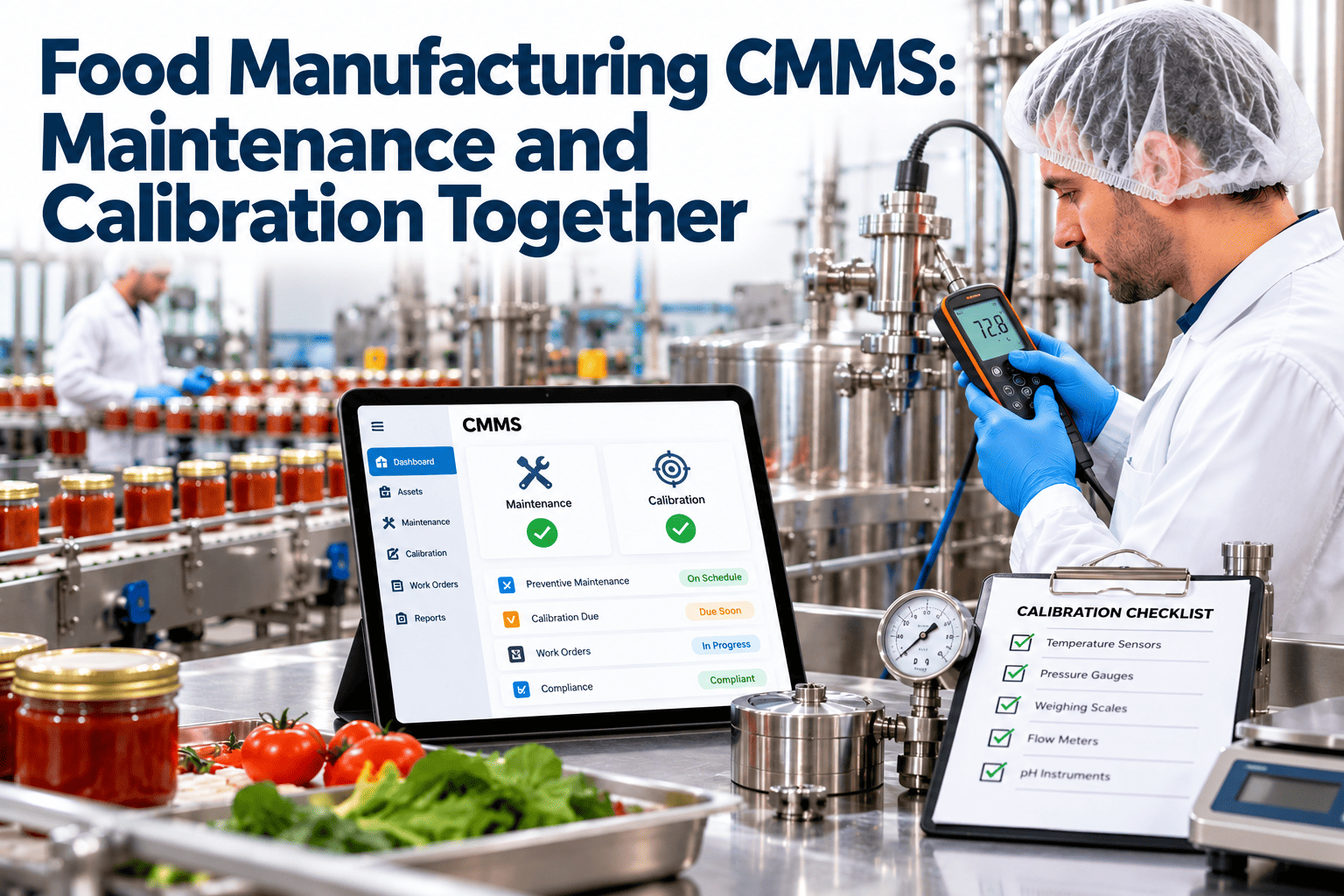
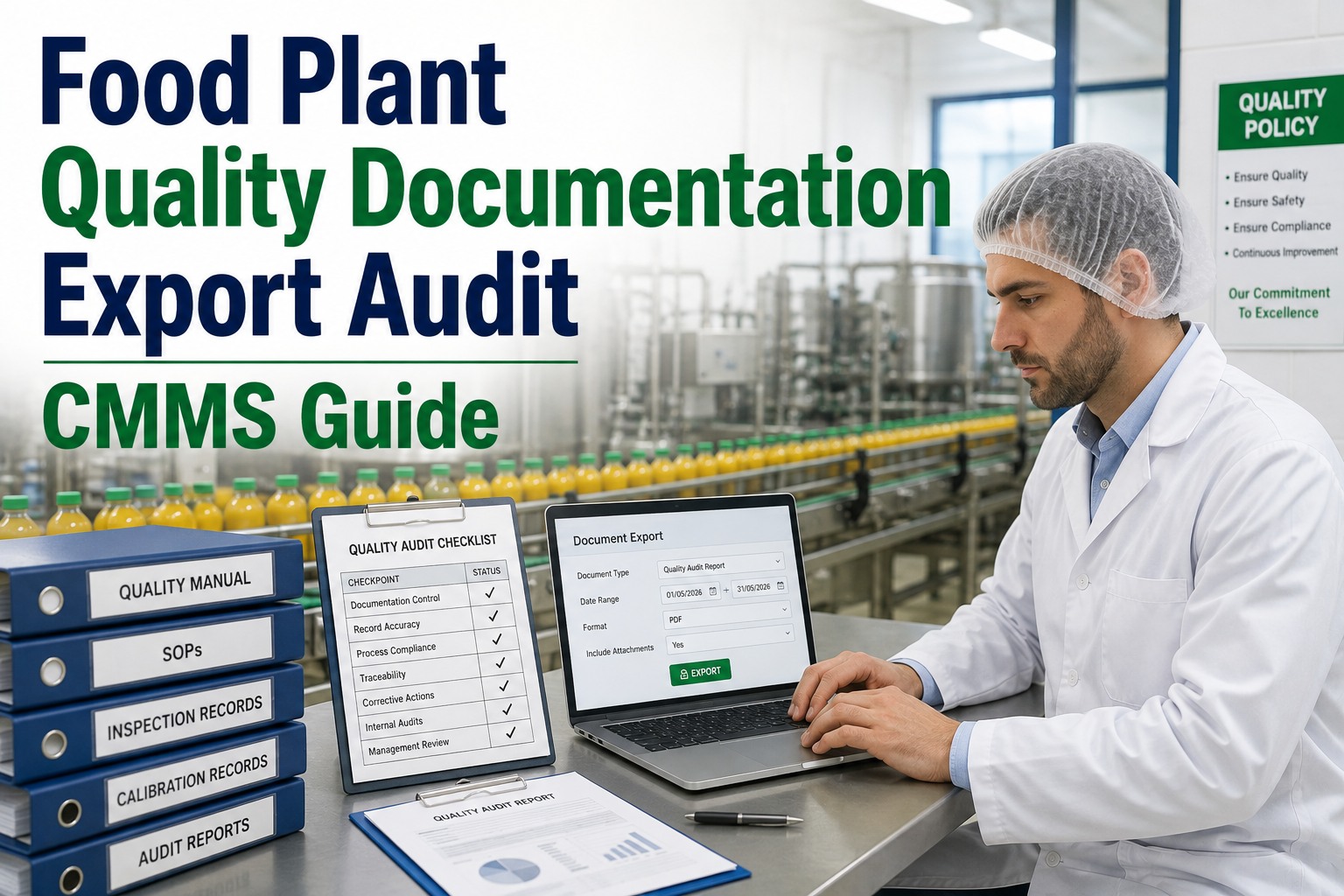
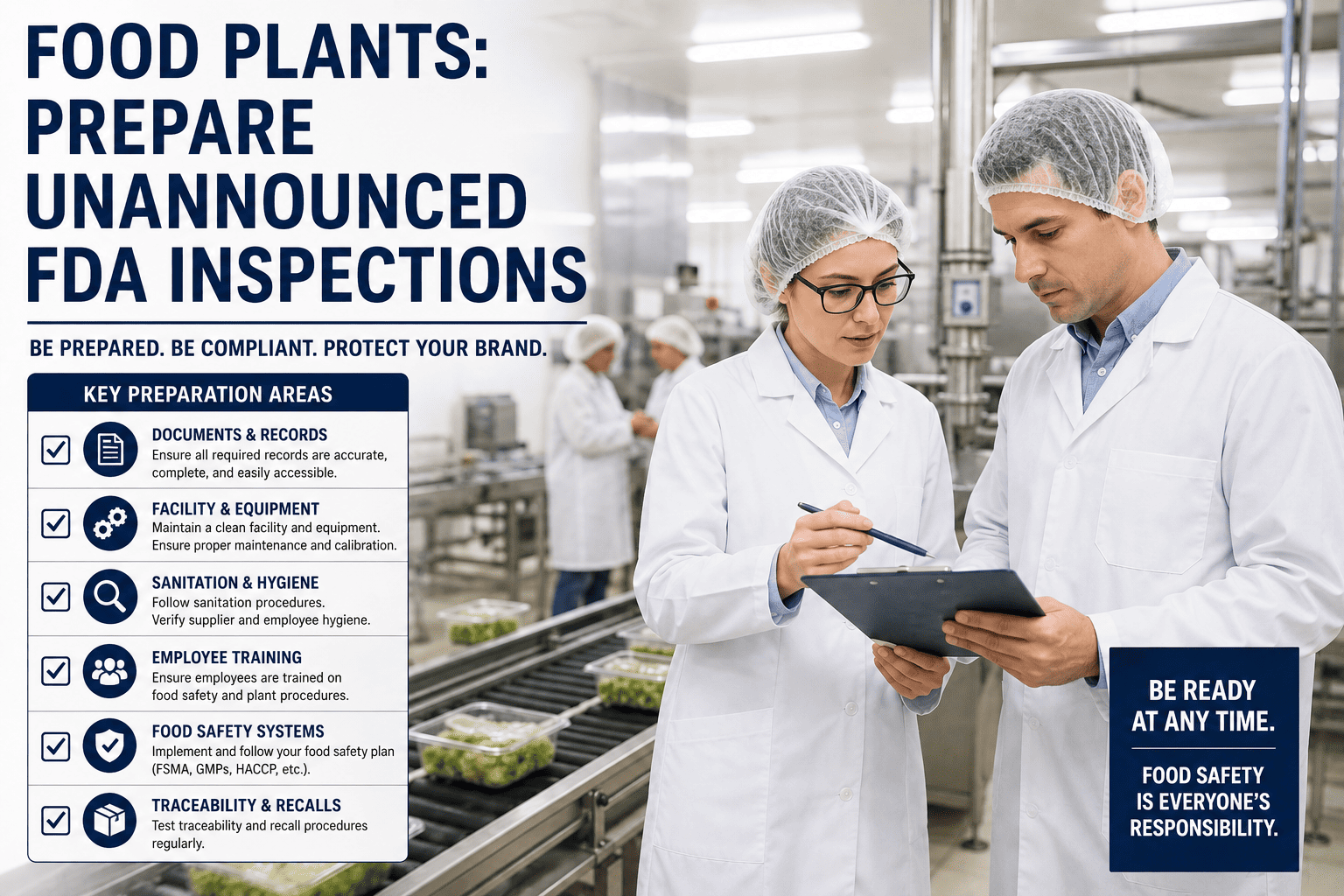
Maintenance SOPs for FDA inspections are the single most scrutinized set of documents in a food plant audit — and the documents most maintenance teams are least prepared to produce on demand. An FDA investigator asking to see your maintenance SOP for a heat exchanger, a fill head, or a CIP system expects a current, signed procedure with documented training records and evidence it is actually being followed. What most plants hand over is a three-year-old Word document that nobody has referenced since it was written. This guide covers how to write maintenance SOPs that satisfy FDA requirements, how to structure a compliant SOP library, and how CMMS tools like Oxmaint automate the compliance trail that proves your SOPs are in use — not just on file. Start a free trial to see Oxmaint's compliance documentation tools, or book a demo and we will map your SOP library to your CMMS workflow.
How to Write Maintenance SOPs That Pass FDA Inspections
FDA investigators don't just want your maintenance SOPs on file. They want evidence that technicians are following them, that they're current, and that deviations are documented. Most food plants have the documents. Far fewer have the compliance trail to prove the procedures are live.
What Are Maintenance SOPs for FDA Inspections?
A maintenance SOP for FDA purposes is a written, approved procedure defining exactly how a maintenance task must be performed to protect food safety and maintain regulatory compliance. Under 21 CFR Part 110 and FSMA, food manufacturers are required to maintain equipment in a manner that prevents contamination. SOPs are how you prove that standard is met.
FDA inspectors evaluate maintenance SOPs on four dimensions: accuracy (does the procedure reflect how work is actually done?), currency (has it been reviewed within the review cycle?), training (can you demonstrate technicians performing the task have been trained on the SOP?), and compliance evidence (are there work order records proving the SOP is followed, not just filed?). Failing on any one of these generates a Form 483 observation. Failing on multiple in a single inspection invites a Warning Letter.
Oxmaint's inspection and compliance management and safety and compliance tools create the automated compliance trail that proves every dimension — not just that the SOP exists.
The 8-Element Framework for an FDA-Compliant Maintenance SOP
Every maintenance SOP submitted during a food plant audit should contain these eight elements. Each maps directly to a dimension FDA investigators evaluate on arrival.
State what the SOP covers, which equipment it applies to, and the food safety objective it addresses. Be specific: "This SOP governs preventive maintenance of pasteurizer heat exchanger units on Line 2 and Line 4."
Identify who is authorized to perform and approve each task. Specify required certifications, training sign-offs, or skill qualifications. FDA inspectors will ask who performed a task and verify they were qualified to do it.
List all required materials, lubricants, cleaning chemicals, tools, and PPE specifically — not generically. Use brand or specification names where food safety depends on the exact material (e.g., NSF H1-certified lubricant).
Number every step. Use plain language. Include LOTO steps as mandatory entries, not assumptions. Specify accept/reject criteria at each inspection point. A technician reading this SOP for the first time should execute it correctly.
Reference the specific LOTO procedure for this equipment. List all energy isolation points with procedure numbers. Include confined space entry requirements where applicable. OSHA and FDA both review LOTO integration in maintenance procedures.
Specify what must be recorded: technician name, date and time, parts used, inspection findings, deviation notes, and supervisor sign-off for critical procedures. This is the evidence layer FDA inspectors evaluate — the SOP means nothing without it.
Define what constitutes a deviation, who must be notified, and the escalation path. FDA expects deviations are documented, not just remediated. An SOP without a deviation protocol is itself an audit finding.
Every SOP must carry a version number, effective date, next review date, and a sign-off chain showing who approved it and when. FDA investigators specifically check whether procedures have been reviewed within the stated cycle — typically annual in food manufacturing.
4 FDA SOP Compliance Pain Points Food Plants Face
Plants that receive Form 483 observations for maintenance procedures almost always share the same structural failures. Recognizing them before an inspection is the difference between a clean audit and a corrective action plan.
The most common FDA finding is not that an SOP doesn't exist — it's that no evidence of compliance exists. When work orders are paper-based and not linked to specific procedures, there is no automatic proof that technicians referenced or followed the SOP. The document exists; the compliance trail does not.
Equipment changes, parts substitutions, and process modifications happen continuously in food plants. SOPs that aren't updated describe procedures that no longer exist — which means any technician following the SOP correctly is still deviating from what the auditor sees during inspection. The SOP becomes a liability instead of a defense.
FDA requires that technicians performing a task be trained on the current version of the procedure — not a prior version. When SOPs are revised without a corresponding training notification and re-sign-off, the training records show a version mismatch that generates an immediate Form 483 observation during inspection.
Every maintenance SOP requires a deviation protocol. Plants without a formal deviation documentation system either skip documentation entirely — creating compliance gaps — or document deviations inconsistently in ways that look worse in an audit than the deviation itself would have.
If your SOP compliance trail relies on paper work orders and verbal confirmation, you are one FDA inspection away from a Form 483. Start a free trial to see how Oxmaint builds the compliance trail automatically, or book a demo to walk through the inspection documentation workflow.
How Oxmaint Automates FDA Maintenance SOP Compliance
A well-written SOP that lives in a shared drive but isn't linked to work orders is invisible to FDA. Oxmaint builds the compliance trail into every work order — automatically, on every task completion.
Each work order is linked to the current approved SOP for that task. Technicians access the procedure from the work order itself — creating an automatic record that the correct version was referenced at task time. No separate compliance step required.
For food safety-critical maintenance tasks, Oxmaint enforces sign-off requirements before a work order can be closed — LOTO completion, procedure deviation notes, supervisor approval. These are built into the workflow, not left to technician discretion.
When a procedure is updated, all linked work order templates automatically reference the new version and the previous version is archived with its effective date range. FDA investigators see current procedures on current work orders — no version mismatches.
Technician skill profiles capture SOP training sign-offs. When an SOP is revised, the system flags technicians requiring re-training before they can be assigned to that work order type. Training records stay in sync with SOP versions automatically.
EHS and compliance workflows in Oxmaint include a structured deviation documentation path. When a technician cannot follow the SOP as written, the deviation is captured in the work order record with a reason code, corrective action, and supervisor notification.
When an FDA investigator asks for maintenance records for a specific piece of equipment over a 12-month period, Oxmaint returns the complete set — work orders, SOP versions referenced, technician sign-offs, and deviation records — in seconds. No filing cabinet, no email reconstruction.
Paper SOP Management vs. CMMS-Integrated Compliance
The difference between a clean FDA audit and a Form 483 observation often comes down to what you can prove — not what you believe happened. This comparison shows the compliance gap between paper-based SOP management and a CMMS-integrated approach.
| Compliance Requirement | Paper / Shared Drive | Oxmaint CMMS |
|---|---|---|
| SOP accessibility at task time | Technicians must locate procedure separately; often skipped under time pressure | Current SOP linked directly in work order; accessible from any mobile device |
| Proof of SOP adherence | No automatic record; relies on technician attestation after the fact | Work order records show SOP version, technician, timestamp, and sign-offs |
| SOP version control | Multiple versions in circulation; version mismatch findings common in audits | Single source of truth; outdated versions archived; current version auto-linked |
| Training record synchronization | Manual tracking; version updates rarely trigger training notifications | SOP revision auto-flags affected technicians; records stay synchronized |
| Deviation documentation | Informal or absent; creates audit exposure when deviations aren't captured | Structured deviation workflow built into work order close-out; all deviations documented |
| FDA audit retrieval time | Hours to days; often incomplete; creates investigator skepticism | Seconds; complete and timestamped; signals a compliance-mature operation |
SOP Compliance Results With Oxmaint
When maintenance SOPs are linked to work orders and compliance is enforced at task time, the downstream results show up in audit performance, equipment reliability, and technician productivity — not just documentation quality.
Use the Oxmaint ROI calculator to estimate what improved SOP compliance saves your facility in corrective action costs and audit preparation time.
Frequently Asked Questions: Maintenance SOPs for FDA Inspections
What FDA regulation requires maintenance SOPs in food manufacturing?
How often should food plant maintenance SOPs be reviewed and updated?
What should a maintenance SOP template include for food manufacturing?
How does a CMMS help food manufacturers pass FDA maintenance audits?
Stop Writing SOPs Nobody Can Prove Are Being Followed
A maintenance SOP that lives in a shared drive but isn't linked to work orders is invisible to FDA. Oxmaint builds the compliance trail into every work order — SOP version referenced, technician sign-off, deviation documentation — so the next inspection finds a system, not a scramble.
- SOP linked directly in work orders — automatic compliance trail with every task completion
- Version-controlled procedure library — current SOP always on the work order, no version mismatches
- Instant audit record retrieval — complete maintenance history by asset, date, or procedure in seconds