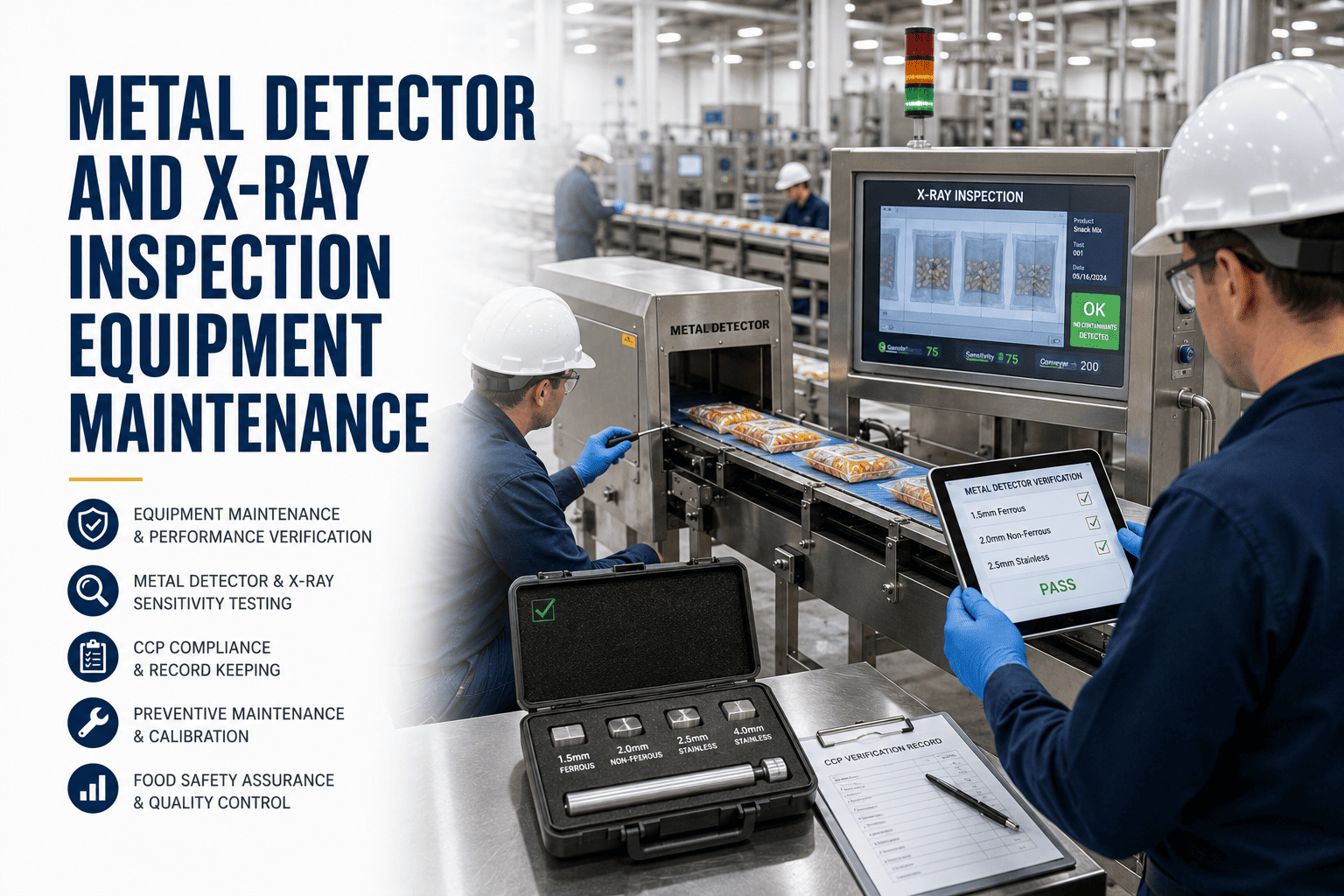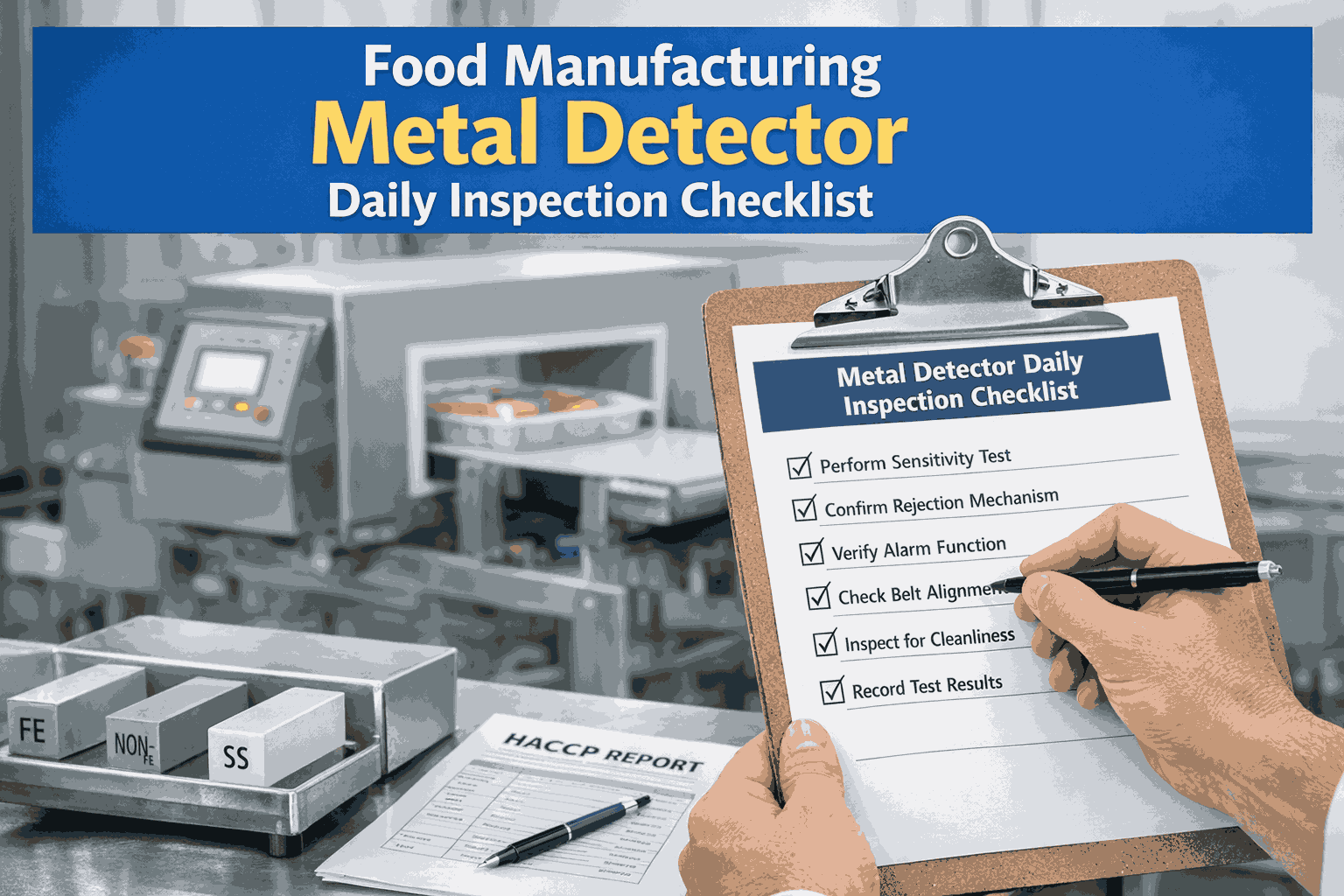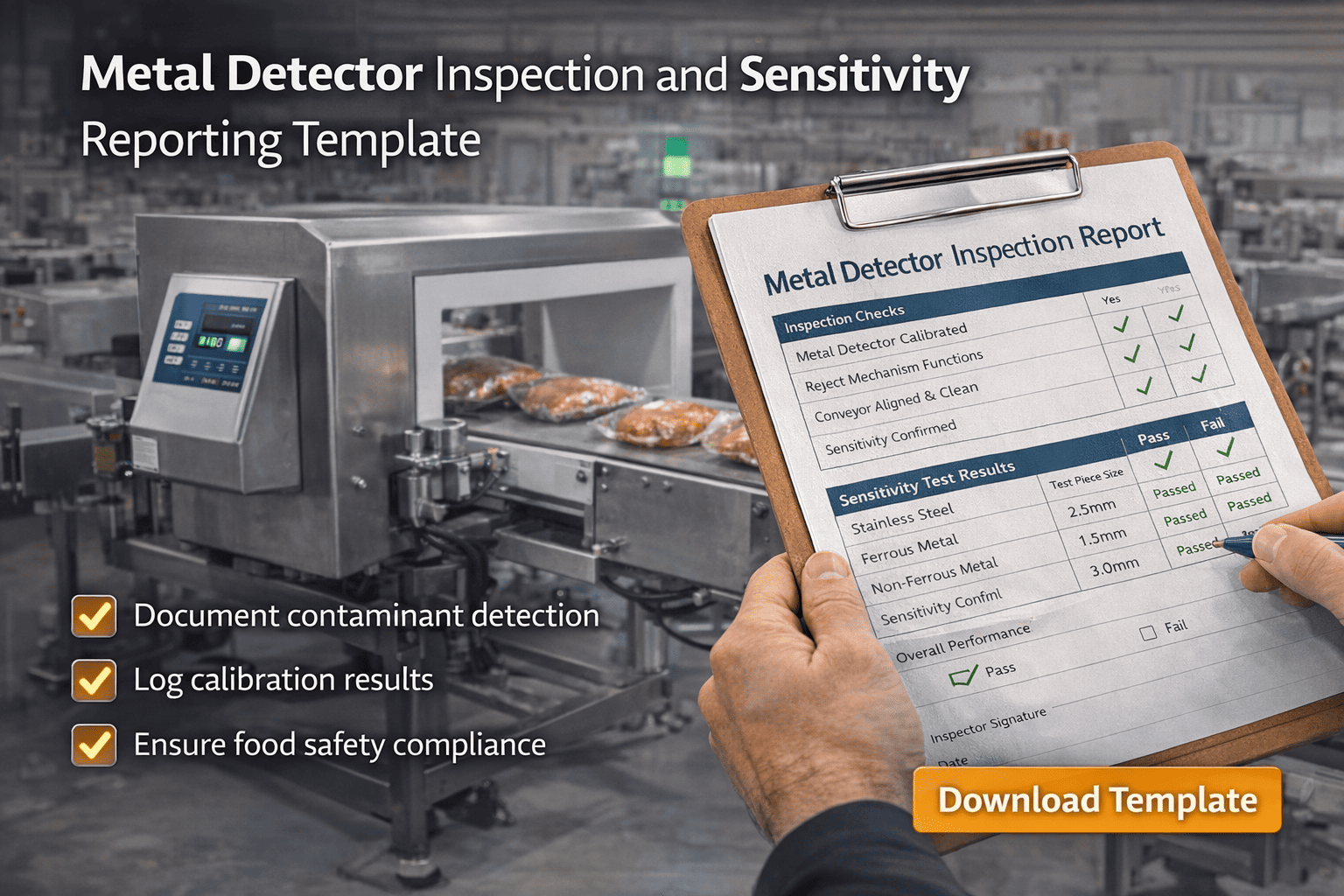
Foreign object contamination is the food safety risk that no amount of ingredient testing can catch — it happens inside your production environment, on your equipment, during your process. A metal fragment from a worn mixer blade, a plastic shard from a cracked hopper lining, a glass chip from a broken sight glass. Your metal detectors and X-ray inspection systems are the last line of defence before contaminated product reaches consumers, and when those systems are not maintained, calibrated, and verified with documented precision, they become expensive false reassurances. 39% of all food recalls in 2024 were driven by physical contamination including foreign materials, and foodborne illness hospitalizations more than doubled to 487 cases. The inspection systems that are supposed to prevent these events require structured maintenance programmes — not occasional attention when a false reject rate climbs too high. OxMaint's CCP equipment management module schedules every sensitivity test, documents every calibration verification, and creates the audit-ready compliance trail that HACCP, BRC, and SQF auditors demand.
Metal Detector and X-Ray Inspection Maintenance for Food Safety
CMMS-documented sensitivity testing, calibration verification, and preventive maintenance for the CCP equipment that stands between your production line and a contamination recall.
Metal Detectors vs. X-Ray Inspection: When Each Technology Applies
Choosing the right inspection technology is a HACCP hazard analysis decision, not a purchasing decision. Each system detects different contaminant types through fundamentally different physics, and most food plants need both technologies at different points in their process to achieve comprehensive foreign object control. Understanding these differences is the foundation of an effective CCP maintenance programme. Still relying on a single detection method? Book a demo and start a free trial to see how OxMaint manages both in a unified CCP dashboard.
The 4 Maintenance Failures That Turn CCP Equipment Into Liability
When inspection equipment fails to detect a contaminant, the consequences are not a production inconvenience — they are a public health event. These four maintenance gaps are responsible for the majority of CCP equipment failures in food plants, and every one of them is preventable with structured CMMS-based management.
Your Inspection Systems Are Only as Reliable as the Maintenance Programme Behind Them. OxMaint Proves Yours Works.
OxMaint schedules every sensitivity test, documents every calibration check, verifies every reject mechanism, and creates the complete audit trail that proves your CCP equipment was maintained, tested, and functional for every production run.
How OxMaint Manages the Inspection Equipment Maintenance Lifecycle
Inspection equipment maintenance is not a single PM task — it is a layered programme of routine verification, periodic calibration, preventive maintenance, and documented corrective action. OxMaint manages every layer from a unified platform, ensuring nothing falls through the cracks and every activity creates audit-ready evidence. Ready to upgrade from paper test logs? Start a free trial and book a demo to see CCP equipment management on your own inspection data.
Before vs. After: Paper Test Logs vs. CMMS-Managed Inspection
The transition from paper-based CCP test logs to CMMS-managed inspection records transforms food safety documentation from a compliance burden into an operational control system.
The Financial Value of Reliable Inspection Equipment
Inspection equipment maintenance is not a cost — it is recall insurance. The mathematics are straightforward: a well-maintained detection system costs thousands per year to operate, while a single contamination recall costs millions. Here is the risk-adjusted value proposition.
Frequently Asked Questions
How often should metal detectors and X-ray systems be tested during production?
GFSI-benchmarked food safety schemes (BRC, SQF, FSSC 22000) require sensitivity testing at minimum at the start of each production shift, after every product changeover, and at regular intervals during production — typically every 1–4 hours depending on the specific scheme and product risk level. OxMaint auto-schedules all test events based on your food safety plan requirements and sends alerts when a test window is approaching or has been missed, so no gap in CCP verification goes undetected.
What should we do when a sensitivity test fails during production?
When a test fails, all product that passed through the detector since the last successful test must be identified, segregated, and re-inspected through a verified system. OxMaint automatically links test results to production batch records, so the exact volume of affected product is identified instantly — not estimated. The system generates a corrective action work order, notifies the quality manager, and documents the entire response for audit purposes.
Can OxMaint track both metal detectors and X-ray systems on the same platform?
Yes. OxMaint manages all inspection equipment types from a unified CCP dashboard — metal detectors, X-ray systems, vision inspection, and checkweighers. Each system has its own test protocols, sensitivity standards, and PM schedules, but all results feed into a single compliance view. This gives quality managers one place to verify that every CCP instrument is tested, maintained, and compliant — rather than managing separate paper logs for each technology.
How does OxMaint handle X-ray tube life tracking and replacement scheduling?
OxMaint tracks X-ray tube operating hours against the manufacturer's recommended replacement interval — typically 10,000–15,000 hours. The system generates alerts at 80% and 90% of expected tube life, giving procurement time to source the replacement tube before failure. When tube hours data is available from the X-ray system's controller, OxMaint can capture this automatically through integration — ensuring hour tracking is based on actual usage, not calendar estimates.
Your Detectors Found the Contaminant. Can You Prove It? OxMaint Documents Everything.
OxMaint manages every sensitivity test, every calibration verification, every reject check, and every PM event for your metal detectors and X-ray systems — creating the complete, audit-ready CCP compliance record that protects your products, your brand, and your certification.