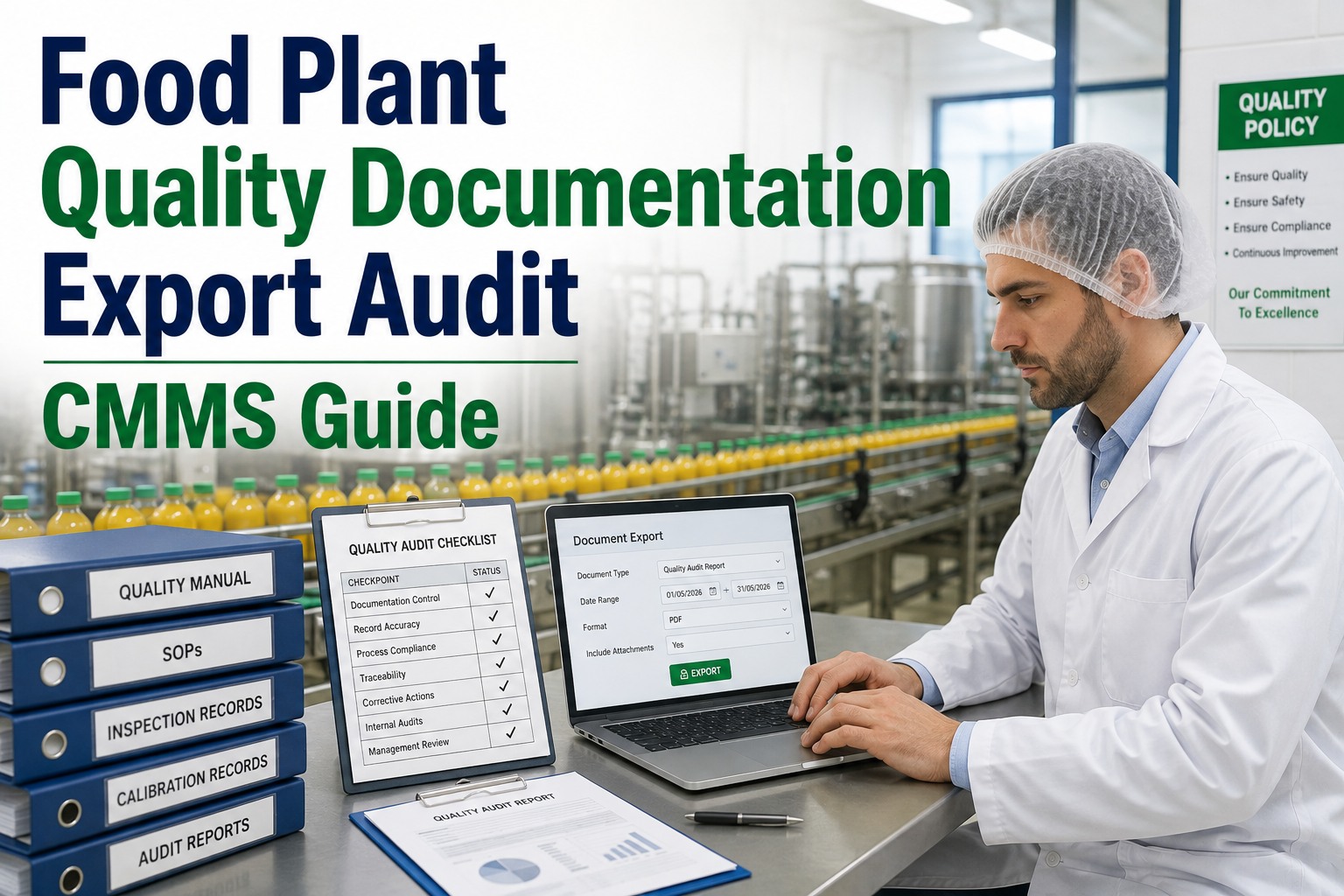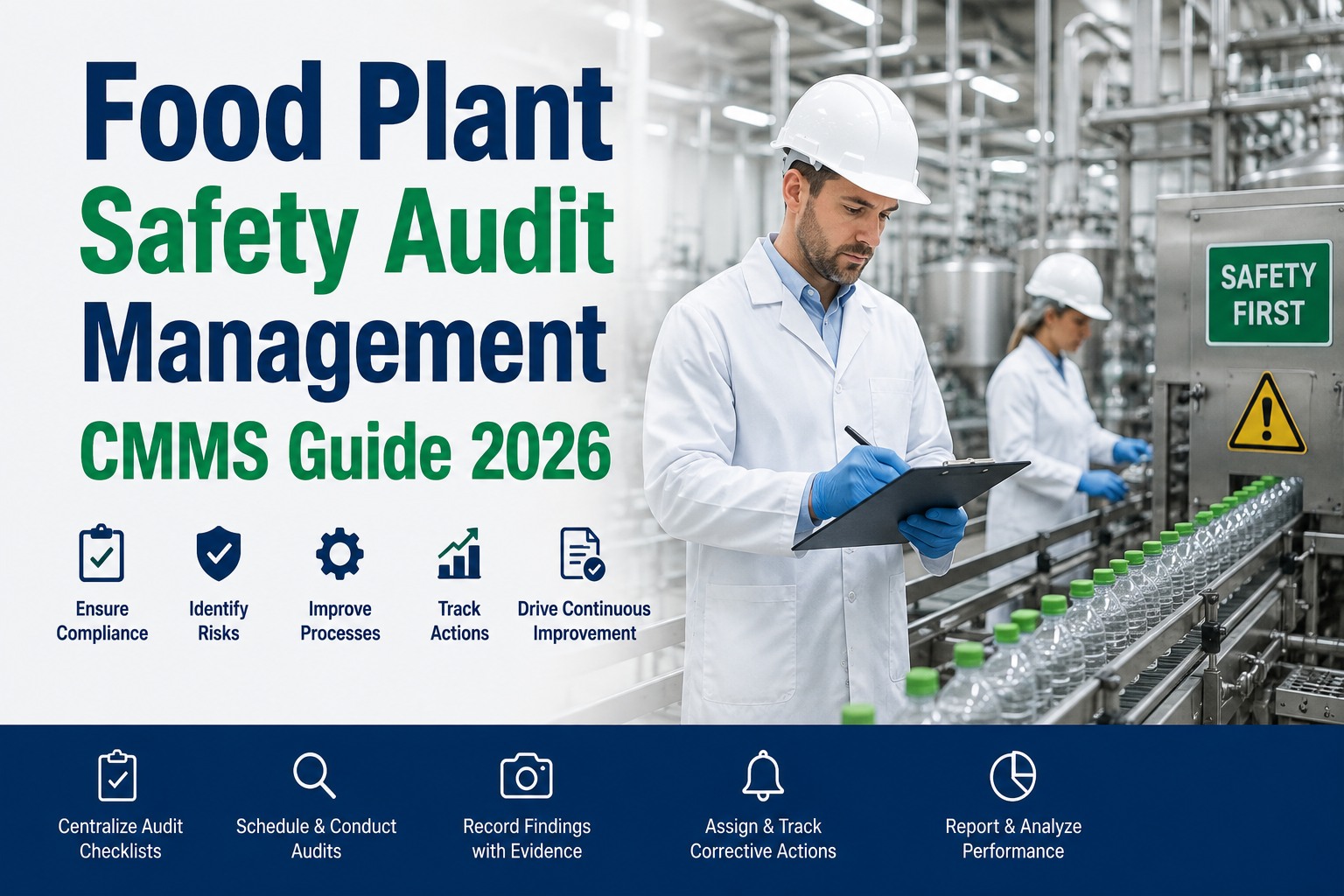
When a food recall hits, every hour of delayed response multiplies liability. Class I recalls — those involving serious health hazards — demand execution within 24 hours. Yet most food manufacturers discover mid-crisis that their traceability records are fragmented, their lot data is siloed, and their maintenance systems have no connection to production asset history. A modern CMMS changes that equation entirely, turning recall response from a fire drill into a documented, auditable, fast-moving process — start a free trial to see how Oxmaint connects your asset records to recall-readiness, or book a demo and walk through your specific facility setup.
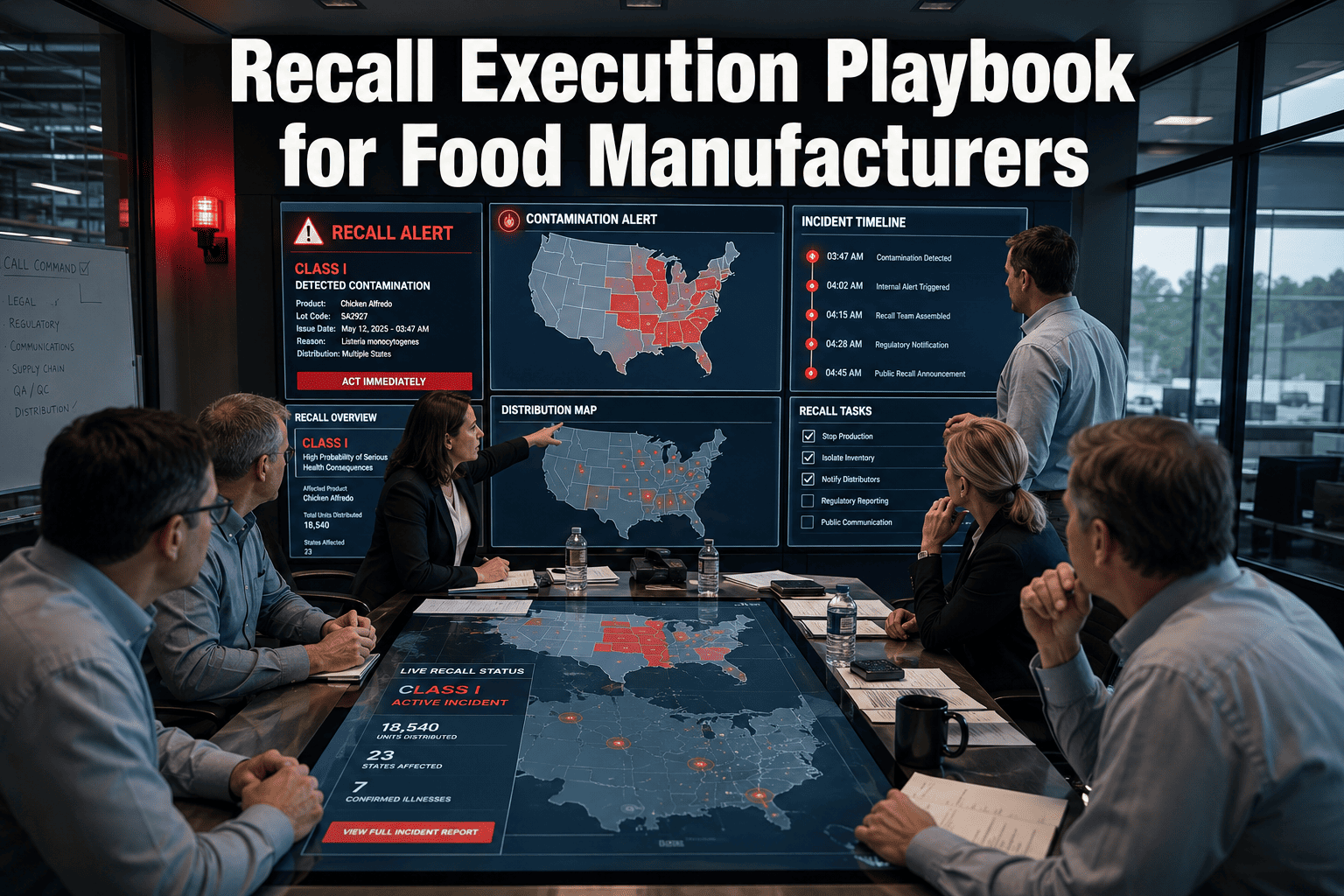
Recall Execution Playbook for Food Manufacturers
CMMS Role in Class I, II, and III Recall Response — Traceability, Coordination, and Audit-Ready Documentation
No heavy implementation required | Live in days, not months | Works across multi-site portfolios
A recall execution playbook is a structured, documented response plan that food manufacturers activate when a product defect, contamination event, or regulatory trigger demands immediate withdrawal from commerce. It defines who does what, in what order, with what records — across Class I (serious health hazard), Class II (remote health hazard), and Class III (unlikely health hazard) severity levels.
Where most playbooks fail is in the data layer. Knowing which lot numbers to recall is only possible if your production asset records, sanitation logs, work order history, and ingredient traceability are connected. A CMMS serves as the operational backbone — linking equipment maintenance timelines to production runs, so investigators can answer the critical question: what ran on that line, when, and in what condition.
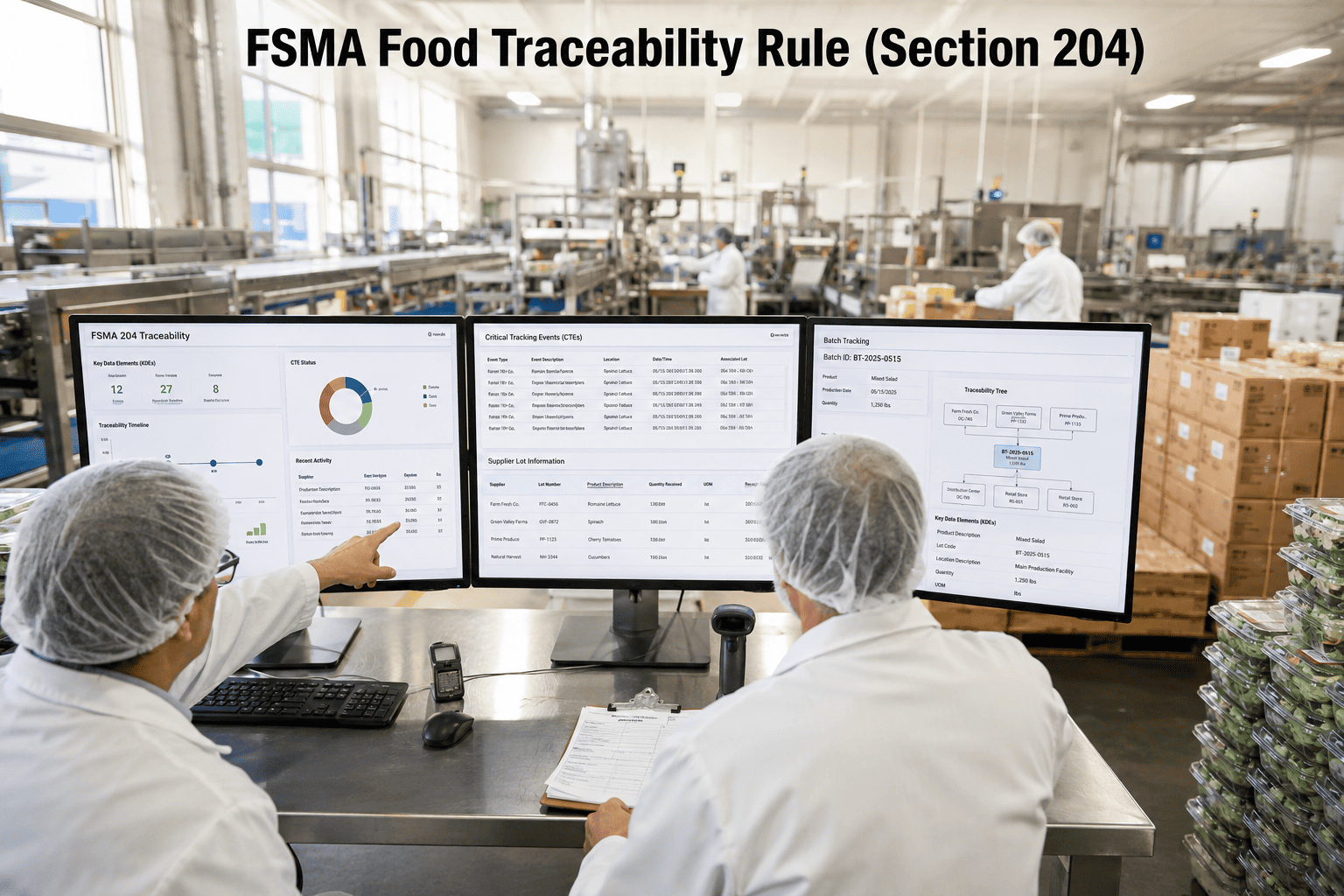
The FDA's Food Safety Modernization Act (FSMA) and the newer Section 204 traceability rule have raised the bar significantly. Food manufacturers now need sub-two-hour KDE/CTE retrieval capability and must demonstrate readiness through mock recall procedures — start a free trial to see how Oxmaint structures your asset records for this exact audit scenario.
Recall Classification and CMMS Trigger Points
Understanding where your CMMS connects to each recall class determines how fast you respond and how clean your audit trail looks.
Involves products with reasonable probability of causing serious adverse health consequences. Requires immediate CMMS work order lockout and full production line asset audit within 24 hours.
Involves products that may cause temporary adverse health consequences. CMMS provides equipment condition history and PM records to isolate the contamination window and scope.
Involves products unlikely to cause adverse health consequences but violating FDA labeling or other regulations. CMMS documentation supports regulatory response and CAPA filing.
A scheduled drill testing your ability to trace all affected lots within 2 hours. CMMS automates the asset-to-lot linkage that makes mock recall success achievable, not aspirational.
Key Data Elements and Critical Tracking Events required by FSMA Section 204. CMMS captures the equipment and process touchpoints that define each CTE in the production chain.
Corrective and Preventive Action reports filed post-recall. CMMS work order history and failure codes become the evidentiary foundation for every CAPA submitted to FDA.
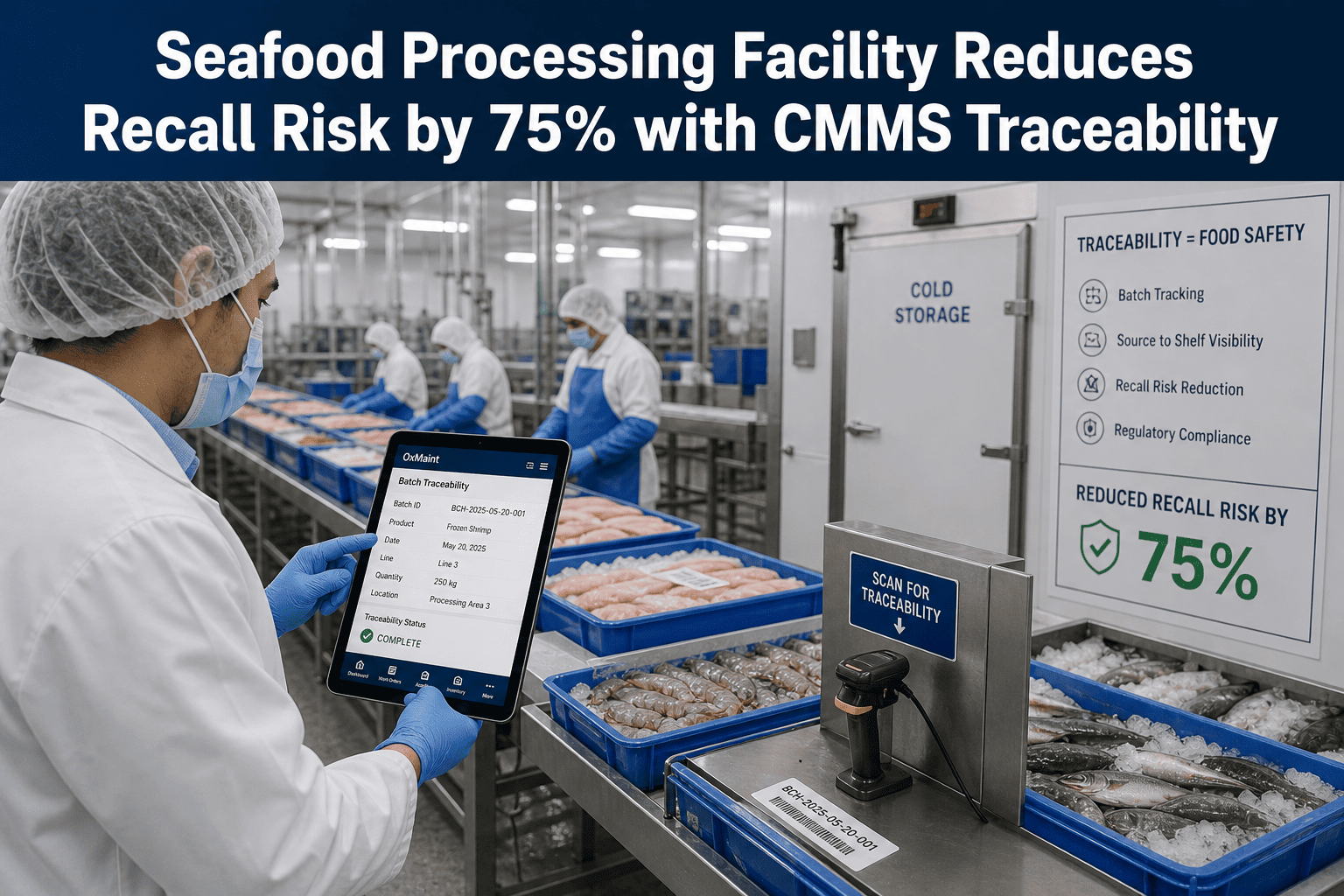
Linking ingredient lot numbers to specific production runs, lines, and asset states. CMMS asset timelines make this linkage automatic rather than manually reconstructed during a crisis.
The structured task sequence assigned to recall team members. CMMS work order templates pre-define these tasks so coordinators execute from a checklist, not from memory under pressure.
Where Recall Response Breaks Down
The gap between having a recall plan and being able to execute it at speed is where food manufacturers lose millions — and where CMMS integration eliminates the risk.
Lot numbers live in ERP. Equipment records live in spreadsheets. Sanitation logs live in paper binders. When recall hits, no one can cross-reference them in time — costing an average $38,000 per hour of delayed response.
Without CMMS integration, there is no record of which assets ran which products, at what condition score, with what maintenance gaps. FDA investigators ask exactly this — and gaps become liability.
Over 40% of food manufacturers fail their annual mock recall drill, unable to produce complete lot traceability within the 2-hour benchmark. This is a direct indicator of Class I recall execution failure risk.
Post-recall CAPA submissions without maintenance work order history, PM compliance records, or failure code documentation are rejected or flagged by FDA — extending enforcement exposure by months.
Without pre-defined CMMS work order templates, recall coordinators spend the first 6 hours of a Class I event building task lists instead of executing them — a critical window that multiplies legal and reputational exposure.
FSMA Section 204 requires electronic traceability records retrievable within 24 hours. Facilities relying on paper-based maintenance logs face mandatory compliance failures and escalating FDA Warning Letter risk — start a free trial to close these gaps before the next audit.
CMMS as Your Recall Execution Infrastructure
Oxmaint connects asset history, work order records, and inspection logs into a single audit-ready system — so when FDA calls, your response is minutes, not days.
Every production asset is tagged with its maintenance history, condition score, and active work orders. When a recall is triggered, Oxmaint surfaces every asset that touched the affected production window — instantly, not manually.
Pre-built CMMS templates activate on recall trigger — assigning tasks, owners, and deadlines to recall coordinators within minutes. Class I response starts executing, not planning.
Schedule and run mock recall procedures inside Oxmaint. Track completion time, identify data gaps, and produce the audit-ready drill report that GFSI and SQF auditors require annually.
Every sanitation inspection, equipment check, and GMP audit is logged in Oxmaint with timestamps and technician signatures — forming the clean-room documentation layer FDA reviewers expect.
Post-recall CAPA submissions are built on Oxmaint work order history, failure codes, PM compliance rates, and corrective action timelines — giving FDA the root cause documentation that closes enforcement loops faster.
For manufacturers operating across multiple facilities, Oxmaint consolidates recall status, asset lockouts, and documentation across the entire portfolio in one dashboard — so the VP of Operations has full recall visibility without chasing site managers. Book a demo to see the multi-site recall dashboard in action.
Recall Response Without CMMS vs. With Oxmaint
The difference between a manageable recall and a brand-ending crisis often comes down to how fast you can produce documentation.
| Recall Stage | Without CMMS | With Oxmaint CMMS |
|---|---|---|
| Lot Identification | 2–6 hours of manual cross-referencing across ERP, spreadsheets, and paper logs | Under 30 minutes — asset-to-lot linkage pre-built in system |
| Equipment Scope | Unknown which assets touched affected production run without physical investigation | Instant asset history pull with condition scores and maintenance gaps flagged |
| Recall Team Activation | Ad hoc phone calls and email chains; task assignment done verbally under pressure | Pre-built work order templates assign tasks, owners, and deadlines automatically |
| FDA Notification | Delayed 8–24 hours while documentation is assembled from multiple systems | FDA notification package generated from CMMS records within 2–4 hours |
| Mock Recall Readiness | Over 40% failure rate — cannot produce complete lot data within 2-hour benchmark | Mock recall completed within benchmark; audit-ready drill report auto-generated |
| CAPA Submission | Weak root cause documentation; CAPA rejected or requires multiple revisions | CAPA built on work order history and failure codes — first-submission acceptance rate higher |
| Multi-Site Visibility | VP of Operations blind to recall status across facilities; coordination by phone | Portfolio-level recall dashboard shows status, asset lockouts, and documentation across all sites |
| Resolution Timeline | Average 45 days with ongoing legal exposure and brand damage accumulating | Average 18 days — faster resolution, lower legal cost, faster return to production |
What Connected CMMS Delivers in Recall Events
These are real outcome metrics from food manufacturers who shifted from reactive recall response to CMMS-backed execution. Start a free trial to benchmark your own facility against these numbers.
How does CMMS support Class I recall response within the 24-hour FDA notification window?
Oxmaint pre-links every production asset to its maintenance history, condition score, and open work orders. When a Class I recall is triggered, the recall coordinator pulls the affected production window and gets an instant asset list — no cross-referencing required. Pre-built recall work order templates assign tasks and owners automatically, so the team executes rather than plans. The FDA notification package is built from existing CMMS records in hours, not days.
What is the difference in CMMS response requirements across Class I, II, and III recalls?
Class I requires immediate asset lockout, full lot traceability retrieval within 2 hours, and FDA notification within 24 hours — CMMS work order templates activate instantly. Class II requires equipment condition history and PM records to isolate the contamination window and scope — CMMS provides this without manual reconstruction. Class III requires clean compliance documentation for regulatory response and CAPA submission — CMMS logs provide the evidentiary base for all three severity levels.
How does Oxmaint support annual mock recall procedures that GFSI and SQF require?
Oxmaint allows you to schedule mock recall drills as recurring CMMS events. During the drill, the team uses the same lot-traceability and asset-linkage tools they would in a real event. Oxmaint tracks drill completion time, flags any data gaps discovered, and generates an audit-ready mock recall report with timestamps — exactly what SQF Edition 9 and GFSI scheme auditors require as documented evidence of annual recall readiness testing.
Can Oxmaint support recall coordination across multiple manufacturing facilities simultaneously?
Yes. Oxmaint is built on a Portfolio greater than Property greater than System greater than Asset hierarchy, meaning a Class I recall affecting multiple sites activates work order templates across all affected facilities from a single command. The VP of Operations sees real-time recall status, asset lockout progress, and documentation completion across the entire portfolio in one dashboard — eliminating the phone-chain coordination that delays multi-site recall response by hours.
Stop Losing Millions to Reactive Recall Response
Turn every asset into a traceable, auditable, recall-ready system with Oxmaint. See measurable results in the first 30 days.
- Real-time asset visibility across all production lines
- Automated recall work order templates for Class I, II, and III
- Audit-ready mock recall documentation in hours, not days
Used by operations teams managing 10,000+ assets across multi-site food manufacturing portfolios.
Limited onboarding slots available this quarter — live in days, not months.
No heavy implementation required | Works across multi-site portfolios | No credit card needed