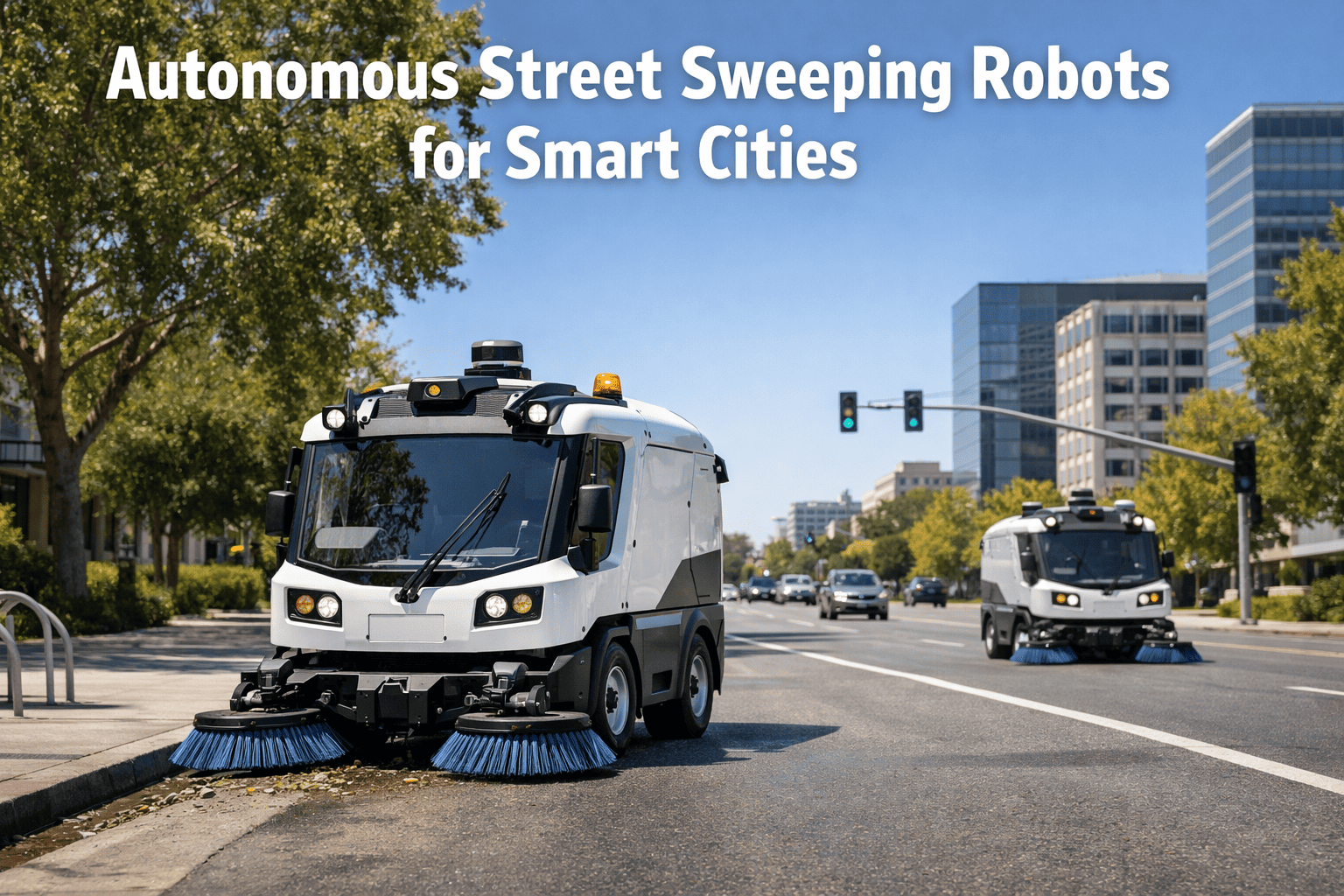
For municipal public works departments, keeping streets clean is a year-round battle against litter, debris, sand, and organic waste. Traditional manual sweeping with aging diesel-powered trucks is expensive, noisy, and increasingly at odds with sustainability mandates. Autonomous street sweeping robots offer a transformative solution, operating during off-peak hours to clean urban roads, bike lanes, and pedestrian zones without disrupting traffic flow or disturbing residents.
A single failure in a sweeper robot's navigation system or a clogged vacuum intake can leave an entire commercial district uncleaned before morning foot traffic begins, triggering merchant complaints and code violations. Oxmaint CMMS transforms robotic sweeper fleet management by centralizing brush roller replacement schedules, tracking vacuum system servicing, monitoring dustbin emptying sensors, and managing navigation LiDAR cleaning across your entire fleet. This guide outlines the maintenance framework necessary to keep your autonomous street sweeping fleet performing at peak efficiency every shift. Start free trial today.
Smart Sweeping Guide 2026
Autonomous Street Sweeping Robots: Municipal Fleet Maintenance & CMMS
Reliable urban cleanliness requires more than brushes and batteries. From calibrating LiDAR sensors to replacing vacuum filters, this guide equips municipal fleet managers with strategies to automate maintenance, ensure zone-based coverage, and maximize the uptime of street sweeping robot fleets.
40%Lower Operating Costs
24/7Off-Peak Operations
ZeroNoise Complaints
95%Route Completion Rate
The Fleet Maturity Spectrum
Municipal street sweeping programs typically fall into one of three operational categories. While many agencies rely on "Reactive" maintenance—repairing sweeper robots only after brush motors burn out or vacuum systems clog mid-route—Oxmaint helps organizations advance toward "Proactive" and "Predictive" maintenance, where sensor data and automated schedules prevent failures before the first route begins.
Predictive (Autonomous)
18%
Critical Maintenance Pillars
Autonomous street sweeping robots are sophisticated operational technology. Maintaining them requires adherence to strict mechanical, vacuum, and digital standards. A comprehensive CMMS acts as the central repository for these obligations, ensuring brushes, filters, dustbins, and navigation systems are ready for every sweeping shift.
Sweeper Maintenance CheckpointsFleet Readiness
Mechanical
Brush Rollers
Inspection of main and side brush bristle wear. Replacement of worn roller assemblies and drive belts to maintain consistent debris pickup across all surface types.
Wear Critical
Vacuum
Suction System
Inspection of vacuum intake ports, fan impellers, and filter cartridges. Cleaning or replacing HEPA filters to maintain airflow and fine dust capture efficiency.
Airflow Critical
Navigation
LiDAR & Cameras
Calibration of LiDAR sensors and cleaning of camera lenses. Verification of geofencing boundaries and curb-detection algorithms to keep robots on assigned routes.
Safety Critical
Dustbin
Collection Hopper
Testing fill-level sensors and auto-dump mechanisms. Cleaning hopper interiors to prevent debris compaction and ensuring dump door seals are intact.
Overflow Risk
Water
Dust Suppression
Checking water tank levels, spray nozzle integrity, and pump pressure. Ensures adequate dust suppression during dry-condition sweeping to meet air quality standards.
Air Quality
Power
Battery Management
Load testing lithium-ion battery packs. Inspecting charging contacts for corrosion and verifying thermal management systems for safe docking and recharging cycles.
Dead Unit
In autonomous sweeping operations, not all failures carry equal weight. A worn brush is a performance issue; a LiDAR failure causing a robot to enter a traffic lane is a public safety emergency. This risk matrix helps fleet managers prioritize maintenance tasks to prevent the most dangerous failure modes in public spaces.
5
Collision
Robot enters traffic lane or strikes pedestrian due to navigation failure. Immediate fleet grounding required.
4
Stranded
Unit loses power on roadway or blocks bike lane. Requires emergency recovery and creates traffic hazard.
3
Ineffective
Brush jam, full dustbin, or clogged vacuum. Route left uncleaned. Complaints and code violations follow.
2
Degraded
Reduced suction power or partial brush wear. Sweeping quality drops but route is completed.
1
Cosmetic
Scratched body panel or broken marker light. No impact on sweeping function or safety.
Automate Your Sweeper Fleet Maintenance
Oxmaint simplifies municipal sweeper robot operations. Schedule brush replacements, track vacuum filter changes, monitor dustbin sensors, and manage zone-based route assignments in one secure, cloud-based platform.
A robust sweeper robot fleet management program is composed of interconnected maintenance modules. Implementing these as digital workflows in Oxmaint ensures data integrity, proper parts usage, and reliable deployment across every sweeping zone in your municipality.
Core
Brush System Care
Per 200 Hours
Inspect main roller and side brush assemblies for bristle wear. Replace drive belts and check brush motor current draw for overload signs.
Roller BrushesSide BrushesDrive BeltsMotor Amps
Critical
Sensor Suite
Daily
Verify functionality of LiDAR, ultrasonic proximity sensors, and cameras. Clean lenses from dust buildup and test obstacle avoidance response times.
LiDAR CleanCamera TestData LinkObstacle Test
Audit
Vacuum & Filtration
Weekly
Check vacuum fan impeller balance and housing seals. Replace or clean HEPA filters and inspect intake ducting for blockages or cracks.
HEPA FiltersFan ImpellerDucting SealsAirflow Test
Prevention
Dustbin & Hopper
Post-Shift
Empty and clean debris hopper. Test fill-level sensor accuracy and auto-dump mechanism. Inspect dump door hinges and seals for wear.
Fill SensorsDump DoorHinge LubeSeal Check
Supply
Consumables
Continuous
Track spare brush rollers, HEPA filter inventory, water tank refill status, and battery pack availability. Trigger reorder alerts before stockout.
Brush StockFilter SupplyWater TanksBatteries
Action
Recovery Ops
As Needed
Protocols for retrieving stuck or powered-down sweeper robots. Manual drive override testing, tow point inspection, and incident logging procedures.
Tow PointsManual OverrideRecovery VanIncident Log
Different municipal zones present unique challenges for autonomous street sweeping. From narrow pedestrian plazas to wide arterial roads, the maintenance strategy must adapt to the specific debris loads, surface types, and traffic patterns of each environment.
Pedestrian Zones / Bike Lanes
Narrow Clearance Navigation
Pedestrian & Cyclist Avoidance
Fine Litter & Cigarette Butts
Uneven Pavers & Cobblestones
High-Precision GPS Required
Arterial Roads / Gutters
Heavy Debris & Gravel Loads
Vehicle Traffic Interaction
Curb-Following Accuracy
Storm Drain Clearance
High Brush & Vacuum Wear
Depot / Charging Station
Docking Alignment
Dustbin Auto-Dump Station
Water Tank Refill Systems
Fire Safety (Lithium Batteries)
Dust Control in Enclosure
The Cost of Neglect: System Failure
The maintenance pyramid illustrates that for every major sweeper breakdown, there are dozens of missed inspections underneath. Ignoring minor brush wear checks or vacuum filter replacements inevitably leads to fleet paralysis during peak demand periods, resulting in uncleaned streets, public complaints, and regulatory fines.
$0 - $150
Preventive Maint
Brush inspection, filter cleaning, sensor wipe, dustbin seal check. Planned downtime only.
Frequency: High
$1k - $8k
Reactive Repair
Burned brush motor, cracked vacuum housing, failed battery pack. Robot offline during critical zone coverage.
Frequency: Medium
$200k+
Regulatory / Liability
Air quality violations from uncontrolled dust, stormwater pollution fines, or robot collision with pedestrian.
Frequency: Low (But Severe)
Keep Your Streets Spotless
Don't wait for brush failures and clogged vacuums to derail your sweeping schedule. Oxmaint provides the digital infrastructure to manage robot inspections, track spare parts, and automate zone-based maintenance across your entire sweeper fleet.
CMMS Features for Sweeper Robotics
A specialized Computerized Maintenance Management System (CMMS) is the command center behind your autonomous sweeper fleet. It links dustbin sensors with work orders, connects brush wear data with replacement schedules, and ensures that fleet health is monitored in real-time so issues are resolved before the next sweeping shift begins.
A
Mobile Maintenance Log
Technicians scan a sweeper robot's QR code to view its complete service history, access brush replacement guides, and log filter changes directly from the depot floor.
B
IoT Sensor Integration
Set automated triggers that create work orders when a robot reports "Dustbin Full," "Low Vacuum Pressure," or "Brush Motor Overcurrent" alerts in real-time.
C
Parts Inventory Tracking
Track critical spares like brush roller assemblies, HEPA filters, vacuum fan impellers, and battery packs. Receive alerts when stock drops below reorder thresholds.
D
Zone-Based Route Tracking
Log which zones cause the most brush wear and vacuum strain. Use data to rotate robots between heavy-debris and light-debris zones to extend fleet lifespan.
E
Compliance Reporting
Generate proof-of-service reports showing exactly when each street, bike lane, or pedestrian zone was swept to satisfy municipal cleanliness ordinances and stormwater permits.
F
Shift-Based Scheduling
Automatically assign off-peak sweeping routes for nighttime operations and high-traffic zone schedules for early morning shifts. Adjust maintenance profiles by operational intensity.
Frequently Asked Questions
Q. How often do brush rollers need replacement on autonomous sweepers?
Main roller brushes typically last 150-300 operating hours depending on surface type and debris load. Side brushes wear faster—roughly every 100-200 hours. CMMS maintenance schedules should track operating hours per robot and trigger replacement work orders automatically when thresholds are reached, rather than relying on visual inspection alone.
Q. Can Oxmaint track dustbin fill levels and vacuum performance?
Yes. Oxmaint integrates with IoT sensors on sweeper robots to monitor dustbin fill levels, vacuum suction pressure, and brush motor current draw in real-time. When thresholds are breached—such as a full dustbin or declining airflow—the system auto-generates work orders for emptying, filter replacement, or duct cleaning without manual intervention.
Q. How do autonomous sweepers navigate around parked cars and pedestrians?
Modern sweeper robots use a combination of LiDAR, ultrasonic sensors, and stereo cameras for real-time obstacle detection and avoidance. Maintaining these sensor systems is a critical PM task. Regular LiDAR lens cleaning, camera calibration, and obstacle avoidance response testing are managed as recurring maintenance tasks within the CMMS.
Q. What happens if a sweeper robot runs out of battery mid-route?
Well-maintained robots will return to their charging dock automatically when battery levels reach a configurable threshold (typically 15-20%). If a unit does lose power on-route due to a battery management failure, recovery protocols tracked in the CMMS include GPS location retrieval, manual override procedures, and tow-point identification for safe retrieval without damaging the robot.
Q. Is cloud-based CMMS secure for managing municipal robot fleets?
Yes. Oxmaint uses enterprise-grade encryption and role-based access controls. Cloud-based systems allow field technicians to access sweeper maintenance data from tablets in the depot or on location, which is vital for quick diagnostics during active sweeping shifts—unlike on-premise systems locked in an office across town.