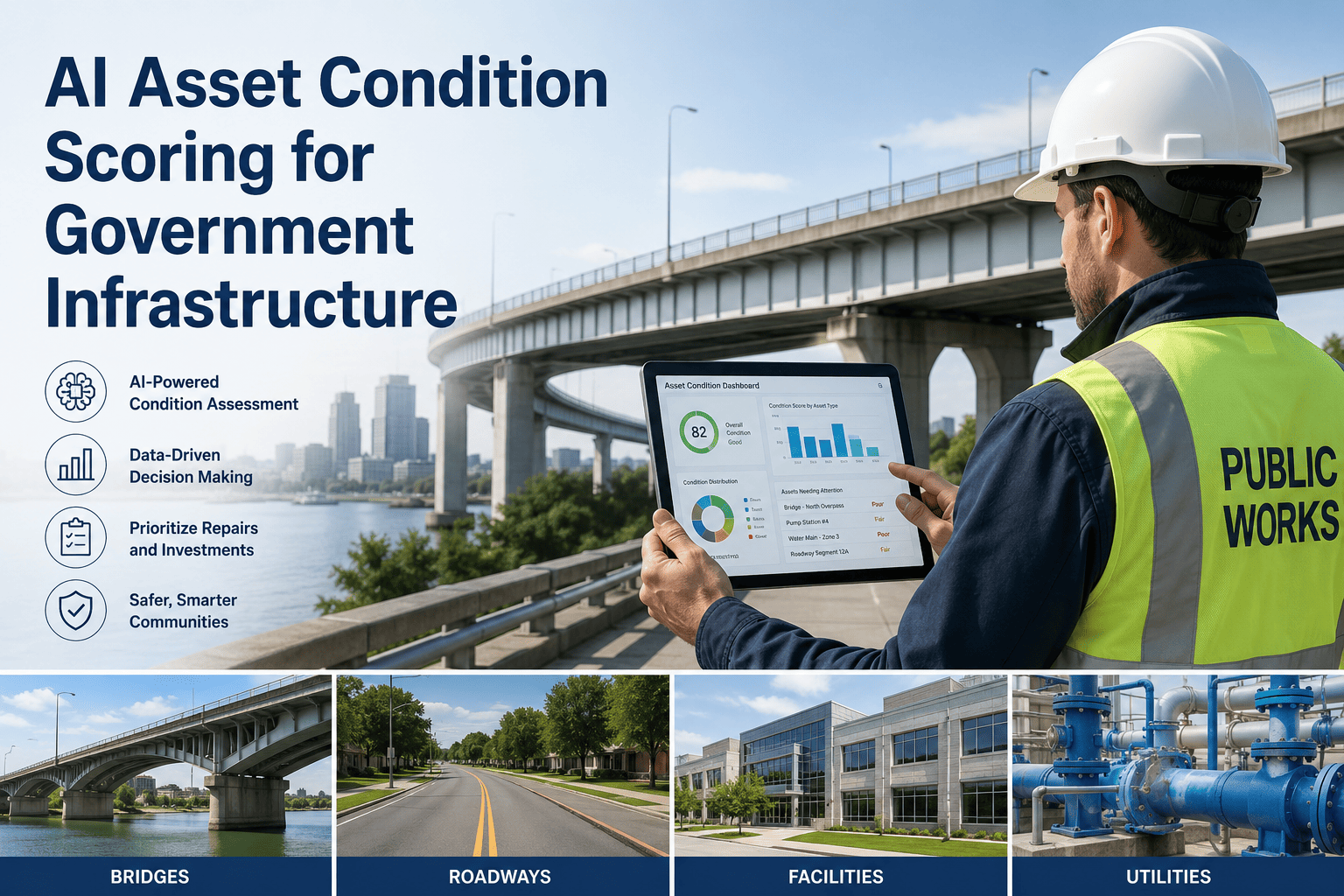
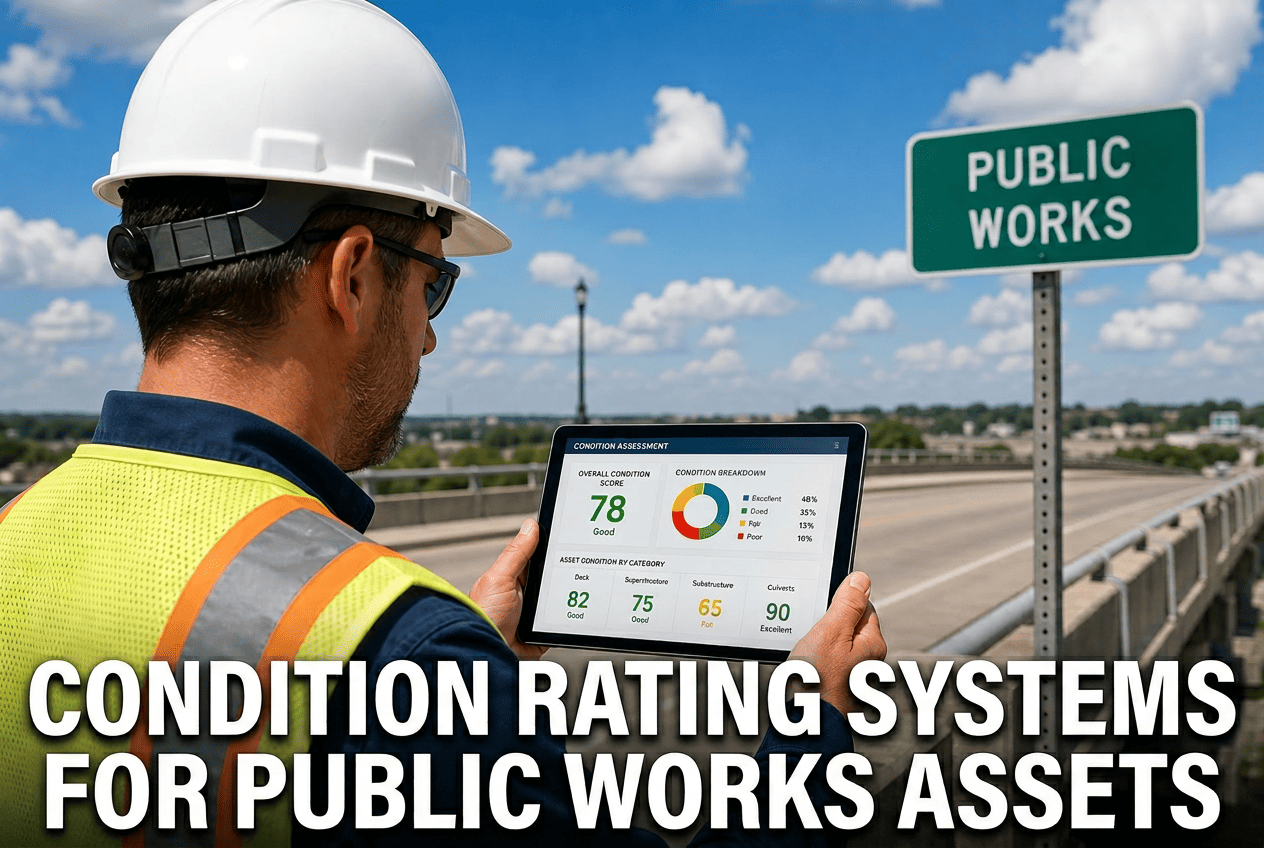
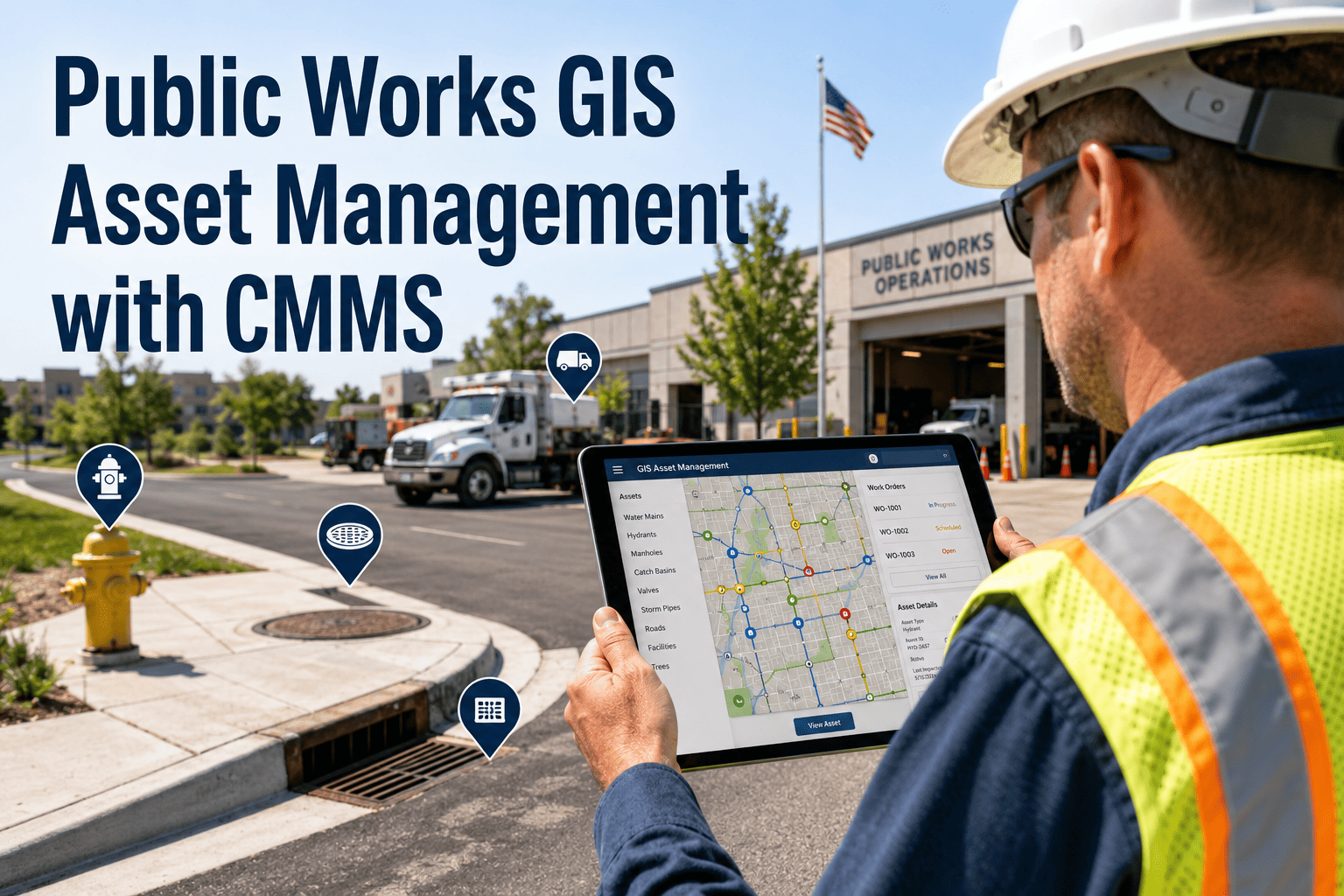
Government agencies in the United States carry an estimated $1 trillion deferred maintenance backlog across federal, state, and municipal facility portfolios, and the single biggest reason that figure does not shrink is that nobody can defend which assets to fix first. AI asset condition scoring replaces subjective inspector judgment and 5-year-old paper inspections with a daily-updated 0-to-100 health score per asset, prioritising every capital dollar against quantified risk. OxMaint AI's analytics and reporting platform brings condition scoring into the same workflow that issues work orders and reports to leadership — or book a 30-minute demo for an asset-scoring walkthrough on your own infrastructure data.
Analytics & Reporting · Infrastructure Asset Management
Score Every Asset. Defend Every Capital Decision.
Government infrastructure asset condition scoring moved from inspector worksheets to AI-calculated daily health scores. The result: 35% reduction in unnecessary maintenance, 65% reduction in emergency repairs, and a capital plan that survives legislative scrutiny.
Critical
0 – 39
Replace or refurbish in current capital cycle. Failure imminent.
Watch
40 – 69
Plan replacement within 3 to 5 years. Monitor closely.
Good
70 – 89
Normal preventive maintenance cycle. No capital action.
Excellent
90 – 100
Newly installed or recently overhauled. Baseline data.
Why Traditional Condition Inspections Fail Government Portfolios
Most public agencies still calculate Facility Condition Index by walking a facility, scoring components against a five-point scale, and rolling the results into an annual capital plan. The process is honest but flawed: the inspector is making subjective judgments about 50 assets per day, the data is stale by the time the report is published, and the resulting capital ranking reflects the loudest complaint rather than the highest risk.
01
Subjective Inspector Scoring
Two qualified inspectors evaluating the same chiller produce different condition scores. Without standardized sensor data, the score reflects inspector experience more than asset reality.
02
Annual Snapshot Bias
A single inspection date captures one moment. Asset degradation between inspections is invisible, and a unit that fails six months later was "fine" in the most recent record.
03
No Failure Pattern Memory
When an asset has generated 14 compressor-related work orders in three years, that pattern should drive the next score. Without analytics, the history is invisible to the inspector.
04
Capital Planning Without Confidence
Legislative budget reviews demand defensible cost-of-failure estimates. Annual inspection scores cannot produce the confidence intervals that infrastructure committees expect.
What Goes Into an AI Condition Score
OxMaint AI calculates a daily condition score per asset from up to eight inputs, weighted by asset class. A water pump's score weights vibration and runtime heavily; a roof asset weights age, leak history, and material life curve. The same scoring engine produces comparable scores across very different asset categories, so the capital planning view can rank a chiller, a roof, a pump, and an elevator against each other on a common scale.
Calibrate Your Portfolio
See Your Portfolio Scored in 15 Business Days
OxMaint imports your asset register, ingests available sensor and work order history, and produces a baseline condition score for every asset within 15 business days of kickoff. No commitment, no cost — just the data your board needs.
From Score to Capital Plan: The Government Workflow
A condition score is meaningless if it does not translate into a budget request a legislator can defend. OxMaint converts the daily-updated score into the four artefacts agencies actually need: the prioritised work queue for operations, the multi-year capital plan for finance, the deferred maintenance backlog in dollars for the comptroller, and the asset-class trend report for the oversight committee.
| Score Band |
Operational Action |
Capital Action |
Reporting Use |
| 0-39 Critical |
Emergency PM and corrective workflow; escalation alert to operations director |
Funded in current fiscal year; replacement scheduled within 12 months |
Risk register; safety committee briefing |
| 40-69 Watch |
Increased PM frequency; condition-based work order triggers |
Planned for current 5-year capital plan; year-of-replacement specified |
Capital plan justification; oversight briefings |
| 70-89 Good |
Standard PM schedule; no abnormal monitoring |
Out-year planning category; replacement beyond 5 years |
Portfolio health summary; ESG reporting |
| 90-100 Excellent |
Baseline data collection; calibration of scoring model |
No capital action; baseline for replacement cost curve |
Audit trail; benchmark cohort data |
What Agencies Report After 18 Months on Score-Based Capital Planning
Public sector deployments of AI-driven asset condition scoring consistently produce four measurable outcomes within 12 to 18 months: shrinking deferred maintenance backlog, reduced emergency repair share of budget, defensible legislative briefings, and rebalanced staff workload from reactive to planned work. The figures below reflect public-sector CMMS deployment case studies.
50%
Reduction in deferred maintenance backlog within 18 months
65%
Reduction in emergency repairs after structured PM deployment
35%
Reduction in unnecessary maintenance tasks through condition triggers
80%
Planned-work share achievable on a structured PM program
Expert Review
JM
Dr. Janet Morales, P.E.
Infrastructure Director · 26 years state public works · APWA Lifetime Member
"For three decades, asset condition scoring was a paper exercise that produced numbers nobody actually trusted at budget time. The numbers were honest — inspectors did their best — but they were not defensible against a legislator asking for a confidence interval. The shift to AI-calculated condition scores backed by sensor telemetry and work-order pattern analysis is the most important methodological change in public sector asset management in my career. The first time you walk into a budget hearing with a daily-updated condition score, a 5-year replacement curve, and a defensible deferred maintenance dollar figure per asset class, you understand why every state DOT and city public works director is moving to this approach."
Frequently Asked Questions
Does AI condition scoring require IoT sensors on every asset?
No. Sensors enhance accuracy but are not required for a useful baseline score. OxMaint generates initial scores from data most agencies already have — asset age, manufacturer life curves, work order history, PM compliance rates, and recent inspection findings. As sensors are deployed, the scoring engine incorporates the telemetry automatically and accuracy improves.
Start a free trial with the data you already have.
How is a low-confidence score flagged so we do not make a bad capital decision?
Every score carries a confidence indicator based on the volume and recency of input data. Assets with thin work order history, no recent inspection, and no sensor data receive a low-confidence flag, and the system recommends an inspector visit before the score is used for a capital decision. Confidence improves automatically as work orders close and sensor data accumulates.
Can the scoring engine handle the specific asset categories in a public works portfolio?
Yes. OxMaint's scoring engine ships with category-specific models for the asset classes typically found in government portfolios: HVAC, roofing, electrical distribution, plumbing, elevators, generators, water and wastewater pumps, traffic signals, streetlights, fleet vehicles, and structural components. New asset classes can be onboarded by the platform's data team within standard implementation timelines.
Book a demo to validate your asset coverage.
How does the platform handle the legislative reporting requirements specific to state and federal funding sources?
OxMaint generates the report formats typically required by state DOT, FEMA, FTA, and DOE funded programs — including capital planning narratives, deferred maintenance dollar figures by category, condition trend lines, and the audit trail of which work orders supported each capital request. Exports are PDF, Excel, and direct API formats compatible with standard state grant reporting platforms.
Analytics & Reporting · Infrastructure Asset Management · Predictive Maintenance
Stop Guessing Which Asset to Fund Next
A daily-updated score on every asset. A defensible capital plan on every budget cycle. A workflow that closes the loop between condition, work order, and capital decision.