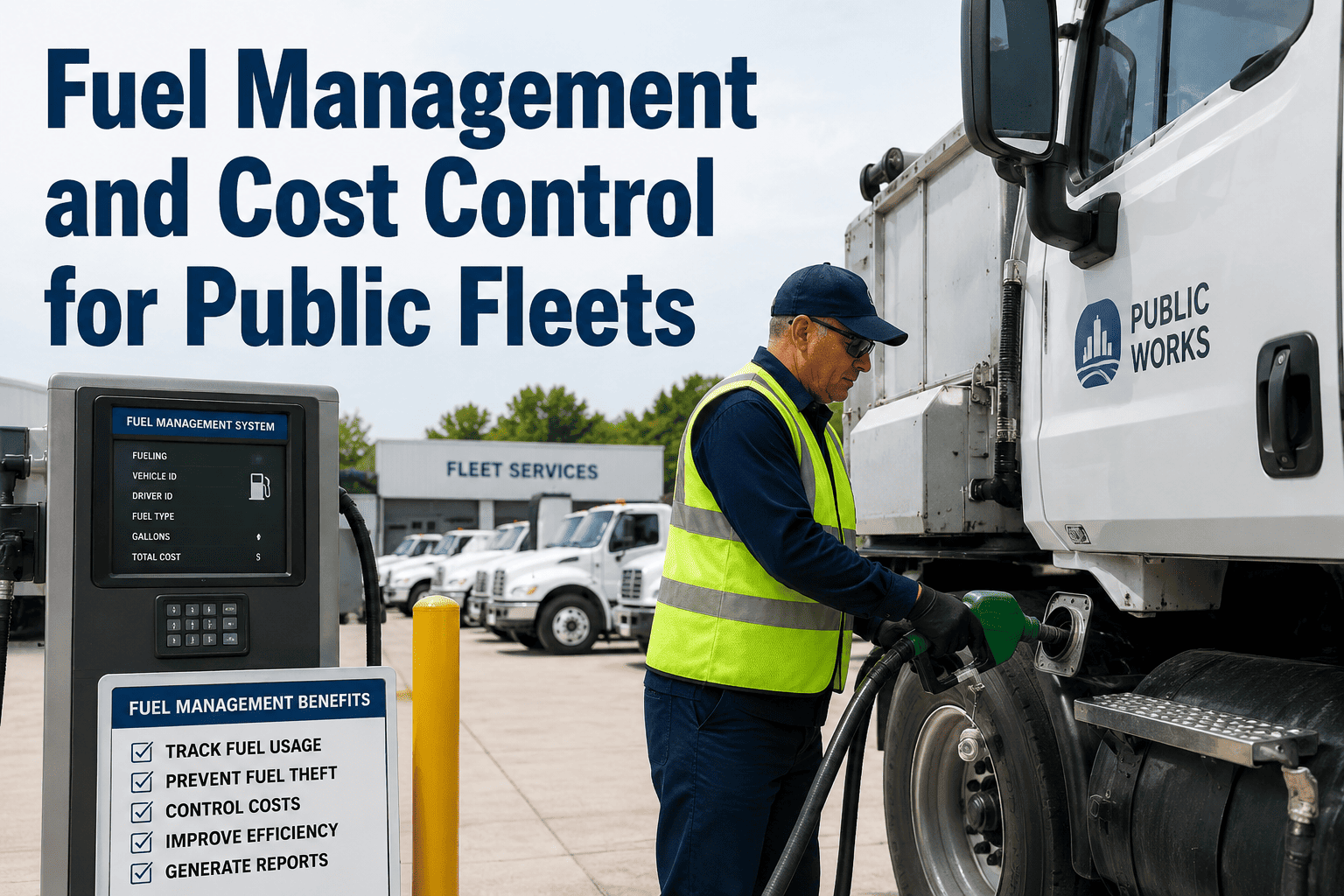
Fuel is the largest controllable line item on most public fleet budgets, typically running 25-40% of total operating cost, and it is also the expense that draws the most scrutiny from finance directors, councils, and taxpayers. A single idling refuse truck or patrol vehicle can burn half a gallon to a full gallon of diesel every hour it sits parked with the engine running, and across a fleet of hundreds of vehicles that adds up to real budget dollars before a single mile is driven. National data shows unnecessary idling alone wastes several billion gallons of fuel every year across U.S. road vehicles, and public fleets running without structured fuel monitoring have no way to see that waste happening in real time. Fleets that pair fuel cards with telematics-based monitoring typically cut fuel spend 8-15% through a mix of fraud prevention, idle reduction, and mechanical issue detection. See how OxMaint brings fuel cost control to a public fleet.
Fuel Management · Cost Control · Public Fleet Operations
Fuel Is the Most Visible Line in Your Fleet Budget. Here Is How to Actually Control It.
OxMaint gives public fleet managers one place to monitor fuel card transactions, idle time, and cost-per-mile by vehicle and department — turning a budget line that is usually reviewed after the fact into a metric you can manage every week.
25-40%
of total public fleet operating budget is typically fuel — the single largest controllable expense
8-15%
fuel spend reduction fleets typically achieve by combining fuel cards with telematics-based monitoring
1-2 mo
typical payback period for an idle-reduction and driver-coaching program once it is in place
50-60%
One major city fleet discovered through telematics data that some vehicles were idling 50 to 60 percent of their total engine-run time — despite an existing idle policy on paper. Pairing that data with driver training and automated idle alerts was projected to cut idling in half and save millions in fuel costs. Policy alone rarely changes behavior; visibility into the data is what makes an idle reduction program actually work.
Four Sources of Fuel Waste in a Public Fleet
Behavioral Waste — Idling & Harsh Driving
Largest Impact
Excessive idling alone wastes several billion gallons of fuel nationally every year, and idle reduction programs typically cut fuel consumption 5-10% with a payback of just 1-2 months once alerts and coaching are in place.
Mechanical Waste — Undetected MPG Drops
High Impact
Dragging brakes, worn injectors, and underinflated tires quietly reduce fuel economy for months before anyone notices, because per-vehicle MPG is rarely tracked without a connected fuel and maintenance system.
Transactional Waste — Card Misuse & Fraud
Moderate Impact
Without GPS and vehicle-presence controls on fuel card transactions, off-fleet fueling and unauthorized purchases can go undetected for an entire budget cycle before an audit catches them.
Compliance Waste — Manual Tax & IFTA Reporting
Moderate Impact
Hand-reconciling fuel receipts and mileage logs for tax exemption and IFTA reporting consumes staff hours every month that automated fuel card and telematics integration removes almost entirely.
OxMaint Fuel Management · Public Sector Fleet Operations
Every Gallon Your Fleet Buys Is Either Tracked, Justified, and Optimized — or It Is a Line Item Nobody Questions Until the Budget Review
OxMaint connects fuel card transactions, telematics, and maintenance records into one view, so fleet managers can defend every dollar of fuel spend with data instead of estimates.
How OxMaint Manages Fuel Cost Across a Public Fleet
Control · Fraud Prevention
Fuel Card & Transaction Controls
Fuel card transactions are matched against GPS location and vehicle assignment, so a purchase can be flagged automatically when the vehicle was not present, exceeded tank capacity, or fell outside an approved spending pattern.
Alert: fuel purchase flagged, assigned vehicle not at station location
Behavior · Idle Monitoring
Idle Time & Driver Behavior Tracking
Every vehicle's idle time is tracked against a configurable threshold by department and vehicle class, with automated alerts and post-shift reports that turn a written idle policy into an enforced, coached habit.
Alert: vehicle idle time exceeds 10 minutes on a single stop
Reporting · Cost Visibility
MPG & Cost-Per-Mile Reporting
Fuel spend, mileage, and maintenance costs roll up into a cost-per-mile figure by vehicle and department, making it easy to justify budget requests, benchmark against peer agencies, and identify vehicles worth replacing.
Report: cost-per-mile trend by department, exportable for budget review
Idle Reduction Potential by Vehicle Class
High Idle Risk
Refuse & Snow Plow Trucks
Route stops and hydraulic system demands keep engines running for extended periods, making these vehicles some of the highest per-vehicle idle fuel consumers in a public fleet.
High Idle Risk
Police & Emergency Response Vehicles
Extended idle for onboard electronics and climate control during patrol and stand-by periods is often necessary, but still benefits from monitoring to separate operational idle from avoidable idle.
Moderate Idle Risk
Transit & Passenger Buses
Layover and warm-up idling at stops and depots is common and highly responsive to policy limits paired with automated alerts once idle data is visible to dispatch.
Moderate Idle Risk
Medium-Duty Service Trucks
Frequent short stops for utility, parks, and public works crews create habitual idling that idle-time reporting by driver makes easy to coach against.
Lower Idle Risk
Administrative Sedans & Light Vehicles
Idle time is typically lower per trip, but fleet-wide totals still add up meaningfully across a large administrative vehicle pool.
Lower Idle Risk
Light-Duty Pickups & Vans
Idle risk is moderate but manageable, and these vehicles usually show the fastest improvement once drivers see their own idle reports.
Fuel Management Approach Comparison
Documented Outcomes from Public Fleet Fuel Management Programs
8-15%
typical fuel spend reduction from combining mechanical fixes, behavior coaching, and fraud detection
5-10%
fuel consumption reduction typically achieved through an idle-reduction program alone
15-30%
cost-per-mile reduction reported by public fleets within 12 months of adopting fleet management software
5¢/gal
typical fuel card network discount available to fleets buying at volume through a discount network
6B gal
estimated gasoline and diesel lost to unnecessary idling across U.S. road vehicles every year
30-40%
of total commercial and public fleet operating cost that fuel typically represents industry-wide
2-3 mo
typical ROI window for MPG-focused fuel monitoring once mechanical issues start surfacing
Frequently Asked Questions — Public Fleet Fuel Management
How quickly can a public fleet expect to see fuel savings?
Idle reduction and driver coaching are usually the fastest wins, often paying back within 1-2 months, while mechanical and fraud-detection savings build over the first two to three months.
Activate OxMaint to start tracking baseline fuel data immediately.
Do we need to replace our existing fuel card program to use OxMaint?
No. OxMaint is designed to integrate with existing fuel card providers and telematics hardware, layering fraud controls and idle monitoring on top of the systems your fleet already uses.
How does fuel card fraud actually get caught with telematics integration?
Every transaction is checked against the assigned vehicle's GPS location and fuel tank capacity at the time of purchase, so a purchase made while the vehicle is elsewhere is flagged automatically instead of surfacing in an annual audit.
Can idle policies actually change driver behavior, or is data required?
Written policy alone rarely changes behavior on its own. Combining a policy with real-time idle alerts and per-driver reporting is what agencies have found actually reduces idling over time.
Book a demo to see idle reporting by driver and department.
Does fuel management help with tax exemption and IFTA reporting too?
Yes. Automated fuel card and mileage integration removes most of the manual reconciliation work required for state tax exemptions and IFTA filings, reducing staff hours spent on compliance every quarter.
Every Dollar of Fuel Your Fleet Buys This Month Is Either Explained by Data — or Explained by Guesswork at Budget Time. OxMaint Makes It Data.
Fuel card controls, idle monitoring, and cost-per-mile reporting — start controlling fuel spend today.