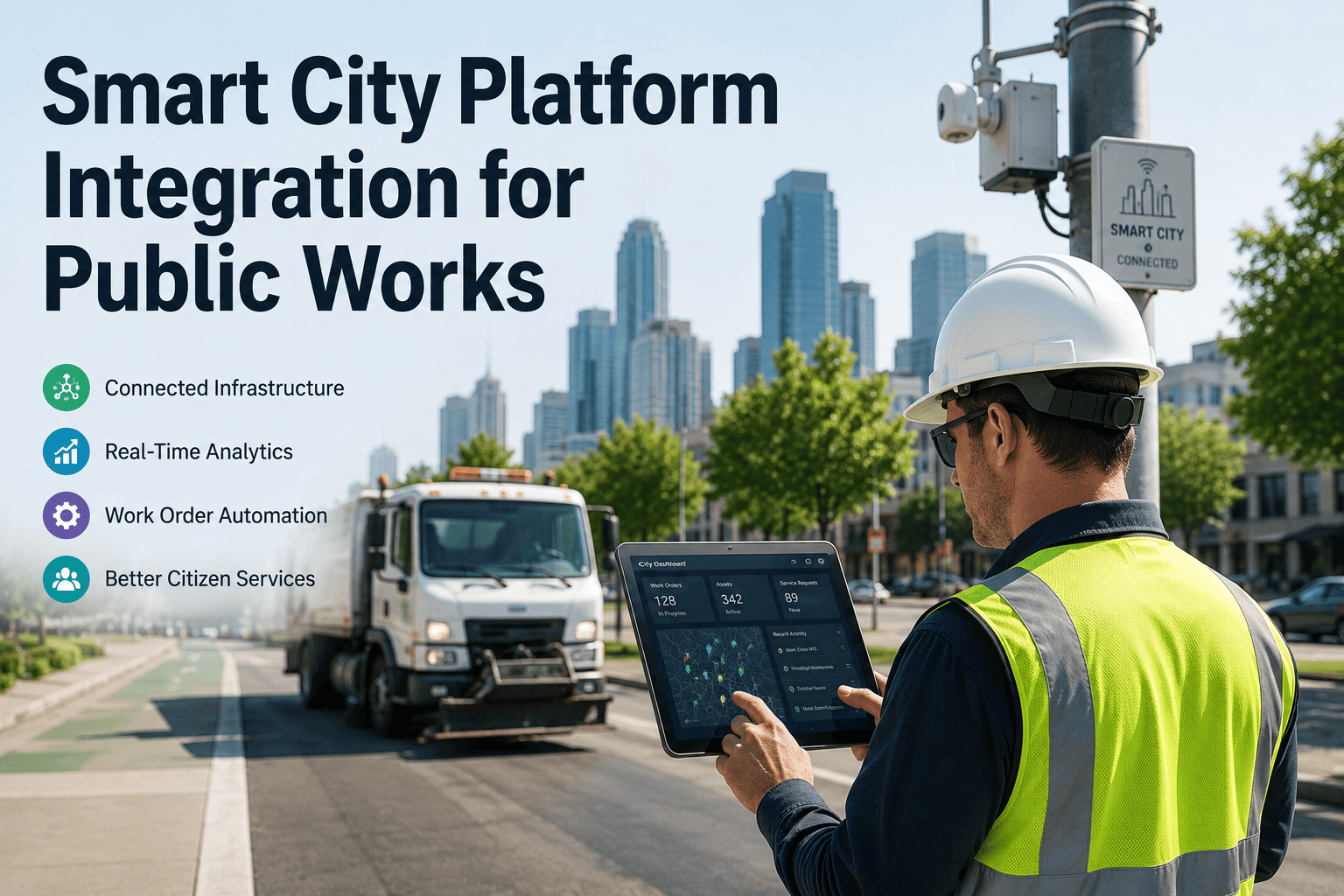
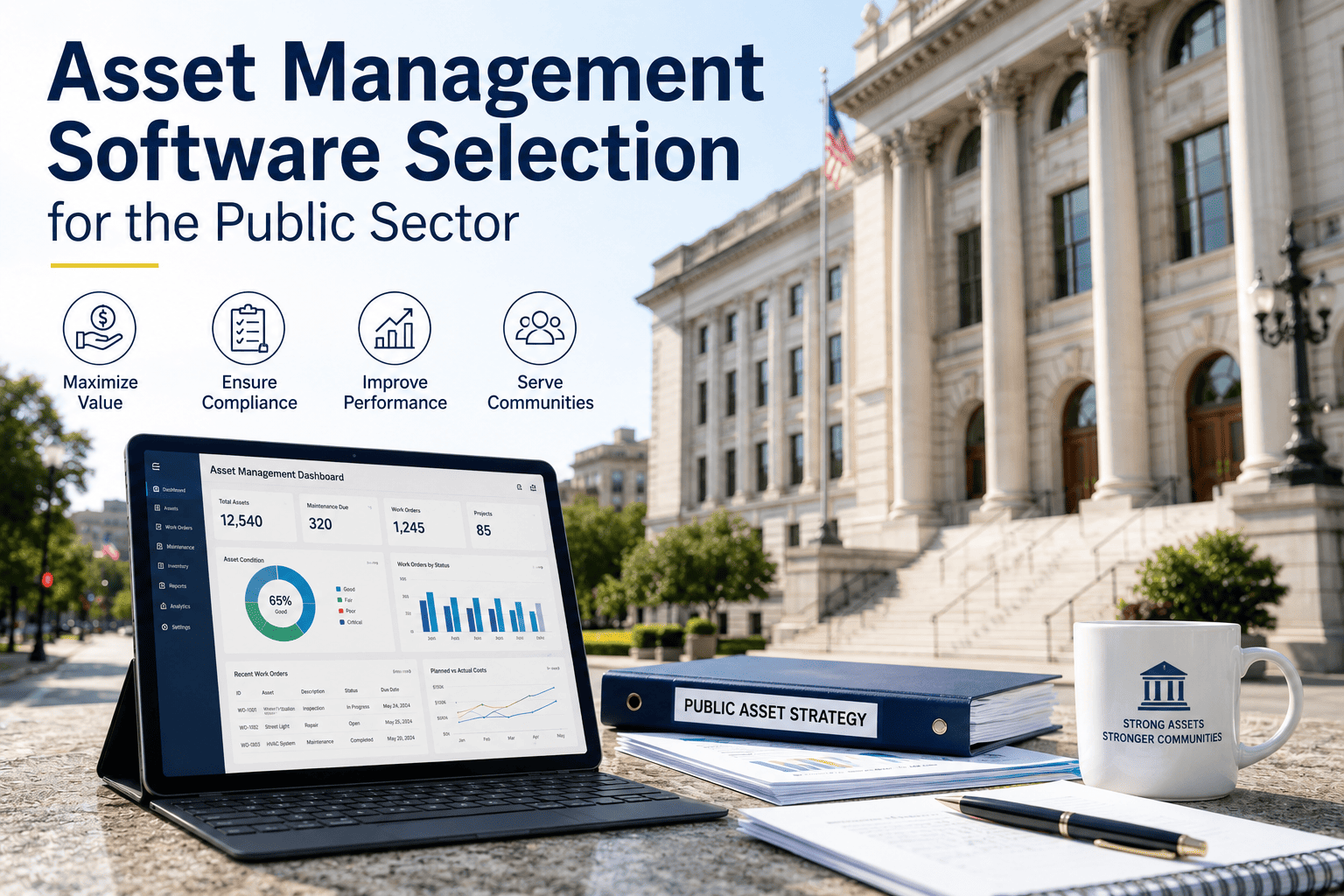
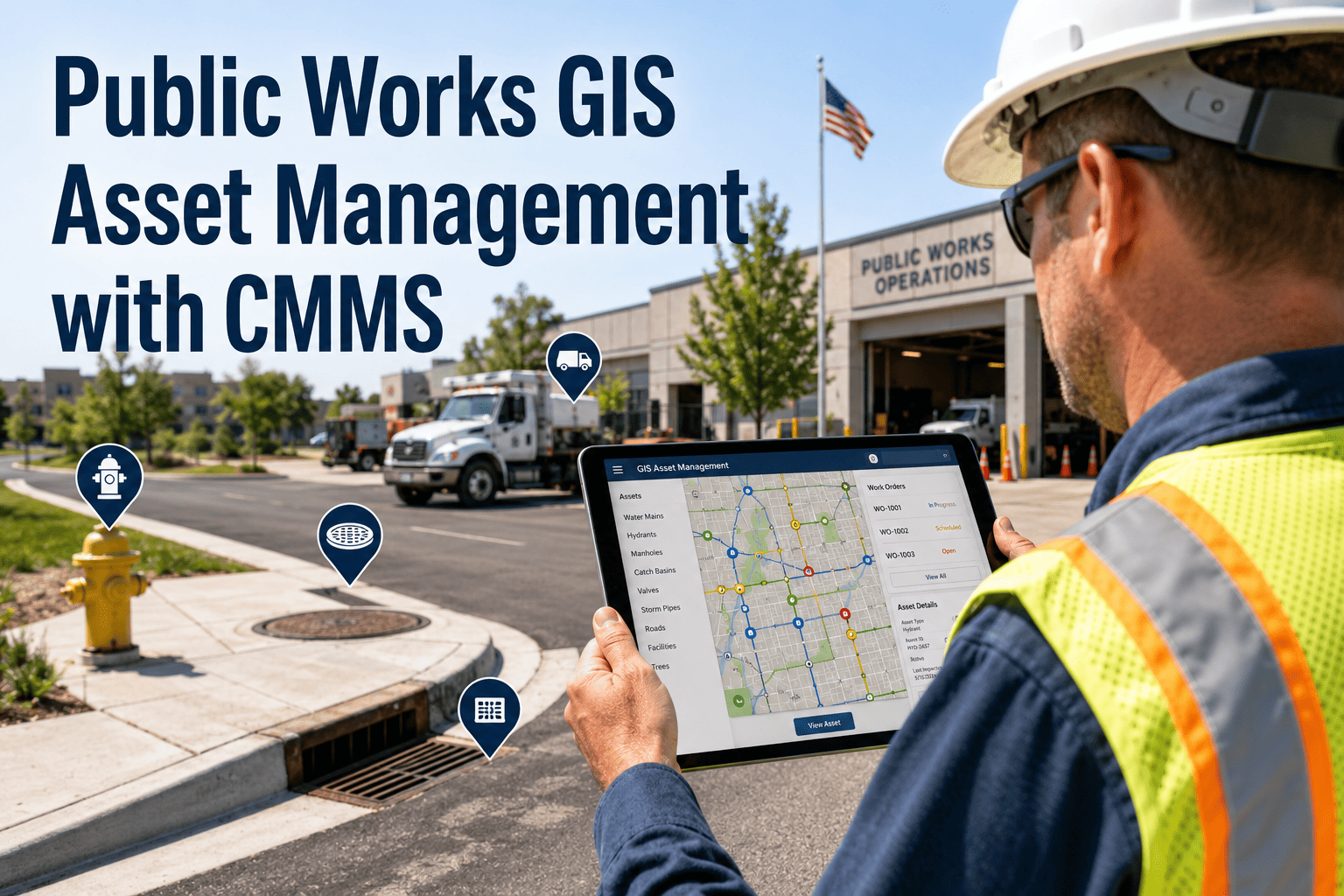
Best CMMS Software for Government and Public Sector: Complete Buyer's Guide
By Taylor on March 5, 2026
Every municipality, county, state agency, and federal department manages physical infrastructure — buildings, roads, water systems, parks, fleet vehicles, and public facilities that citizens depend on daily. Yet an estimated 72% of government maintenance organizations still run on paper work orders, disconnected spreadsheets, and legacy systems that cannot produce the audit trails, compliance reports, or cross-department visibility that public sector operations demand. The consequences are predictable: deferred maintenance backlogs that grow 8–12% annually, emergency repair costs 3–5x higher than planned work, OSHA and ADA compliance gaps that generate citations and liability exposure, and citizens filing complaints into systems that cannot track resolution. A purpose-built government CMMS changes every variable in that equation — centralizing work orders across departments, automating compliance documentation, enabling citizen request portals that track issues from submission to resolution, integrating with GIS for location-based asset management, and producing the audit-ready records that government operations require. This guide evaluates the specific capabilities that separate government-grade CMMS platforms from commercial alternatives — and shows you exactly what to look for before your next procurement cycle. Schedule a free government CMMS assessment to see how OxMaint handles multi-department maintenance, citizen portals, and compliance tracking for public sector operations.
Government CMMS Guide 2026
The Complete Buyer's Guide to CMMS for Government & Public Sector
Citizen portals, FedRAMP compliance, audit trails, multi-department management & GIS integration for municipal, state, and federal maintenance operations
72%
Gov Agencies Still on Paper/Spreadsheets
3–5×
Emergency vs. Planned Repair Cost Multiplier
35%
Average Maintenance Cost Reduction with CMMS
$1T+
U.S. Public Infrastructure Deferred Maintenance Backlog
The 5 Capability Gaps That Make Commercial CMMS Fail in Government
Government maintenance operations are fundamentally different from private sector facilities. Public accountability requires audit trails that commercial CMMS platforms don't generate. Multi-department budgets require cost allocation that single-entity systems can't handle. Citizen-facing services require request portals that industrial CMMS platforms never considered. Federal data security mandates require FedRAMP or equivalent compliance that most SaaS platforms haven't pursued. And geographic asset management across roads, parks, water systems, and buildings requires GIS integration that facility-only platforms don't support.
5 Requirements That Eliminate Most Commercial CMMS Platforms
01
Audit Trail Compliance
Every work order, approval, cost entry, and status change must be immutably logged with user, timestamp, and before/after values for auditor review
Required: GASB, GAO, IG standards
02
Citizen Request Portal
Public-facing intake for pothole reports, park damage, facility complaints — tracked from submission through resolution with citizen notification
Public accountability requirement
03
Multi-Department Budgets
Cost allocation across Parks, Public Works, Facilities, Fleet, and Water departments — each with separate fund codes, GL accounts, and approval chains
Fund accounting integration
04
Data Security & FedRAMP
Federal agencies require FedRAMP authorization. State and local agencies require SOC 2 Type II minimum. CJIS compliance for law enforcement facilities
Non-negotiable for federal use
05
GIS & Location Integration
Government assets span geographic areas — roads, water mains, parks, bridges. GIS-linked work orders map maintenance to physical location, not just asset ID
Essential for infrastructure agencies
Every one of these capabilities is a hard requirement — not a nice-to-have — for government CMMS procurement. Platforms that lack any one of them force agencies into manual workarounds that defeat the purpose of digital maintenance management. Agencies evaluating their options can start a free trial of OxMaint to test these government-specific capabilities against their actual departmental workflows before committing to a procurement decision.
The 4 Pillars of Government CMMS Excellence
Government-grade CMMS platforms must excel across four interdependent capability domains. When work order management handles multi-department routing and citizen requests, asset management integrates with GIS and tracks compliance obligations, reporting produces audit-ready documentation automatically, and the platform meets government data security requirements — the agency achieves the operational visibility, accountability, and cost control that public sector maintenance demands.
Use this scorecard to evaluate any CMMS platform against the specific requirements of government and public sector operations. Every capability listed is a hard requirement for at least one level of government — federal, state, or municipal. Platforms that cannot demonstrate these capabilities out of the box should be eliminated from your procurement shortlist. Agencies ready to see how OxMaint scores can schedule a live demo with a government CMMS specialist.
Government CMMS Capability Evaluation Matrix
Swipe to view all columns →
Capability
Municipal
State Agency
Federal
OxMaint
Citizen Request Portal
Critical
Beneficial
Beneficial
Included
Multi-Department Routing
Critical
Critical
Critical
Included
Fund Code / GL Integration
Critical
Critical
Critical
Included
Immutable Audit Trail
Required
Critical
Critical
Included
GIS Asset Mapping
Critical
Beneficial
Beneficial
Included
FedRAMP / SOC 2 Compliance
SOC 2
SOC 2
FedRAMP
SOC 2 Type II
Critical = must have for procurement approval | Required = expected by auditors | Beneficial = competitive advantage in evaluation scoring
See Every Government Capability in a Live Demo
Watch how citizen request portals, multi-department work order routing, GIS asset mapping, fund code allocation, and audit-ready compliance reporting work together in OxMaint — purpose-built for government maintenance operations.
Real-Time Government Maintenance Dashboard: What Visibility Looks Like
Government maintenance managers need a single view across all departments, all asset classes, and all active work — from citizen-reported potholes to scheduled HVAC maintenance to emergency water main repairs. OxMaint's government dashboard provides this cross-department visibility in real time, with drill-down capability from portfolio overview to individual work order detail.
Government Maintenance Command Center
6 Departments Active
Active Work Orders
847
Across 6 departments | 124 citizen-reported
PM Compliance Rate
94%
Target: 95% | Up from 61% pre-CMMS baseline
Citizen Request Avg. Resolution
2.4 days
Target: <3 days | Down from 11 day baseline
Planned vs. Reactive Ratio
78% planned
Target: 80% | Up from 28% reactive baseline
Budget Utilization YTD
67%
On track | Per-department allocation visible
Audit-Ready Score
100%
All records current | One-click export available
The ROI of Government CMMS: Costs Avoided and Efficiency Gained
Government agencies implementing purpose-built CMMS platforms see measurable returns across maintenance cost reduction, staff productivity, citizen satisfaction, and compliance posture within the first 12 months. The math is clear: proactive maintenance management costs a fraction of the reactive emergency spending, deferred maintenance escalation, and audit citation penalties that paper-based programs generate.
Annual Impact: Government CMMS Deployment
Based on a mid-size municipality with 6 departments and 4,000+ managed assets
Maintenance Cost Reduction
35% savings from planned vs. emergency repairs
$2.8M reactive
$1.82M planned
$980,000
Staff Productivity Gain
40% faster WO completion with mobile dispatch
Paper overhead
$420K recaptured
$420,000
Extended Asset Service Life
25% longer lifespan with PM compliance
$1.2M CapEx/yr
$900K CapEx
$300,000
Avoided Compliance Penalties
OSHA, ADA, EPA citation prevention
$180K citations
$0
$180,000
Total Annual Value of Government CMMS
$1,880,000
Platform cost: $35K–$85K/year depending on scale — ROI exceeds 22:1 in first year
Expert Perspective: Why Government Maintenance Is a Public Trust Issue
"
The difference between a well-run government maintenance operation and a struggling one is never the budget — it's the system. Agencies with the same per-capita maintenance budget produce dramatically different outcomes depending on whether they can track work orders across departments, prove PM compliance to auditors, resolve citizen complaints within days instead of weeks, and make data-driven capital decisions instead of political ones. The agencies that deploy purpose-built CMMS platforms don't just maintain infrastructure better — they rebuild public trust by demonstrating accountability through documented, transparent, and measurable maintenance performance.
— Director of Public Works, County Government Association; Government Facilities Management Review, Q1 2026
78%
Planned Work Ratio
Government agencies with CMMS achieve 70-85% planned maintenance ratio — vs. 28% average for paper-based programs
2.4 days
Citizen Resolution Time
Average citizen request resolution drops from 11+ days to under 3 days with digital tracking and automated routing
22:1
First-Year ROI
Government CMMS deployments consistently deliver 15-25x ROI through cost reduction, productivity gains, and penalty avoidance
The shift from reactive paper-based maintenance to proactive CMMS-managed operations requires selecting a platform that understands government requirements from the ground up — not a commercial platform with a "government edition" sticker. For public sector facilities managers evaluating where to start, the answer is clear: test the platform against your actual departmental workflows before committing to procurement. Schedule a demo to see government-specific workflows in action.
Build a Maintenance Program Your Citizens and Auditors Can Trust
Join government agencies using OxMaint to centralize work orders across departments, track citizen requests to resolution, produce audit-ready compliance reports, and manage infrastructure assets with GIS integration — all from one purpose-built platform.
What makes a government CMMS different from a commercial CMMS platform?
Government CMMS platforms must support capabilities that commercial platforms typically lack: citizen-facing request portals that track issues from public submission through resolution with automated notifications, multi-department work order routing with separate fund codes and GL accounts per department, immutable audit trails that log every status change and cost entry with user identification and timestamp for auditor review, GIS integration for geographic asset management across roads, water mains, parks, and distributed infrastructure, and compliance with government data security standards including SOC 2 Type II and FedRAMP for federal agencies. Commercial CMMS platforms designed for single-facility industrial operations cannot satisfy these requirements without extensive customization that typically exceeds the cost of a purpose-built government platform. Start a free trial to test OxMaint's government capabilities against your departmental workflows.
How does the citizen request portal work for municipal maintenance?
OxMaint's citizen request portal provides a public-facing web form (embeddable on your municipality's website) where citizens submit maintenance requests — pothole reports, park damage, facility complaints, streetlight outages — with location data and optional photos. Each submission auto-creates a work order in the CMMS, routed to the appropriate department based on request category and location. Citizens receive an automated confirmation with a tracking number, status updates as the work order progresses, and a resolution notification when the work is completed. Department managers see all citizen requests alongside internal work orders in a unified dashboard, with SLA tracking that measures time from submission to resolution. Book a demo to see the citizen portal workflow.
Does OxMaint integrate with existing government ERP and financial systems?
Yes. OxMaint connects via API with major government ERP and financial systems including Tyler Munis, SAP (Public Sector), Oracle (Government Cloud), Workday, and others. Integration enables bi-directional data flow: purchase orders and cost entries from the CMMS flow to the financial system with correct fund codes and GL accounts, while budget availability and vendor payment status flow back to the CMMS. This eliminates the duplicate data entry that plagues agencies using disconnected systems — and ensures every maintenance cost is properly allocated to the correct department, fund, and budget line for audit compliance.
What audit and compliance reports does OxMaint produce for government agencies?
OxMaint auto-generates compliance documentation required by government auditors and oversight bodies: complete work order history with immutable audit trails showing every status change, approval, and cost entry with user identification and timestamp; PM compliance reports showing scheduled vs. completed maintenance with percentage and trending; asset condition reports supporting GASB 34 infrastructure reporting requirements; ADA and OSHA compliance documentation with inspection records and corrective action tracking; citizen request resolution metrics with SLA performance by department; and budget utilization reports by department, fund code, and GL account. All reports are exportable on demand — no manual compilation required before audit cycles.
How long does it take to deploy OxMaint across a multi-department government agency?
A typical multi-department government deployment runs 8–12 weeks: Phase 1 (weeks 1–3) covers asset inventory import, departmental structure configuration, fund code mapping, and user role setup. Phase 2 (weeks 3–6) activates work order management, PM scheduling, citizen request portal, and mobile deployment for field crews. Phase 3 (weeks 6–10) configures reporting dashboards, audit trail compliance verification, and ERP integration testing. Phase 4 (weeks 10–12) completes staff training and launches live operations across all departments. Quick wins — mobile work orders and citizen request intake — are typically live within the first 3 weeks. Book a scoping call for a timeline specific to your agency's size and departmental structure.