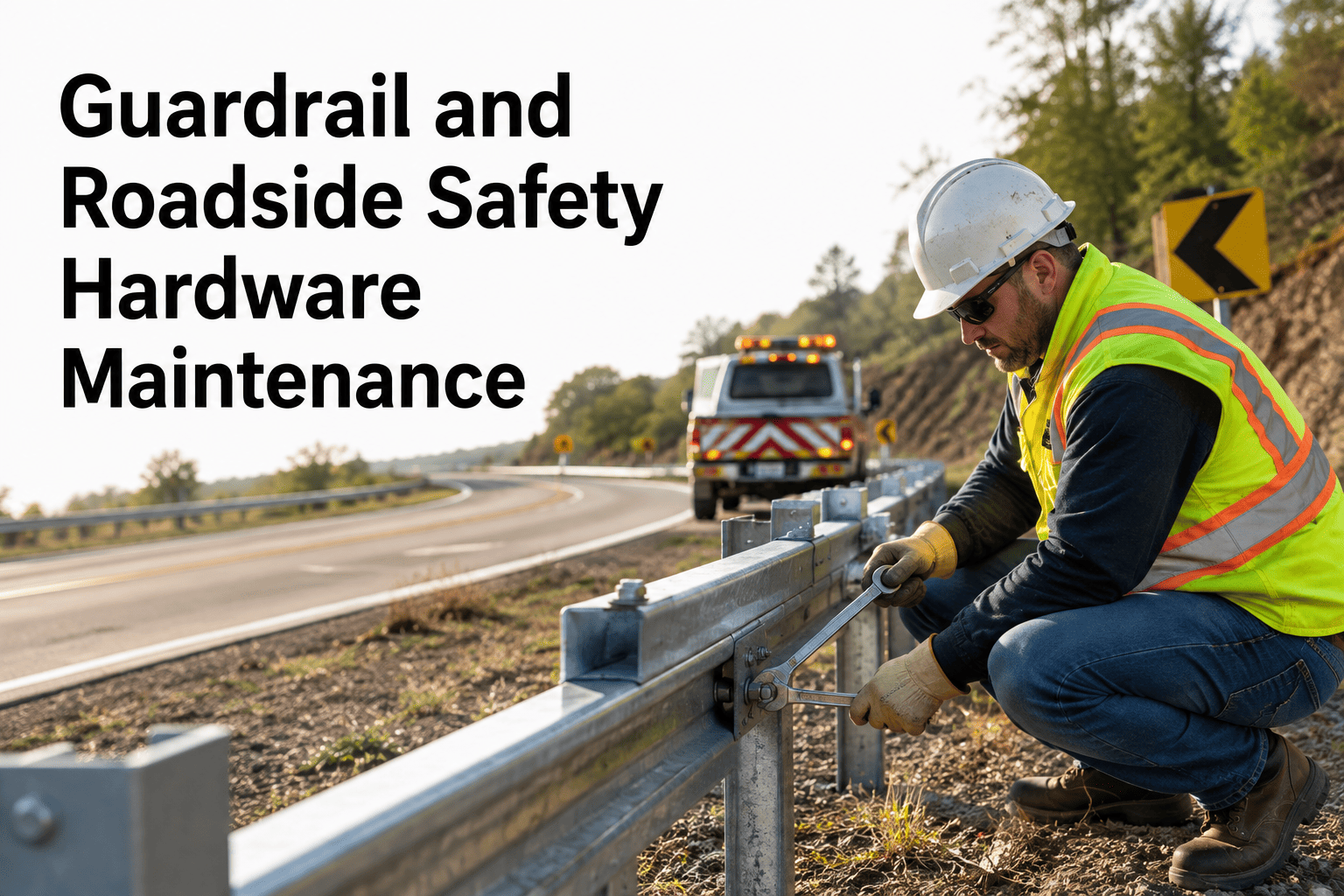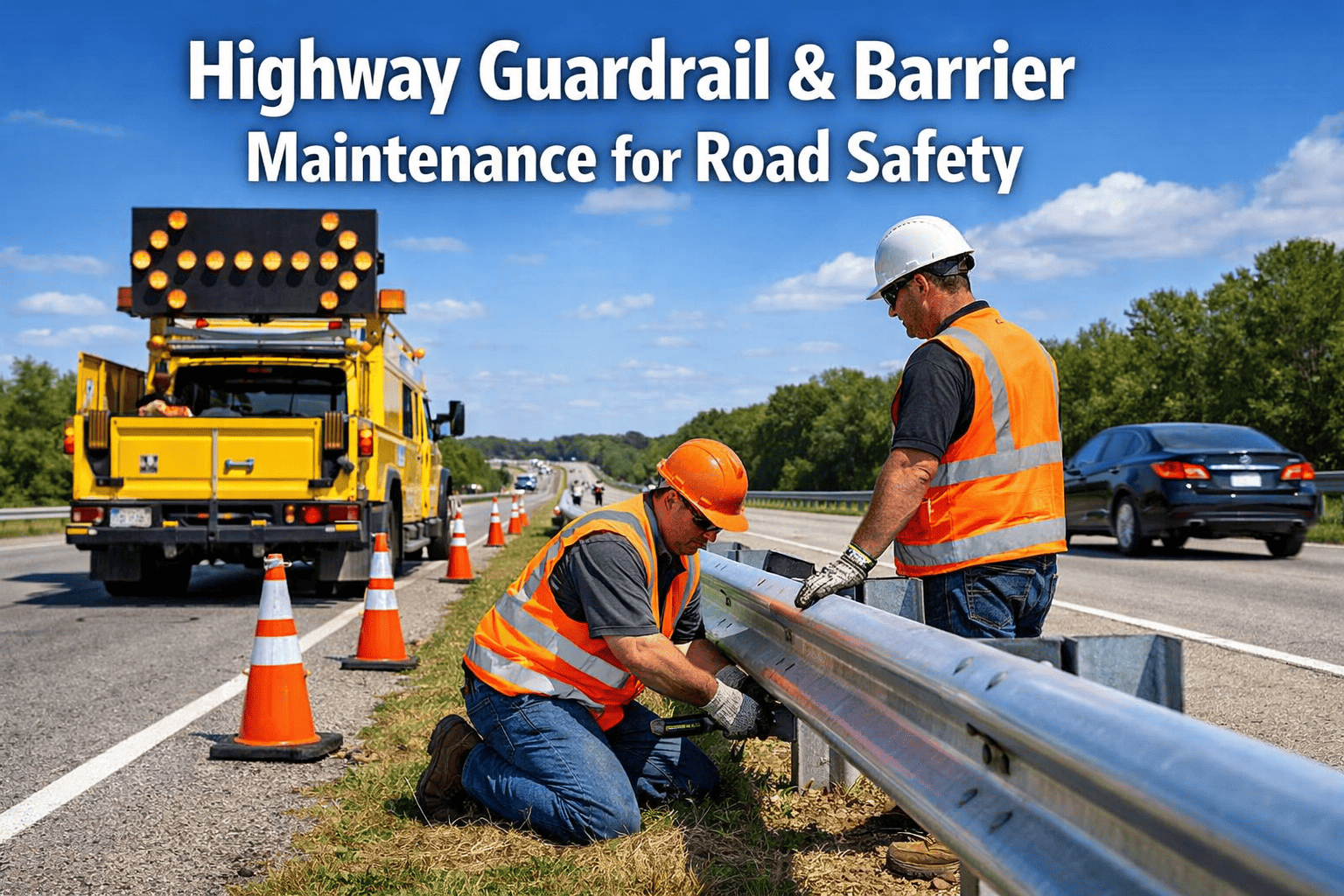
Guardrails and highway barriers are among the most safety-critical assets a road agency manages — and among the most underdocumented. A damaged end treatment left unrepaired after a minor impact can become a spearing hazard in the next collision. An uncalibrated rail height below 24 inches no longer provides the containment it was designed to deliver. Effective guardrail maintenance is not a reactive task. It is a structured program with inspection cycles, damage classifications, repair priorities, and compliance records — all tracked systematically.
Manage Every Guardrail Asset in One Place
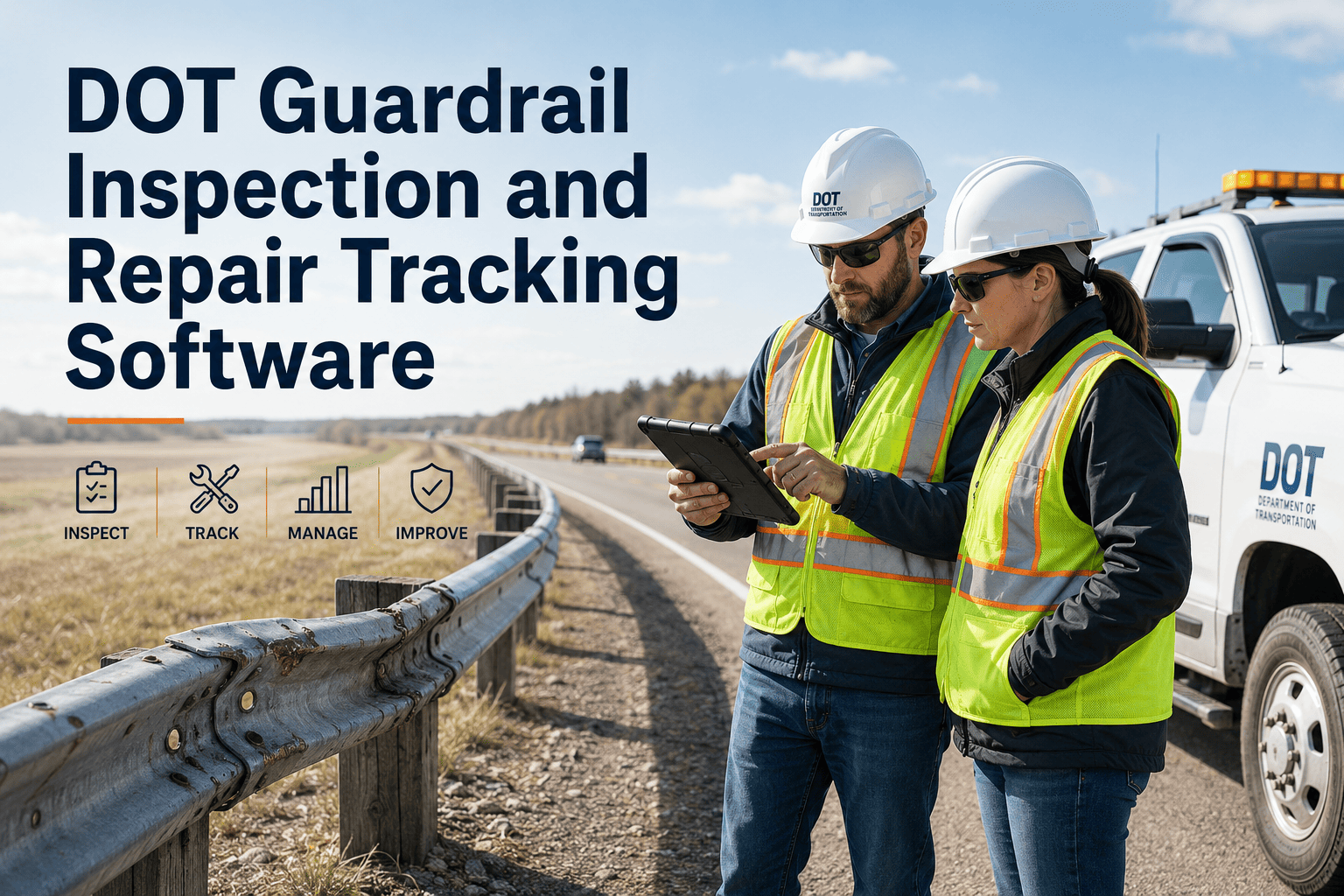
OxMaint gives roads and transportation teams a structured system to log guardrail inspections, classify damage, assign repair priorities, and maintain audit-ready compliance records. Start free and have your first guardrail inspection workflows running this week — or book a demo to see the roads asset module live.
Inspection Frequency: What the Standards Require
Conduct an on-site damage review immediately after any reported collision. Classify damage, place temporary warning devices if the system is non-functional, and initiate a repair work order. Many guardrail impacts are drive-away situations — rely on routine patrols, not just incident reports, to catch unreported damage.
Conduct a full walking inspection of all W-beam guardrail in the jurisdiction. FHWA guidance recommends annual or biannual reviews. Keep a record with date and inspector name — this documentation is critical protection in the event of post-collision litigation.
For guardrail on non-interstate routes, many state DOTs mandate formal hands-on inspection every five years, logged in the highway maintenance management system. FDOT requires inspector certification renewal on the same five-year cycle.
Three Damage Categories — and What Each Requires
FHWA and state DOT guidance consistently classify guardrail damage into three categories. Your repair program should be built around these, with response timelines defined in advance.
Rail element is separated or torn. Rail height is at or below 24 inches. End treatment is non-functional. A blunt or spearing end is exposed. At this level the system cannot redirect an errant vehicle — it may worsen the crash outcome. Place temporary warning devices (drums, cones at 10-foot spacing) immediately and initiate repair without delay. If a blunt end is exposed, drop the rail to form a turndown as a temporary measure.
Rail is flattened or bent out of line by less than 12 inches, but the element is intact and attached. Height is between 24 and 30 inches. Post is damaged but still provides resistance. Repair during the next scheduled maintenance window. Do not defer beyond 90 days on high-speed facilities.
Superficial dings, surface corrosion, minor paint or galvanising damage. The rail can still perform its intended function. Document and monitor at the next inspection cycle. Do not expend repair resources on minor damage while severe or moderate defects remain outstanding in the network.
What to Check on Every Inspection
MASH Compliance: What Your Team Needs to Know
AASHTO's Manual for Assessing Safety Hardware (MASH) replaced NCHRP Report 350 as the governing crash-test standard for roadside safety devices. As of December 31, 2019, all new permanent installations on federal-aid highways must use MASH-compliant hardware. The standard covers W-beam guardrail, thrie-beam systems, end treatments, crash cushions, concrete barriers, and cable barriers.
When repairing short stretches of damaged barrier, use the same post type as the existing installation. For longer replacement sections, all new end treatments must be MASH-compliant — even if the guardrail run itself is older Type 1 hardware. Use the Type 31 to Type 1 adapter to connect a MASH-compliant terminal to an existing non-MASH run. Never reinstall an unprotected or twist-down terminal on a high-speed facility.
Maintain a guardrail inventory that records each section's hardware type, post material, end treatment model, installation date, and MASH compliance status. This inventory is required to prioritise upgrade projects and is the first document reviewed in any litigation following a crash involving the barrier. An agency without inspection records has no defence of reasonable care.
OxMaint's roads asset module lets your team log MASH compliance status, inspection dates, and repair history against every guardrail segment — from a mobile device in the field. Start free or book a demo to see the inspection workflow.
Frequently Asked Questions
FHWA guidance recommends an annual or biannual walking inspection of all W-beam guardrail. Many state DOTs require formal inspection every five years for non-interstate routes, entered into the highway maintenance management system. In addition, a damage review must be conducted after every reported impact event — and routine patrols should be used to identify unreported drive-away collisions, which are common.
For the Modified Guardrail System (MGS), the design height is 31 inches with a construction tolerance of plus or minus 3 inches, meaning the acceptable range is 28 to 34 inches. Rail at or below 24 inches is classified as severe damage requiring immediate repair — at that height the system cannot contain an errant vehicle. Erosion and debris accumulation at the base are common causes of gradual height reduction that inspectors must check for.
MASH (Manual for Assessing Safety Hardware) is the current crash-test standard for roadside safety hardware, replacing NCHRP 350 fully as of December 31, 2019. Any new permanent installation or replacement on a federal-aid highway must use MASH-compliant hardware. For repairs, end treatments must always be MASH-compliant even when the connected guardrail run is older non-MASH hardware. The Type 31 to Type 1 adapter allows a MASH-compliant terminal to connect to an existing Type 1 run.
When a guardrail section is non-functional and cannot be repaired immediately, place retroreflective drums or cones in accordance with the MUTCD Part 6 standards — at least three devices ahead of the damaged area, then one every 10 feet along the length of damage. If a blunt spearing end is exposed, drop the rail to form a turndown immediately as a temporary measure. In extremely hazardous situations, deploy a truck-mounted attenuator. Make a detailed damage inspection report estimating repair parts and crew requirements before leaving the site.
For short repair sections, FHWA guidance recommends using the same post type as the existing installation. For longer replacement sections, substituting steel posts for the existing type is generally acceptable. However, MASH crash testing has shown performance differences between steel and wood post systems — particularly when the top of rail is below 27.75 inches — so agencies should consult their state DOT standard plans when selecting post materials for replacement sections.
Transportation agencies have a legal duty of care to inspect, maintain, and repair public roadways to accepted engineering standards. In post-collision litigation, the central question is whether the agency met that standard. A complete inspection log — with dates, inspector names, damage classifications, and repair records — is the primary evidence of reasonable care. Agencies without documentation have no demonstrable defence. Keep records of every inspection, including the date, route, inspector, findings, and any repairs initiated.
Build a Defensible Guardrail Maintenance Program
OxMaint gives roads teams structured inspection workflows, damage classification, repair prioritisation, and a full audit trail for every guardrail asset. Log inspections in the field on mobile, generate compliance reports in minutes, and never face a documentation gap in a safety review. Start free today or book a demo with a roads maintenance specialist.