Parks and recreation departments feel the calendar in a way few other municipal teams do — a quiet park in January turns into a fully booked sports complex by June, and the same small crew has to cover both. Mowing, irrigation start-up, playground inspections, field prep, and winterization all land in different weeks, and a single missed changeover can mean a flooded field or a burst irrigation line before spring even begins. Most departments still plan this from memory, a spreadsheet, or a supervisor's notebook, which works fine until a key person is out sick right as peak season hits. Matching crew capacity to the real seasonal workload, instead of running one fixed schedule all year, is what keeps a parks system ahead of the season instead of chasing it, and this is exactly the shift that Oxmaint's parks maintenance scheduling platform is built to support.
Parks & Recreation · Seasonal Planning · 2026
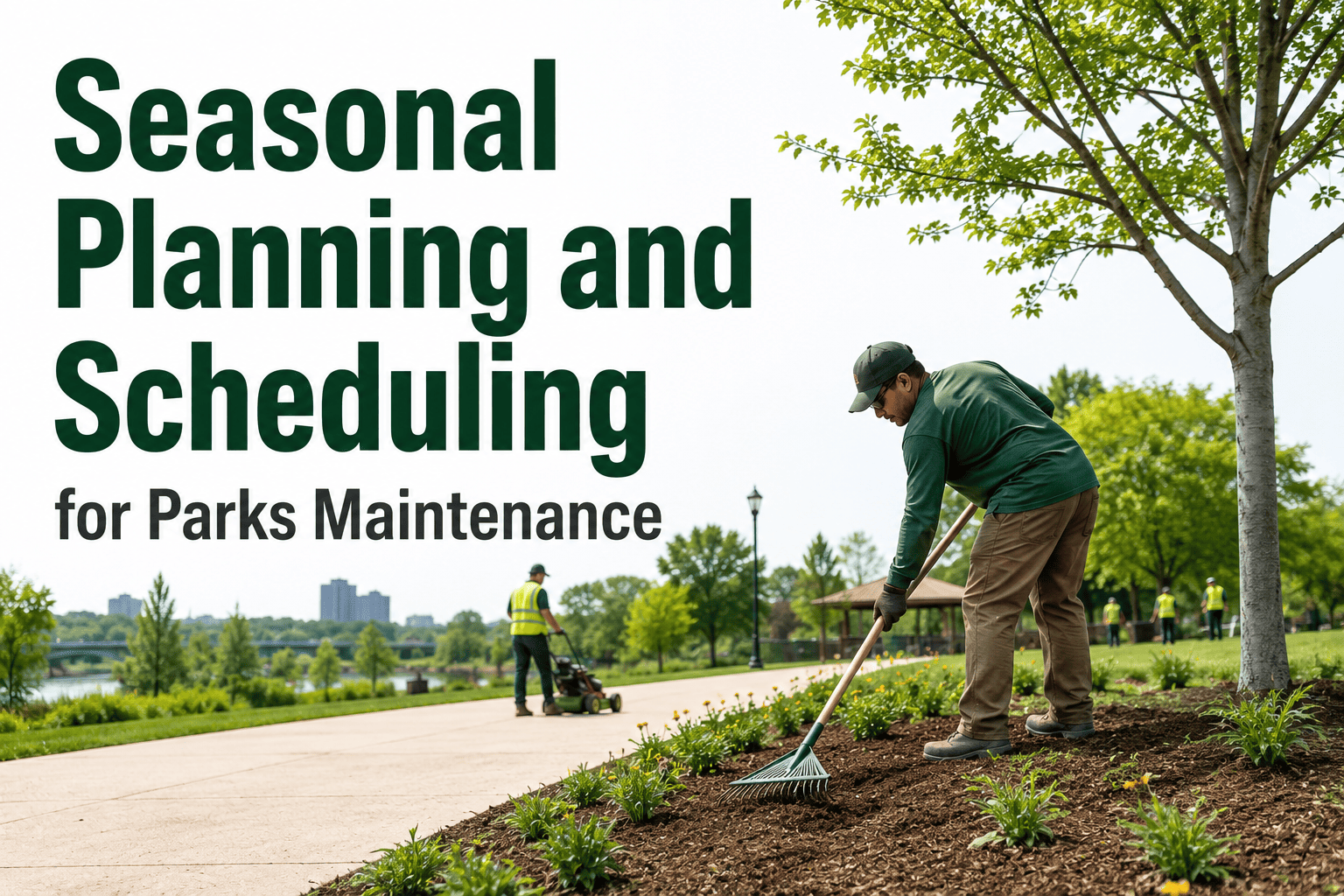
Seasonal Planning and Scheduling for Parks Maintenance Teams
Parks demand surges and drops with every season, but most crews stay the same size all year. Here is how leading parks departments plan, staff, and schedule maintenance so every peak season is covered — not survived.
3x
higher maintenance workload in peak summer months versus off-season
40%
fewer emergency repairs when seasonal preventive tasks are scheduled in advance
30%
of maintenance budgets lost to reactive repairs from missed seasonal changeovers
25%
productivity gain when crews are cross-trained and scheduled by season
Why Seasonal Scheduling Breaks Down Without a System
Parks departments run on a rhythm that changes every few months, but most staffing plans and task lists stay static. Here is where that gap shows up most often.
Staffing Gap
Peak Season Understaffing
Seasonal hires get onboarded late, right as mowing, irrigation, and field prep all peak at once. Core staff absorb the overflow and burn out by midsummer.
Task Gap
Forgotten Changeover Tasks
Irrigation winterization or spring start-up depends on someone remembering the date. When they forget, a burst pipe or a dry field tells you first.
Weather Gap
Weather-Driven Rescheduling
A storm week pushes every task back, but paper schedules do not reshuffle themselves. Lower-priority work quietly disappears instead of getting rebooked.
Equipment Gap
Equipment Not Ready for the Season
Mowers, aerators, and irrigation controllers sit unused for months, then fail in the first week of peak demand when there is no time to wait for parts.
The Four-Season Maintenance Cycle
Spring
March – May
Crew Load: Rising Sharply
Irrigation start-up, playground mulch top-up, mowing restart, athletic field prep
Summer
June – August
Crew Load: Peak
Weekly mowing, daily playground checks, event turnover, restroom servicing
Fall
September – November
Crew Load: Second Peak
Leaf removal, tree hazard survey, field renovation, aeration and overseeding
Winter
December – February
Crew Load: Lowest
Irrigation winterization, restroom closures, equipment overhaul, staff training
| Season |
Primary Tasks |
Staffing Need |
Common Failure Point |
| Spring |
Irrigation startup, turf renovation, playground mulch |
High — seasonal hires onboarding |
Late irrigation activation floods low-lying turf |
| Summer |
Mowing, field lining, daily safety checks |
Peak — full crew plus seasonal staff |
Missed playground inspection during high-visitor weeks |
| Fall |
Leaf cleanup, tree risk assessment, aeration |
High — before weather turns |
Tree hazard survey skipped, liability exposure rises |
| Winter |
Winterization, equipment overhaul, indoor training |
Low — core staff only |
Un-winterized irrigation lines burst in first freeze |
Director of Parks & Recreation, Mid-Sized Municipality
We manage dozens of parks across the city, and the season used to catch us off guard every single year. Once we moved seasonal changeovers into a scheduling system instead of a supervisor's memory, crew assignments stopped being a scramble. We know exactly who is doing what, in which park, and nothing slips through when the season turns.
Manual Planning vs. Seasonal Scheduling with Oxmaint
Spreadsheet & Memory Planning
Seasonal changeover tasks depend on someone remembering the date
Crew schedules rebuilt from scratch every quarter
Cross-trained staff assigned informally, skills tracked nowhere
No record linking a missed task to the resulting repair cost
Seasonal staffing requests based on guesswork
Oxmaint Seasonal Scheduling
Changeover tasks trigger automatically by date and by park
Crew capacity plans roll over and adjust year to year
Skills and certifications tracked per staff member for smarter assignment
Every task links to an asset, a cost, and an outcome for reporting
Seasonal staffing requests backed by last year's actual workload data
Build Your Department's Seasonal Calendar in Oxmaint
See how parks departments plan crew capacity, automate seasonal changeovers, and keep every park ready before the season shifts.
40%
fewer emergency repairs with scheduled preventive seasonal maintenance
27%
productivity increase reported after moving to digital scheduling
25-40%
staff productivity gain through cross-training and seasonal planning
Frequently Asked Questions
How does seasonal scheduling work for a department with dozens of parks?
Each park gets its own calendar of seasonal tasks tied to its specific assets, so a splash pad and a trail system never share the same schedule.
Oxmaint rolls up every park into one dashboard for the director.
Can the same crew schedule handle routine mowing and sudden weather work?
Yes. Routine tasks sit on a recurring seasonal calendar, while weather-driven work can be inserted without losing track of what got pushed back.
Book a demo to see rescheduling in action.
How far in advance should a seasonal maintenance calendar be built?
Most departments build the full-year calendar at the start of the fiscal year, then let seasonal triggers fire automatically as dates approach. This keeps onboarding of seasonal staff aligned with actual peak workload.
Does seasonal scheduling help justify budget requests for temporary staff?
Yes. Historical task and completion data from
Oxmaint shows exactly how much seasonal workload increased last year, giving budget requests real numbers instead of estimates.
What happens when a scheduled task is missed during peak season?
Overdue seasonal tasks surface immediately on the supervisor's dashboard instead of waiting for someone to notice.
Talk to our team about how overdue alerts are configured per park.
Stop Reacting to the Season — Start Planning For It
Oxmaint helps parks and recreation teams build seasonal calendars, match crew capacity to real workload, and keep every park audit-ready and visitor-ready year round.