Park restrooms are among the most visible services a parks department provides, and one of the hardest to keep consistent. Traffic swings with weather, events and school holidays, sites are spread across the city, and the only proof that a round happened is often a signature on a paper sheet. A good public restroom cleaning schedule matches visit frequency to actual use, tells staff what each round must cover, and leaves a record that supervisors and the public can trust. This guide shows how to build that schedule and verify it. Teams that want mobile checklists and completion records can start with Oxmaint and pilot the plan at a handful of sites.
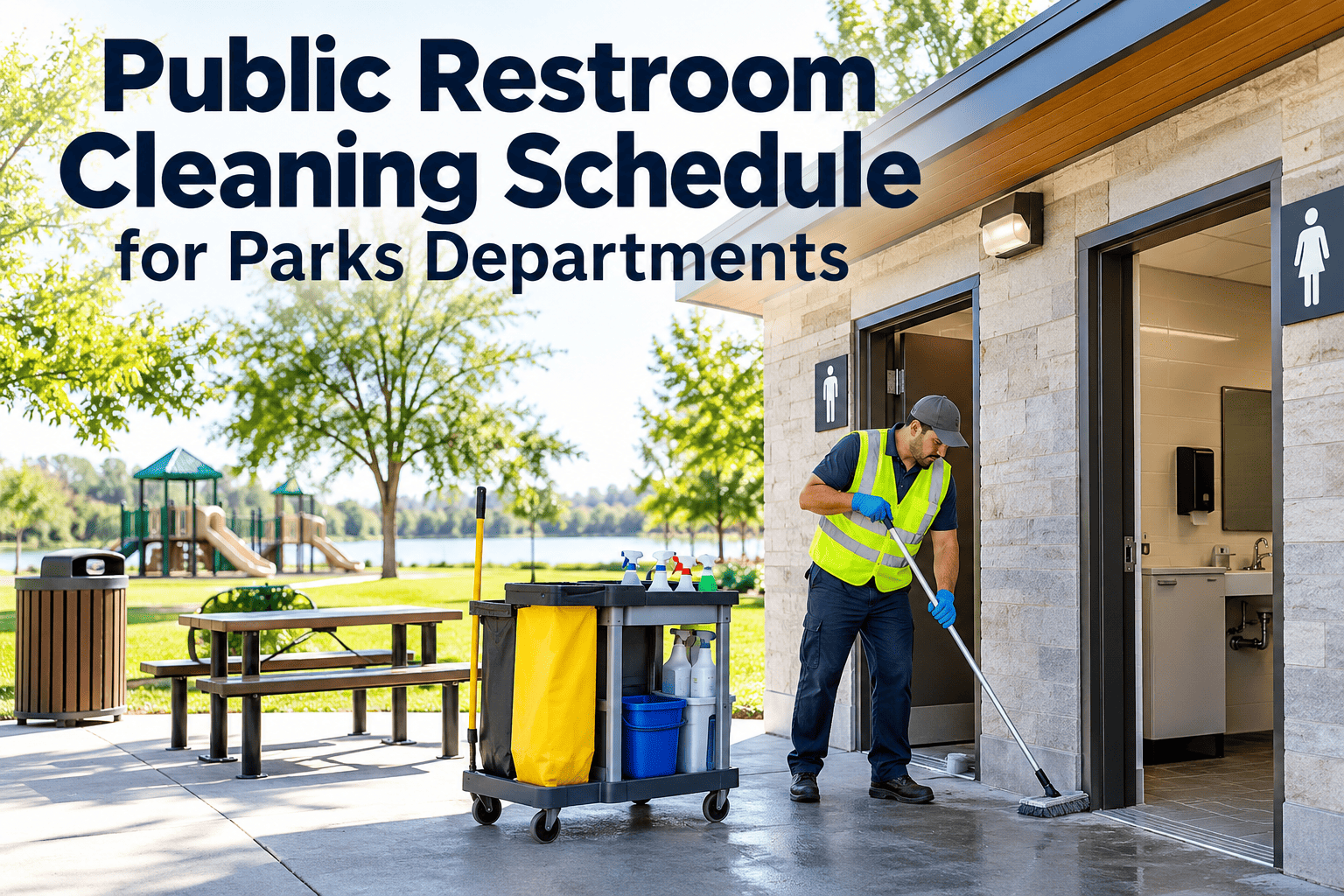
Public Restroom Cleaning Schedule for Parks Departments
Plan rounds by traffic tier, give crews a clear checklist, and capture proof of completion from the field, so residents find clean, stocked restrooms on every visit.
Why restroom service levels slip in parks
Step one: sort every restroom into a traffic tier
A tier system lets you assign effort where it is needed. Review tiers each season using counts, complaint logs and event calendars, and move sites up or down as use changes.
| Tier | Typical sites | Service pattern to consider |
|---|---|---|
| Tier A: high use | Regional parks, trailheads, beaches, splash pads, sports complexes, event grounds | Multiple rounds per day in season, with a full clean at peak and a closing clean |
| Tier B: moderate use | Community parks, playgrounds, picnic areas | Daily full clean, with a spot check and restock at midday on busy days |
| Tier C: low use | Small neighborhood parks, seasonal or remote sites | Scheduled visits on set days, with extra visits after events or complaints |
| Special: events | Festivals, tournaments, markets | Temporary schedule tied to the event calendar and expected attendance |
The patterns above are starting points, not standards. Set frequencies from your own counts and complaint history, and adjust them as the data comes in.
A sample weekly grid you can adapt
The grid below is illustrative. F means a full clean, S means a spot check and restock, and C means closing clean and lock. Replace the times with ones that fit your shifts.
| Time block | Tier A weekday | Tier A weekend | Tier B | Tier C |
|---|---|---|---|---|
| Opening | F | F | F | Scheduled days only |
| Mid-morning | S | S | None | None |
| Midday peak | F | F | S on busy days | None |
| Afternoon | S | F | None | None |
| Closing | C | C | C | C on visit days |
Schedule rounds and see which ones were completed
Oxmaint generates recurring cleaning work orders by site, sends them to crews' phones and records completion with checklists, photos and timestamps.
Three levels of service, three checklists
Spot check and restock
- Look for hazards, spills and damage
- Empty full bins and replace liners
- Refill paper, soap and other consumables
- Wipe obvious mess on floors and fixtures
- Photo only if a problem is found
Standard full clean
- Clean and disinfect toilets, urinals and sinks
- Disinfect high-touch surfaces such as handles, locks and dispensers
- Clean mirrors, counters and partitions
- Sweep and mop floors, including drains
- Check lights, locks, water flow and ventilation
Weekly or periodic deep clean
- Descale fixtures and clean grout and wall surfaces
- Clean vents, light covers and exterior doors
- Inspect partitions, plumbing and floors for wear
- Remove graffiti and sticker residue
- Create work orders for any repair needs
Follow product labels for dilution, contact time and ventilation, and keep safety data sheets available to staff. Disinfection only works if the product is used as directed.
Seasonal and event adjustments
Supplies: avoid the empty dispenser
Set restock rules
- Define a minimum level for paper, soap, liners and cleaning chemicals at each site
- Restock to that level at every round, not only when someone complains
- Track use by site so you can forecast busy periods
Typical failure points
- Crews carry too little stock between depots and sites
- Chemicals run out and substitute products are used without guidance
- Vandalism or theft goes unreported, so repeat losses stay invisible
Proof of completion that supervisors can trust
Proof should be quick for the crew and hard to fake. Combine a location check, a short checklist and a photo for any issue, so records tell a real story.
Arrive and scan
Scan a code posted at the restroom, or open the work order at the site, to confirm location and start time.
Complete checklist
Mark each item, enter supply levels and note anything unusual.
Capture photos
Take photos of problems and, where policy requires, of the finished room.
Raise issues
Turn damage, leaks and missing parts into repair requests on the spot.
Sign off
Submit the record, and let the supervisor review exceptions and overdue rounds.
Track service levels, not just activity
| Measure | What it tells you | How to calculate it |
|---|---|---|
| On-time round rate | Whether the schedule is being followed | Rounds completed in their window divided by rounds scheduled |
| Complaints per site | Where service falls short from the public's view | Complaints grouped by restroom and by month |
| Supply outages | Whether restocking rules work | Reports of empty dispensers per site, per period |
| Issue-to-repair time | How fast defects found by cleaners are fixed | Days from issue creation to closed repair |
| Repeat defects | Fixtures or sites that need a bigger fix | Count of the same defect type at one site over time |
Connect cleaning to maintenance
Without a link
- Cleaners mention a broken lock verbally or on paper
- Maintenance hears about it days later or after a complaint
- The same fixture is reported again and again
With a link
- The cleaner raises a work order with a photo before leaving
- Maintenance prioritizes the repair and sees its history
- Repeat failures show up in reports and support replacement decisions
If you use contractors, verify the work the same way
Route planning: make travel time work for you
Cleaning time is limited by how far crews must drive between sites. Build routes around tiers and geography, then review them every season as use and staffing change.
Design principles
- Place Tier A sites at the start of a shift and at the peak window
- Group nearby Tier B and C sites into one loop
- Leave buffer time for incidents, major spills and urgent repairs
- Keep a supply stop in the route for restocking
Review monthly
- Actual time on site compared with planned time
- Rounds that were skipped or finished late, and why
- Sites where complaints continue despite scheduled visits
- Opportunities to shorten routes or add a second crew
Health, safety and training for restroom crews
Close or protect a restroom when conditions require it
Some situations make a restroom unsafe or unusable. Decide in advance how crews should respond, so the closure is quick, visible and recorded.
Identify
Crew finds a flood, major damage, a safety hazard or a failed utility.
Secure
Close and sign the restroom, and keep people away from the hazard.
Report
Create an urgent work order with photos and notify the supervisor.
Repair
Assign the correct trade, and arrange a temporary option for visitors if possible.
Reopen
Inspect, clean, restock and record the reopening time.
Let the public help you find problems early
Residents notice an empty dispenser or a broken stall before any supervisor does. A simple reporting route adds coverage between scheduled rounds.
Post a clear contact route
Display a phone number or web link at each restroom, and make sure the report creates a work order with the site already identified.
Respond and confirm
Send a short acknowledgement and a closing message when the issue is fixed, so people learn that reports matter.
Learn from the patterns
Review complaints by site, time and category each month, and adjust tiers, routes or supplies accordingly.
Check accessibility and visitor comfort on every full clean
Budget the program from measured effort
Cost conversations are easier when you know how much labor, material and travel each restroom actually uses. Record these figures for a full season before you ask for changes.
Use these numbers to compare in-house and contracted service, decide whether to add portable units, and show council why a high-use site needs more rounds than a quiet one.
Mistakes that undermine a restroom cleaning plan
How Oxmaint supports restroom service programs
Capabilities that fit the workflow
- Recurring work orders by site and tier, with schedules for seasons and events
- Mobile checklists with photos, notes and timestamps for each round
- Corrective work orders raised directly from cleaning findings
- Inventory tracking for paper, soap, liners and cleaning supplies
- Dashboards and reports for on-time rounds, complaints and repair times
Technology records the work, but good results still depend on clear routes, enough staff, suitable supplies and supervisors who act on the data.
Pilot the schedule at five to ten sites across all tiers for one season. Compare completion rates, complaints and supply outages with the previous year, adjust tiers and routes, and then roll the plan out to the rest of the park system.
Frequently asked questions
How often should park restrooms be cleaned?
It depends on traffic, season and events, so assign sites to tiers and set frequencies from your own counts and complaints. Review the tiers each season.
How can we prove that a cleaning round happened?
Use a mobile checklist with a timestamp, location check and photos for issues. You can book a demo to see this workflow.
What should a restroom checklist include?
Safety checks, cleaning and disinfection of fixtures and high-touch surfaces, floors, supplies, lighting, locks and plumbing function.
How do we handle repairs found during cleaning?
Have cleaners create a work order with a photo on the spot. You can sign up to link cleaning and maintenance in one system.
Can the same system manage contractors?
Yes. Give contractors the same checklists and require photos and timestamps, then audit a sample of sites against their records.
Clean restrooms, with the records to back it up
Plan rounds by need, verify them from the field and turn findings into repairs. Oxmaint helps parks departments manage restroom service levels across every site.