Public building roofs and envelopes are the highest-value component groups on any municipal asset register — and premature failure from skipped maintenance is the top driver of unplanned capital spend. A single undetected membrane breach can escalate from a $400 sealant repair into a $180,000 re-roofing project within two heating cycles. A CMMS-driven envelope program extends roof service life 30–50%, redirects water-intrusion claims before they metastasize, and converts volatile emergency spend into a predictable line item. The asset teams that win are the ones inspecting on cadence, not on crisis — start yours with a Start Free Trial of OxMaint today.
Is one undrained scupper quietly writing your next capital requisition?
Public roofs and envelopes fail from neglect long before they fail from age. A disciplined inspection-and-sealant program catches the $400 leak before it becomes the $180,000 re-roof — and extends envelope service life 30–50% without a single line of new capital.
Envelope neglect is the single largest controllable line on a municipal asset register
Roof and wall assemblies typically represent 18–24% of a public facility's replacement asset value — yet draw less than 6% of routine maintenance budget. That imbalance is exactly why envelope failures dominate unplanned capital draws.
A 12-building municipal campus carried 186,000 ft² of BUR and TPO roofing on a 25-year replacement schedule with no interim program. After three skipped inspection cycles, a single HVAC curb flashing failed on the library — undetected for 14 months. The resulting claim: $84,000 in interior finish replacement, $31,000 in mold remediation, and a $6,200 emergency membrane patch. A $380 annual sealant service would have caught it. A CMMS envelope program was deployed the following quarter; across the campus, emergency envelope spend dropped 71% within 18 months.
A tiered inspection schedule that matches risk to frequency
Not every roof warrants the same scrutiny. Tiering by assembly type, age, occupancy sensitivity, and warranty status lets a small facilities team concentrate effort where failure consequence is highest.
Critical & High-Risk
- Hospitals, dispatch centers, records archives
- Roofs > 15 years old or in final warranty year
- Assemblies with known leak history
- Low-slope roofs with internal drains
Standard Operations
- Office buildings, courthouses, libraries
- Roofs aged 7–15 years, under active warranty
- Moderate occupancy sensitivity
- Mixed drainage (gutter + internal)
Low-Risk & Storage
- Storage depots, vehicle bays, pump houses
- Roofs under 7 years old, manufacturer-warranted
- Low occupancy consequence
- Steep-slope with conventional gutters
| Inspection Event | Tier 1 | Tier 2 | Tier 3 | Trigger Condition |
|---|---|---|---|---|
| Visual envelope walk-through | Quarterly | Semi-annual | Annual | Scheduled cadence |
| Drainage & scupper flow test | Quarterly | Semi-annual | Annual | Pre-monsoon / leaf-drop |
| Infrared moisture scan | Annual | Biennial | Every 5 yrs | Year 10+ or post-storm |
| Sealant & flashing condition audit | Semi-annual | Annual | Biennial | Warranty year 8+ |
| Post-storm rapid assessment | Within 48 hrs | Within 72 hrs | Within 1 week | Event-driven |
| Warranty compliance documentation | Annual | Annual | Annual | Manufacturer requirement |
The four service streams that determine whether a roof reaches year 25 or year 14
Roughly 83% of premature envelope failures trace back to four predictable, serviceable failure modes. A program that addresses each on cadence will outperform a reactive team spending three times the budget.
Joint & penetration sealant renewal
UV exposure hardens polyurethane and silicone sealants within 7–10 years, losing elongation and adhesion. Recoat or replace perimeter sealants at curbs, vents, skylights, and expansion joints on an 8-year rolling cycle. A failed $12 tube of sealant at a plumbing stack is the single most common origin point for six-figure interior damage claims in public buildings.
Base, counter, and edge flashing service
Wind uplift and thermal cycling loosen cleats, open hemmed edges, and detach termination bars. Inspect all flashing terminations annually; re-secure loose cleats, replace corroded components, and verify the continuous seal at wall-to-roof transitions. Edge flashing failures account for an estimated 41% of wind-related roof damage on low-slope public assemblies.
Drain, scupper, and gutter management
A single blocked primary drain shifts hydrostatic load onto a membrane designed for 1/4 in/ft slope — ponding water triples membrane degradation rate. Clear all drainage paths quarterly, verify overflow scuppers are unobstructed, and confirm primary + secondary drains are both functional before every wet season. Inspect leader lines for ice-dam risk in cold climates.
Moisture-intrusion detection & documentation
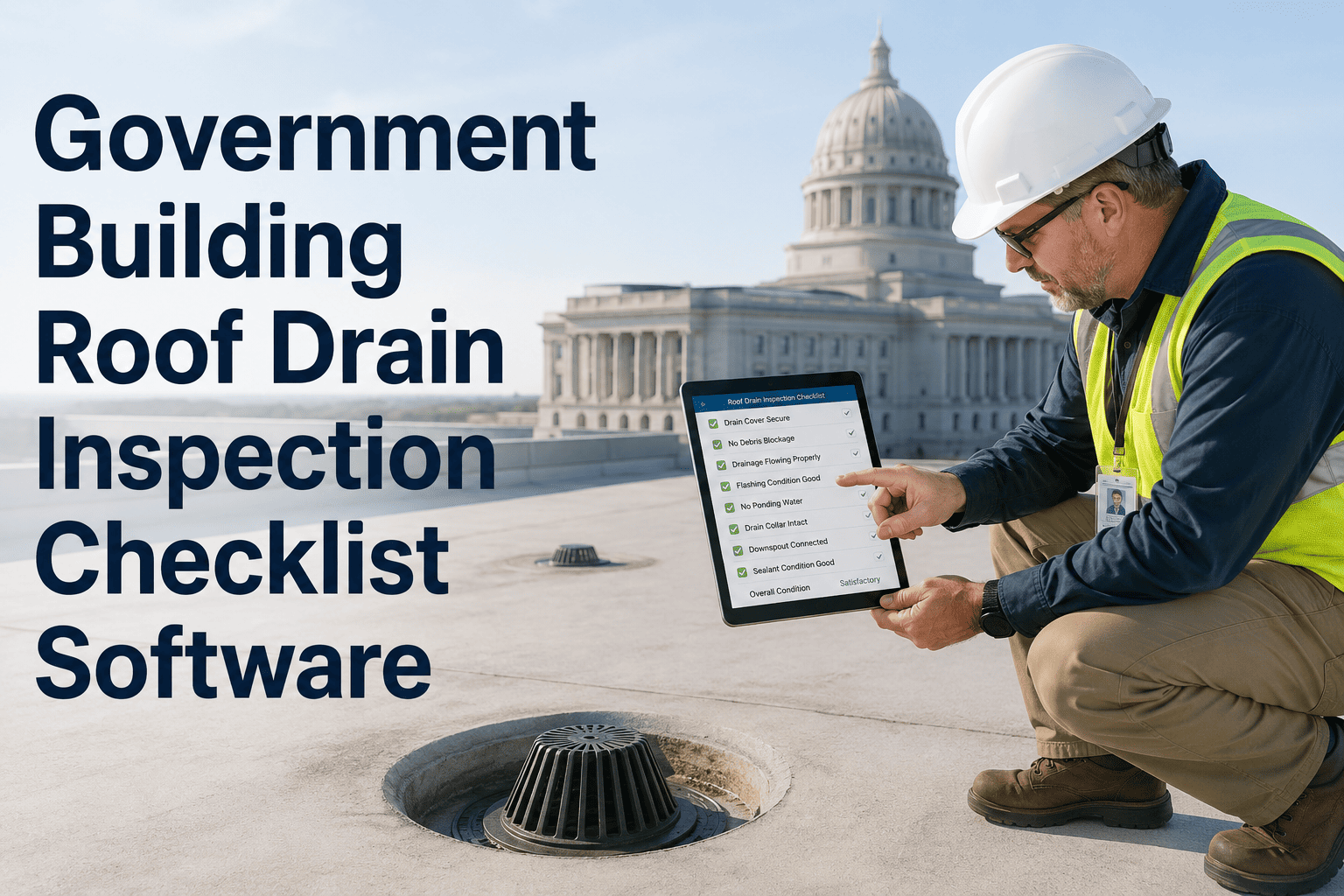
Infrared thermography and capacitance surveys detect trapped moisture long before blisters appear on the surface. Annual IR scans on Tier 1 roofs catch wet insulation while the repair is still a small patch — not a full tear-off. Document every finding with geotagged photos in the CMMS to defend warranty claims and demonstrate ISO 55000-aligned asset stewardship.
A 12-month program that aligns service work with seasonal risk windows
Envelope risk is seasonal. A calendar that sequences sealant work before freeze-thaw, drainage clearance before monsoon, and IR scans during dry thermal differential windows doubles the effectiveness of every hour spent on the roof.
Inspect for ice-dam damage at eaves, split membranes at expansion joints, and displaced flashings from wind events. Document immediately for insurance and warranty reserves.
Execute sealant replacement and flashing repairs while temperatures support proper cure (40°F+ for most polyurethanes). Complete before spring storm season in most climate zones.
Clear every primary drain, overflow scupper, gutter, and downspout. Flow-test internal drains. Verify secondary drainage paths are functional — they are the last line of defense during a 100-year event.
IR thermography delivers best results on warm, dry evenings after a sunny day — thermal differentials between wet and dry insulation are sharpest. Scan Tier 1 roofs annually; Tier 2 biennially.
Second drainage clearance after leaf drop. Inspect heat-trace cables at gutters and downspouts in cold-climate facilities. Verify roof hatches and access doors close and seal properly.
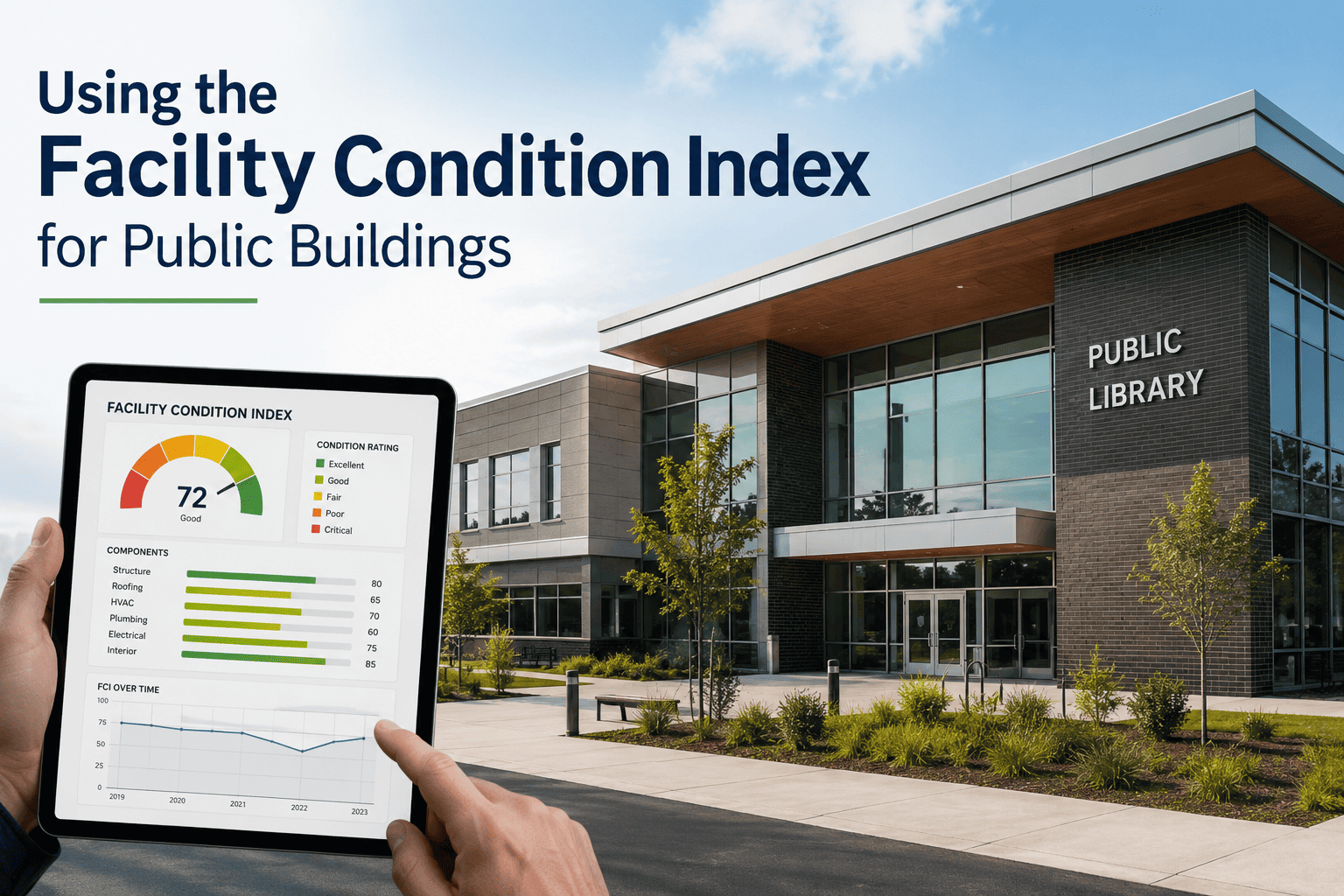
Aggregate CMMS findings into a condition index for each asset. Prioritize the next year's capital prevention work, submit warranty-required documentation, and forecast 5-year replacement needs.
From inspection findings to closed work orders — without a spreadsheet
The difference between a 14-year failure and a 25-year service life is not the inspection itself — it is the closed loop between finding a defect, scheduling the repair, and documenting the outcome. A CMMS-built envelope program is what closes that loop.
A 20-year TPO roof under a disciplined CMMS envelope program typically achieves 26–30 years of service — a 30–50% extension — by intercepting the small defects that cascade into membrane-wide failure.
Public facilities running a CMMS envelope program report 60–75% reductions in emergency envelope spend, with the redirected budget funding the program itself within 8–14 months.
"We were replacing roofs at year 16 and blaming the manufacturer. After deploying OxMaint's envelope program across 34 public buildings, our oldest TPO roof just cleared year 24 with a condition index of 78. The inspection cadence, the photo documentation, the automatic work-order generation — it turned a reactive mess into a defensible asset plan."
Stop financing premature roof replacement out of next year's capital budget
Deploy a CMMS-driven envelope program in under a week. Your 14-year roofs become 25-year roofs.
Answers to the questions public facilities teams ask before deploying
How often should a public building roof actually be inspected?
Tier 1 critical assets (hospitals, dispatch centers, archives, roofs over 15 years old) should be inspected quarterly. Standard office and civic buildings warrant semi-annual inspections. Low-risk storage and vehicle facilities can be inspected annually. Every roof should receive a post-storm rapid assessment within 48–72 hours of any event exceeding manufacturer wind/warranty thresholds. The cadence matters less than the closed loop — an inspection with no follow-up work order is functionally the same as no inspection.
What does a CMMS-driven envelope program cost versus save?
A typical municipal portfolio of 10–15 buildings spends $8,000–$18,000 annually on a CMMS-supported envelope program including inspections, minor sealant work, and software licensing. The same portfolio averaging one emergency membrane failure every 18 months faces $40,000–$120,000 per incident in patch, interior, and downtime costs. Most programs pay for themselves within 8–14 months on avoided reactive spend alone, before counting the 30–50% service-life extension. Start Free Trial to model your portfolio's payback in the platform.
Can a CMMS envelope program help defend roof warranty claims?
Yes — and this is one of the most underappreciated value drivers. Manufacturer warranties on commercial roofing typically require documented biannual inspections, prompt repair of defects, and records of all work performed. A CMMS that auto-generates geotagged photo documentation, stores condition ratings, and timestamps every work order produces exactly the evidence a manufacturer needs to honor a warranty claim. Facilities without this documentation routinely lose six-figure claims because they cannot prove maintenance compliance.
Which envelope components fail earliest and need the most attention?
Sealants at penetrations and curbs fail first (7–10 years), followed by flashing terminations and edge metal (10–15 years), then membrane surface and field seams (15–20 years for most systems). Drainage infrastructure — scuppers, internal drains, gutters — fails continuously based on debris load and seasonal conditions. The highest-leverage maintenance dollar in a public envelope program goes to sealant renewal and drainage clearance, because both are inexpensive and both prevent the water entry that cascades into substrate damage.
How long does it take to deploy an envelope program in a CMMS?
A focused facilities team can inventory roof and envelope assets, set inspection cadences by tier, and begin generating scheduled work orders within 5–7 business days. The bulk of the effort is the initial asset register — assembly type, age, warranty status, square footage, tier assignment. Once that baseline exists, the CMMS handles cadence, documentation, and reporting automatically. Book a Demo to see a live envelope program deployment walkthrough.
Turn 14-year failures into 25-year assets
Join the public facilities teams using OxMaint to inspect on cadence, close the loop on every finding, and extend roof service life 30–50% without new capital.
Free 14-day trial · No credit card