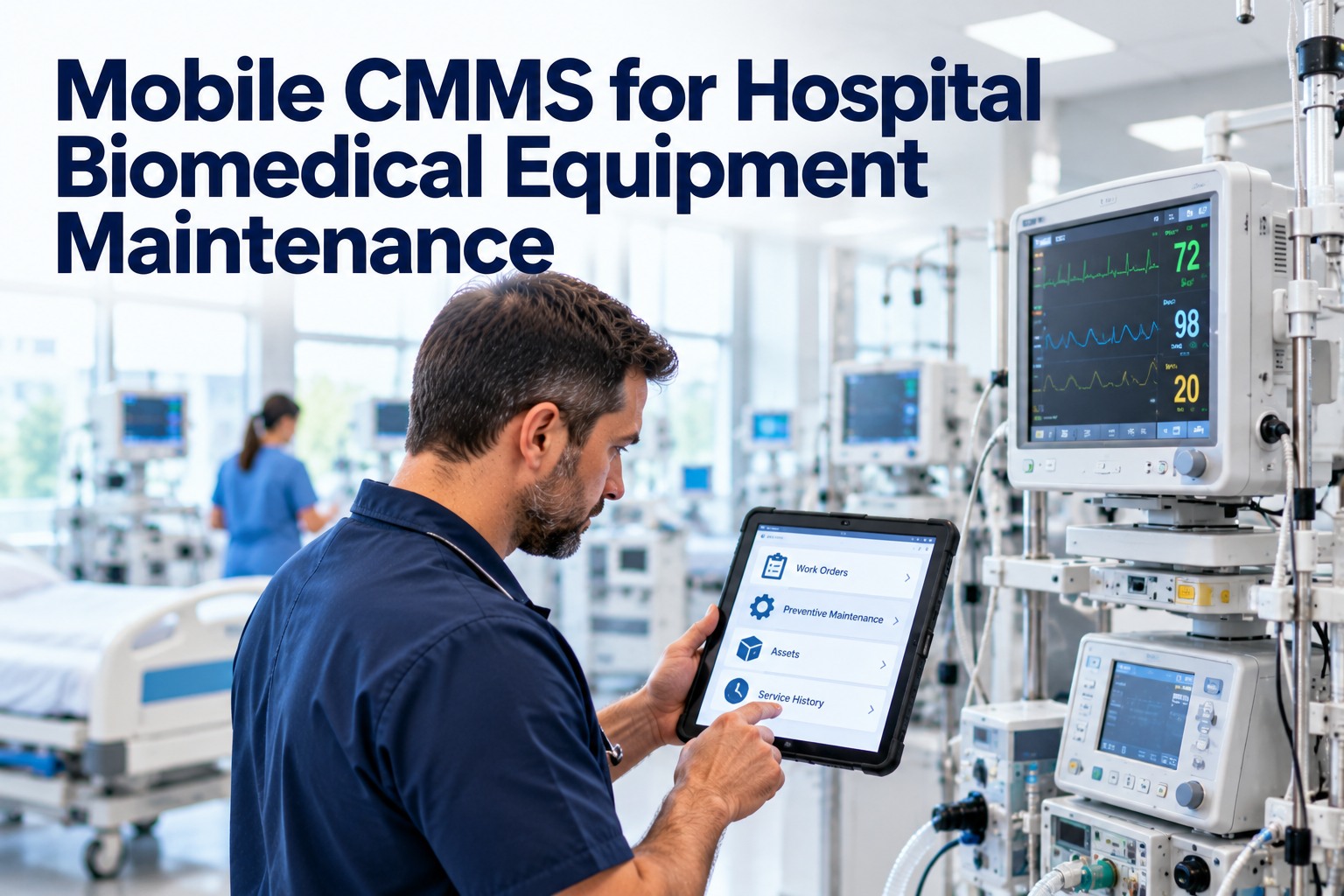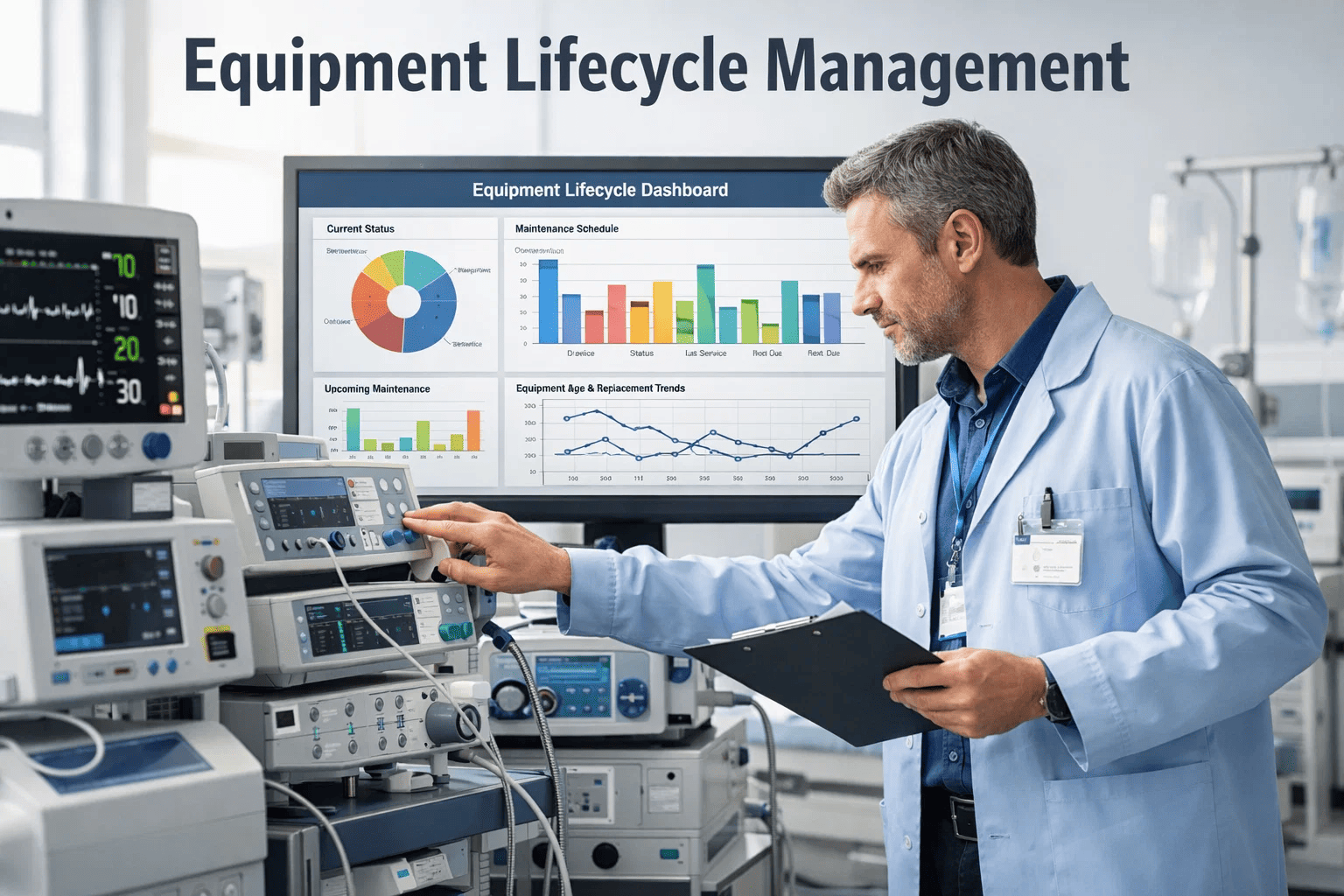
Biomedical equipment failures do not announce themselves. A ventilator that drifts out of calibration, an infusion pump with a worn drive mechanism, or a defibrillator with a degrading capacitor — these are not sudden events. They are the predictable endpoints of lifecycle trajectories that a structured asset management program can identify, quantify, and act on before patient care is compromised. Hospitals that manage biomedical equipment reactively spend 3.1x more per device annually than those running structured preventive maintenance programs, and face regulatory exposure from JCAHO EC.02.04.01, ISO 13485, and FDA 21 CFR Part 820 that no risk-adjusted budget can absorb. Oxmaint's biomedical CMMS gives clinical engineering teams a full asset registry, calibration tracking, PM scheduling, and replacement forecasting in a single platform built for the realities of hospital operations. Start a free trial and see your biomed asset landscape clearly for the first time, or book a demo with our healthcare asset team today.
Biomedical Equipment Lifecycle Management: From Acquisition to Replacement — and Every PM in Between
Every medical device in your facility has a lifecycle. Most hospitals track only the acquisition date and the JCAHO inspection due date. The 94% of the lifecycle in between — calibration drift, wear patterns, failure history, and remaining useful life — is where patient safety risk and budget waste live.
Full Biomedical Asset Lifecycle Visibility — Live in Under 60 Minutes
No implementation fee. No IT project. No minimum contract. Oxmaint's clinical engineering platform connects your biomed asset registry, PM schedules, calibration records, and replacement forecasts into one audit-ready system from day one.
The 6-Phase Biomedical Equipment Lifecycle — and What Your CMMS Must Track at Each Stage
Clinical engineering teams that manage equipment by inspection due date alone are operating with 5% of the lifecycle data available to them. A complete biomedical asset management program tracks all six lifecycle phases — from capital acquisition through decommission. Start a free trial to see how Oxmaint structures this for your device inventory, or book a demo and we will walk through your specific equipment classes.
Risk-Based PM Scheduling for Biomedical Equipment — The AAMI EQ56 Framework Oxmaint Applies
Not all medical equipment carries the same maintenance risk. A life-critical ventilator and a patient-room TV require fundamentally different PM intervals and documentation depth. AAMI EQ56 provides the risk-stratification framework that JCAHO recognizes as the standard for alternative equipment management (AEM) programs. Here is how Oxmaint applies it operationally.
Calibration Management — The Documentation Gap That Triggers the Most JCAHO Findings
Calibration records are the single most frequently cited gap in JCAHO EC.02.04.01 reviews. The issue is not that hospitals do not calibrate equipment — it is that calibration records are scattered across technician workbooks, shared drives, and paper binders that cannot be linked to the specific device, the specific PM date, and the specific calibration equipment used. Oxmaint's calibration module ties every calibration record to the asset it was performed on, the technician who performed it, the reference standard used, and the tolerance result — creating the traceability chain that both JCAHO and ISO 13485 require.
| Device ID | Last Calibration | Result | Drift | Next Due | Status |
|---|---|---|---|---|---|
| IP-ICU3-001 | 14 Jan 2025 | ±0.8% | +0.2% | 14 Jul 2025 | In Tolerance |
| IP-ICU3-002 | 14 Jan 2025 | ±1.1% | +0.5% | 14 Jul 2025 | In Tolerance |
| IP-ICU3-003 | 14 Jan 2025 | ±2.4% | +1.8% | 14 Apr 2025 | Trending Out |
| IP-ICU3-004 | 09 Jan 2025 | ±0.6% | +0.1% | 09 Jul 2025 | In Tolerance |
| IP-ICU3-005 | 09 Jan 2025 | ±3.1% | +2.6% | Overdue | Out of Tolerance |
How Oxmaint Supports Biomedical Equipment Compliance Across Six Regulatory Frameworks
Biomedical equipment management sits at the intersection of multiple overlapping regulatory requirements. Oxmaint's documentation architecture is built to satisfy all six simultaneously — without custom configuration or compliance add-ons for each jurisdiction.
Oxmaint vs. Competing Biomedical CMMS Platforms — Feature-Level Comparison
Biomedical equipment management has specific requirements that generic CMMS platforms and legacy biomed systems handle inconsistently. Here is how Oxmaint compares on the capabilities that clinical engineering teams actually need day-to-day.
| Feature / Capability | Oxmaint | TruAsset | Nuvolo | IBM Maximo | UpKeep | Accruent FAMIS | Hippo (Eptura) |
|---|---|---|---|---|---|---|---|
| NIST-Traceable Calibration Record Linking | Yes — Full Chain | Yes | Partial | Yes | No | Partial | No |
| JCAHO EC.02.04.01 Audit Export | Yes — Direct PDF | Yes | Yes | Custom Build | No | Yes | No |
| AAMI EQ56 Risk-Based PM Scheduling | Yes — Built-in | Yes | Partial | Manual Config | No | Partial | No |
| Calibration Drift Trending & Alerts | Yes — Automated | Basic | No | Custom Build | No | No | No |
| FDA MAUDE Recall Alert Integration | Yes | Yes | Partial | No | No | Partial | No |
| OOT Workflow with Department Notification | Yes — Automated | Manual | Partial | Custom | No | No | No |
| Repair-to-Replacement Cost Analysis | Yes — Auto Calc | Basic | Yes | Yes | No | Yes | No |
| Multi-Site Hospital Portfolio Dashboard | Yes | Partial | Yes | Yes | Basic | Yes | No |
| Mobile Technician App (Offline Capable) | Yes | Partial | Yes | Add-on | Yes | Partial | Yes |
| No Implementation Fee / Rapid Onboarding | Yes — Under 60 min | Fee Required | No — Complex | No — Months | Yes | No — Weeks | Yes |
Capital Replacement Forecasting — How Oxmaint Turns Condition Data Into Budget-Ready CapEx Requests
Most hospital capital budget requests for equipment replacement are built on age — "this ventilator is 12 years old." Oxmaint builds them on condition — "this ventilator has had 7 corrective work orders in 18 months, its repair cost has exceeded 60% of replacement value, and its calibration drift rate has accelerated by 340% in the last 4 quarters." That is a fundamentally different and more defensible conversation with hospital administration. Start a free trial and run your first replacement forecast today, or book a demo to see the CapEx model built for your device classes.
What Hospital Biomed Teams Report After 12 Months on Oxmaint
8 Reasons Clinical Engineering Teams Choose Oxmaint for Biomedical Asset Management
Biomedical Equipment Lifecycle Management — Questions Clinical Engineering Teams Ask Most
How does Oxmaint handle the documentation requirements for JCAHO EC.02.04.01 surveys?
Can Oxmaint track calibration drift and alert the team before a device goes out of tolerance?
How does Oxmaint support biomedical equipment management across multiple hospital sites in a health system?
How does Oxmaint generate the evidence package for capital equipment replacement budget requests?
Your Biomedical Equipment Is Aging. The Question Is Whether Your Documentation Is Keeping Up.
Every device in your facility is accumulating lifecycle data — calibration drift, repair frequency, PM findings, condition trend. The clinical engineering teams that convert that data into structured asset intelligence are the ones that pass surveys cleanly, make defensible CapEx requests, and replace equipment before it fails in clinical use rather than after. Oxmaint gives your biomed team the platform to do exactly that — starting today, with the devices you already manage. Start a free trial and build your biomedical asset registry today, or book a demo with our clinical engineering solutions team.