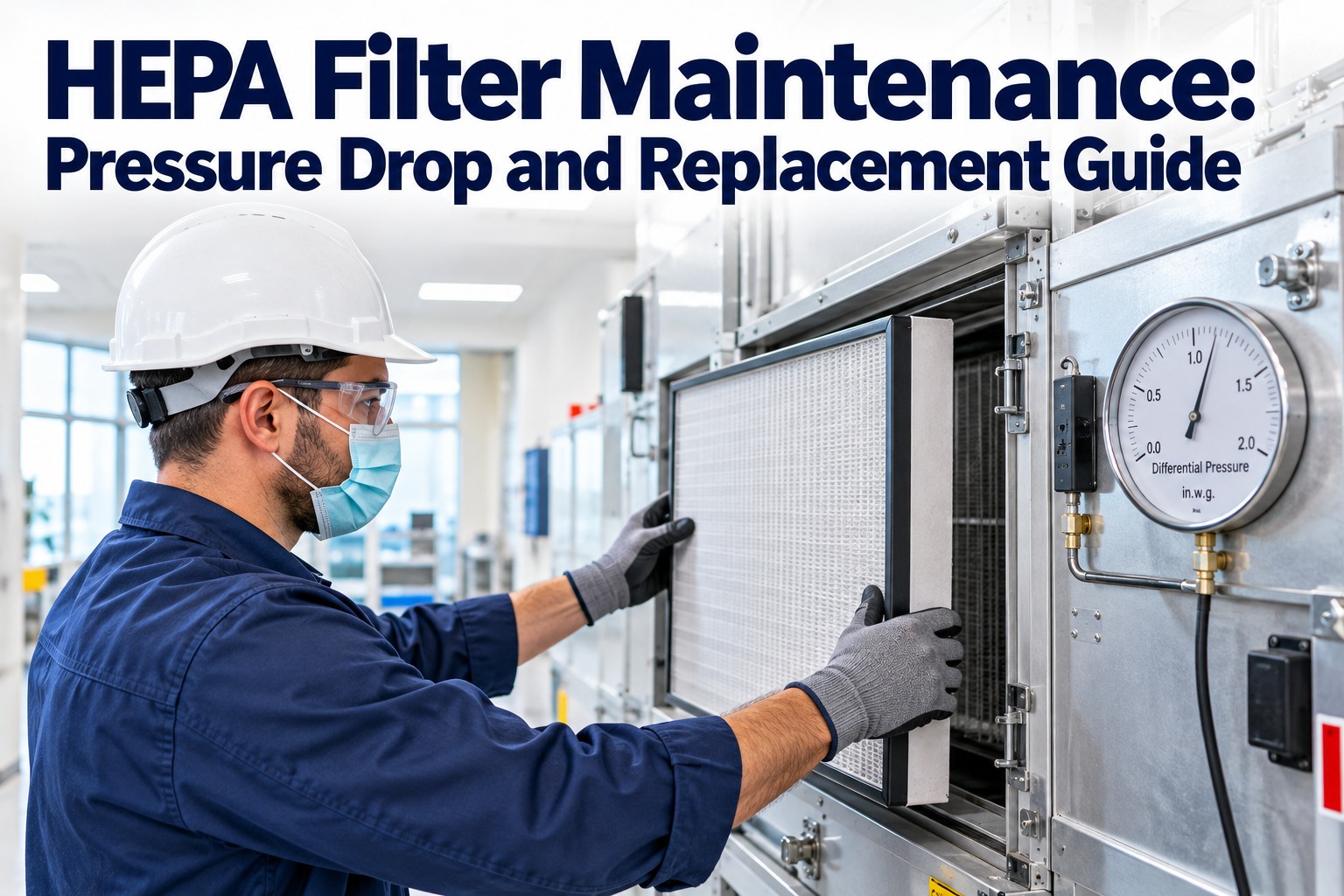
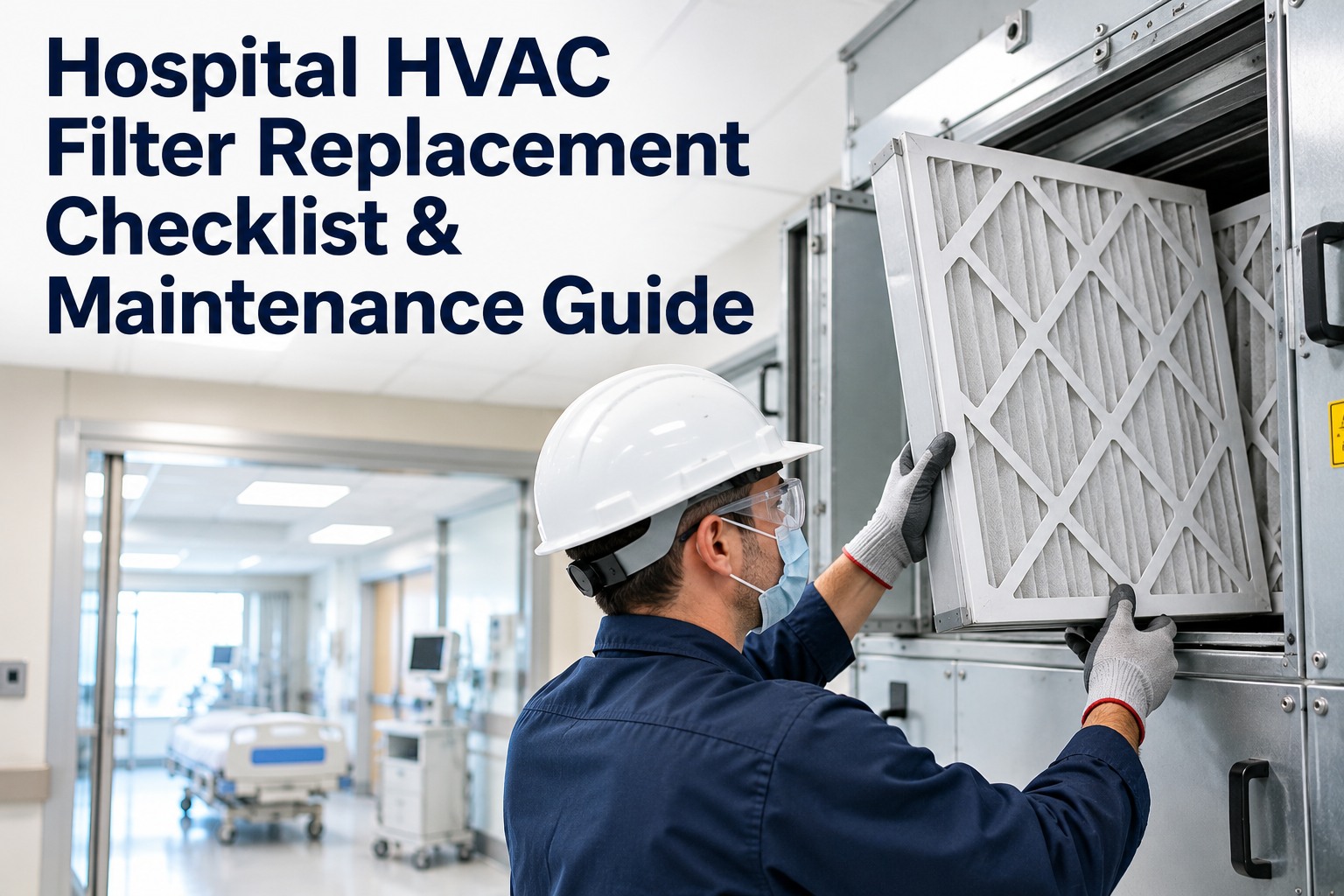
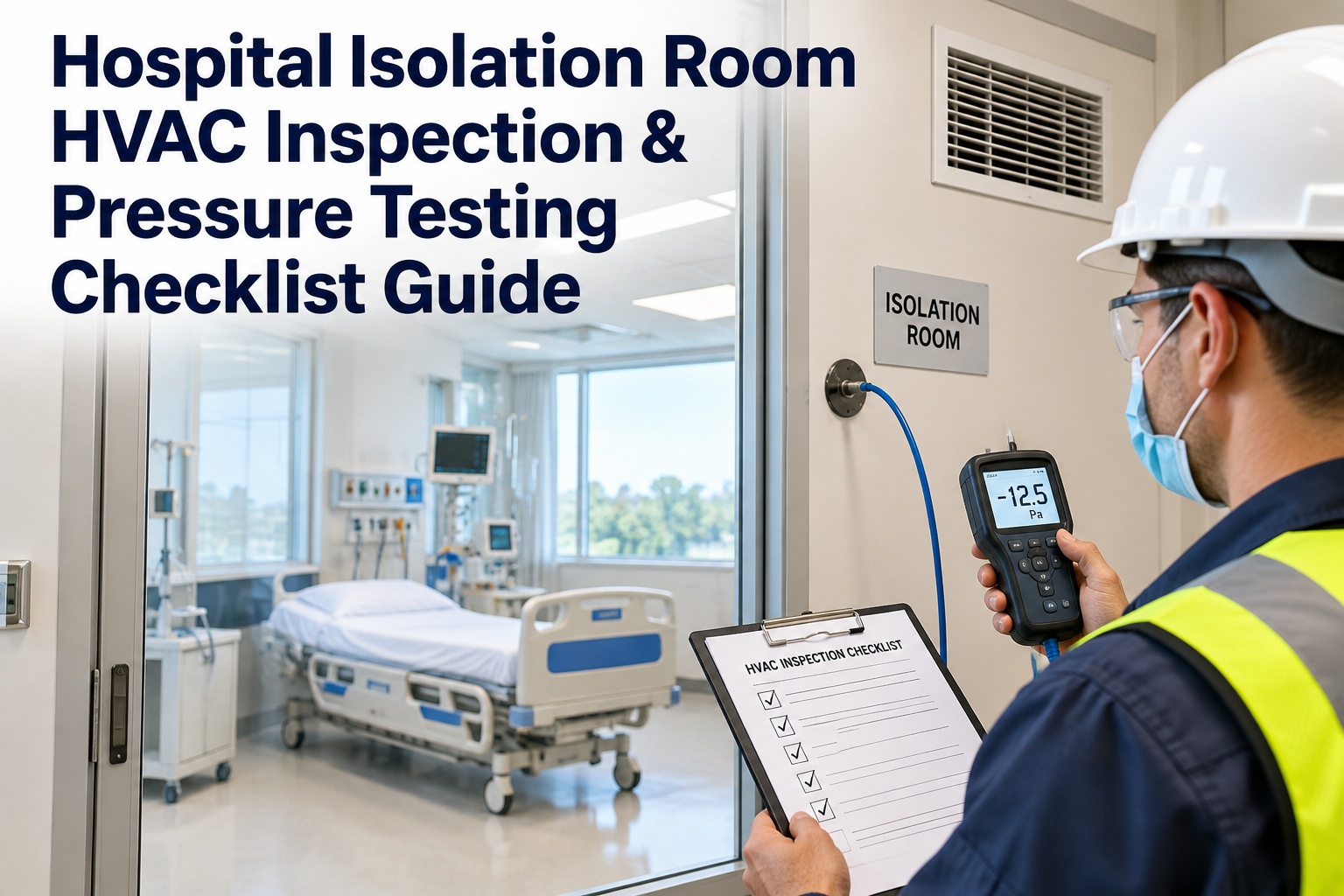
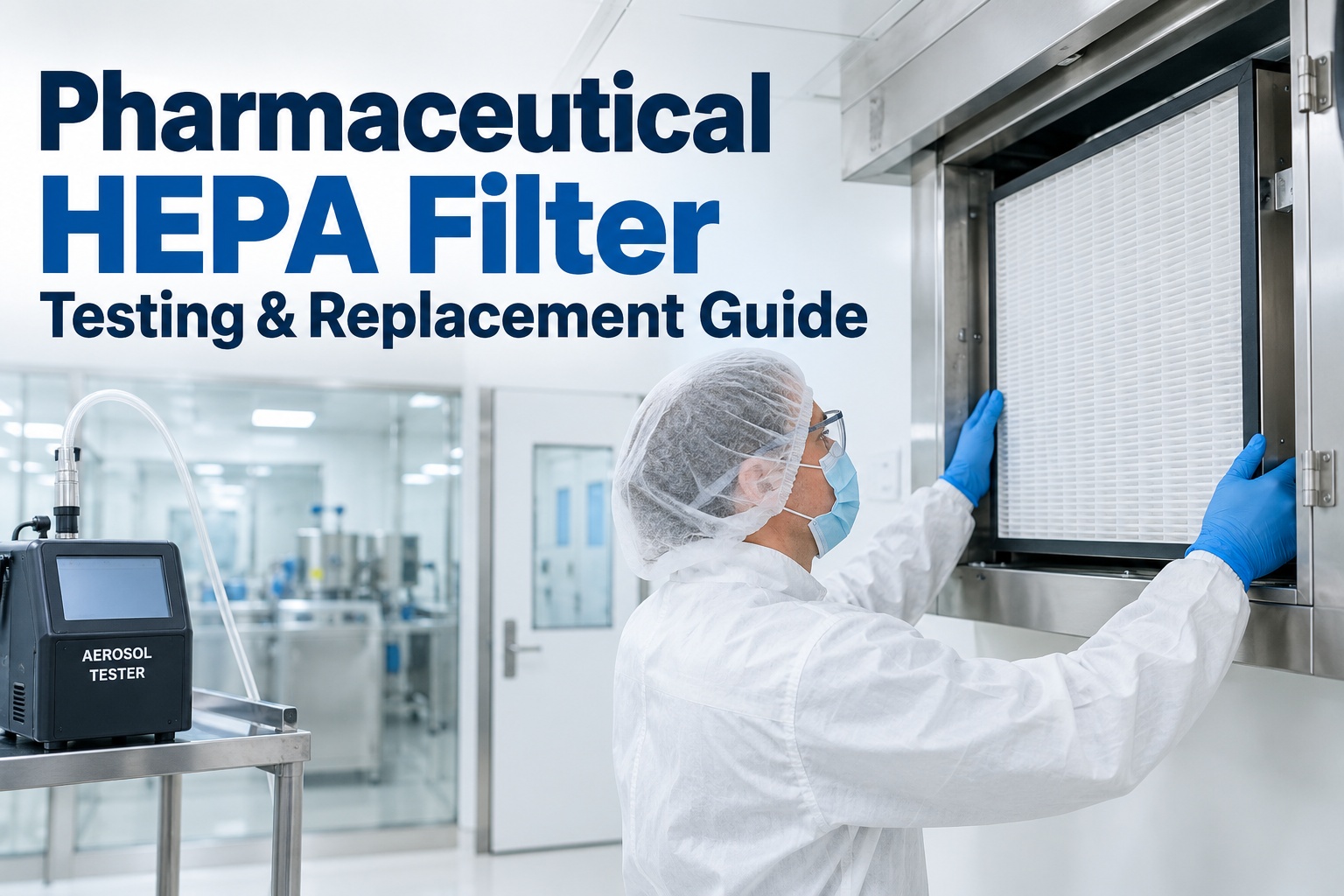
HEPA Filter Maintenance: Pressure Drop and Replacement Guide
By Willam Jerry on October 14, 2026
A HEPA filter never fails loudly. It slowly loads with dust, resistance climbs, and one day the fan can no longer push enough clean air to hold the pressure and air changes an operating room or isolation room depends on. Replace it by the calendar and you either throw away good filters or miss the moment it mattered. OXMAINT AI is the AI-powered maintenance management software that replaces guesswork with differential-pressure data — tracking each filter's resistance, flagging the one that's reached its limit, and raising the work order before airflow is ever at risk.
HEPA Filter Maintenance: Differential Pressure and Replacement Guide
The right time to change a HEPA filter isn't on a date — it's when the data says so. OXMAINT AI, a healthcare HVAC maintenance platform, watches each filter's differential pressure and airflow, triggers replacement the moment it crosses its limit, and logs every reading and integrity test. You stop over-replacing good filters and stop risking the ones that have quietly choked.
Scope: This guide explains differential-pressure-based HEPA maintenance in general terms. Follow ASHRAE 170, FGI Guidelines, USP 797/800 where applicable, the filter manufacturer's rated clean and final resistance, and your facility's policies — and use qualified personnel for filter work and integrity testing. Thresholds and intervals vary by equipment, space and jurisdiction.
99.97%
HEPA efficiency at the 0.3-micron most-penetrating particle size
~1" w.g.
typical clean resistance of a new HEPA (design-dependent)
~2" w.g.
common manufacturer final-resistance replacement point
20 ACH
ASHRAE 170 air changes for an operating room
Read the Loading Curve, Not the Calendar
A HEPA filter's whole life is written in one number: differential pressure. It starts low on a clean filter and climbs as dust loads the media — slowly at first, then faster near the end. The replacement decision is simply where that curve crosses the filter's final resistance.
Clean ~1" w.g.Replace line ~2" w.g.
Clean
~1.0" w.g.
New filter at rated resistance, full airflow margin.
Normal loading
1.0–1.6"
Working as designed; log the reading and trend it.
Approaching limit
1.6–2.0"
Stage the replacement; margin is thinning.
Replace
≥ final resistance
At the manufacturer's final ΔP — change it now.
A calendar can't see that curve — it changes a half-loaded filter early in a clean zone and leaves a choked one in a dirty one. Differential pressure changes each filter at exactly its own moment. Start free and trend every filter's ΔP in OxMaint.
The Five Triggers That Say "Replace Now"
Differential pressure is the main signal, but it isn't the only one. A HEPA filter comes out when any one of these fires — not when all of them agree. Treat them as a checklist where a single hit is enough.
1
Final resistance reached
ΔP has climbed to the manufacturer's rated final resistance — commonly around 2" w.g. The primary trigger.
2
Airflow or ACH falls
The space falls below its required air changes or pressure relationship even though the fan is working harder.
3
Failed integrity test
An aerosol scan finds a leak or bypass past the filter or seal — efficiency is gone regardless of ΔP.
4
Visible damage or wetting
Torn media, a damaged gasket, or a filter that has been wetted — any of which defeats filtration.
5
Time limit reached
A maximum service life set by policy or the manufacturer, as a backstop even if ΔP still looks fine.
Any one is enough
You never wait for a second signal. The first trigger to fire takes the filter out of service.
Risk-Based: Not Every Filter Earns the Same Attention
A HEPA in an operating room and one in a general corridor carry very different consequences if they slip. Risk-based maintenance tightens the triggers and the monitoring frequency where a failure reaches a patient fastest.
A Gauge Reading Nobody Logs Is Just a Needle Moving.
Differential pressure only protects patients when it's trended, compared to a limit, and acted on. OxMaint captures every reading against the filter, watches it against the triggers, and raises the replacement the moment it's earned — with the record to prove it.
Qualified technicians do the readings and the changes. OxMaint turns those into a condition-based program — trended, triggered and documented in one place.
ΔP Trending
Each filter's differential pressure logged over time, so you see the curve climbing and act before it crosses the limit.
Threshold Triggers
Set final resistance, airflow and time limits per filter; a work order opens on the first trigger to fire.
Mobile Readings
Technicians enter gauge readings on a phone against the right filter, with the trend updating instantly.
Risk-Tiered PM
Critical spaces get tighter margins and shorter cycles; standard spaces run lighter — all from one plan.
Integrity Test Log
Schedule and record leak tests and certifications per space, with results kept against the filter record.
Survey-Ready Records
Readings, replacements and tests timestamped per filter — the documentation a surveyor asks for, in seconds.
Reviewed by OxMaint Healthcare Facilities Operations
Content was checked against ASHRAE 170, FGI and standard HEPA filtration practice. Clean and final resistance values are design-dependent and manufacturer-specific, and air change and testing requirements vary by space and jurisdiction — confirm against your own equipment and AHJ.
Frequently Asked Questions
When should a HEPA filter be replaced?
When its differential pressure reaches the manufacturer's final resistance (often around 2" w.g.), when airflow or air changes fall below spec, when it fails an integrity test, when it's damaged or wetted, or when it hits a set service life — whichever comes first.
Why use differential pressure instead of a fixed schedule?
Filters load at different rates depending on the air they see. A calendar replaces some too early and leaves others choked; differential pressure changes each one at its own real end of life. Book a demo to compare the two on your filters.
What is a normal HEPA differential pressure?
A clean HEPA is typically around 1" w.g., rising as it loads toward a final resistance often near 2" w.g. — but the exact values are design- and manufacturer-specific, so always use the filter's rated figures.
Does a passing differential pressure mean the filter is fine?
Not on its own. A filter can have acceptable ΔP but still fail — a torn media or a leaking seal lets air bypass it. That's why an integrity test is a separate trigger.
How does this help with accreditation surveys?
A trended ΔP record, defined replacement triggers and logged integrity tests per filter demonstrate a controlled, condition-based program — exactly what a surveyor wants to see instead of guesswork.
Change Filters on the Data, Not the Date.
Put every HEPA filter on one platform with OXMAINT AI — differential pressure trended, replacement triggers set per filter, integrity tests scheduled, and a survey-ready record built as you go. Protect the air changes your patients depend on, and stop paying to replace filters that still had life.