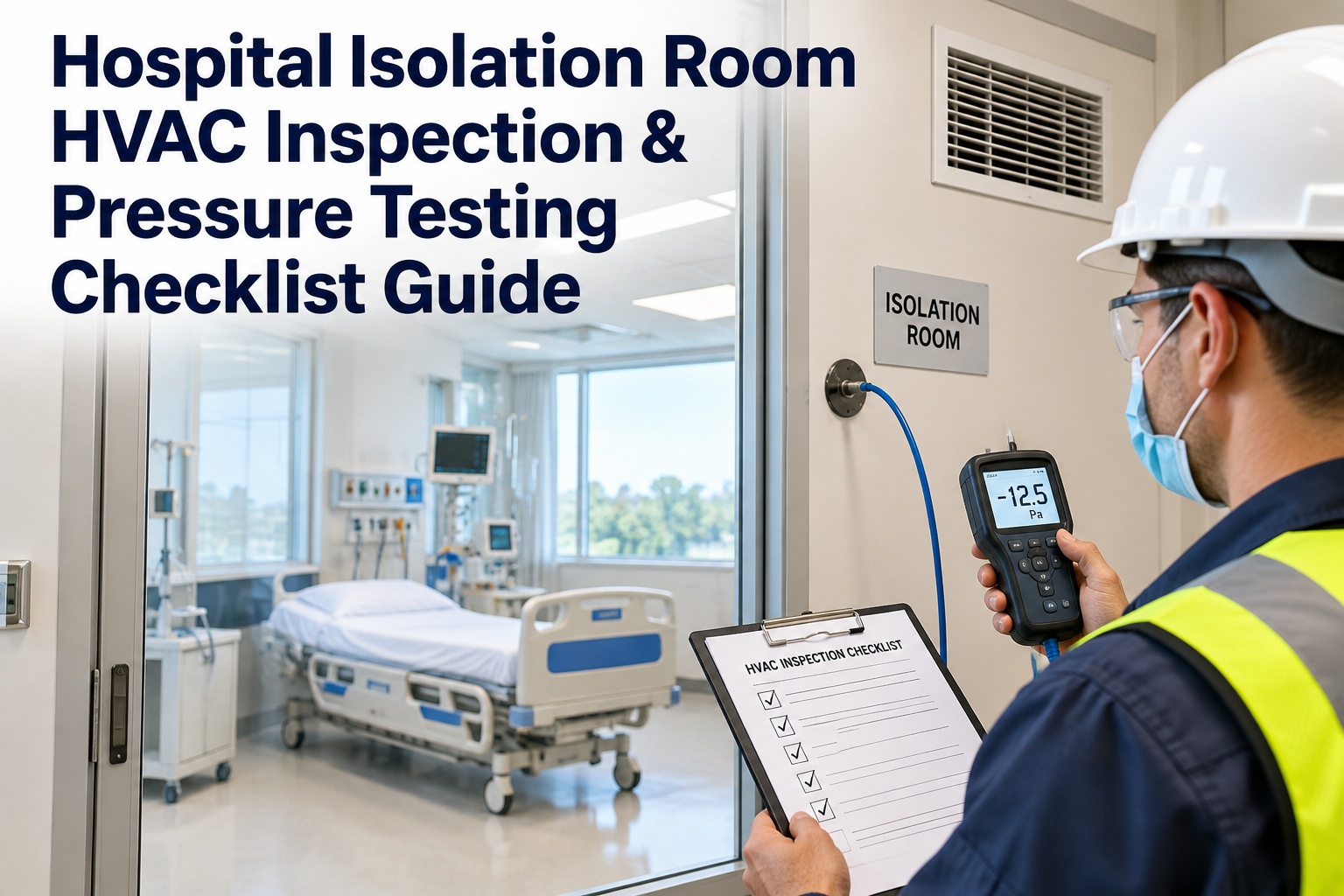
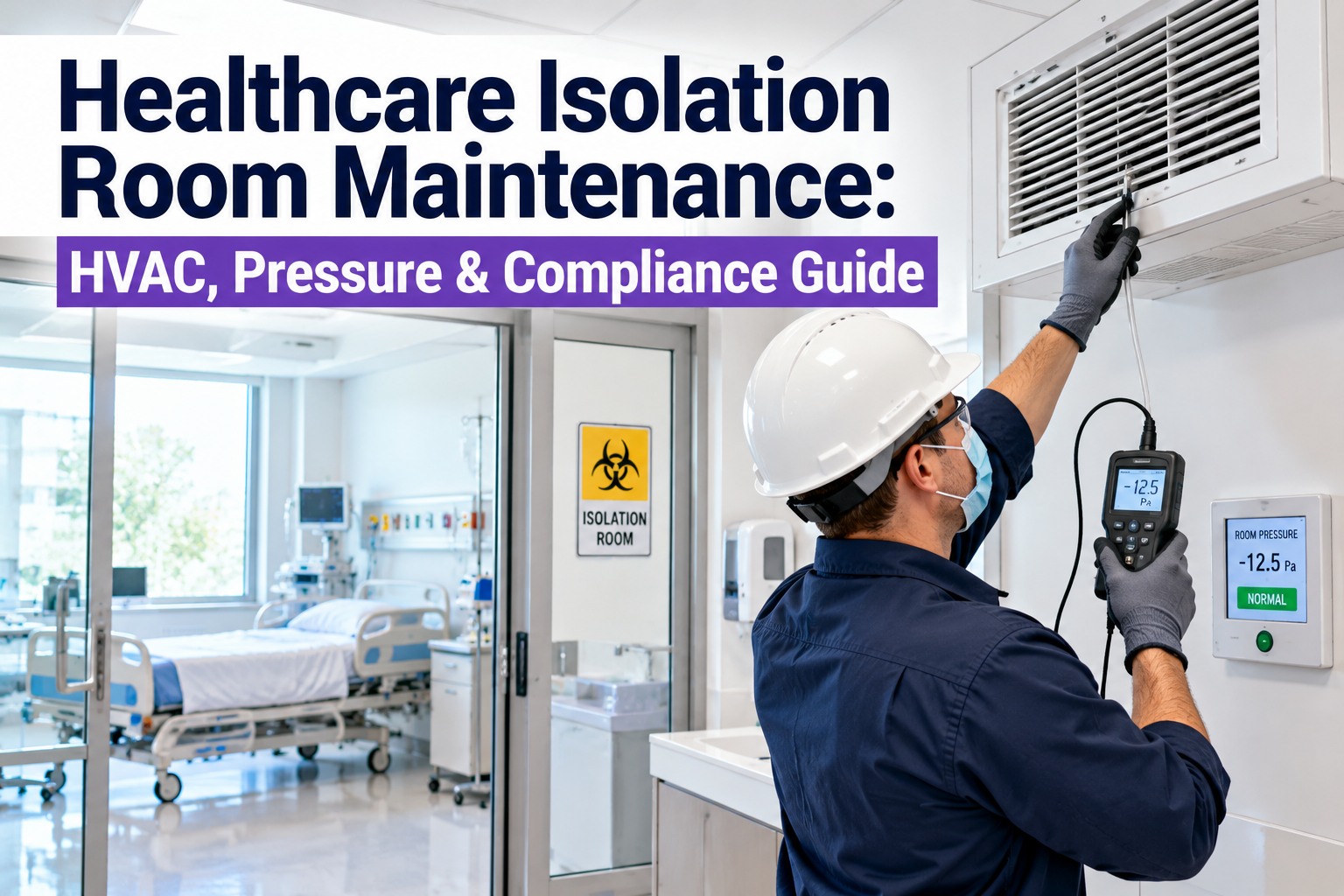
An isolation room does its entire job through one invisible thing — the direction the air moves under the door. A negative-pressure room pulls air in so an airborne infection cannot escape to the corridor; a positive-pressure room pushes air out so nothing reaches an immunocompromised patient. When the pressure drifts, the room looks exactly the same but protects no one, and only testing reveals it. The OXMAINT AI — the AI-powered maintenance management software — schedules the pressure checks, runs this inspection and keeps the record infection control depends on.
Room pressure, airflow direction, air changes, alarms and records — everything that keeps an isolation room protective, on one checklist. Tick each item, and let OXMAINT AI turn pressure monitoring and testing into scheduled, documented work orders.
Two isolation rooms can look identical and do opposite jobs — the difference is only which way the air flows under the door. Getting that direction right, and proving it, is what isolation-room maintenance is really about; start free and monitor every room's pressure direction in OXMAINT AI.
Negative Pressure
Airborne Infection Isolation (AII)
Corridor→ air in →Room
Air flows into the room and is exhausted or HEPA-filtered, so a contagious patient's air cannot reach the corridor.
Protects: everyone outside the room
Positive Pressure
Protective Environment (PE)
Room→ air out →Corridor
Air flows out of the room through HEPA-filtered supply, so no airborne contaminant can reach a vulnerable patient inside.
Protects: the patient inside the room
A room set to the wrong direction, or one that has drifted toward neutral, offers no protection while looking completely normal — which is why direction has to be verified, not assumed.
The Numbers That Define a Pass
A compliant isolation room is defined by a handful of measurable targets. These are the reference figures a pressure test checks against — confirm the exact values against ASHRAE 170, CDC guidance and your authority for your room type; book a demo to see every room measured against its targets in OXMAINT AI.
≥ 0.01"
water column
Minimum pressure differential to corridor (≈ 2.5 Pa)
≥ 12
air changes / hr
Total ACH for new construction (existing rooms often 6)
Daily
when occupied
Pressure monitored each day the room is in use
HEPA
filtration
Exhaust (AII) or supply (PE) HEPA-filtered as required
Key test
The Smoke / Tissue Direction Test
Hold a smoke tube or a tissue at the bottom of the closed door. In a negative room the smoke should pull into the room; in a positive room it should push out. It is the fastest way to confirm the airflow direction is real — not just what the gauge claims — and it belongs on every pressure check.
As the filter loads, airflow falls and the differential weakens — the slowest, most common drift.
Door or seal left open
A propped door or failed seal collapses the pressure relationship the moment it happens.
Fan or damper fault
A drifting damper or weakening fan shifts the supply-to-exhaust balance that holds the pressure.
Uncalibrated monitor
A gauge reading wrong hides a real problem — or raises a false one — until it is checked against smoke.
A Gauge Can Read Right and the Room Still Be Wrong.
Pressure drifts slowly, monitors fall out of calibration, and a daily check missed is a day a room may not have protected anyone. The OXMAINT AI maintenance management software schedules the monitoring, runs the pressure and smoke test on each round and timestamps the result — so an isolation room's protection is proven every day, not assumed.
An isolation-room program holds up only when pressure is monitored, tested and recorded per room — and that is the job the software does. Here is what the OXMAINT AI maintenance management software brings to isolation-room compliance; start free and run your isolation-room program in OXMAINT AI.
Pressure & direction monitoring
Each room's differential and airflow direction watched against target, per room type.
Scheduled pressure testing
Routine and daily-when-occupied checks set on cadence, so no test slips.
Mobile inspection checklist
The pressure, smoke and filter checks run from a phone at the door, captured per room.
Filter & AHU tracking
HEPA filter life and air-handler service held per room, so a loading filter is flagged early.
Out-of-range alerts
A drift past target raises an alert and a work order, so a failing room is caught, not missed.
Infection-control records
Every reading, test and certification kept and searchable, so the evidence is always to hand.
Frequently Asked Questions
What is the difference between negative and positive pressure rooms?
A negative-pressure (AII) room pulls air in so a contagious patient's air cannot escape; a positive-pressure (PE) room pushes HEPA-filtered air out so nothing reaches an immunocompromised patient. They protect opposite directions.
What pressure differential does an isolation room need?
A minimum of 0.01 inch water column (about 2.5 pascals) relative to the corridor is the common reference under ASHRAE 170. Confirm the exact target for your room type and authority.
How often should isolation rooms be tested?
Pressure should be monitored daily while the room is occupied, with fuller airflow and filtration testing on a routine schedule. A permanent monitor and alarm support the daily check.
What is the smoke test for?
Holding smoke or a tissue at the base of the closed door shows the true direction of airflow — into a negative room, out of a positive one. It confirms the real direction rather than trusting the gauge alone.
How does a CMMS help with isolation-room maintenance?
It monitors pressure and direction per room, schedules the tests, runs the checklist, tracks HEPA filters, alerts on drift and keeps the infection-control records; OXMAINT AI runs the whole isolation-room program.
Keep Every Isolation Room Protecting the Right Side of the Door.
Run isolation-room inspection inside the OXMAINT AI maintenance management software — pressure and direction monitoring, scheduled testing, a mobile checklist, HEPA filter tracking, out-of-range alerts and infection-control records — so room pressure, airflow and ventilation stay within target and the evidence is always ready.