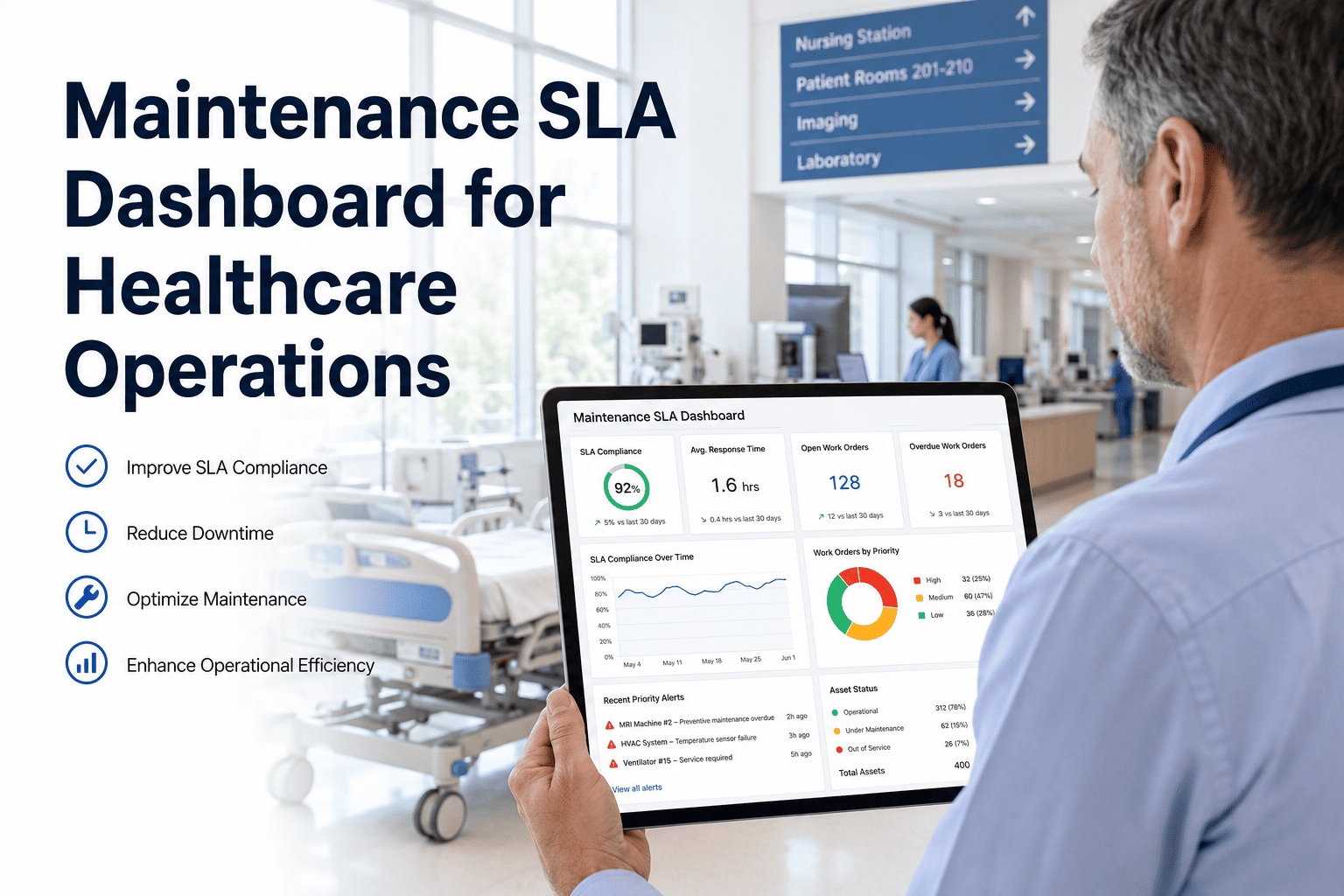
A leaking sink and a failed HVAC unit in an isolation room should never compete for the same technician's attention — but in hospitals without formal SLA tiers, they often do. Without a structured response framework, maintenance teams default to self-prioritizing by geography or convenience instead of clinical urgency, and that is exactly where patient risk and compliance exposure start to accumulate. A proper SLA dashboard fixes this by making urgency visible, measurable, and enforced automatically. Start a free OxMaint trial and see exactly which work orders are at risk of breaching their response window right now.
71% of Facilities Without SLA Tiers Let Technicians Self-Prioritize by Guesswork
OxMaint's SLA dashboard turns response time commitments into a live, enforced system — so every work order is classified by clinical urgency the moment it's created, not whenever someone gets around to it.
What's Written on Paper vs. What Actually Happens
Most hospitals already have some version of a response time standard documented somewhere. The problem isn't the absence of a policy — it's the gap between that policy and what technicians actually do when three work orders land at once with no system telling them which one matters most.
How Fast Each Tier Should Move, At a Glance
Shorter bars mean tighter response windows. Tier 1 and 2 carry the highest patient-safety stakes — and the highest cost when they're missed.
See Your Current SLA Compliance Rate
OxMaint shows you exactly where response times are breaking down by tier, by site, and by technician — before it shows up in a survey finding.
What Happens When a Window Is About to Close
SLA enforcement only works if missed deadlines trigger something automatically. OxMaint's escalation chain removes the need for anyone to notice a problem manually.
What Changes When SLAs Are Tracked, Not Just Written Down
| Measure | Manual SLA Tracking | OxMaint-Enforced Tracking |
|---|---|---|
| Average SLA compliance rate | Around 51% | Up to 94% |
| Work order prioritization | Technician judgment call | Automatic classification at creation |
| Missed deadline detection | Discovered after the fact | Live countdown with auto-escalation |
| Emergency contractor costs | Frequent premium-rate callouts | Reduced via faster internal response |
| Audit documentation | Reconstructed manually | Mandatory closure fields enforced live |
What Facilities Leaders Should Validate Before Setting SLA Tiers
Common Questions About Healthcare Maintenance SLA Dashboards
Stop Letting Urgency Get Decided by Guesswork
OxMaint enforces your SLA tiers automatically — classifying, routing, and escalating every work order so the most critical issue always gets attention first.