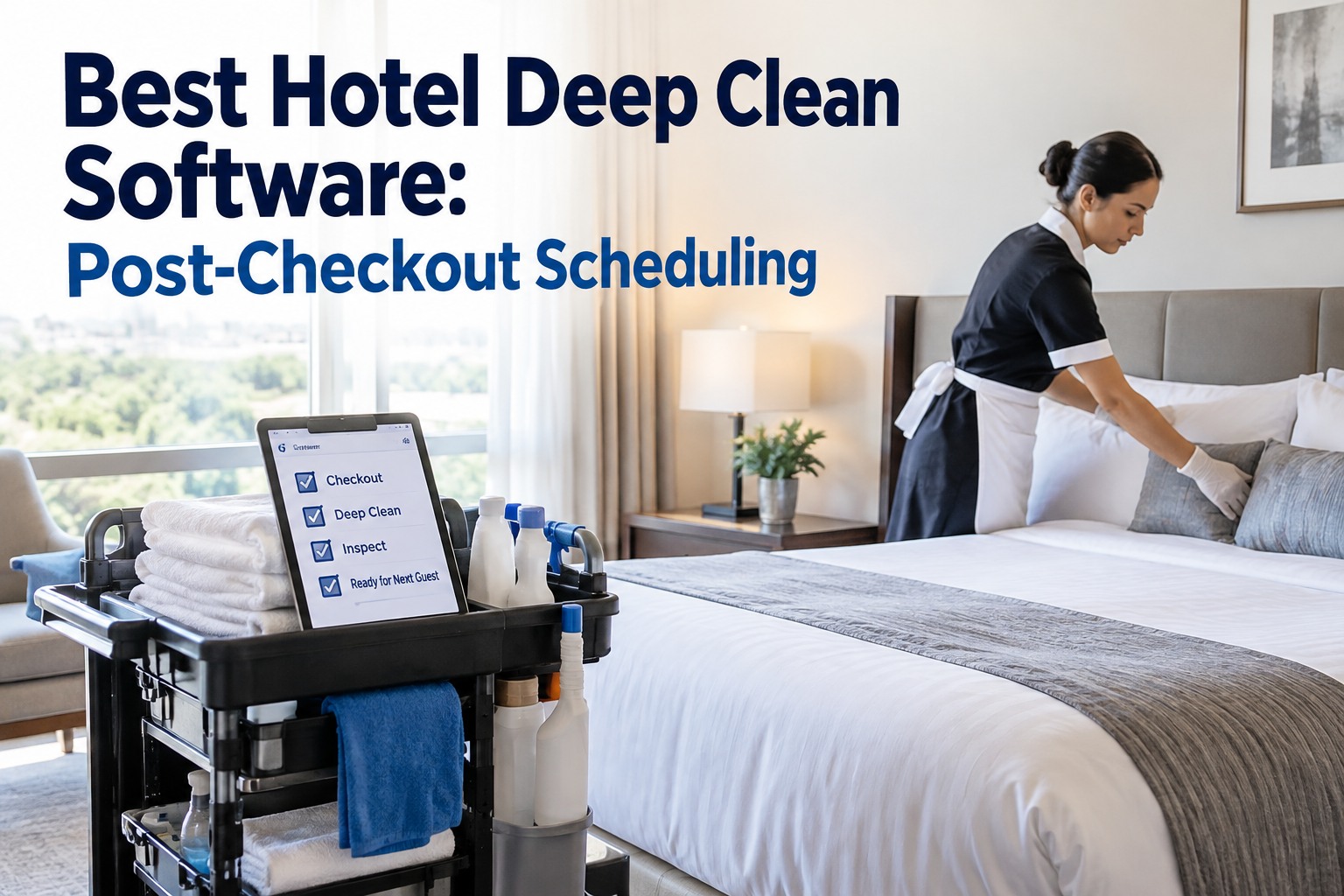
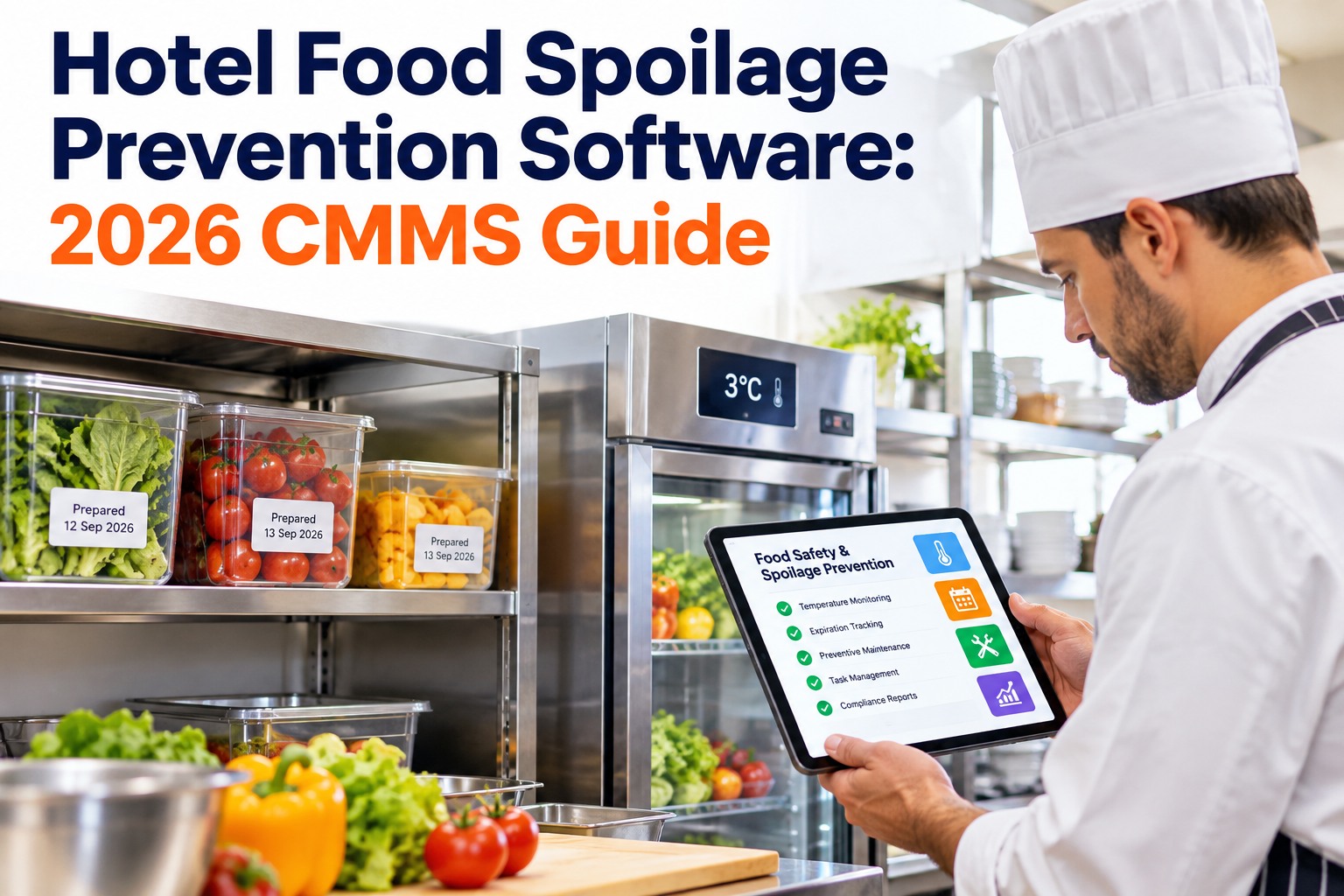
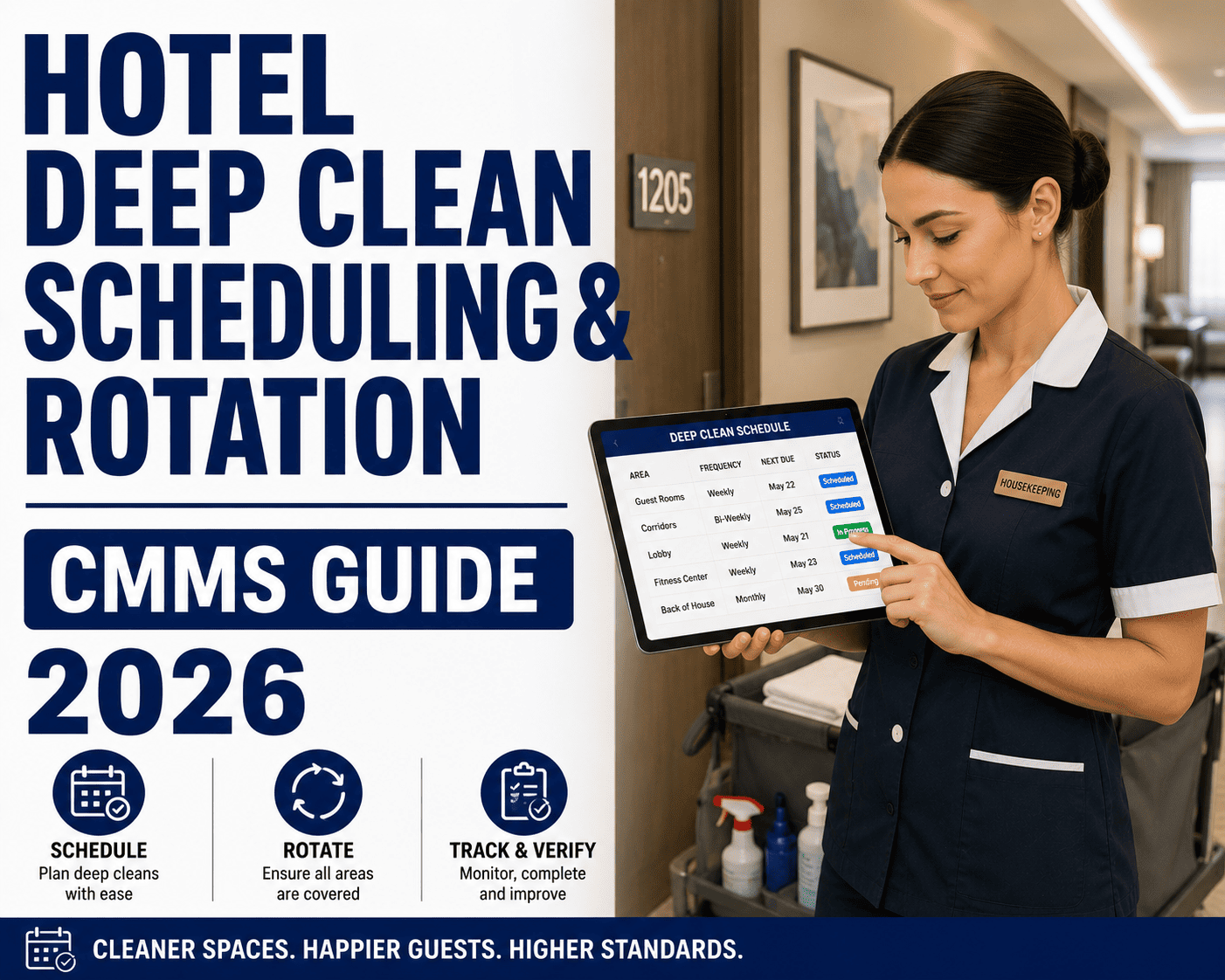
Every deep clean pulls a room out of inventory for 60 to 90 minutes — two to three times longer than a standard checkout turn — and if too many rooms on the same floor go dark on the same Tuesday, you've created your own out-of-order surge on a day you didn't even have a maintenance problem. Deep-clean rotations are supposed to protect brand standard quietly, in the background, during low-occupancy windows. Done with a whiteboard or a shared spreadsheet, they do the opposite: they collide with housekeeping's daily turn schedule, blow through the labor budget without anyone noticing until the monthly variance report, and leave a compliance gap the next brand audit finds first. A one-point improvement in review score has been linked to a 7-8% lift in RevPAR — cleanliness is a revenue lever, not a checkbox. This guide covers what the best hotel deep clean software actually needs to do, where post-checkout scheduling breaks down without it, and how OxMaint runs the rotation so it protects the brand standard without ever surging your OOO count. Book a free deep-clean scheduling demo for your property.
A Deep Clean Costs 2-3x More Than a Turn — Schedule It Like That's True
The rotation that isn't planned against the labor budget shows up as a variance nobody can explain.
60-90 min
Time a deep clean takes per room, versus 22-30 minutes for a standard turn
2-3x
Higher labor cost per room for a deep clean versus a daily turn
30-60 day
Typical rotation cycle for running deep cleans across a full room inventory
+7-8%
RevPAR lift linked to each one-point improvement in cleanliness review score
What "Best" Actually Means for Deep Clean Software
Plenty of tools can hold a checklist. The best hotel deep clean software has to do something harder: run a rotation across every floor without ever colliding with the daily turn schedule or the labor budget. These are the six capabilities that separate a real deep-clean platform from a digital checklist.
01
Rotation Scheduling by Rule
Set the cycle once — every 30, 45, or 60 days — and the system assigns which rooms are due, instead of a supervisor tracking it on a whiteboard.
02
Floor & Zone Distribution
Deep cleans spread across floors and zones on purpose, so no single floor loses a disproportionate share of its inventory on the same day.
03
OOO Cap Enforcement
A hard ceiling on how many rooms can be out of inventory at once for deep cleaning, checked automatically against occupancy before a room is pulled.
04
Mobile Checklists & Photo Proof
Carpet extraction, drapery, mattress rotation, and vent cleaning each get their own checklist item — completed and photographed from a phone, room by room.
05
Audit & Compliance Logging
Every completed deep clean timestamped and attached to the room's record — the exact evidence a brand or health inspection audit asks for first.
06
PMS & Housekeeping Integration
Room status syncs live with the property management system, so front desk and housekeeping are reading the same status — not two.
See Your Rotation Mapped Against Your Occupancy Calendar
Bring your floor plan and current deep-clean cycle to a working session. We'll show how OxMaint distributes the rotation without ever colliding with your daily turn schedule.
Where Post-Checkout Deep Clean Scheduling Actually Breaks Down
Every property already runs some version of a rotation. These are the four ways it quietly goes wrong without software enforcing the rules.
OOO Surge on the Same Floor
Whiteboards don't check for overlap. When several rooms on one floor hit their deep-clean date the same week, that floor's inventory quietly craters right when weekend demand picks up.
Labor Budget Blind Spot
Deep clean labor gets absorbed into the same budget line as daily turns. Since a deep clean runs two to three times the hours, that line shows an unexplained variance every rotation cycle.
No Audit Trail to Show
A brand standard or health inspection asks "prove this room was deep cleaned in the last 60 days." A whiteboard photo from three managers ago isn't proof.
Rooms Skipped Past Their Cycle
When the rotation lives in someone's memory, rooms that are hard to schedule — long-stay guests, VIP holds — quietly drift 90, then 120 days past due.
Manual Rotation vs. Software-Driven Rotation
The rotation logic is the same either way. What changes is whether anyone catches the collision before it happens.
Whiteboard / Spreadsheet
Overlap across floors caught after the OOO count spikes
Deep clean hours folded into the daily-turn labor line
Completion proof scattered across phones and memory
Hard-to-schedule rooms drift past their rotation date
Front desk and housekeeping reading different room statuses
OxMaint-Driven Rotation
OOO cap enforced automatically before a room is ever pulled
Deep clean hours tracked as their own labor line, per cycle
Timestamped, photo-verified completion attached to the room
Overdue rooms flagged automatically, no room left behind
One room status, synced live between PMS and housekeeping
How the Rotation Runs Inside OxMaint
Once the rules are set, this cycle repeats itself across every floor, every cycle, without a supervisor tracking it by hand.
1
Set the Rotation Rule. Define the cycle length and which tasks count as deep clean — carpet, drapery, mattress, vents — once per room type.
2
Auto-Schedule Against Occupancy. OxMaint assigns due rooms into low-occupancy windows and spreads them across floors, capping how many go OOO at once.
3
Execute & Document. The team completes the deep clean checklist on mobile with photo proof, and the room's status updates live to the PMS.
4
Track & Audit. Completion history, labor hours, and overdue rooms roll up per floor — so the next brand audit or budget review has an answer ready.
Why Hotels Choose OxMaint as Their Deep Clean Platform
OxMaint is a purpose-built maintenance management platform used by hotel chains, resorts, and hospitality groups to run exactly this kind of rotation — from a 50-room boutique to a 500-key luxury property.
Schedule
Rule-Based Rotation Engine
Deep clean cycles auto-generate per room type and spread across floors, so no single day or floor absorbs the whole rotation.
Protect
OOO Cap Enforcement
A hard limit on simultaneous out-of-order rooms, checked against real-time occupancy before any room is pulled for deep cleaning.
Execute
Mobile Checklists With Photo Proof
Carpet, drapery, mattress, and vent tasks each tracked as their own checklist item, completed and photographed from any phone.
Prove
Audit-Ready Compliance Logs
Timestamped, HACCP-ready records attached to every room — the evidence a brand-standard or health inspection asks for first.
Sync
Live PMS Integration
Room status updates instantly between housekeeping and the front desk, so both teams are reading the same real-time status.
Analyze
Labor & Budget Reporting
Deep clean hours tracked as their own line against the budget, so the monthly variance report finally has an explanation attached.
Run Your Next Deep Clean Cycle Without the OOO Surge
See how OxMaint schedules and caps deep cleans automatically across every floor, keeps an audit-ready record per room, and syncs live with your PMS. Free forever plan available.
Frequently Asked Questions
How often should hotel rooms get a deep clean?
Most properties run a rotating cycle of every 30 to 60 days across the full room inventory, rather than one large seasonal event — typically 5 to 10 rooms a day on a rolling basis. The right interval depends on occupancy, room type, and brand standard, but the key is that it runs continuously in the background rather than piling up into a single disruptive push.
Book a walkthrough to map the right cycle for your property.
Why does deep clean scheduling need its own software instead of a spreadsheet?
A spreadsheet can hold a checklist, but it can't check for collisions — it won't catch that six rooms on the same floor are all due the same week, or that deep clean hours are quietly running two to three times the daily-turn labor rate. Software enforces those rules automatically, before the OOO count spikes or the budget variance shows up.
Does deep cleaning really affect hotel revenue?
Yes, in two directions. Skipped or overdue deep cleans erode the cleanliness scores that drive guest reviews — and a one-point improvement in review score has been linked to a 7-8% lift in revenue per available room. On the cost side, an uncontrolled rotation can spike out-of-order rooms during high-demand periods, which is lost revenue that's harder to see but just as real.
How is deep clean labor cost different from a daily room turn?
A standard checkout turn takes roughly 22 to 30 minutes; a deep clean takes 60 to 90 minutes for the same room — two to three times the labor. Hotels that fold deep clean hours into the same budget line as daily turns see a recurring, unexplained variance every rotation cycle, because the underlying labor standard was never built for deep clean work in the first place.
Does OxMaint work for both small boutique hotels and large resort properties?
Yes. OxMaint runs deep clean rotation scheduling, OOO cap enforcement, mobile checklists, audit-ready compliance logs, and live PMS sync for properties ranging from 50-room boutiques to 500-key luxury resorts and multi-property hospitality groups. A free forever plan is available to try the full workflow on your own property.
Sign up free to get started.