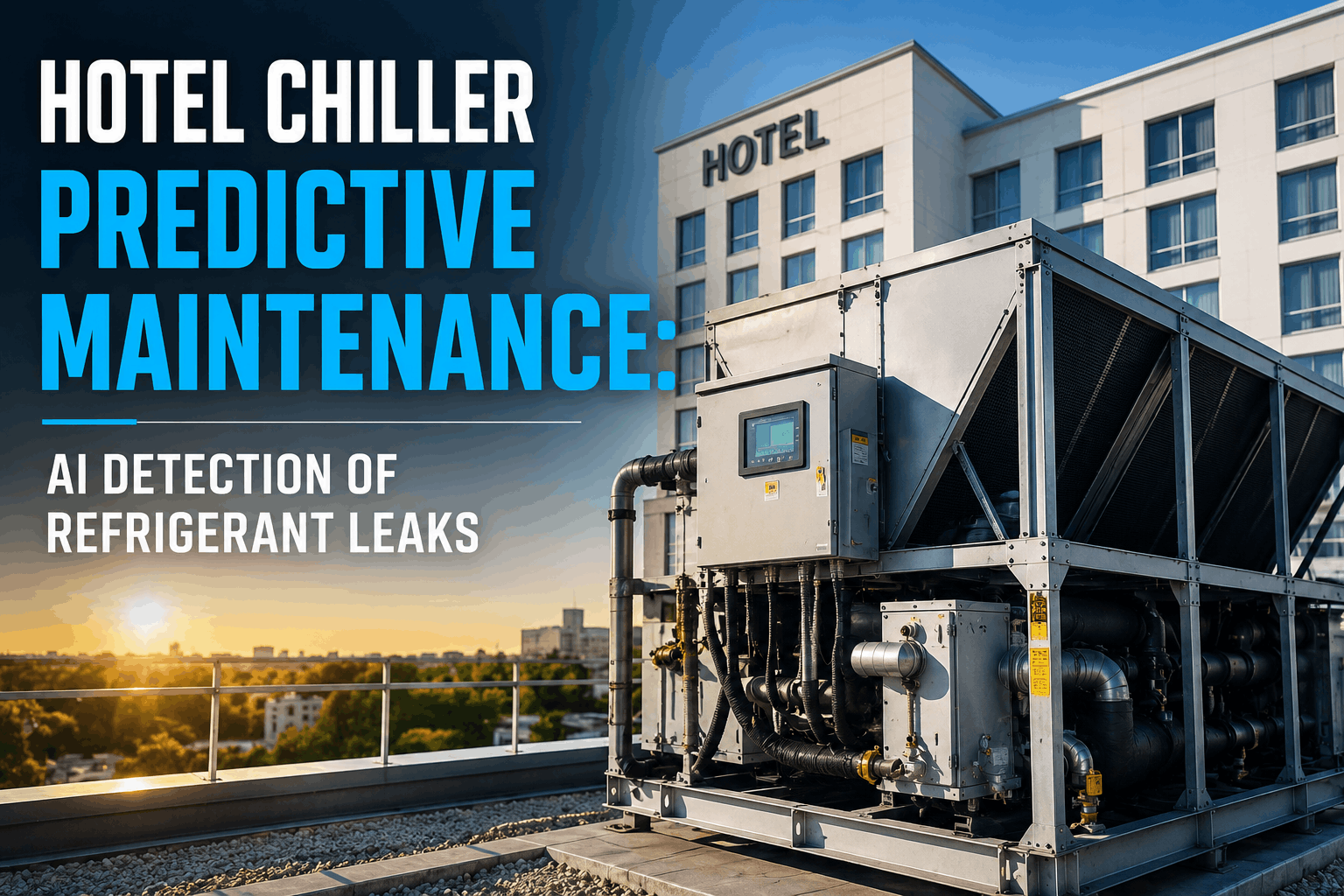
The facility manager noticed it on a Tuesday morningthe chiller wasn't holding temperature like it used to. By Thursday, the building's third floor was hitting 78°F despite the system running at full capacity. The technician arrived Friday and delivered the news nobody wanted to hear: the system had lost 40% of its refrigerant charge through a leak that had been developing for months. Emergency refrigerant replacement: $8,500. Environmental compliance fine for unreported release: $12,000. Compressor damage from running low on charge: $28,000 replacement. Total cost of an undetected leak: $48,500. A systematic monthly leak check—requiring 30 minutes and a $200 detectorwould have caught the problem when it was a $400 repair.
A comprehensive refrigerant leak checklist transforms expensive emergency repairs into manageable scheduled maintenance. When facility teams can identify, document, and track potential leak points before they become environmental violations and equipment failures, chillers run efficiently, compliance stays current, and budgets stay intact. Properties that implement digital leak tracking report 70% fewer emergency refrigerant charges and dramatically lower compliance risk.
Understanding Refrigerant Leak Impact: The Numbers That Matter
Refrigerant leaks aren't just maintenance problems—they're environmental violations, energy drains, and equipment destroyers. The EPA Section 608 regulations require leak repair within 30 days for equipment containing 50+ pounds of refrigerant. Missing that deadline triggers mandatory reporting, potential fines, and increased regulatory scrutiny. Understanding the full impact helps prioritize leak detection in your maintenance program.
Typical cooling capacity reduction when refrigerant charge drops 20%—before any alarms trigger
Increased energy consumption as compressor works harder to compensate for lost refrigerant
Reduction in compressor life when operating at sustained low charge conditions
EPA Compliance Requirements
Under Section 608, commercial chillers with 50+ lbs refrigerant exceeding leak rates of 30% annually must be repaired within 30 days of discovery. Failure to comply can result in fines up to $44,539 per day per violation. Systematic leak checks create the documentation trail that proves compliance—or reveals problems before they become violations.
Complete Refrigerant Leak Detection Checklist
Effective leak detection requires systematic inspection of every potential leak point. This checklist covers the complete chiller system from compressor to evaporator, organized by component and leak likelihood. Work through each section methodically, documenting all findings. When your team can see how digital checklists streamline leak tracking, compliance becomes automatic instead of stressful.
Mechanical Connections
Service valve stems and caps
Flare fittings and connections
Brazed joints and solder connections
Compressor terminal seals
Pressure relief valves
Compressor Components
Shaft seal (scroll/screw compressors)
Oil drain and fill ports
Suction and discharge connections
Crankcase heater penetrations
Capacity control valve seals
Why Priority 1:
These points account for 60-70% of all refrigerant leaks—mechanical connections and compressor seals are the most common failure points
Condenser Coil
Coil tube surfaces (corrosion/damage)
U-bend connections
Header connections
Distributor tube joints
Fin/tube contact points
Evaporator Section
Evaporator tube bundle
Tube sheet connections
End cap gaskets
Shell penetrations
Liquid line connections
Why Priority 2:
Heat exchangers develop leaks from vibration fatigue, corrosion, and thermal stress—especially at tube-to-header joints
Document Every Inspection, Track Every Leak Point
See how facility managers are using digital checklists to create EPA-compliant documentation, track repair timelines, and prevent costly violations.
Leak Detection Methods: Tools and Techniques
Different leak sizes require different detection methods. A major leak might be obvious from oil stains and performance loss, while a slow seep requires sensitive electronic detection. Your checklist should specify which method to use at each inspection point. Properties that track detection method results digitally can identify patterns and predict where leaks are likely to develop.
ELECTRONIC
Electronic Leak Detector
Sensitivity: 0.1 oz/year
Best for: Small leaks
Portable and precise
Requires calibration
Works in tight spaces
$150-$500 cost
EPA-approved method for leak verification
VISUAL
Bubble Solution Test
Sensitivity: Moderate
Best for: Accessible joints
Low cost method
Confirms exact location
Temperature limitations
$5-$20 cost
Best for pinpointing after electronic detection
UV DYE
Fluorescent Dye System
Sensitivity: Very high
Best for: Intermittent leaks
Finds multiple leaks
Permanent installation
Requires UV light
$100-$300 per system
Excellent for hard-to-find intermittent leaks
ACOUSTIC
Ultrasonic Detector
Sensitivity: Large leaks
Best for: Pressurized systems
Works while running
No refrigerant specific
Background noise issues
$200-$800 cost
Useful for initial screening of large systems
Leak Rate Calculation and Documentation
EPA regulations require tracking leak rates—not just finding leaks. Understanding how to calculate and document leak rates is essential for compliance. Systems losing more than 30% of charge annually must be repaired within 30 days or face regulatory action. Proper documentation proves compliance and protects your organization.
| Data Point |
What to Record |
Why It Matters |
Retention Period |
| Full Charge |
Total system refrigerant capacity (lbs) |
Baseline for leak rate calculation |
Life of equipment |
| Refrigerant Added |
Date, amount (lbs), technician ID |
Numerator in leak rate formula |
3 years minimum |
| Leak Location |
Component, detection method, severity |
Repair verification and trending |
3 years minimum |
| Repair Action |
Date, method, parts replaced, verification test |
Proves compliance with 30-day rule |
3 years minimum |
| Annual Leak Rate |
Calculated as: (Refrigerant Added ÷ Full Charge) × 100 |
Determines regulatory threshold |
3 years minimum |
Swipe to see full table
Leak rate exceeding 30% triggers mandatory repair within 30 days—digital tracking ensures you never miss a deadline
Inspection Frequency by System Type
Different chiller systems require different inspection frequencies based on age, refrigerant type, and operating conditions. Newer systems with HFC refrigerants may need less frequent checks than older systems with higher-GWP refrigerants facing phase-down requirements. Adjust your schedule based on these factors.
| System Type |
Monthly |
Quarterly |
Semi-Annual |
Annual |
| New Systems (<5 yrs) |
Visual inspection |
Electronic scan |
Full system check |
Comprehensive audit |
| Mature Systems (5-15 yrs) |
Visual + key points |
Full electronic scan |
Comprehensive check |
Pressure test if indicated |
| Aging Systems (>15 yrs) |
Electronic scan |
Full system + UV check |
Comprehensive audit |
Consider replacement eval |
| High-GWP Refrigerants |
Electronic scan |
Full system check |
Comprehensive audit |
Conversion assessment |
| Systems w/ Leak History |
Full electronic scan |
Comprehensive check |
Pressure test |
Replacement evaluation |
Paper Logs vs. Digital Leak Tracking: The Compliance Difference
EPA auditors don't accept "we think we checked it" as documentation. When they request three years of leak records, you need dates, amounts, technician IDs, and repair verifications—instantly accessible. Paper systems make this nearly impossible. Digital tracking makes it automatic. The difference shows up when auditors arrive or when you need to prove compliance during a refrigerant purchase.
Paper-Based Logs
Leak rate calculation:
Manual math
30-day deadline tracking:
Calendar reminders
Audit readiness:
High risk
Digital CMMS
Leak rate calculation:
Automatic
30-day deadline tracking:
Auto-alerts
Audit readiness:
Always ready
100%
EPA compliance documentation
70%
fewer emergency refrigerant charges
$0
compliance fines with proper tracking
Expert Perspective: What Separates Compliant Operations
"The facilities that never face EPA enforcement actions share one characteristic: they treat refrigerant like a tracked asset, not a consumable. Every ounce in, every ounce out, documented with dates and technician signatures. When I audit a facility with digital tracking, I can verify three years of compliance in 15 minutes. Paper-based operations We're there all day, and we usually find gaps."
— Environmental Compliance Auditor, 18 years experience
Chain of Custody
Track every pound of refrigerant from purchase to recovery. Digital systems create automatic custody documentation.
Proactive Detection
Scheduled leak checks find problems before they trigger reporting thresholds. Prevention beats remediation every time.
Repair Verification
Document that repairs were successful with post-repair leak tests. Verification closes the compliance loop.
Common Leak Indicators: What to Watch For
Not every leak requires an electronic detector to find. Experienced technicians recognize visual and performance indicators that suggest refrigerant loss. Training your team to spot these signs during routine rounds catches problems early—before expensive detection equipment is needed.
Oil stains around fittings or connections
Frost patterns in unusual locations
Corrosion or discoloration on copper
Bubbles in sight glass (low charge)
UV dye traces under black light
Gradual decrease in cooling capacity
Longer run times to reach setpoint
Suction pressure trending lower
Superheat increasing over baseline
Compressor amp draw decreasing
Low pressure cutout trips
High superheat alarms
Compressor overload trips
Oil level warnings
Temperature setpoint failures
Monthly refrigerant additions increasing
Energy consumption rising
Subcooling decreasing over time
Seasonal performance degradation
Repeat repairs at same location
Team Roles for Leak Detection Program
Effective leak detection isn't a one-person job. Successful programs distribute responsibility across the maintenance team, with clear accountability for inspections, documentation, and escalation. This structure ensures nothing falls through the cracks and compliance stays current.
Program Owner
Facilities Director or Chief Engineer
Sets inspection schedules and standards
Reviews leak rate calculations monthly
Ensures 30-day repair compliance
Lead Technician
Senior HVAC Technician
Performs electronic leak detection
Documents findings in CMMS
Coordinates with contractors
Operations Staff
Building Engineers & Operators
Visual inspections during rounds
Reports suspected leaks immediately
Logs refrigerant additions
Compliance Officer
Environmental or Safety Manager
Audits documentation quarterly
Manages EPA reporting requirements
Coordinates external audits
Stop Leaks Before They Stop Your Operation
Oxmaint gives facility teams complete leak tracking, automatic leak rate calculations, and EPA-compliant documentation. Protect your refrigerant, protect your equipment, protect your compliance status.
Frequently Asked Questions
What is the EPA leak rate threshold for commercial chillers
Under EPA Section 608 regulations, commercial refrigeration and air conditioning equipment containing 50 or more pounds of refrigerant has an annual leak rate threshold of 30%. If your system exceeds this rate, you must repair the leak within 30 days of discovery or face potential fines up to $44,539 per day per violation. The leak rate is calculated as the total refrigerant added over a 12-month period divided by the full system charge, multiplied by 100.
How often should chiller refrigerant leak checks be performed
Inspection frequency depends on system age and leak history. New systems (under 5 years) should have visual inspections monthly with electronic scans quarterly. Mature systems (5-15 years) need monthly electronic scans of high-probability points with quarterly full-system checks. Aging systems (15+ years) or those with leak history should have monthly full electronic scans. All systems should have comprehensive annual audits.
What are the most common locations for chiller refrigerant leaks
Service valve stems and caps account for approximately 25% of leaks, followed by flare fittings (20%), brazed joints (15%), compressor shaft seals (15%), and Schrader valve cores (10%). Heat exchanger tube leaks, while less common, are often more serious and harder to repair. Focusing your inspection on these high-probability points catches the majority of leaks early.
What documentation is required for EPA refrigerant compliance
EPA requires documentation of: full system charge (pounds), all refrigerant additions (date, amount, technician), leak locations and detection methods, repair actions and dates, post-repair verification tests, and annual leak rate calculations. Records must be retained for at least 3 years and made available upon EPA request. Digital CMMS systems automatically generate compliant documentation from routine maintenance entries.
What is the cost of not detecting refrigerant leaks
Undetected leaks create compounding costs: refrigerant replacement ($50-150 per pound for common refrigerants), increased energy consumption (10-30% while running low), accelerated compressor wear (50% reduction in life), and potential EPA fines (up to $44,539 per day). A typical 200-ton chiller losing 20% charge annually could cost $15,000+ in refrigerant alone, plus $5,000-10,000 in excess energy costs. Early detection through systematic checking typically costs under $2,000 annually.
Ready to Implement a Comprehensive Leak Detection Program
Join thousands of facility managers using Oxmaint to track refrigerant, document inspections, and maintain EPA compliance automatically. Start preventing costly leaks today.