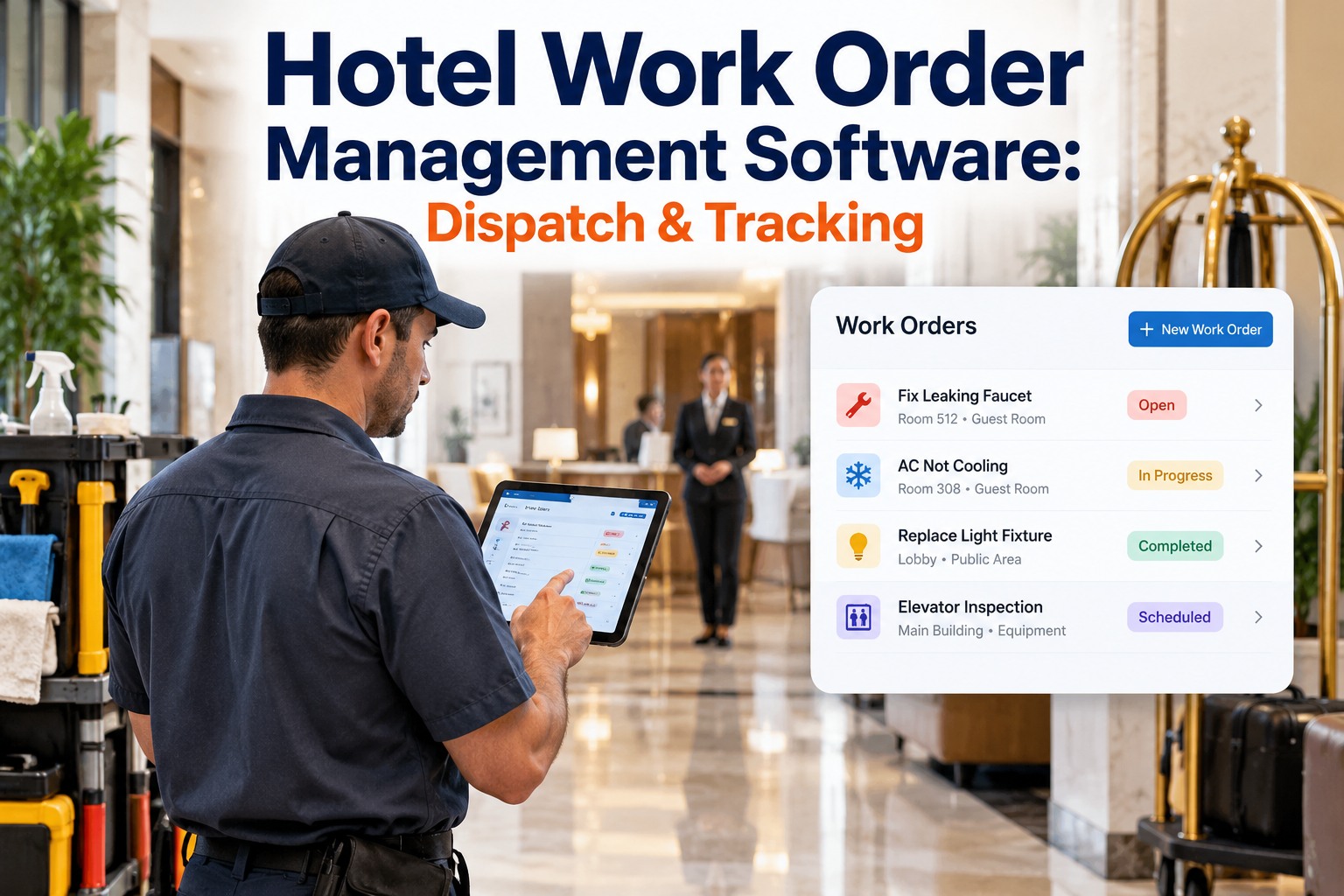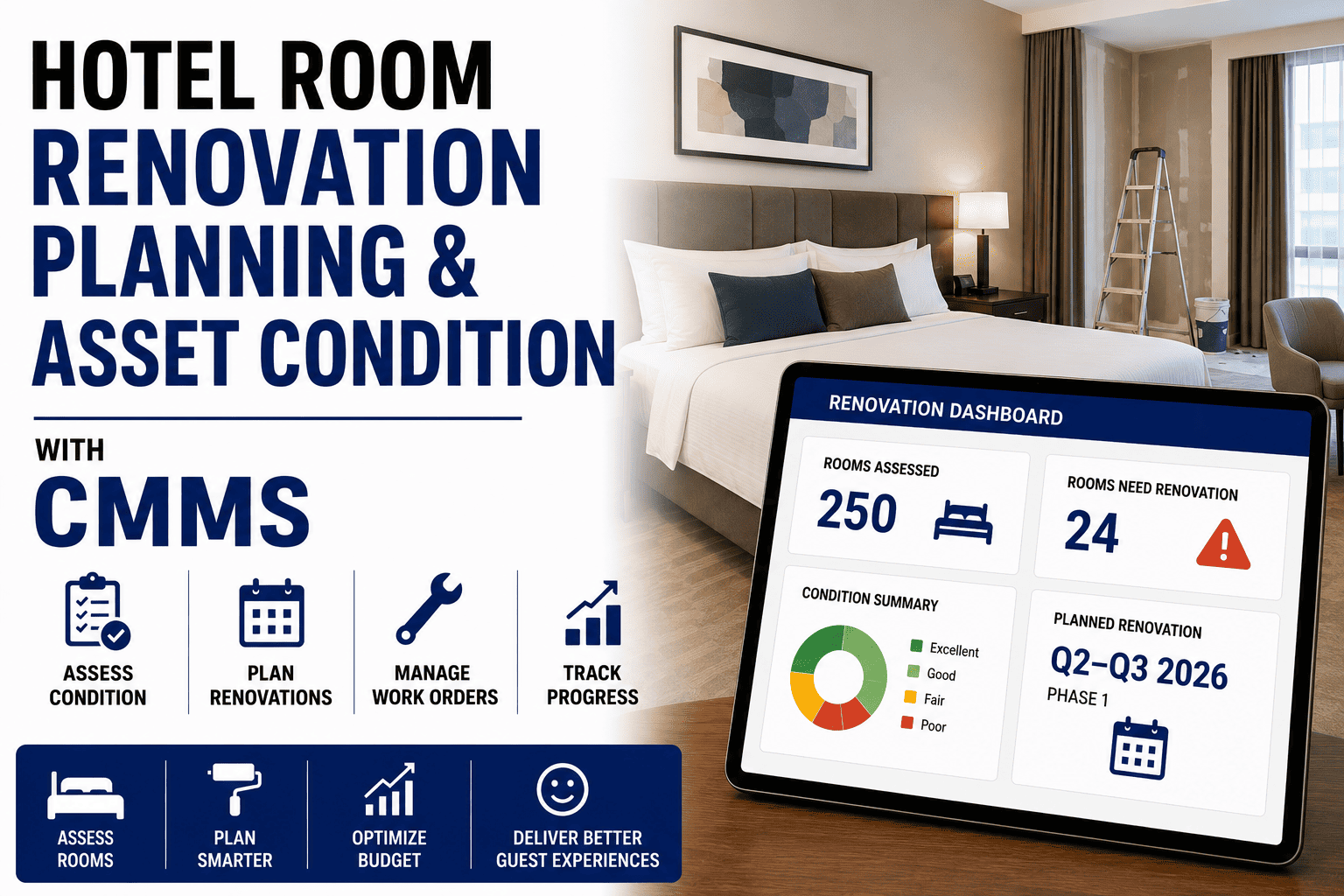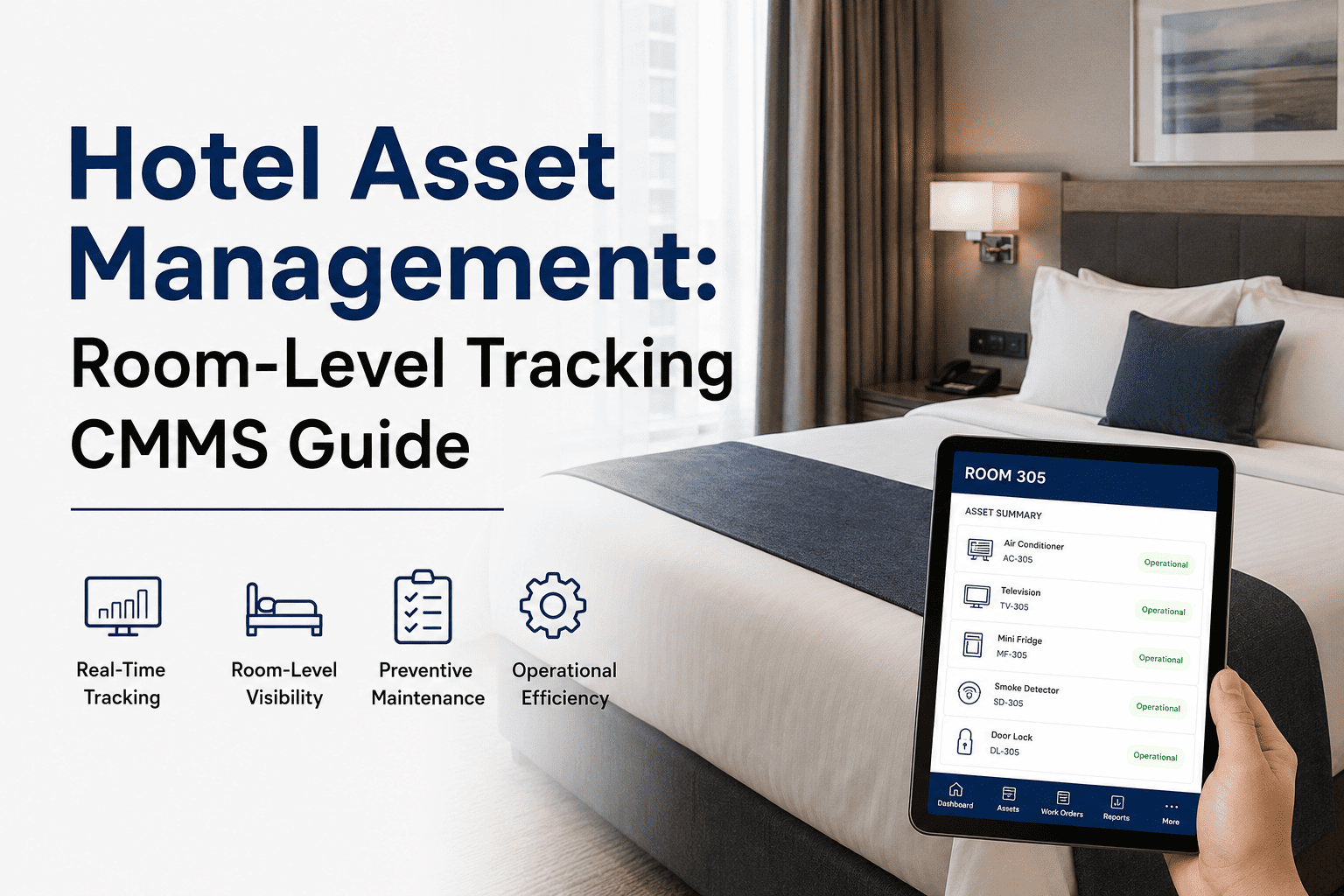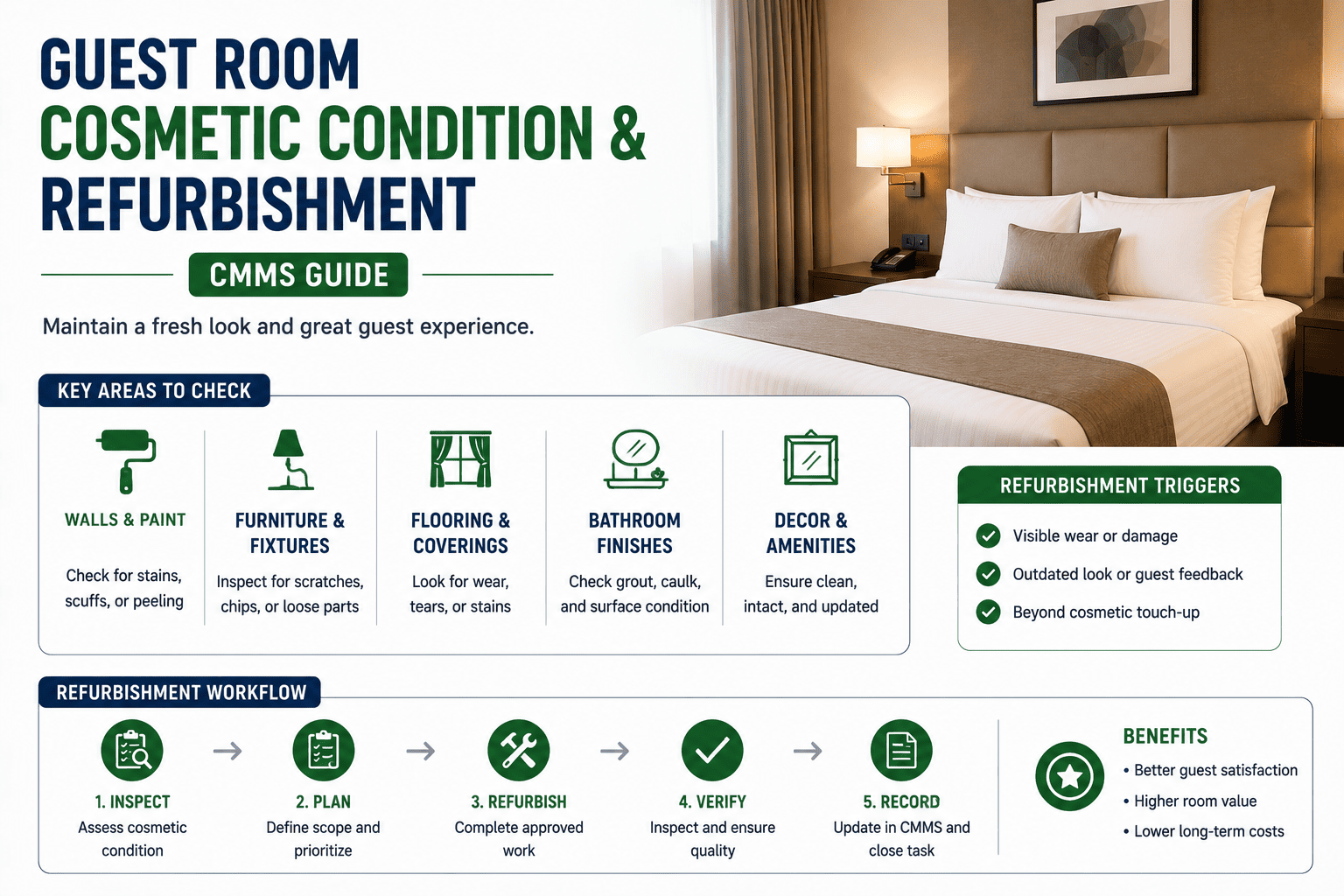
Managing hotel maintenance during property renovations is a high-wire act: your capital project team is tearing walls apart, contractors are everywhere, and the engineering department must simultaneously maintain life safety systems, respond to guest issues, and execute preventive maintenance on areas outside the renovation zone. Without structured communication, hotels lose $4,500–$8,200 per day in revenue from rooms pulled out of service due to maintenance failures during renovation periods, guest complaints spike as construction dust infiltrates HVAC systems and contractors damage existing systems, and engineers spend 40%+ of their time managing renovation-related maintenance chaos instead of preventive work. Oxmaint's renovation-aware CMMS coordinates engineering team workflows with construction schedules, automates maintenance requests in occupied vs. renovation zones, tracks contractor-caused damage for cost recovery, and maintains guest satisfaction through coordinated shutdown planning and noise scheduling. This guide walks through managing engineering operations during renovations, staging maintenance tasks around construction phases, and ensuring life safety compliance continues uninterrupted through the chaos.
Renovation Creates Maintenance Chaos Without Structure
During renovations, the engineering team faces unprecedented operational pressure: construction dust clogs HVAC filters, contractors accidentally damage water lines and electrical panels, rooms are dark because renovation lighting hasn't been connected, guest complaints spike (43% increase typical), and the Chief Engineer spends half the day responding to emergency calls instead of executing preventive maintenance. Meanwhile, the capital project team views engineering as a support function, not as a critical path controller. Without structured coordination, hotels see 38% more emergency maintenance events, 64% higher costs to repair contractor damage, and revenue losses from out-of-service rooms that should have been available. Oxmaint's renovation workflows create a shared schedule between your capital project and engineering teams, automatically adjust PM timing for renovation phases, and track every contractor-caused issue for cost recovery.
Five Key Renovation Phases & Engineering Response
Each renovation phase presents distinct maintenance challenges. Your engineering team's responsibilities shift as the project moves from pre-demolition shutdown through phased reoccupancy. The schedule below shows typical phase timing for a 200-room hotel with floor-by-floor renovation approach; your timeline may differ based on renovation scope and property complexity.
Tracking and Recovering Contractor-Caused Maintenance Costs
Renovation contractors regularly damage existing systems: they punch holes through water lines, cut electrical wires, crack plaster ceilings, or damage HVAC ducts. Most of these damages are contracted back to the general contractor for correction, but without systematic documentation, hotels lose $15,000–$45,000 in unrecovered costs per renovation. Oxmaint's damage tracking system captures damage photos, root cause (contractor negligence vs. design change), repair cost estimates, and billing status, enabling your capital project team to track contractor performance and insurance claims teams to build accurate cost-recovery documentation.
| Damage Type | Typical Cost | Documentation Required | Recovery Method |
|---|---|---|---|
| Water line rupture (contractor cutting) | $2,200–$5,400 | Photos of damage, work order with labor and parts, water damage report | Contractor warranty clause, insurance claim |
| Electrical panel damage (impact or cutting) | $1,800–$4,200 | Electrical inspection certificate, repair estimate, safety test results | Contractor responsibility, hold from contract payment |
| HVAC duct damage (crushing or disconnection) | $1,200–$3,600 | Photos of damage, airflow testing, repair work order | Contractor correction, HVAC vendor certification |
| Drywall / plaster damage (adjacent areas) | $400–$1,600 | Photos from multiple angles, construction defect report, repair quote | Defect liability hold, final certificate of completion |
| Fire suppression system tampering or disconnection | $800–$2,200 | Fire protection inspector's report, system certification, compliance documentation | Mandatory contractor correction, hold from progress payment |
Oxmaint's Damage Tracking Process: When a contractor damage is discovered, your technician creates a damage work order in Oxmaint with photos, estimated cost, and root cause classification. The system generates a report exportable to your general contractor for correction or back-charge. By renovation end, you have a complete damage log for insurance claims, contract reconciliation, and lessons-learned documentation.
Pre-Renovation Planning Checklist for Engineering
Begin renovation planning 6–8 weeks before demolition starts. Engineering must coordinate with capital projects, facilities, and operations to prevent surprises that derail schedules or spike emergency costs. This checklist represents minimum engineering involvement in pre-renovation planning.
Task: Mark electrical panel locations, water main shutoffs, HVAC branches, fire sprinkler heads, and gas lines on floor plans. Identify which systems must remain operational during construction and which can be temporarily isolated.
Task: Walk job site with electrical, plumbing, HVAC, and demolition contractors. Point out critical systems, show them as-built plans, establish daily coordination schedule and damage reporting protocol.
Task: Schedule isolation work (drain water lines, cap electrical branches, disconnect HVAC ducts) for days before demolition starts. Document locations of shutoff valves and breakers for emergency access during construction.
Task: Ensure all fire alarms, elevators, emergency exits, and lighting remain operational throughout construction. Coordinate with local fire marshal if renovation affects egress pathways or fire ratings.
Task: Pause room-level HVAC PMs in occupied renovation areas. Accelerate HVAC filter changes to 2x weekly due to dust. Maintain all life-safety PMs without delay. Disable automatic work order generation in active demolition zones temporarily.
Task: Create guest messaging for noise, dust, access limitations during renovation. Coordinate with reservations to manage room bookings in unaffected areas. Train front desk on explaining maintenance delays during high-emergency periods.
Oxmaint's renovation module lets you create a renovation project record, attach as-built drawings, set phase dates, and automatically adjust PM schedules by phase. Your team tracks contractor compliance, documents damage, and maintains full system visibility throughout the project — without shifting focus away from guest areas.
Renovation Maintenance FAQ
Customer Review: Chief Engineer, 275-Room Luxury Resort, Colorado
"A full-property renovation was scheduled for 18 months. Without Oxmaint, we would have been completely unprepared. We created a renovation project record, mapped all phase dates, documented contractor damage in real-time, and deferred non-critical PMs automatically. When guests complained about dust in room AC units, we had visibility into which rooms needed emergency filter changes. When the contractor punched a hole in a water line, it was documented with photos within the hour, and we recovered $3,200 from the GC's insurance. The data visibility alone was worth 5x the software cost." — Thomas K., Vail, CO
Keep Your Hotel Maintained During Renovation Without Losing Revenue
Renovation-focused workflows in Oxmaint coordinate engineering with construction, automatically adjust PM schedules by phase, track contractor damage for cost recovery, and maintain full system visibility — preventing the $4K–$8K per-day revenue losses from maintenance failures that derail renovations.