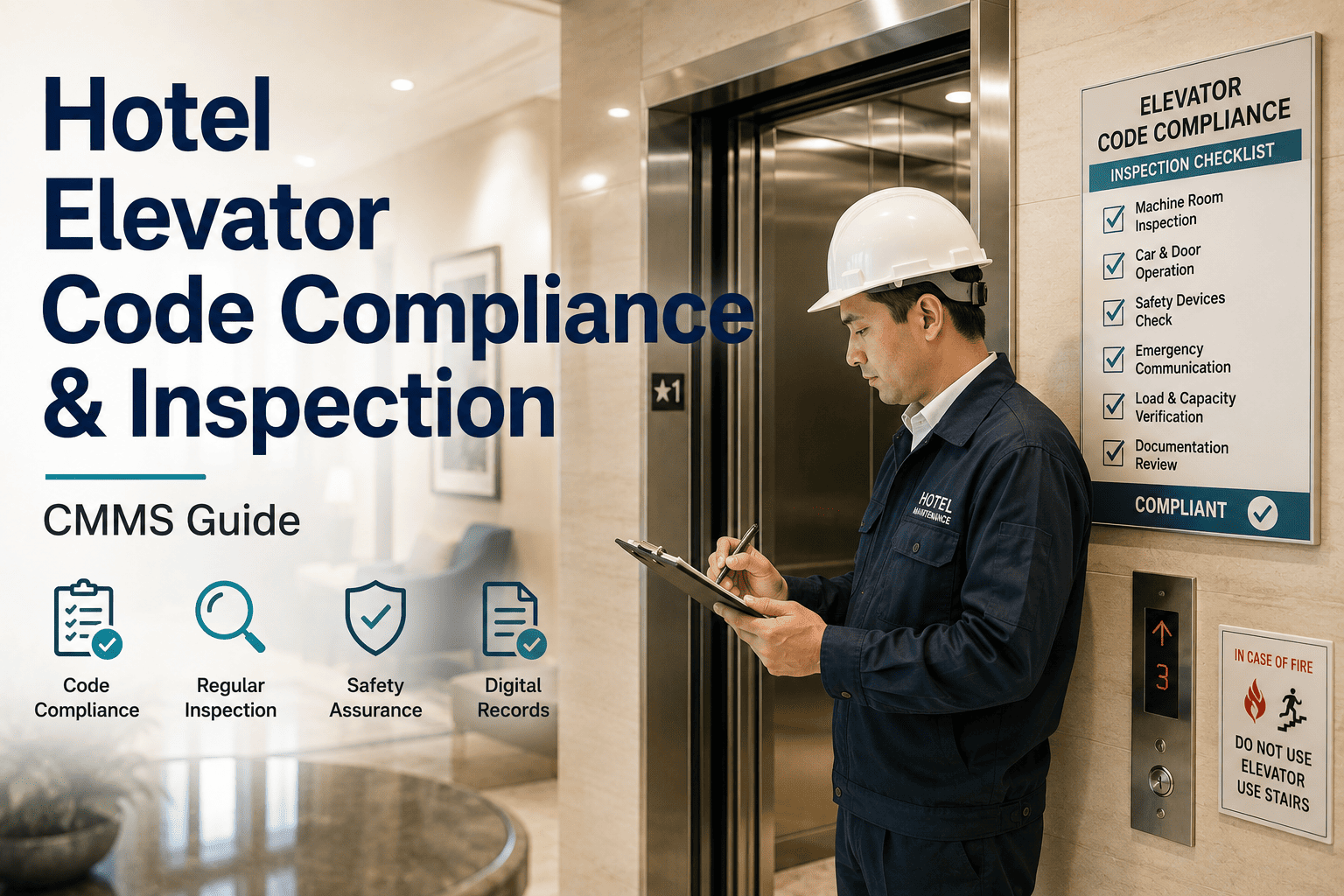
Managing is an elevator systems across commercial buildings, healthcare facilities, residential high-rises, or mixed-use developments means navigating one of the most complex regulatory landscapes in facility management. North America's patchwork of federal, state, provincial, and local codes—ASME A17.1 in the United States, CSA B44 in Canada, and NOM-053 in Mexico—creates compliance obligations that vary by jurisdiction while sharing core safety requirements. Traction system wear, hydraulic fluid degradation, door operator fatigue, controller component drift—these degradation patterns progress invisibly until they manifest as either code violations during inspections or, far worse, entrapment incidents that endanger occupants. Traditional maintenance approaches discover these problems only during scheduled testing, leaving dangerous gaps where silent failures develop unchecked.
The stakes couldn't be higher: elevator code violations can result in immediate shutdown orders that strand building occupants, fines ranging from $500-$25,000 per violation depending on jurisdiction, and liability exposure that can devastate property owners. AI-powered predictive maintenance fundamentally changes this equation by continuously monitoring system health indicators—motor current signatures, door timing patterns, brake wear measurements, and controller diagnostics—identifying degradation weeks before it would cause failure or code violation. For facility managers and vertical transportation professionals responsible for conveyance systems, AI compliance isn't optional technology—it's the difference between hoping elevators pass inspection and knowing they will.
Spring
Post-Winter Assessment
Inspect pit for water intrusion damage
Test sump pump operation and alarms
Check hydraulic fluid levels post-thaw
Verify door operator timing after humidity changes
Review AI predictions for seasonal drift patterns
Summer
Peak Load Monitoring
Monitor machine room temperatures
Track motor current under high traffic
Verify HVAC cooling for controllers
Test emergency ventilation compliance
Analyze AI alerts for overheating patterns
Fall
Annual Inspection Prep
Complete Category 1 periodic testing
Perform 5-year full load safety tests
Update maintenance control program documentation
Verify firefighter service operation
Calibrate AI models with annual test data
Winter
Cold Weather Vigilance
Monitor hydraulic viscosity in cold
Track door operator response times
Verify pit heater operation
Check emergency phone line integrity
Review predictive maintenance forecasts
ASME A17.1/CSA B44 Compliance: AI monitoring supplements but never replaces required inspection frequencies—use predictions to optimize timing within code-mandated windows
North American Elevator Code Framework: Understanding Jurisdictional Requirements
Elevator compliance in North America operates under a tiered regulatory structure where model codes establish baseline requirements that jurisdictions can adopt, modify, or enhance. Understanding this framework is essential for developing maintenance programs that satisfy Authority Having Jurisdiction (AHJ) requirements while leveraging AI monitoring to exceed minimum standards. The complexity multiplies for organizations managing elevator portfolios across multiple states or provinces, where inspection frequencies, testing protocols, and documentation requirements can vary significantly.
United States
ASME A17.1
Safety Code for Elevators
State Adoption
Local Amendments
AHJ Variations
50 states with varying code editions and inspection requirements
Canada
CSA B44
Safety Code for Elevators
Provincial Acts
TSSA (Ontario)
BC Safety
Harmonized with ASME A17.1 but with provincial enforcement variations
Mexico
NOM-053
Norma Oficial Mexicana
Federal Standard
State Verify
Third-Party
Federal code with third-party verification requirements
Testing Categories
Cat 1 & 5
Periodic Test Requirements
Annual
5-Year
Witnessed
Category 1 annual, Category 5 every 5 years for safety devices
The financial and operational case for AI monitoring compounds through compliance risk reduction. A commercial property managing 20 elevators across multiple jurisdictions can face $100,000+ in annual violation exposure if inspections reveal deficiencies. When integrated with a CMMS platform, AI sensors continuously monitor the exact parameters that inspectors evaluate—door timing, leveling accuracy, safety device response, and controller function—alerting maintenance teams weeks before conditions would trigger violations. Properties ready to implement AI-driven elevator compliance monitoring can explore predictive maintenance integrations designed for vertical transportation systems.
Transform elevator compliance through AI condition monitoring
Condition monitoring transforms elevator maintenance from calendar-based service into continuous health surveillance aligned with compliance requirements. Instead of performing maintenance monthly regardless of actual condition, AI systems track real-time performance metrics—motor current signatures, door operator force measurements, leveling accuracy, brake wear indicators, and rope condition—triggering service precisely when conditions indicate emerging degradation that would fail inspection. For facilities where elevator reliability determines both tenant satisfaction and regulatory standing, condition monitoring catches the 3mm leveling drift before it becomes the 12mm violation that triggers AHJ citation.
Door Systems
60-75%
Entrapment reduction
Force
Timing
Cycles
Detect door operator wear 6-10 weeks before force limits exceed code
Drive Systems
99.5%
Uptime target
Current
Vibration
Temperature
Identify motor bearing and drive sheave issues before callback conditions
Safety Devices
100%
Test readiness
Governor
Safeties
Buffers
Continuous verification ensures Category 1/5 test passage
Controllers
3-6 weeks
Advance failure warning
Voltage
Processor
I/O Status
Predict controller board and relay failures before service interruption
The Elevator Compliance AI Framework: KPIs That Predict Violations
Elevator systems require KPI frameworks that balance uptime metrics with compliance readiness—two goals that align when managed intelligently through continuous monitoring. AI-powered systems enable sophisticated measurement that traditional maintenance programs cannot achieve, tracking leading indicators that predict both mechanical failures and code violations. The most effective frameworks combine system performance metrics with inspection readiness measurements, creating comprehensive visibility into elevator compliance status.
Compliance Readiness Score
Target: >98% | Critical Buildings: 100%
Higher readiness = zero surprise violations, continuous operation authority
System Availability
99.2%
Target: >99%
Each 0.1% downtime = hours of tenant disruption annually
Callback Rate
0.4/unit/mo
Target: <0.5/unit/month
Lower callbacks = better maintenance, reduced emergency costs
Door Performance
97.8%
Target: >95%
Door issues cause 70%+ of elevator service calls
Inspection Pass Rate
100%
Target: 100% (Required)
First-time inspection passage prevents shutdown orders
Predicted Issues Resolved
91%
Target: >85%
Issues caught by AI before affecting operation or compliance
Build Your Elevator Compliance AI Monitoring Dashboard
Oxmaint CMMS delivers real-time elevator compliance tracking with automated alerts when system health metrics drift from code requirements—purpose-built for vertical transportation systems requiring absolute regulatory compliance.
Designing an AI-driven elevator inspection program with SOPs
Transforming from calendar-based elevator maintenance to AI-augmented predictive compliance requires more than deploying sensors—it demands standardized operating procedures that integrate AI insights with ASME A17.1/CSA B44 requirements. The 80/20 rule applies: 80% of elevator issues originate from 20% of components—typically door systems, controllers, and drive components. AI monitoring concentrates attention on these high-probability failure points while ensuring required inspection frequencies and testing protocols remain compliant with jurisdictional requirements.
Foundation (Days 1-30)
Equipment Inventory
Document all elevators with types, ages, controllers, and compliance history
Code Mapping
Identify applicable ASME/CSA editions and jurisdictional amendments
Sensor Deployment
Install AI monitoring on door systems, drives, and safety devices
Output: Complete elevator registry with AI monitoring active
Learning Phase (Days 31-60)
Baseline Calibration
AI learns normal operating signatures for each elevator system
Compliance Mapping
Link AI thresholds to specific code requirements for violation prediction
Team Training
Train technicians on interpreting AI alerts and compliance documentation
Output: Calibrated AI models with compliance-linked alerting
Optimization (Days 61-90)
Predictive Compliance
Enable automated work orders tied to code violation probability
Inspector Integration
Generate AHJ-ready reports with continuous compliance evidence
Performance Dashboards
Launch real-time compliance monitoring with escalation triggers
Output: Fully operational predictive elevator compliance system
The SOP framework must respect the unique regulatory environment of elevator compliance. ASME A17.1 and CSA B44 mandate specific testing frequencies—Category 1 periodic testing annually, Category 5 full-load safety device testing every five years—that AI monitoring supplements but cannot replace. However, AI transforms how maintenance is prioritized between required tests: instead of responding reactively to callbacks, technicians address AI-flagged conditions before they would cause violations or service interruptions. Properties implementing this approach can schedule implementation consultations to customize AI integration for their specific elevator portfolios and jurisdictional requirements.
Risk Scoring: Prioritizing Elevator Components for Compliance
Not all elevator component failures create equal compliance risk. A worn door roller creates noise complaints; a failed safety device triggers immediate shutdown orders. Risk scoring systematically prioritizes AI monitoring attention based on actual consequences of failure—enabling teams to focus resources on components where degradation poses the greatest threat to both safety and regulatory standing.
Low Frequency
Medium Frequency
High Frequency
Shutdown Violation
High Priority
Safety devices
Critical Priority
Governor/overspeed
Critical Priority
Door interlocks
Major Violation
Medium Priority
Buffers
High Priority
Door force/timing
High Priority
Leveling accuracy
Minor Violation
Low Priority
Car lighting
Medium Priority
Signage/markings
Medium Priority
Phone testing records
Critical: Continuous AI monitoring, immediate response, can cause shutdown
High: Active AI monitoring, same-day response, major violation risk
Medium: Periodic AI analysis, scheduled maintenance windows
Low: Standard inspection cycles with AI trend monitoring
Risk scoring also guides AI monitoring investment decisions. Critical-priority components like door interlocks and governors justify dedicated sensors and continuous monitoring even when installation costs are higher—because a single undetected failure can result in immediate elevator shutdown, stranding occupants and triggering emergency response. For facilities managing elevator portfolios across multiple jurisdictions, this systematic approach ensures that AI monitoring budgets deliver maximum compliance improvement per dollar invested. Properties seeking to implement risk-based elevator AI can access component scoring frameworks built into modern CMMS platforms.
Expert Review: The Economics of Predictive Elevator Compliance
We used to treat inspections as unpredictable events—hoping our elevators would pass but never truly knowing until the inspector arrived. AI monitoring changed everything. Now we see exactly which components are trending toward violation thresholds weeks in advance. Our inspection pass rate went from 82% to 100% in the first year, eliminating the shutdown orders that used to cost us $15,000+ each in emergency repairs, tenant accommodations, and legal exposure. The technology doesn't replace good maintenance—it makes good maintenance predictable.
Reactive Approach
Violations discovered during inspections
Shutdown orders strand tenants
Emergency repair premiums 3-5x
Callback rates erode tenant satisfaction
Paper-based compliance documentation
AI-Driven Approach
100% inspection pass rate achievable
Zero unplanned shutdowns
Planned maintenance at standard rates
99%+ availability targets met
Audit-ready digital compliance records
The transition economics strongly favor AI adoption for elevator compliance. Properties implementing predictive monitoring with integrated CMMS platforms typically see measurable improvement within 60-90 days: callback rates drop as degrading components are addressed proactively, compliance readiness scores climb as violation risks are eliminated, and inspection outcomes shift from uncertainty to confidence. The combination of avoided shutdown costs, eliminated violation fines, reduced emergency service fees, and improved tenant satisfaction delivers ROI that justifies investment within the first year for most facilities.
Transform Your Elevator Compliance with AI
Join facilities already achieving 100% inspection pass rates with Oxmaint's AI-powered predictive monitoring, automated compliance tracking, and ASME/CSA-ready documentation.
State and Provincial Code Variations: What You Need to Know
While ASME A17.1 serves as the model code throughout the United States and CSA B44 governs Canada, significant jurisdictional variations affect maintenance requirements, inspection frequencies, and compliance documentation. Understanding these variations is essential for organizations managing multi-state or cross-border elevator portfolios.
California
CAL/OSHA
Enhanced Requirements
Seismic
Annual Permit
CCR Title 8
Stricter seismic requirements, annual permit renewal, additional safety margins
New York City
DOB
Local Amendments
Category 1
5-Year Test
Local Law
Witnessed Category 1 testing, strict documentation, Local Law compliance
Ontario (TSSA)
CSA B44
Provincial Enforcement
TSSA License
MCP Required
QEI Program
Mandatory Maintenance Control Program, licensed contractor requirements
Texas
TDLR
State Oversight
Registration
Annual Inspect
ASME Adopted
State registration required, annual inspections, ASME adoption with amendments
Frequently Asked Questions
What are the key differences between ASME A17.1 and CSA B44 elevator codes?
ASME A17.1 (United States) and CSA B44 (Canada) are harmonized codes developed jointly, meaning their technical requirements are nearly identical. The primary differences lie in adoption and enforcement: US states adopt specific ASME editions with local amendments, while Canadian provinces enforce CSA B44 through provincial safety authorities (like TSSA in Ontario or Technical Safety BC). Canada requires mandatory Maintenance Control Programs (MCPs) in most provinces, while US requirements vary by jurisdiction. Both codes use the same Category 1 (annual) and Category 5 (5-year) testing framework, though witnessing requirements and documentation standards differ by AHJ.
How often are elevator inspections required in North America?
Inspection frequencies vary significantly by jurisdiction, but ASME A17.1/CSA B44 establish baseline requirements: Category 1 periodic testing annually for most safety-critical components (governors, safeties, door interlocks), and Category 5 full-load safety device testing every five years. Many jurisdictions require annual AHJ inspections beyond the periodic testing requirements. Some high-density jurisdictions like New York City require witnessed testing, while others accept contractor-performed tests with documentation review. Healthcare and high-rise buildings often face more frequent inspection requirements. AI monitoring helps ensure continuous compliance readiness between required inspection dates.
What happens if an elevator fails inspection in the US or Canada?
Consequences depend on violation severity and jurisdiction. Minor violations (documentation gaps, cosmetic issues, signage) typically result in correction orders with 30-90 day remediation windows. Major violations affecting safety-critical components may trigger immediate restriction orders limiting operation. Shutdown violations—failed safety devices, non-functional interlocks, structural issues—result in immediate out-of-service orders until repairs are completed and re-inspected. Fines range from $500-$25,000+ depending on jurisdiction and violation type. In some jurisdictions, repeated violations can result in contractor license actions. AI monitoring prevents violations by identifying code-threshold conditions weeks before inspection.
How accurate is AI at predicting elevator compliance issues?
Modern AI systems achieve 88-95% accuracy in predicting elevator compliance issues when properly calibrated. Door system predictions (force, timing, interlock function) typically reach 92%+ accuracy 6-10 weeks before code thresholds are crossed. Leveling accuracy predictions achieve 90%+ accuracy 4-6 weeks ahead. Safety device trending achieves 85-90% accuracy in predicting Category 1/5 test outcomes. Controller and drive system predictions achieve 88-93% accuracy. Accuracy improves over time as algorithms learn facility-specific patterns—properties maintaining continuous feedback loops see 10-20% accuracy improvement within the first year of AI implementation.
What ROI can facilities expect from AI elevator compliance monitoring?
Facilities implementing AI elevator compliance monitoring typically achieve 35-55% reduction in total elevator-related costs with payback periods of 10-16 months. Primary savings come from: eliminated shutdown violations ($5,000-$25,000+ per incident including fines, emergency repairs, tenant accommodations), reduced callback rates (40-60% reduction, each callback costs $200-$500), prevented emergency repairs (emergency service rates 3-5x standard maintenance), and improved inspection outcomes (100% pass rates eliminate re-inspection fees averaging $500-$2,000). For a 15-elevator commercial portfolio, realistic first-year savings range from $35,000-$75,000.
Does AI monitoring replace required elevator inspections and testing?
No—AI monitoring supplements but never replaces code-mandated inspection and testing requirements. ASME A17.1 and CSA B44 require specific testing intervals (Category 1 annually, Category 5 every five years) and AHJ inspections that must be performed regardless of AI monitoring status. However, AI transforms maintenance effectiveness between required tests: instead of discovering problems during inspections, AI identifies degradation weeks in advance, ensuring elevators pass inspections consistently. AI also provides continuous documentation that supports compliance demonstrations, showing ongoing system health monitoring between required inspection dates.
Start Achieving 100% Elevator Compliance Today
Transform your vertical transportation program from inspection anxiety to compliance confidence. Join facilities already achieving zero violations and 99%+ availability with AI-powered monitoring that predicts issues weeks before they affect operation or regulatory standing.