When a guest calls the front desk at 2 AM reporting no hot water, or when an elevator traps passengers during checkout rush, your property's reputation hangs on a single metric: response time. The difference between a service recovery story and a social media disaster is often measured in minutes, not hours. Hotels that excel at emergency maintenance don't just respond faster they've built systematic protocols that ensure the right technician, with the right tools, reaches the right location within 15 minutes of any critical failure.
Emergency maintenance represents only 15-20% of total work orders at well-managed propertiesyet accounts for 60-70% of guest complaints and negative reviews. The properties that minimize this impact operate under a fundamental principle: emergencies are predictable in pattern even when they're unpredictable in timing. When you've documented the response protocol for every critical system, pre-positioned emergency supplies, and trained staff on escalation triggers, 2 AM crises become manageable incidents rather than reputation-threatening disasters.
15 min
Critical Response
Life safety & guest-facing
2 hrs
Critical Resolution
Or workaround implemented
24/7
Coverage Model
On-call + vendor network
95%+
First-Call Resolution
With proper protocols
The Emergency Triage Framework That Saves Revenue
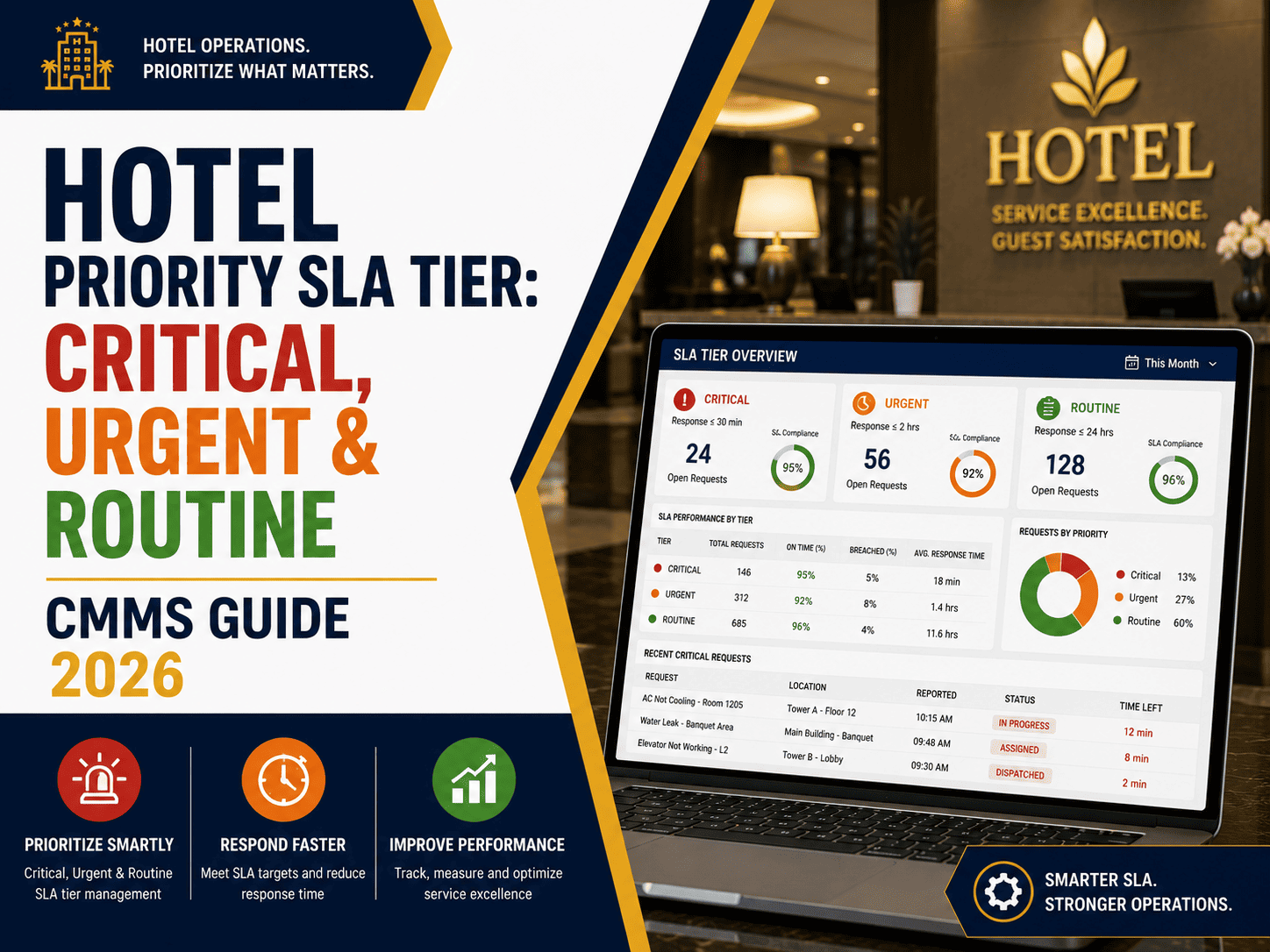
Not all emergencies are created equal. A guest room toilet overflow requires immediate response, but it's fundamentally different from a main ballroom HVAC failure during a 300-person conference. Properties that handle emergencies effectively use structured triage systems that automatically route incidents to the appropriate response level. This eliminates the paralysis that occurs when front desk staff must decide whether a situation warrants waking the general manager at 3 AM. If you're struggling with inconsistent emergency response across shifts, our team can that matches your property's specific operations.
Level 1 — Critical Emergency
Elevator entrapment with guests
Fire alarm system failure
Major water leak affecting multiple rooms
Total HVAC failure (extreme weather)
Gas leak or electrical hazard
Response:
Immediate (≤15 min)
Resolution Target:
2 hours or workaround
Escalation:
GM + Ops Director immediately
Documentation:
Incident report required
Level 2 — Urgent Emergency
Single room HVAC failure
Toilet/shower malfunction in guest room
Room door lock failure
No hot water in guest room
Broken window or door
Response:
≤30 minutes
Resolution Target:
4 hours or room move
Escalation:
Maintenance Manager if unresolved 2 hrs
Documentation:
Work order with guest impact notes
Level 3 — Standard Emergency
Minor plumbing issues (slow drain)
Temperature adjustment needs
Light fixture failures
TV/entertainment system issues
Minor cosmetic concerns
Response:
≤2 hours
Resolution Target:
Same shift or next business day
Escalation:
Only if guest escalates complaint
Documentation:
Standard work order
Building a 24/7 Response System Without Breaking Your Budget
The challenge facing boutique and mid-sized hotels is clear: guests expect 24/7 maintenance response, but most properties can't justify full-time overnight staff. The solution isn't choosing between service quality and profitability—it's building hybrid coverage models that combine on-call rotations with strategic vendor partnerships and mobile technology that enables rapid remote diagnosis. Properties using this approach maintain 15-minute critical response times at 40-50% lower labor costs than traditional 24/7 staffing models.
01
Emergency Hotline
Front desk or automated system captures incident details instantly
02
Automated Triage
System classifies emergency level and routes to appropriate responder
03
Mobile Dispatch
On-call technician receives push notification with location and priority
04
Remote Assessment
Video/photo diagnostic determines if on-site or vendor response needed
05
Response Execution
On-site repair, temporary fix, or guest relocation based on assessment
06
Documentation & Follow-up
Timestamped records, guest communication, and permanent resolution planning
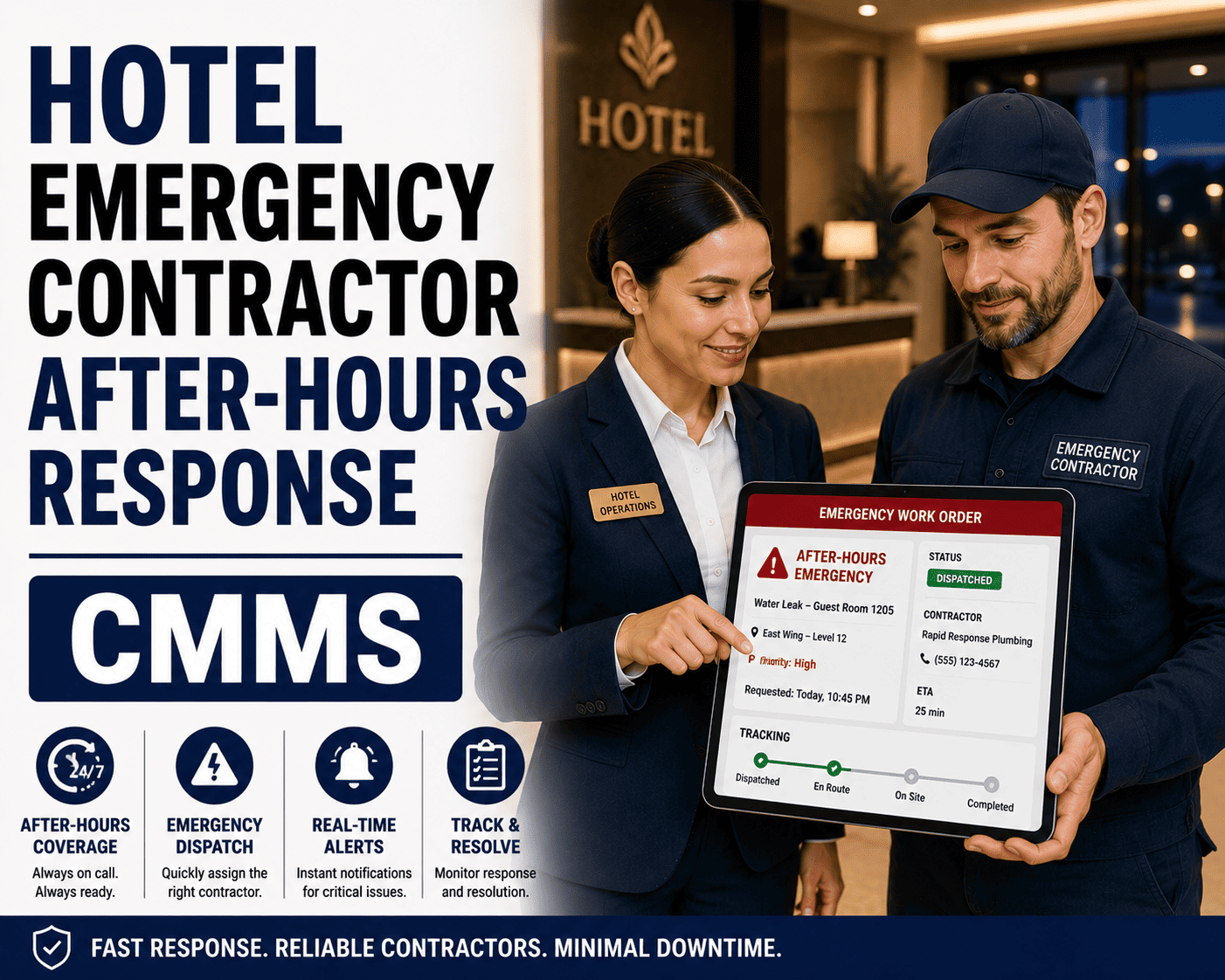
This model works because mobile CMMS platforms enable remote diagnosis that eliminates 40-50% of unnecessary on-site calls. When a guest reports "no hot water," a photo of the shower controls often reveals they simply haven't located the temperature adjustment. When remote diagnosis confirms a true emergency, technicians arrive with the right parts because the system pulls asset history and common failure modes automatically. Want to see how this works with your specific property layout and staffing? Schedule a 30-minute demo customized to your operations.
The Emergency Response Checklist Your Team Needs
Consistency during emergencies requires pre-defined protocols that remove decision-making uncertainty. The following checklist represents the critical components every hotel emergency response system must include to maintain service quality during high-stress situations.
Communication Infrastructure
24/7 emergency hotline with clear routing
Mobile dispatch app for on-call technicians
Emergency contact list (vendors, contractors, management)
Guest communication templates for common emergencies
Equipment & Supplies
Emergency response kit in secure location
Critical spare parts inventory (HVAC, plumbing, electrical)
Backup systems for critical equipment
Emergency tools accessible 24/7
Response Protocols
Written procedures for each emergency type
Clear escalation matrix by severity level
Authorization limits for emergency spending
Guest relocation procedures and comp policies
Staff Preparedness
On-call rotation schedule with backup coverage
Emergency response training for all staff
Vendor relationships pre-established and tested
Regular emergency drills and protocol reviews
Missing even a few items on this checklist increases emergency response time and guest dissatisfaction risk exponentially. If you're not confident your property could handle a major emergency at 3 AM next Saturday, from our hospitality team—we'll identify your most critical gaps.
Is Your Emergency Response System Audit-Ready?
See how leading hotels manage critical failures with mobile dispatch, automated triage, and real-time guest communication that turns potential disasters into service recovery wins.
Performance Metrics That Measure Emergency Effectiveness
Hotels that excel at emergency maintenance track specific KPIs that reveal both response effectiveness and opportunities for prevention. These metrics separate properties that react well from those that prevent emergencies altogether through systematic monitoring and predictive maintenance. Properties using comprehensive tracking typically reduce emergency work orders by 60-70% within 12 months while simultaneously improving response times for unavoidable emergencies.
Critical Response Time
Target: Under 15 minutes
Emergency Resolution Rate
Target: 90%+ within SLA
Emergency Work Orders
Target: Under 20% of total
First-Call Resolution
Target: 85%+ single visit
Not tracking these metrics yet? You're missing early warning signals that predict major failures before they become guest-facing emergencies. Schedule a demo to see how your emergency response dashboard could look with automated data collection from every work order.
Expert Perspective: What Separates Excellent Emergency Response
"After managing emergency maintenance at properties ranging from 50 to 500 rooms, I've learned that response speed isn't about having the biggest maintenance team—it's about having the right information flow. Properties that excel at emergencies have eliminated all the time-wasting steps: searching for equipment history, hunting for parts, trying to reach on-call technicians, explaining the situation multiple times. When a critical failure occurs, their system has already dispatched the right person with asset details and probable cause analysis. The actual repair time is often identical across properties; the winners just eliminate the chaos that precedes the wrench turning."
— Director of Engineering, Multi-Property Hotel Group, 18 years hospitality experience
Information Speed = Response Speed
The difference between 15-minute and 45-minute response is rarely travel time—it's the time wasted gathering context, locating tools, and determining parts needed.
Guest Communication Matters More Than Fix Speed
A 2-hour repair with excellent guest communication generates better reviews than a 30-minute fix with no updates. Guests tolerate issues when they feel informed and valued.
Prevention Reduces Emergency Stress
Properties that track equipment performance data reduce emergency work orders by 60-70%, meaning the emergencies that do occur get full attention rather than overwhelming the team.
Still relying on phone trees and paper logs during emergencies? Every minute wasted on coordination is a minute your guest is frustrated and your team is stressed. If you want to understand what modern emergency response looks like,that works with your existing staffing model.
Your Next Emergency Is Coming—Are You Ready?
Equipment failures don't schedule themselves around your convenience. The 2 AM HVAC breakdown, the Sunday morning plumbing disaster, the holiday weekend electrical fault—these events will occur. The only variable under your control is how systematically your property responds when they do. Hotels that treat emergency response as a designed system rather than a reactive scramble protect both guest satisfaction and operational profitability, because the cost difference between excellent emergency response and chaotic emergency response compounds over hundreds of incidents per year.
That transformation begins with honest assessment of your current emergency preparedness and building infrastructure that supports rapid, consistent response regardless of time, day, or which staff members are on duty.
Build Bulletproof Emergency Response Protocols
Oxmaint provides hotels with mobile emergency dispatch, automated triage, remote diagnostics, and complete documentation that turns chaos into controlled response. Join properties that handle emergencies with confidence 24/7.
Frequently Asked Questions
What response time should hotels target for emergency maintenance calls?
Critical emergencies affecting guest safety or major comfort (HVAC failures, water leaks, elevator entrapment) require 15-minute response times maximum. Urgent single-room issues should receive 30-minute response. Standard maintenance requests can be addressed within 2-4 hours. These targets represent industry best practices—properties achieving them consistently maintain higher guest satisfaction scores and reduce negative reviews related to maintenance issues by 70-80%.
How can small hotels afford 24/7 emergency maintenance coverage?
Most properties under 100 rooms use hybrid models combining on-call rotations with mobile dispatch technology and pre-established vendor relationships. This approach maintains 15-minute critical response times at 40-50% lower cost than full 24/7 staffing. Key elements include automated emergency triage systems that route calls appropriately, mobile apps that enable remote diagnosis (eliminating 40-50% of unnecessary on-site visits), emergency response kits with critical parts pre-positioned, and vendor partnerships that guarantee response times for specialized systems like elevators and fire safety equipment.
What documentation is required for hotel emergency maintenance responses?
Emergency work orders should capture: incident timestamp and discovery method, guest impact details (room numbers, displaced guests, safety concerns), response timeline (dispatch time, arrival time, resolution time), technician actions taken including temporary fixes or workarounds, parts used and costs, guest communication log, escalation notifications to management, photo documentation of issue and resolution, and follow-up requirements for permanent fixes. Digital CMMS platforms capture this documentation automatically as emergencies unfold, versus paper systems that require manual compilation after the fact.
How do hotels prioritize multiple simultaneous emergencies?
Effective triage systems prioritize by: life safety threats first (fire systems, gas leaks, electrical hazards), then guest impact severity (issues affecting multiple rooms before single rooms, revenue events before back-of-house), then financial impact (preventing water damage to multiple rooms before fixing a single TV). Properties using digital dispatch platforms automate this prioritization—when multiple emergencies occur, the system routes based on pre-defined priority rules and available technician proximity, ensuring the most critical issues receive immediate attention while lower-priority items queue appropriately with guest communication about expected response times.
What's the ROI of investing in emergency maintenance response systems?
Hotels implementing structured emergency response systems typically see ROI within 6-12 months through multiple channels: reduced guest complaints and negative reviews (each prevented negative review worth $2,000-$5,000 in future booking impact), eliminated lost revenue from out-of-order rooms (each day a room is offline costs $150-$400 depending on ADR), lower emergency repair costs through faster response preventing issue escalation (40-50% reduction in emergency premiums), improved staff retention as maintenance teams experience less crisis stress, and reduced liability exposure from properly documented emergency responses. The largest financial benefit comes from preventing emergencies altogether through predictive monitoring—properties using this approach reduce total emergency work orders by 60-70% within 12 months.