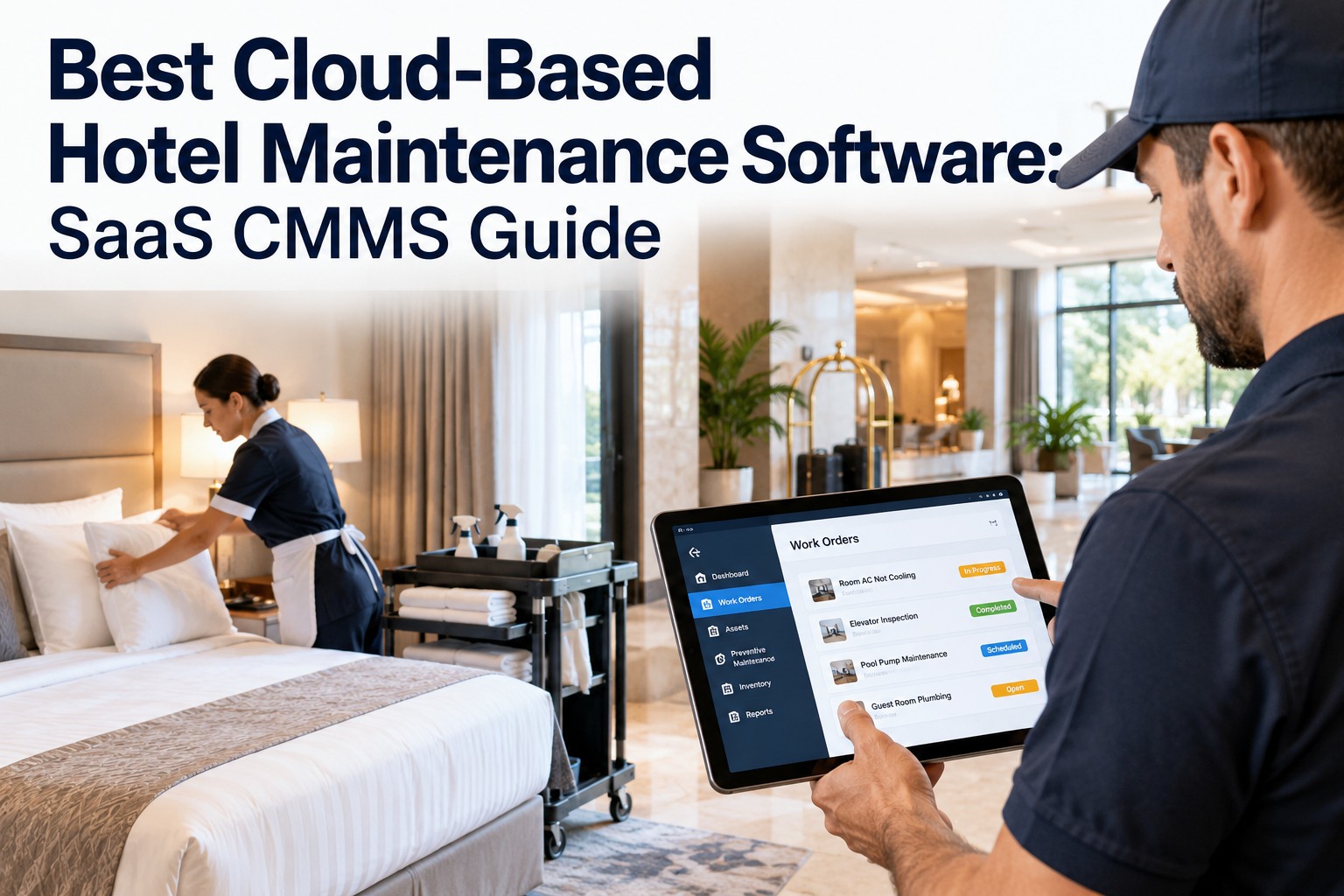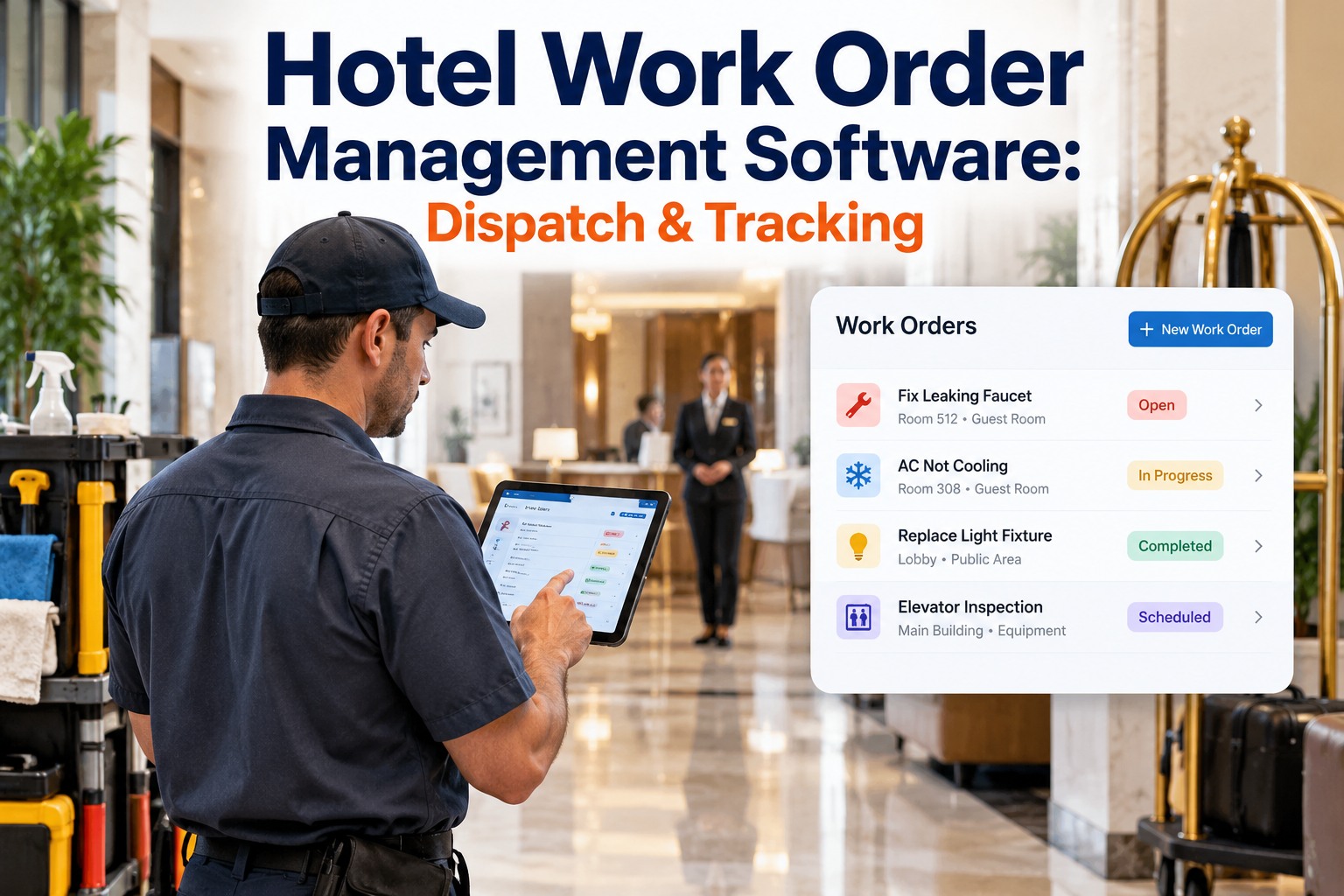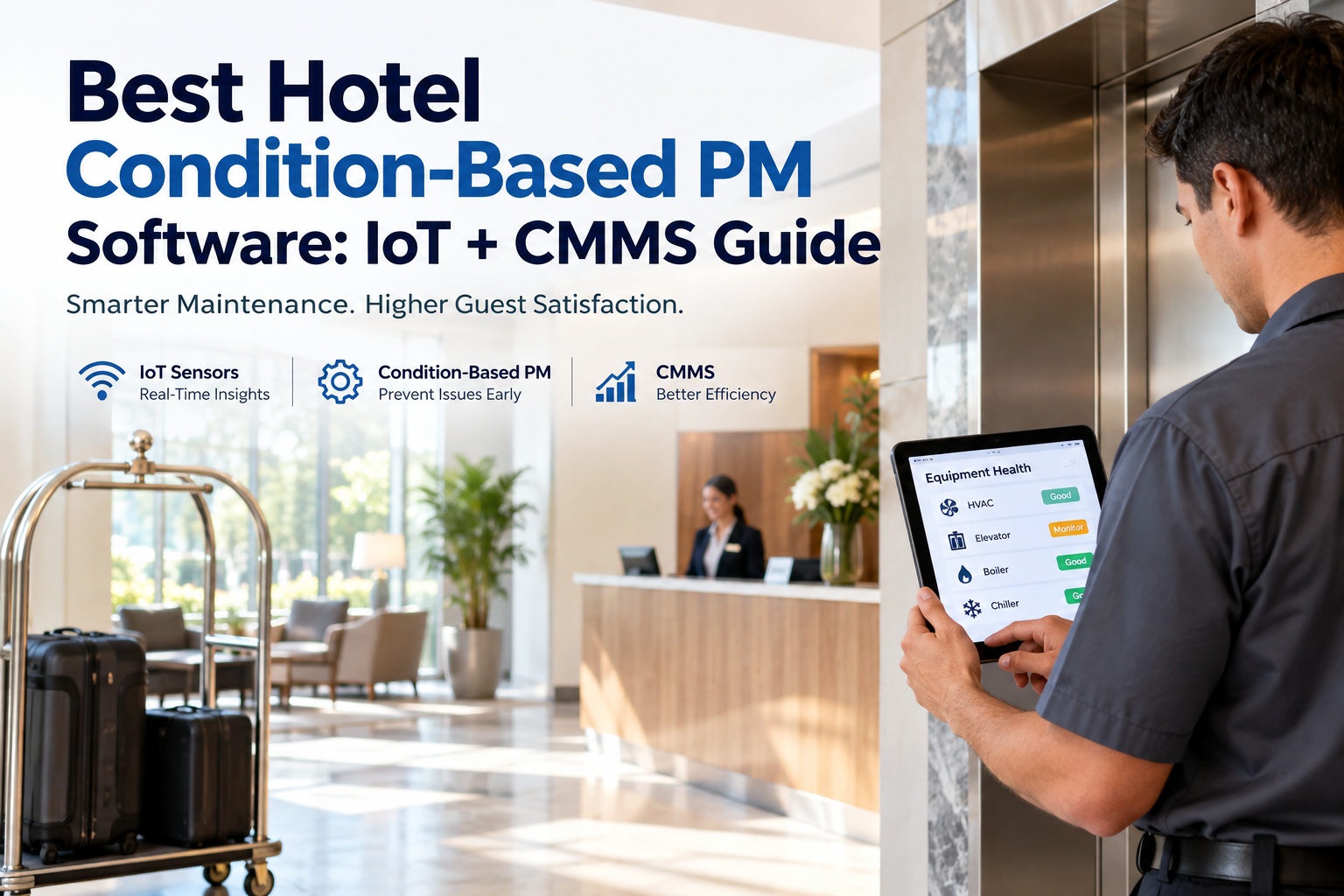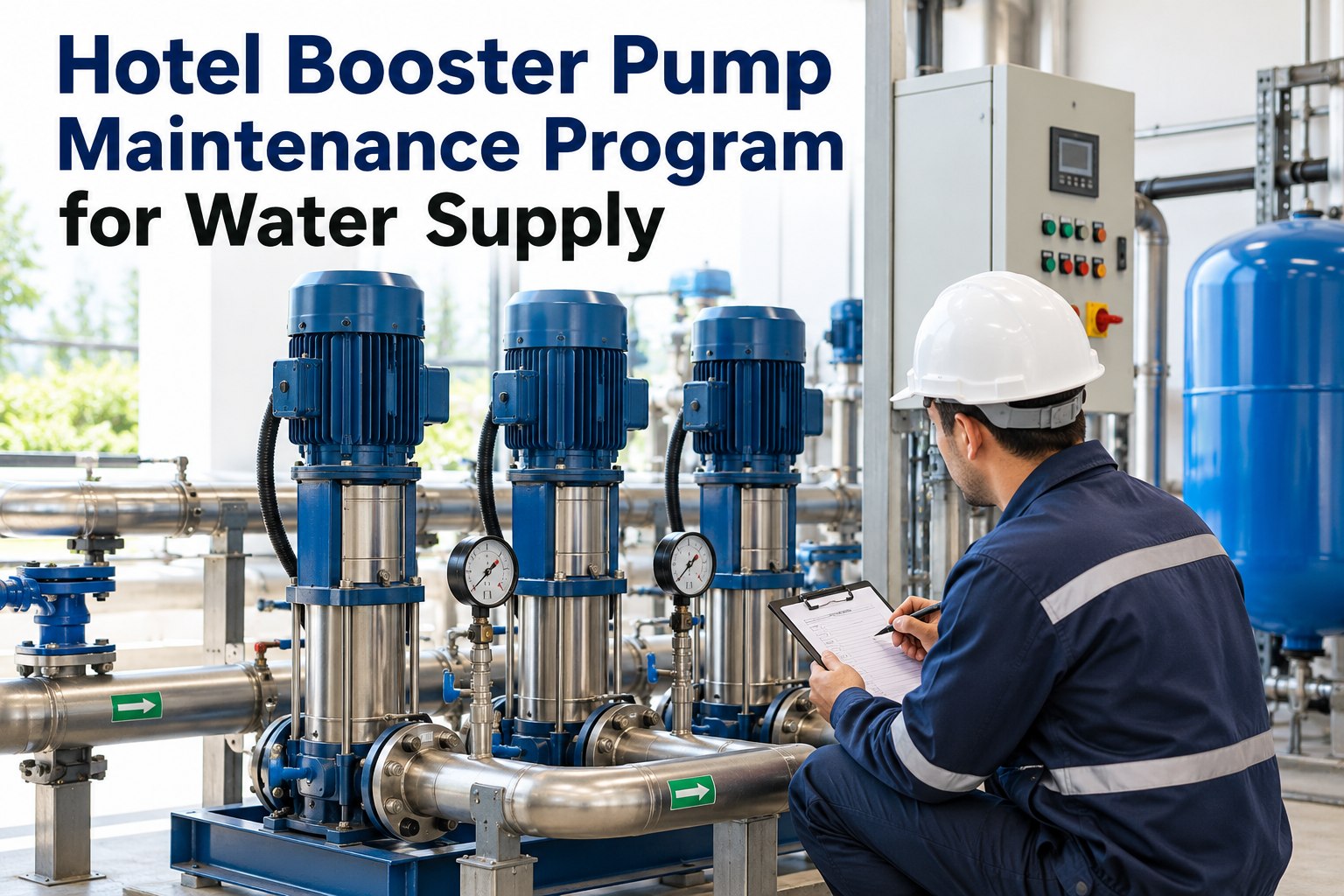
The guest on the 14th floor does not know what a booster pump is. They know the shower went weak at 7 a.m. When the booster set that lifts water to your upper floors loses pressure, the complaints arrive in a wave: showers, toilets, hot water, laundry, kitchen. It is a critical asset, because one set can serve every floor above it. The good news is that booster pumps warn you before they fail, through pressure, vibration and run-time. OxMaint AI maintenance management software puts each booster set in an asset record, schedules its checks by date or run-time hours, and turns an abnormal reading into a work order before guests feel it.
Hotel Booster Pump Maintenance Program for Water Supply
A booster set is rarely noticed until it fails, and then the whole building notices. This guide shows where pressure gets lost, the three signals that warn you early, a maintenance program you can run from routine rounds up to predictive alerts, and how to keep a record that proves each check was done.
Follow the Water: Where Pressure Gets Lost
A weak-pressure complaint on a high floor can start at any link in the chain. Knowing the chain tells your technician where to look first. Start free and map each link as an asset in OxMaint AI.
Three Signals That Warn You Early
You do not need advanced analytics to start. Capture these three signals on every round, compare them with a healthy baseline, and act on the trend. Book a demo to see readings trended per pump.
Set your alert limits from your own pump's healthy readings and the manufacturer's data. There is no single pressure or vibration number that fits every booster set.
Symptom to First Check
When the front desk calls, a quick lookup saves time. Start with the simplest, cheapest check first. Start free and attach this checklist to your pump work orders.
| What guests or staff report | Likely cause | Check first |
|---|---|---|
| Weak showers on upper floors | Pump fault, low suction, setpoint drift | Discharge pressure, VFD fault log, suction supply |
| Pressure surges or "banging" pipes | Waterlogged tank, check valve problem | Tank precharge with the system depressurized, check valves |
| Pump starts and stops constantly | Low precharge, leak, faulty pressure sensor | Tank air side, pressure sensor, leaks downstream |
| Loud or grinding pump | Bearing wear, cavitation, loose mounting | Isolate the pump, check vibration and mounting |
| Water at the pump base | Shaft seal wear, loose fitting | Seal, fittings and drain, then schedule a repair |
| Total loss of pressure | Break tank low, tripped drive, closed valve | Tank level, drive fault, standby auto-start, valve positions |
The Best Pump Alarm Is the One Guests Never Hear About.
If your first warning is a phone call from a guest, the program is already behind. OxMaint AI records each pump's readings and run-time, flags what drifts, and opens a work order for the right technician, with the unit's full history one tap away.
Build the Program in Three Steps Up
You do not need sensors on day one. Start with disciplined rounds, then add condition data, then let trends predict the next job. Book a demo to see all three levels in OxMaint AI.
What to Inspect, and How Often
Typical frequencies are below. Always follow the pump, motor, drive and tank manufacturers' requirements and local rules for pressure equipment. Start free and set frequencies per pump.
Listen for noise, look for leaks at seals and fittings, check temperature by touch or gun, and log discharge pressure.
Record vibration or condition readings, check lubrication where required, and inspect mounts and couplings.
Review the fault history, check panel cooling and cleanliness, and confirm setpoints have not been changed.
Check precharge to the manufacturer's figure with the system depressurized, and watch for rapid cycling.
Clean strainers, confirm isolating valves are fully open, and check non-return valves for leaks back.
Confirm pumps alternate and the standby starts when the duty pump is stopped, so a hidden fault is found early.
Turn Signals Into Rules
A good program is a set of if-then rules everyone follows. Write yours down once and let the system apply them every time. Start free and set your alert rules.
How OxMaint AI Supports a Booster Pump Program
The program only works if the data, the schedule and the work orders live together. Book a demo to see it set up for your pump sets.
Integration options depend on your controller and building systems. Ask for a walkthrough in your demo to confirm what fits.
Frequently Asked Questions
Keep the Pressure On. Keep Guests Out of the Story.
Put every booster set under a program that watches pressure, vibration and run-time, and let OxMaint AI schedule the checks, flag the drift and keep the proof.