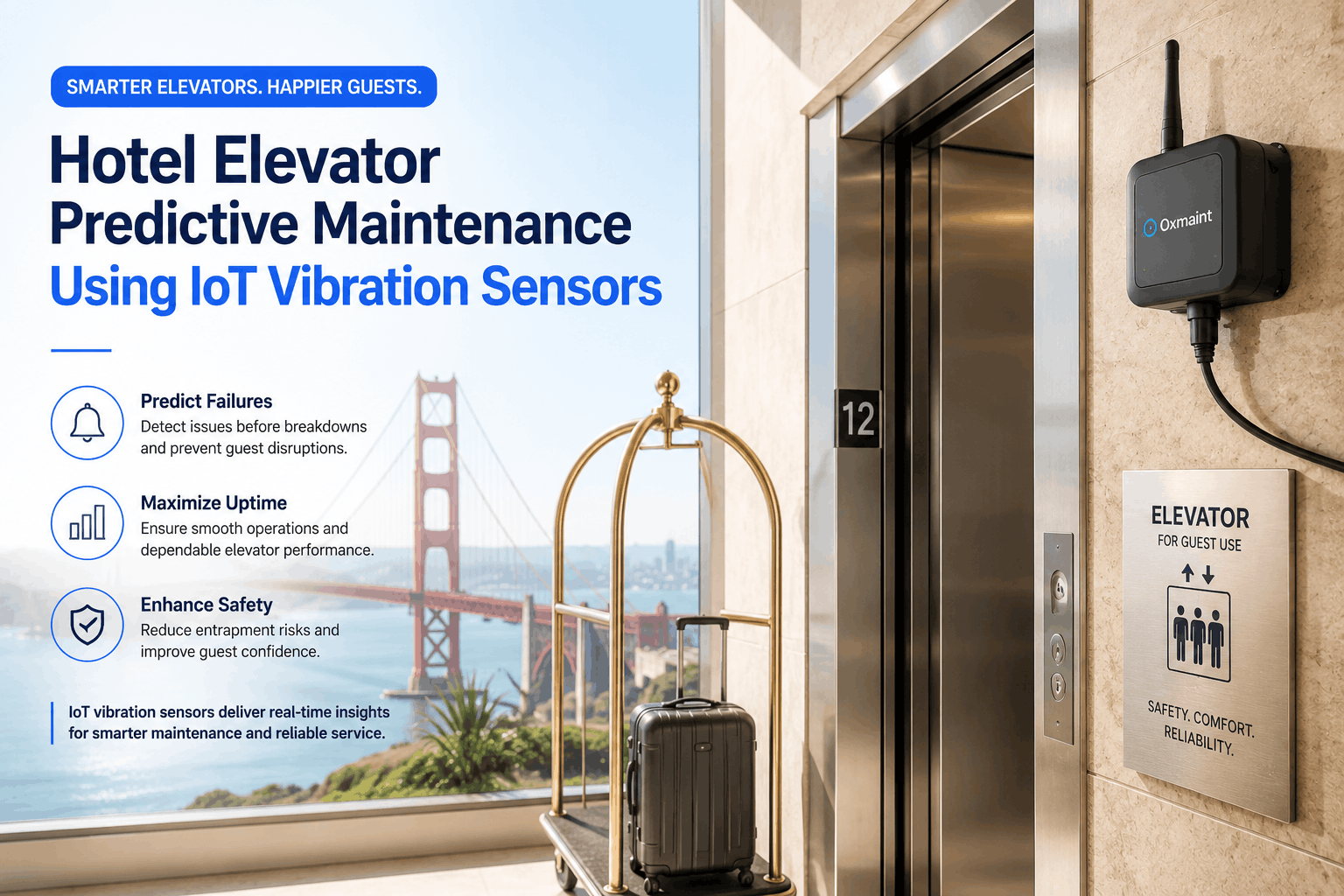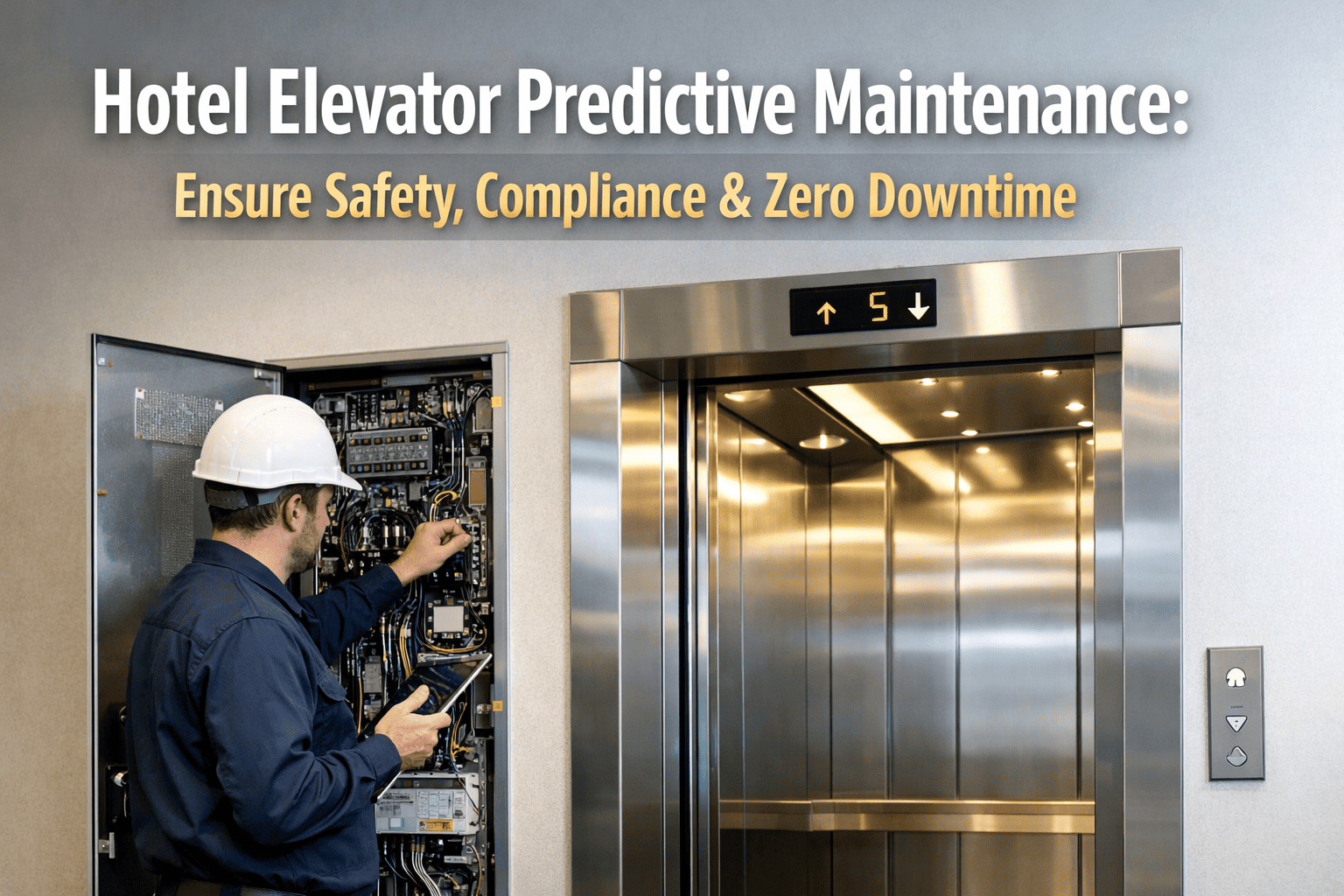
Elevator and escalator failures are among the most disruptive events a hotel can face — they stop guests mid-journey, trigger safety concerns, and generate maintenance costs that reactive repairs never fully recover from. OxMaint's IoT condition monitoring platform gives hotel engineering teams the live data to predict failures before they happen, protect guest experience, and meet vertical transport compliance requirements across every region. Start free to protect your vertical transport assets today.
Stop Elevator Failures Before They Strand Your Guests
OxMaint's IoT monitoring detects motor, vibration, and cycle anomalies 24–72 hours before a visible failure — giving your team time to act without disrupting operations.
The Problem
Why Elevator Breakdowns Are a Hotel's Most Expensive Failure
A broken elevator in a full hotel creates a cascading set of costs that never appear on a single repair invoice. Guests with mobility limitations cannot reach their rooms. Luggage movement stalls. Staff hours are consumed managing complaints and manual workarounds. And when an elevator fails over a weekend, emergency callout rates for certified lift engineers run at 2.5–4x standard rates. OxMaint monitors the signals that precede failure — vibration drift, motor temperature rise, door cycle anomalies — and gives your team a planned window to act. Book a demo to see how the platform maps to your property.
Average total cost of an unplanned elevator outage in a 180-room hotel
Includes emergency engineer callout, guest compensation, and partial revenue loss
Of elevator failures are preceded by detectable sensor anomalies 24–72 hours prior
Motor temperature, vibration frequency, and door torque are the primary indicators
Emergency repair cost multiplier versus planned maintenance for lift and escalator work
After-hours certified engineer callout rates across UK, USA, and GCC markets
What We Monitor
IoT Sensor Coverage for Hotel Vertical Transport
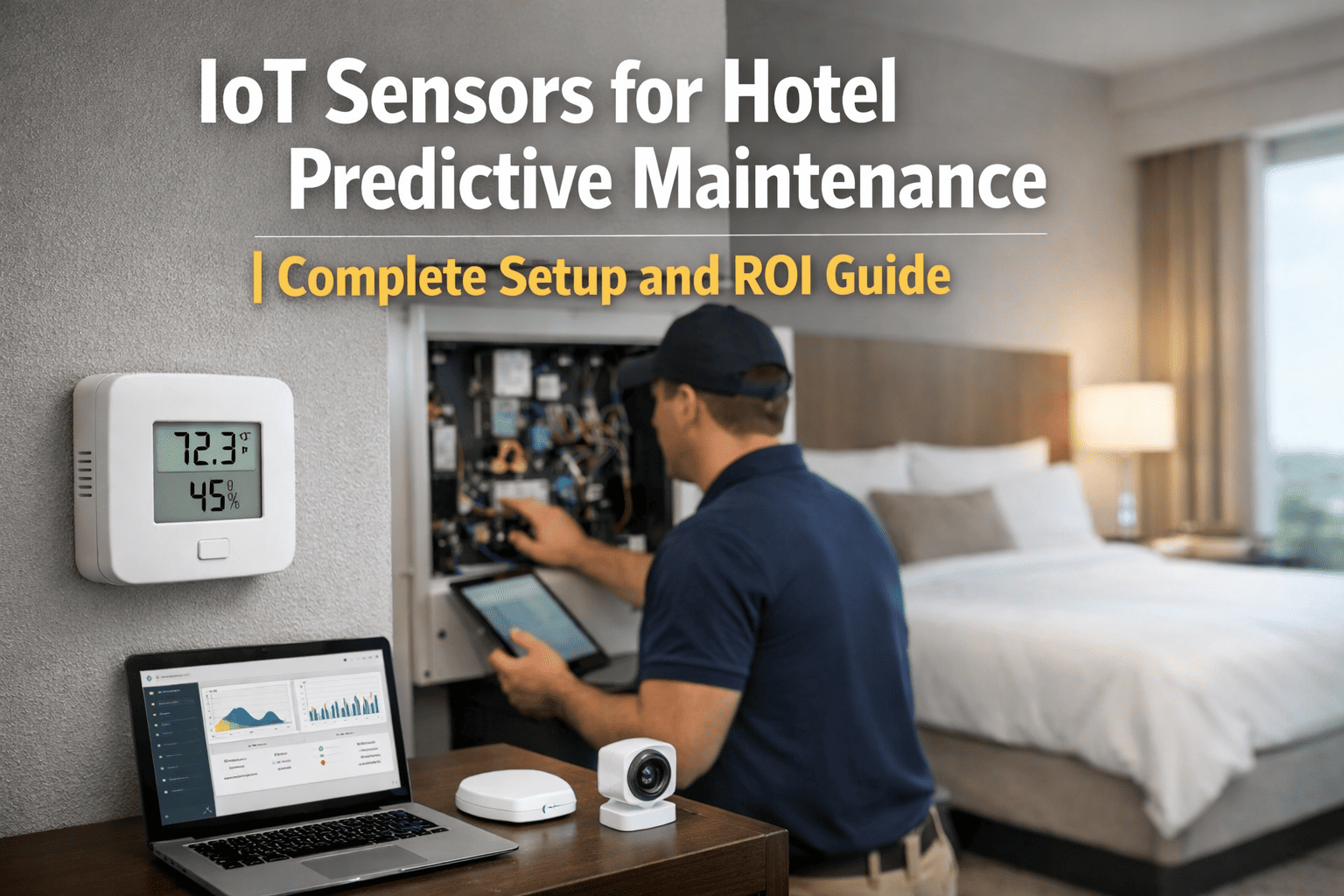
OxMaint's condition monitoring layer connects to a wide range of off-the-shelf wireless sensors — no proprietary hardware required. For properties already equipped with BMS-integrated lift controllers, OxMaint integrates directly. For older equipment, wireless retrofits are installed with no downtime.
Motor Temperature
Continuous monitoring of drive motor and control panel temperatures. Sustained elevation above baseline indicates bearing wear, winding degradation, or ventilation failure — all addressable before shutdown occurs.
Vibration Analysis
Tri-axial vibration sensors on drive sheaves, guide rails, and escalator step chains detect imbalance, misalignment, and progressive mechanical wear patterns weeks before audible symptoms develop.
Door Cycle Monitoring
Door open-close torque, dwell time, and reversal frequency are tracked per cycle. Rising torque trends and frequent reversals predict door system failures — the single most common cause of elevator downtime.
Cycle Count and Load
Lift cycle totals and load cell readings track usage intensity against manufacturer service intervals. High-occupancy periods — check-in peaks, events, weekends — are automatically flagged for post-surge inspection scheduling.
Escalator Step Chain Tension
Step chain tension and drive sprocket wear are monitored continuously. Tension loss outside tolerance triggers a priority alert — preventing both safety incidents and the far higher cost of full chain replacement.
Power Draw and Current
Drive motor current consumption is compared against baseline profiles at equivalent load. Rising current at normal load is an early indicator of mechanical resistance — from worn guide shoes, contaminated rails, or deteriorating brake components.
Connect Your Lift Assets to OxMaint in Under Two Weeks
No specialist hardware required. Our hotel onboarding team handles sensor pairing, baseline capture, and alert configuration — your engineering team just acts on the alerts.
How It Works
OxMaint Condition Monitoring Workflow for Hotel Lifts
Asset Registration and Sensor Pairing
Each lift and escalator is catalogued in OxMaint with manufacturer specs, installation date, service history, and compliance records. IoT sensors are paired to each asset — either via direct BMS integration or wireless retrofit — and begin transmitting within 24 hours of installation.
Baseline Profiling
Over a 14-day period, OxMaint builds a normal operating profile for each asset — capturing expected vibration ranges, motor temperature curves, door cycle times, and power draw at different loads. Baselines adjust automatically for seasonal and occupancy-driven variation.
Anomaly Detection and Prioritised Alerts
When a sensor reading drifts beyond its baseline threshold, OxMaint generates a prioritised alert — classified as Watch, Warning, or Critical based on deviation severity and rate of change. Alerts are pushed to the engineering team via mobile app and dashboard within minutes of detection.
Planned Work Order and Compliance Documentation
Each alert auto-generates a work order with the relevant sensor readings, asset history, and recommended action. Completed repairs are logged with technician sign-off, parts used, and post-repair sensor confirmation — creating a full compliance-ready audit trail automatically.
Implementation Roadmap
From Deployment to Full Predictive Coverage in 60 Days
Asset Audit and Platform Setup
All vertical transport assets catalogued and entered into OxMaint. Service history uploaded. Team access provisioned. Sensor placement plan agreed with your engineering lead.
Sensor Installation and Integration
Wireless sensors installed across motor rooms, door mechanisms, and escalator drive stations. BMS integration configured where available. No downtime to any lift during installation.
Baseline Capture and Alert Tuning
Operating baselines established for each asset. Alert thresholds tuned to property-specific operating patterns. First Watch-level alerts begin appearing as the system identifies outlier readings.
First Prevented Failures and Compliance Reporting
Planned repairs replace reactive callouts. First compliance-ready maintenance reports generated. Engineering team reviews monthly condition summary for all monitored assets.
Compliance
Regulatory Standards OxMaint Supports by Region
Hotel elevator and escalator maintenance is subject to mandatory inspection, certification, and documentation requirements in every operating market. OxMaint's automated record-keeping and audit trail features are built to meet these requirements by default — not as an add-on.
| Region | Key Standards | OxMaint Support |
|---|---|---|
| USA | ASME A17.1 Safety Code for Elevators, OSHA 1910, ADA vertical access requirements, state-specific inspection intervals | Automated inspection scheduling, technician sign-off records, ADA access uptime logging, exportable audit reports |
| Canada | CSA B44 Safety Code for Elevators and Escalators, provincial technical standards authority requirements, PIPEDA data handling | CSA B44-aligned PM templates, PIPEDA-compliant data storage, provincial compliance documentation export |
| United Kingdom | LOLER 1998 (Thorough Examination requirements), PUWER 1998, UK GDPR, BS EN 13015 lift maintenance standard | LOLER examination scheduling and record storage, GDPR-compliant audit trail, BS EN 13015 maintenance log format |
| Australia | AS 1735 Lifts, Escalators and Moving Walks standard, state WHS Act obligations, Building Code of Australia vertical transport access requirements | AS 1735-aligned service scheduling, WHS compliance checklists, secure digital inspection record storage |
| Germany | BetrSichV (Betriebssicherheitsverordnung), DSGVO data requirements, TÜV inspection documentation, DIN EN 13015 | BetrSichV-compliant examination records, DSGVO-aligned data architecture, TÜV-ready documentation packages |
| Saudi Arabia | SASO elevator safety standards, municipality building authority inspection requirements, PDPL data compliance | PDPL-aligned data handling, audit-ready maintenance records, SASO-structured PM documentation |
Competitive Comparison
OxMaint vs. Leading Maintenance Platforms for Hotel Vertical Transport
| Capability | OxMaint | MaintainX | UpKeep | Fiix | Limble | IBM Maximo | Hippo CMMS |
|---|---|---|---|---|---|---|---|
| Hotel elevator PM templates | Yes | Partial | Partial | No | Partial | No | Partial |
| IoT vibration and motor monitoring | Yes | No | Limited | Yes | Limited | Yes | No |
| Door cycle anomaly detection | Yes | No | No | Limited | No | Limited | No |
| LOLER / ASME A17.1 compliance records | Yes | No | No | Basic | Basic | Yes | No |
| Free tier available | Yes | Limited | Limited | No | Limited | No | Limited |
| Implementation time | 1–2 weeks | 2–4 weeks | 2–4 weeks | 4–8 weeks | 2–4 weeks | 3–6 months | 2–4 weeks |
Client Results
Measurable Outcomes From Hotel Properties Using OxMaint
Reduction in unplanned elevator callouts
Full-service hotel, 220 rooms, 12-month comparison after OxMaint deployment
Annual vertical transport maintenance savings
Hotel group, 4 properties, combining emergency labor and parts cost reduction
Time to first predictive alert actioned
Boutique hotel, 95 rooms — motor temperature anomaly identified before visible symptoms
Your Guests Expect Working Elevators. OxMaint Ensures It.
Move from reactive callouts to planned maintenance. OxMaint's IoT monitoring gives your team the advance warning they need to protect guest experience and contain vertical transport costs.
Value Summary
What OxMaint Delivers for Hotel Vertical Transport
| Value Area | Reactive Baseline | With OxMaint | Annual Saving (4 lifts) |
|---|---|---|---|
| Emergency Engineer Callouts | 8–14 unplanned callouts/year at premium rates | 1–3 unplanned callouts/year | $18,000 – $34,000 |
| Downtime Duration | 6–18 hours average per failure event | 0–2 hours (planned window) | Significant guest experience gain |
| Compliance Documentation | Manual records, inspection gaps common | Auto-generated, audit-ready records | Regulatory risk eliminated |
| Equipment Lifecycle | Drive replacement at 12–14 years | Drive replacement at 18–22 years | $22,000 – $40,000 deferred capex |
| Guest Complaints | 3–6 lift-related complaints/month | 0–1 lift-related complaints/month | Review score protection |
FAQ
Frequently Asked Questions
Start Monitoring Your Hotel's Lifts This Week
OxMaint's onboarding team will have your vertical transport assets online within 14 days. Book a session and we'll map the platform to your specific lift and escalator inventory.