A hotel kitchen that fails a health inspection on a Friday afternoon faces a weekend of lost F&B revenue, emergency repair callouts, and reputational damage that takes months to recover. The root cause in almost every case is not a sudden equipment failure — it is the absence of a structured preventive maintenance program. Walk-in cooler door gaskets that should have been replaced six weeks ago. Exhaust hood grease filters that were last cleaned beyond the local code interval. An ice machine sanitization log with a three-week gap. These are not maintenance surprises — they are missed PM tasks, each preventable with a scheduled checklist executed consistently. Sign up for Oxmaint to automate your hotel F&B maintenance schedule and ensure zero missed inspections, or book a demo to see how PM programs are structured for hotel kitchen compliance.
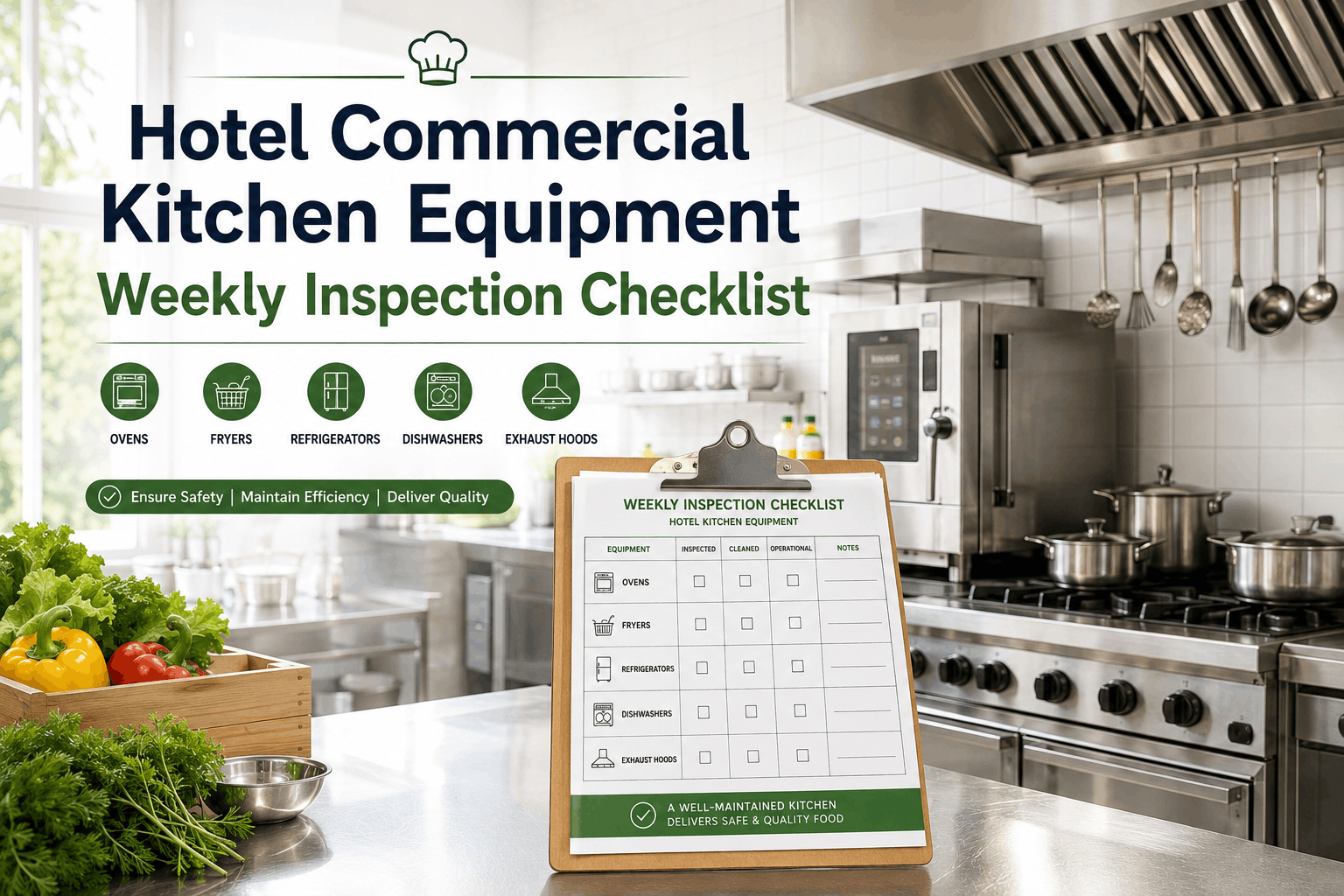
Hotel Kitchen & Restaurant Equipment Maintenance Checklist
7 equipment categories, 80+ maintenance tasks with daily through annual frequency codes, health code compliance triggers, and detection callouts — structured for hotel F&B operations.
Why Hotel Kitchen Maintenance Programs Fail
Hotel F&B equipment operates under conditions that make reactive maintenance uniquely expensive. A restaurant kitchen runs high-temperature, high-grease, high-humidity cycles across 16 hours per day — and most of the equipment is interdependent. When the ice machine fails during a weekend wedding banquet, the bar stops, the kitchen scrambles, and a $4,500 emergency service call arrives with a 4-hour response window. When the walk-in fails and 200 pounds of protein must be discarded, food cost spikes and the next health inspection carries elevated scrutiny of temperature logs that were never kept.
Most hotel kitchens attempt to manage F&B equipment maintenance through a combination of manufacturer manuals, vendor-recommended service intervals, and staff memory. None of these approaches create the documented, time-stamped records that health inspectors, insurance auditors, and brand standards programs require. Structured preventive maintenance — executed through a CMMS with auto-generated work orders and completion logs — is the only approach that produces compliance evidence alongside operational reliability.
Automate Your Hotel Kitchen PM Schedule
Oxmaint generates work orders automatically at the correct frequency for every F&B asset — with mobile completion logging, compliance records, and escalation alerts for overdue tasks.
Commercial ovens and ranges are the highest-use, highest-temperature equipment in any hotel kitchen. Grease accumulation on burner assemblies, degraded door gaskets allowing heat escape, and uncalibrated thermostat controls directly affect food safety, energy cost, and fire risk. A combi oven running 25°F under setpoint produces undercooked protein — a food safety violation that is invisible without documented calibration records.
Commercial fryers present the highest fire risk in any hotel kitchen. The combination of high-temperature oil, grease accumulation in the flue area, and thermal cycling creates conditions where a single missed maintenance task can result in a serious fire event. Regular boil-out cycles, oil quality monitoring, and thermostat calibration are not optional — they are the maintenance activities that keep a fryer operating inside its safe operating range.
Walk-in refrigeration failure during a peak service period is among the most operationally and financially damaging events in hotel F&B. Beyond the emergency repair cost, a temperature excursion that compromises protein inventory, wedding cake tiers, or banquet prep creates food safety liability and waste that can exceed $10,000 in a large hotel kitchen. Daily temperature logging, weekly gasket inspection, and quarterly condenser cleaning are the PM tasks that prevent this scenario — and create the documented records that demonstrate HACCP compliance to health inspectors.
Ice is classified as a food product under health codes — meaning an ice machine with biofilm contamination, missed sanitization cycles, or a dirty water filtration system is producing contaminated food. Health inspectors routinely check ice machine sanitization logs, and a gap of more than 6 months without a documented clean-and-sanitize is a correctable deficiency that can trigger a full kitchen re-inspection. For a hotel with bar service, restaurant dining, and banquet operations running simultaneously, ice machine failures are high-visibility, high-urgency events. Sign up for Oxmaint to automate ice machine sanitization work orders with automatic 6-month scheduling and timestamped completion records.
A commercial dishwasher that fails to reach minimum sanitizing temperature or maintain correct chemical concentrations is producing unsanitized ware — a direct critical violation under most health codes. Temperature and chemical logs are mandatory documentation, and health inspectors will check them. Daily temperature verification, weekly chemical concentration checks, and monthly descaling are the three tasks that keep a commercial dishwasher inside its compliance operating window.
Exhaust hood and grease management is the single most regulated area of commercial kitchen maintenance. Local fire codes, health codes, and NFPA 96 prescribe mandatory cleaning frequencies based on cooking volume and type — and violations are among the most commonly cited in hotel kitchen inspections. A hood system with overdue grease filters, a full grease collection cup, or ductwork accumulation beyond code limits is a fire waiting to happen and an immediate inspection failure. Book a demo to see how Oxmaint manages hood cleaning compliance schedules with automatic interval tracking and certificate upload.
Kitchen fire suppression systems are life-safety equipment — and they are among the most commonly found to be non-compliant in hotel fire inspections. Blocked suppression nozzles (from accumulated grease), expired chemical agent, missed semi-annual inspections, and a suppression system that does not auto-shut the gas and power supply on activation are not minor deficiencies. They are the conditions that allow a kitchen fire to become a structure fire. Bi-annual inspection by a certified fire protection contractor is required by NFPA 17A — and must be logged with dated certificates.
How Oxmaint Manages Hotel Kitchen Compliance
Each checklist section above represents a compliance program, not just a task list. Oxmaint structures hotel F&B maintenance as scheduled, documented, and auditable work orders — with the records health inspectors, brand standards teams, and insurance auditors require.
Run a Hotel Kitchen That Passes Every Inspection — Without the Last-Minute Scramble
Oxmaint handles F&B PM scheduling, temperature log tracking, compliance certificate storage, and overdue task escalation automatically. Your kitchen team focuses on food — Oxmaint manages the documentation that protects your license to operate.
Frequently Asked Questions
How often must hotel kitchen exhaust hoods be professionally cleaned?
NFPA 96 sets the standard: high-volume operations (continuous cooking 12+ hours/day, wok cooking, or solid fuel cooking) require quarterly cleaning. Moderate-volume operations require semi-annual cleaning. Low-volume operations may qualify for annual cleaning. Most hotel kitchen operations producing full dinner service qualify as high-volume — quarterly cleaning is the default. Sign up for Oxmaint to track your hood cleaning certificates with automatic expiry alerts.
What records do hotel health inspectors specifically look for in the kitchen?
The four records most commonly requested during hotel kitchen health inspections are: (1) temperature logs for all refrigeration units showing daily readings for the past 30–90 days, (2) dishwasher sanitizer concentration and final rinse temperature logs, (3) ice machine clean-and-sanitize log showing frequency and operator name, and (4) hood cleaning certificates showing contractor name, date, and next scheduled service. All four are automatically generated and stored in Oxmaint's compliance documentation module. Book a demo to see how the compliance dashboard is structured for health inspection readiness.
How frequently must commercial kitchen fire suppression systems be inspected?
NFPA 17A requires wet chemical kitchen fire suppression systems to be inspected every 6 months by a factory-authorized service technician. Each inspection must include fusible link replacement, nozzle flow verification, gas and power shunt function test, and agent quantity check. A dated service certificate must be posted on the system and retained in the property's fire compliance file. Missing a semi-annual inspection is a correctable deficiency during fire inspections and can affect insurance coverage. Oxmaint stores suppression system certificates against the asset record and generates automatic alerts 30 days before each inspection is due.
What happens if a hotel walk-in cooler temperature log shows a gap?
A gap in temperature logs is a HACCP documentation failure — it creates the presumption that the unit was not monitored during the gap period. During a health inspection, a temperature log gap may result in a correctable deficiency citation, require food discarding if a plausible temperature excursion cannot be excluded, and in repeat violation cases can result in higher inspection frequency or elevated scrutiny across all HACCP critical control points. Oxmaint prompts daily temperature log entries with mobile push notifications, and flags missed entries before they become multi-day gaps that create inspection risk.