Hotel facility and engineering operations in 2026 operate under extreme time pressure: floor technicians spend 85% of their shifts moving through guest corridors, basement boiler rooms, and rooftop cooling plants — not sitting at a desk. Historically, properties have managed operations using traditional desktop CMMS platforms, forcing technicians to return to the maintenance office at the start and end of every shift to transcribe paper work orders. This administrative loop is highly inefficient, resulting in delayed guest issue resolutions, lost maintenance records, and double-bookings. By deploying a dedicated mobile maintenance application, properties transition from reactive desk-bound tracking to real-time floor execution. With offline-first data synchronization, direct guest QR code dispatches, and automated Opera and Mews PMS sync, mobile apps empower technicians to record checks directly at the asset. OxMaint's mobile hotel CMMS app provides Chief Engineers, GMs, and operations directors with the real-time visibility, fast response times, and compliance ledger logging needed to protect luxury assets and optimize engineering wrench time. Schedule a 30-Minute Mobile CMMS Strategy Session
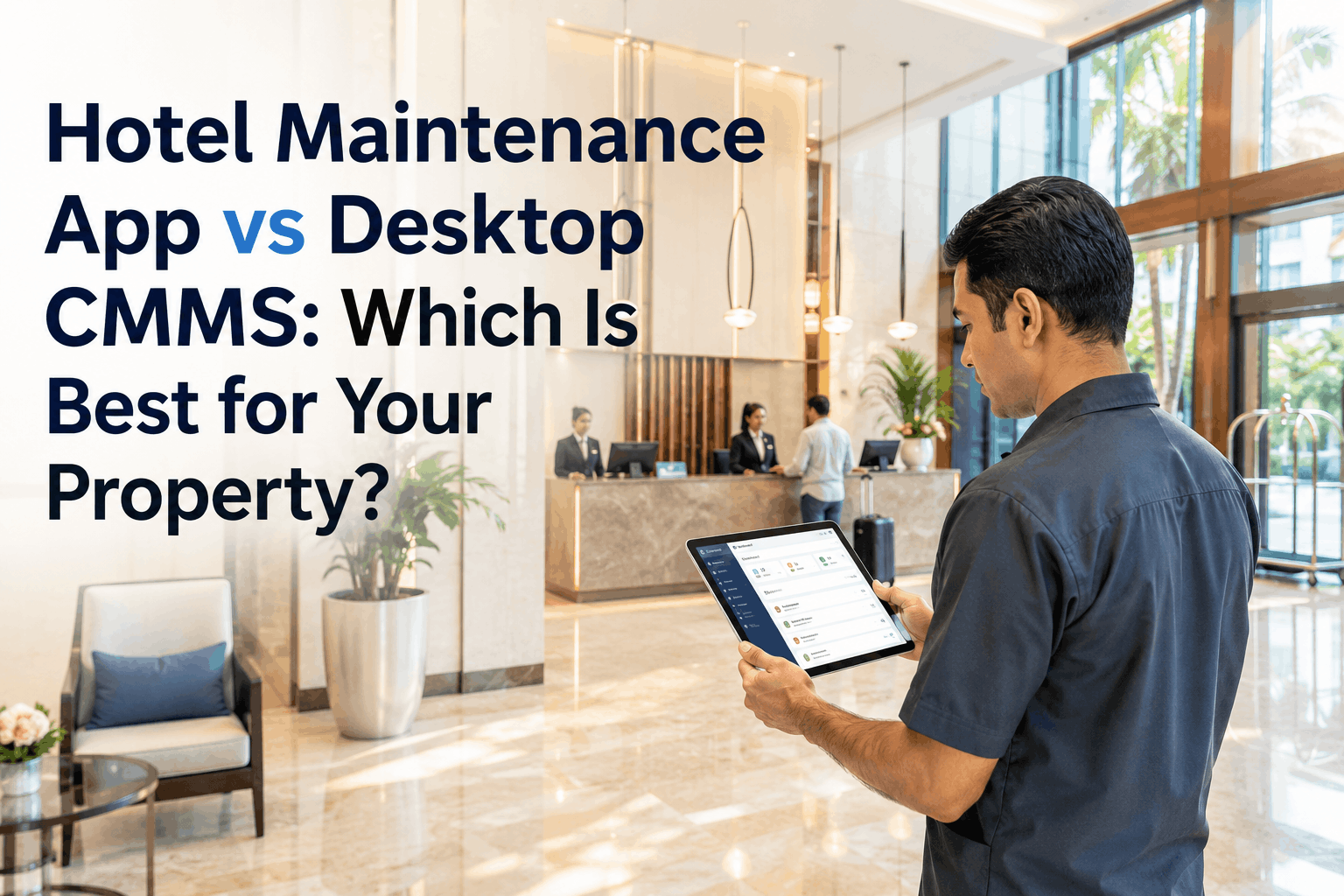
Hotel Maintenance App vs Desktop CMMS: Which Is Best for Your Property?
An in-depth, thought-leadership analysis weighing floor-first mobile maintenance apps against back-office desktop CMMS platforms — comparing technician adoption, offline logging, guest response SLAs, and CapEx reporting.
Mobile App vs. Desktop CMMS Feature Matrix
Hover or click each platform type to analyze operational workflows, technician adoption, and data synchronization.
Floor Wrench-Time Core
Offline-first local database caching, instant guest room QR scans, photo-documented defect attachments, and live proximity-based technician dispatching.
Back-Office CapEx Core
Detailed procurement approval loops, long-term asset useful-life analytics, purchase order generations, and centralized multi-property dashboards.
Full Property Synchronization
Bidirectional Opera and Mews PMS APIs sync room blockage status, while automatic mobile-to-desktop reporting logs real-time BOH mechanical parameters.
The Critical Operational Gap: Desk vs. Floor Workflows
The primary failure point of traditional desktop CMMS platforms is data latency. When a housekeeper identifies a leaky shower valve in Room 412, they must phone the front desk dispatcher, who manually inputs the ticket into a desktop computer. The floor technician, currently on the third floor descaling a ice machine, remains unaware of the ticket until they return to the BOH office at the end of their shift. This coordination lag easily stretches resolution times past the critical 15-minute guest complaint threshold, resulting in room blocks and guest refunds. Deploying a dedicated mobile maintenance application eliminates this delay. By scanning the room's unique QR code, attendants generate instant priority dispatches that route directly to the closest floor engineer's mobile device, bypass the desk bottleneck completely, and protect hotel RevPAR.
INTERACTIVE WIDGET 2: TECH PRODUCTIVITY CROSSOVER (SVG)Offline Capability: Why Native Caching Matters in Concrete Shafts
Hotel mechanical plants are notoriously difficult environments for wireless connectivity. Technicians routinely descale ice machines in remote laundry chutes, service ventilation loops in concrete basement vaults, and check backup generators on rooftops where cellular signals drop completely. Cloud-only desktop tools or basic web apps lose synchronization in these zones, preventing technicians from viewing mandatory safety checklists or recording active repair logs. OxMaint resolves this with a native offline-first database. The mobile application caches the property's entire asset tag database locally on the tablet or smartphone, allowing engineers to scan QR tags, record pump parameters, and attach photos offline. All completed checks automatically sync back to cloud databases as soon as the technician returns to a Wi-Fi coverage zone.
INTERACTIVE WIDGET 3: CORE DEPLOYMENT TIMELINE CHECKLIST (SVG)10-Day Mobile-First Deployment Roadmap
Structured timeline comparison: OxMaint mobile-first setup vs. standard desktop data configurations.
Extending Mechanical Asset useful-life through Proactive Mobilization
Proactive maintenance extends expensive hotel central assets' useful-life. When Ice machines, BOH laundry boilers, and pool pump motors remain uninspected, small mechanical faults like bearing wear or calcium buildup expand into catastrophic failures that force room blocks and guest refund compensation payouts. Mobile-first checklists ensure these preventive sweeps are executed consistently on-site. Floor technicians scan QR asset tags to verify physical presence, executing step-by-step checks on mobile screens while logging replacement parts automatically. This seamless BOH tracking extends boiler and chiller useful-life by 6.2 years. Activate mobile BOH mechanical PM templates.
Managing Labor Union Compliance and Work Rules
For properties operating under union agreements, managing technician shift schedules and work classifications is a major administrative task. Work orders must be assigned strictly to the correct labor class to avoid contract grievances. A desktop-centric system requires shift supervisors to manually filter and distribute paper slips, creating high room blockage delays. A mobile-first CMMS automates this routing. OxMaint integrates local union agreements directly into the scheduling engine, automatically dispatching tasks to technicians based on active certifications and hours, providing GMs with unalterable digital tracking.
We historically managed our resort maintenance using a legacy desktop CMMS, but our technicians spent all day on the property floor and hated returning to the BOH office for data entry. Work order backlogs were massive, guest room blockages delayed check-ins, and we failed multiple compliance inspections. Switching to OxMaint's mobile-first app changed everything. Our engineers complete plumbing and chiller sweeps on mobile screens, guest response SLAs dropped to under 8 minutes, and we cut yearly operating costs by 40%. It is the ultimate thought-leadership playbook for luxury hotels.
Frequently Asked Questions
Desktop CMMS platforms focus primarily on administrative back-office reporting, purchasing approvals, and high-level CapEx analysis.
Attendants execute checks without signal, automatically syncing changes back to cloud databases once they return to Wi-Fi.
This eliminates floor translation hurdles and increases daily platform adoption across all properties.
This sync locks down dirty guestrooms during rushes, preventing double-bookings and guest disappointment.
This validation eliminates spam and ensures only checked-in guests can submit tickets.
OxMaint's intuitive, simple layout eliminates the need for expensive, weeks-long corporate implementation consulting.
This logs compliance records to meet municipal health department mandates, protecting the hotel from liability.
Catching low battery voltages before peak season eliminates guest room lockout incidents and late-night technician pages.
Mobilize Your Hotel Maintenance Strategy Today.
OxMaint gives hospitality General Managers, Chief Engineers, and Operations Teams the real-time mobile work order sync, digital checklists, and guest QR portals required to protect guest ratings and prolong property assets — fully free to start, setup in minutes.