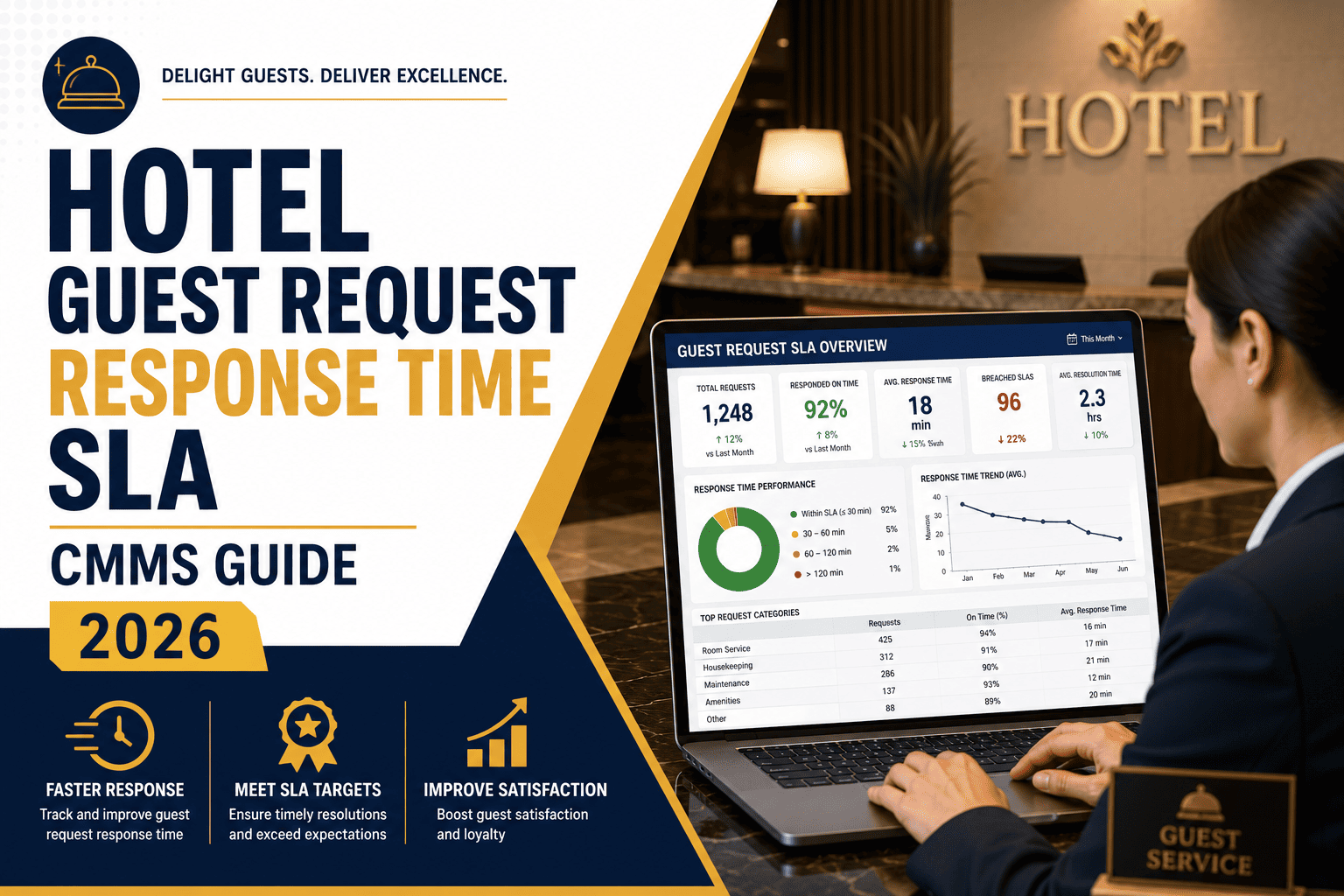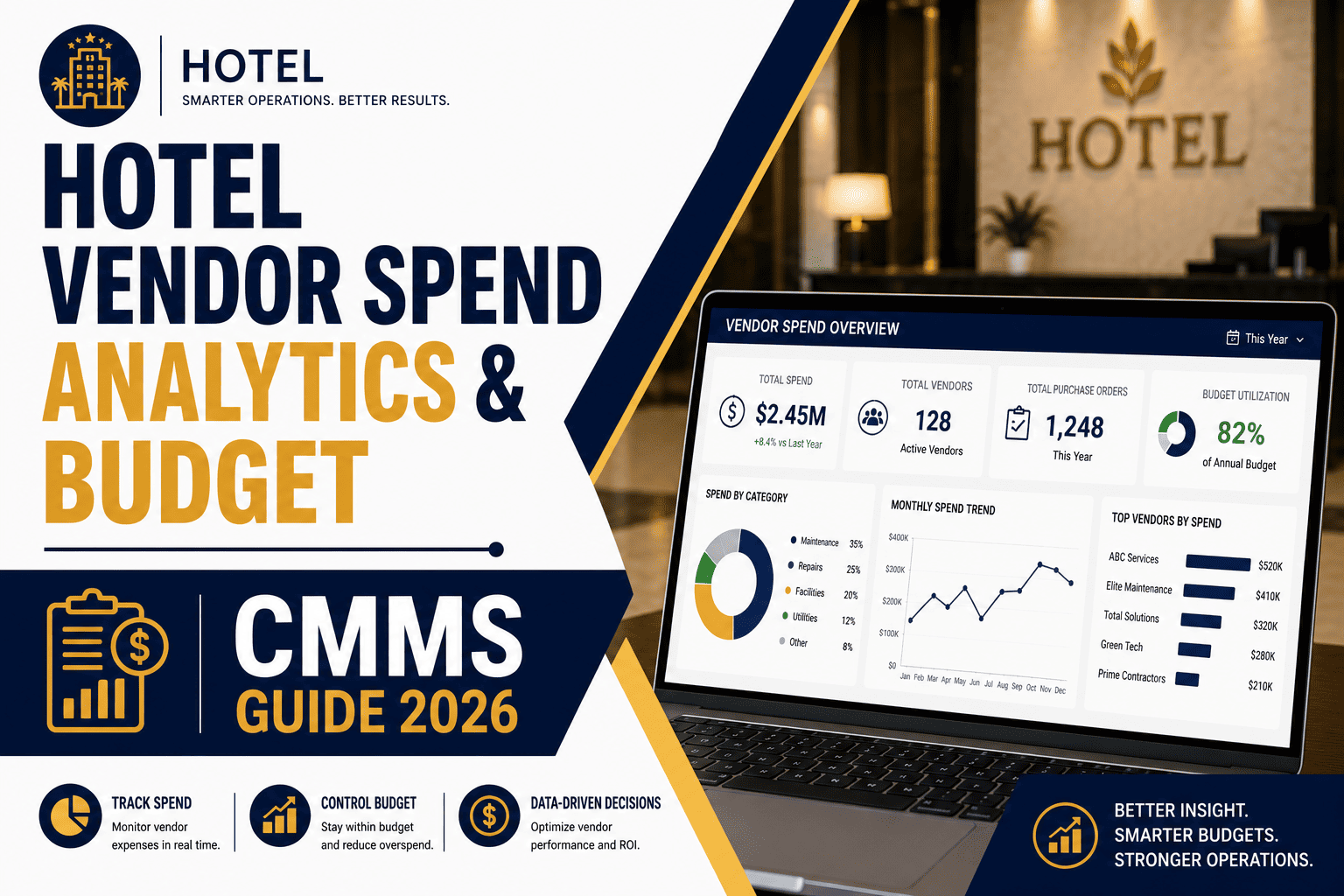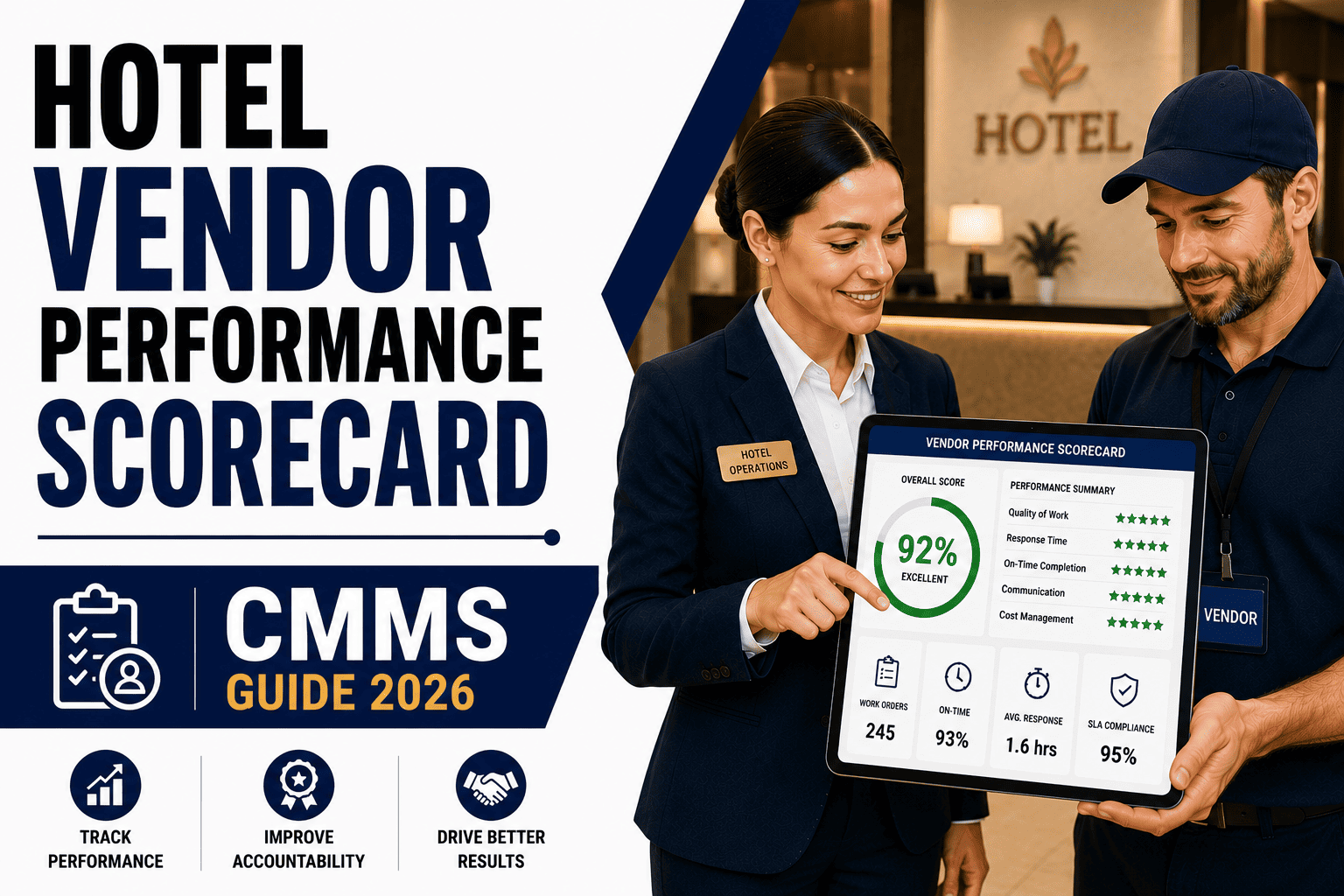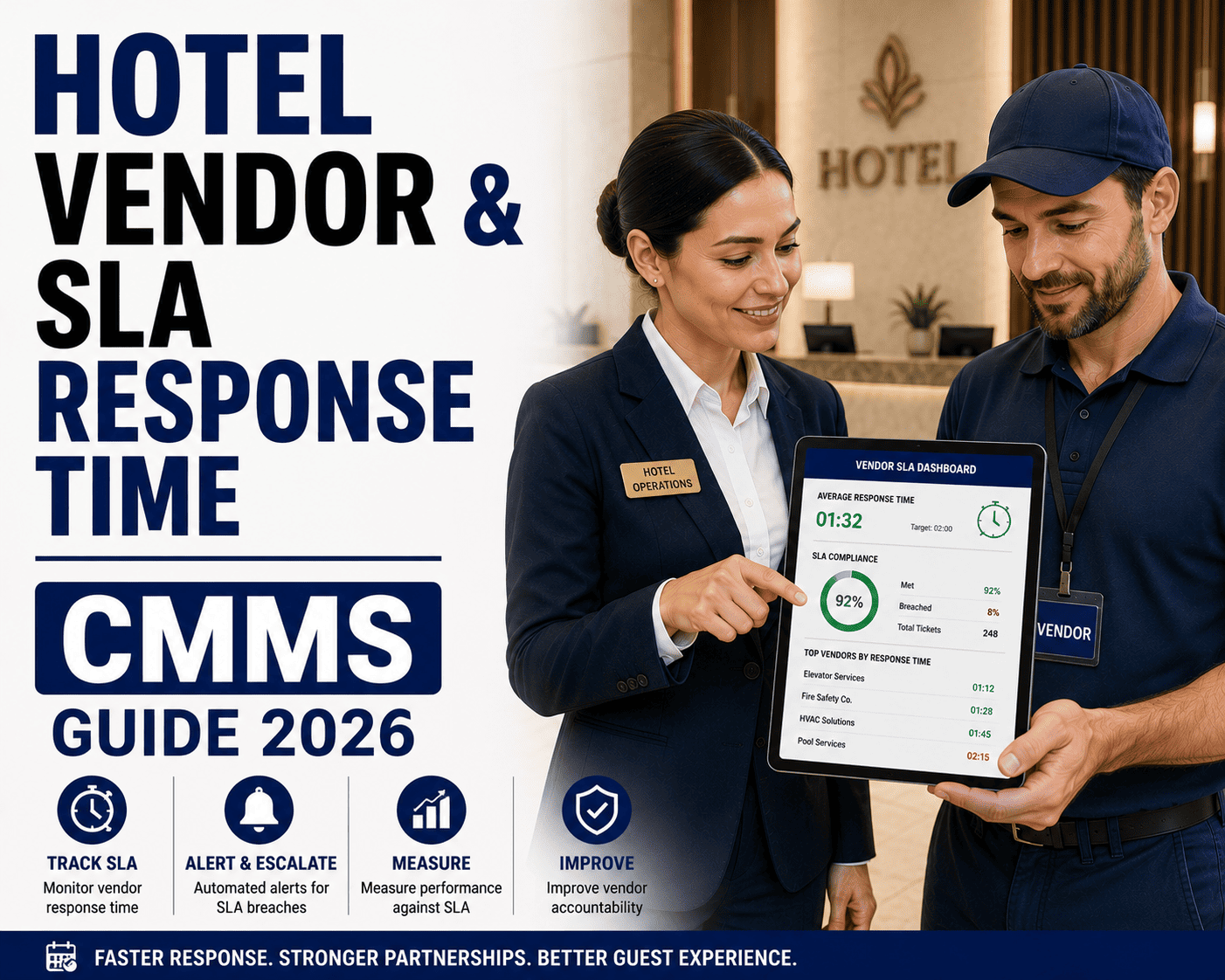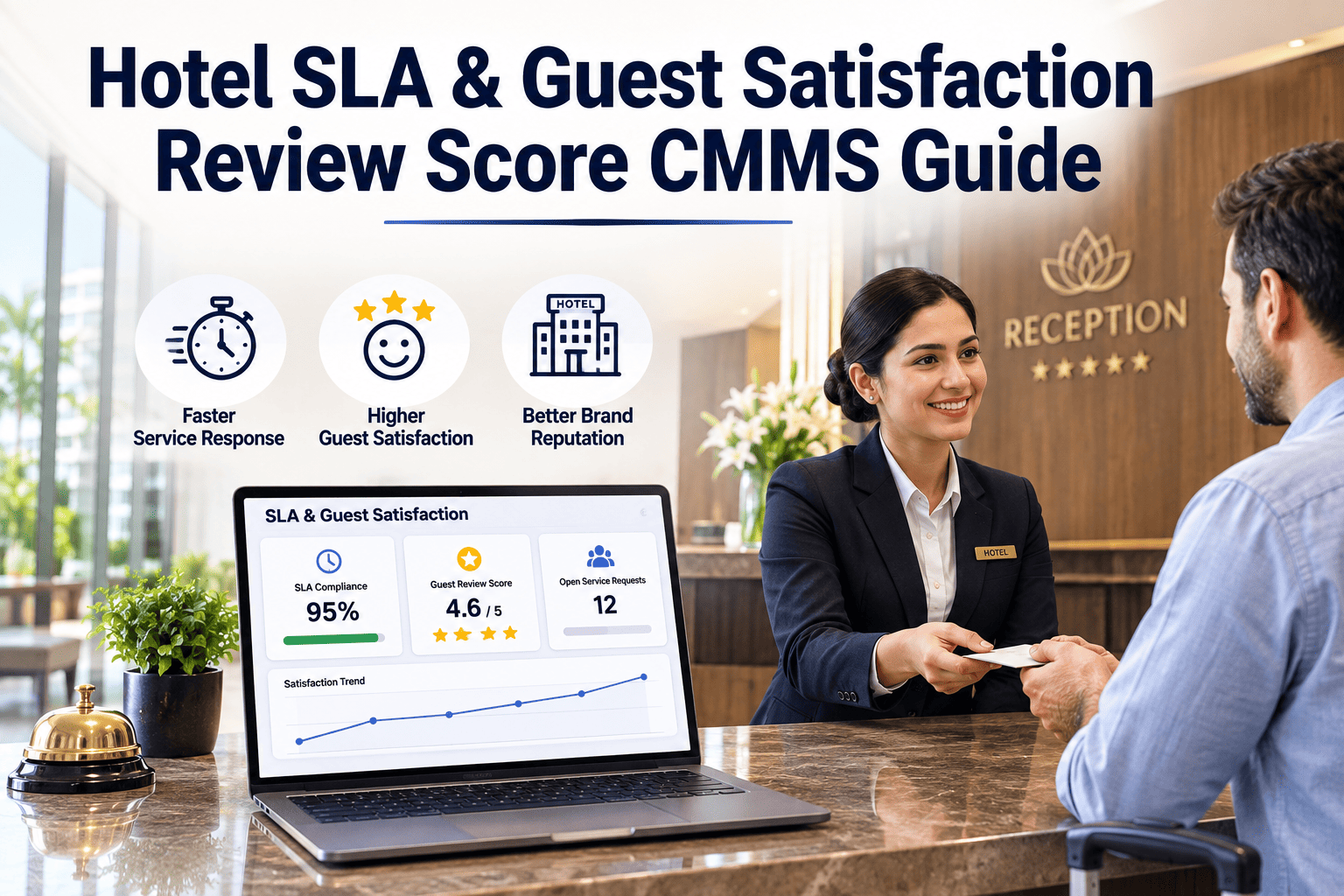
Hotel SLA and guest satisfaction are directly correlated — every additional hour a maintenance work order stays open measurably erodes online review scores across Booking, Expedia, and TripAdvisor. This CMMS hotel guest satisfaction guide maps exactly how engineering response time impacts review score performance, giving General Managers and Chief Engineers the analytics framework to defend maintenance budgets with hard data. Hotels that link SLA review correlation CMMS reporting to revenue typically cut guest complaint-triggered maintenance issues by 30–50% within two quarters. If you want to see the platform in action on your own property, you can Start Free Trial or read on for the full satisfaction correlation guide.
Satisfaction Correlation Guide 2026
Can you prove your engineering SLA drives your TripAdvisor score?
A 15-minute improvement in first-response time can lift your average online review score by 0.3–0.5 stars — but only if you can measure, model, and report the correlation. OxMaint turns raw work-order timestamps into defensible guest-satisfaction analytics.
The Business Case
Why hotel SLA and guest satisfaction share one data pipeline
A 2024 analysis of 1,200 properties found that hotels maintaining a first-response SLA under 20 minutes averaged 4.4 stars on TripAdvisor, while those exceeding 60 minutes averaged 3.6. That 0.8-star gap translates into a 12–18% revenue-per-available-room difference on OTA platforms — yet most engineering teams still report SLA compliance in isolation, never linking it to the review score that drives bookings. The hotels winning the satisfaction correlation race in 2026 treat every work order as a guest-experience event: timestamped, categorized, and pushed into a CMMS analytics layer that maps maintenance performance directly to online reputation.
Correlation Model
How to model SLA review correlation in a CMMS
Building a defensible satisfaction correlation model requires four data streams converging in your CMMS. Each stream feeds a regression that isolates maintenance's contribution to review score movement — independent of front desk, housekeeping, or F&B variables.
Capture first-response and resolution times per guest-triggered ticket
Every guest complaint — broken AC, leaking faucet, noisy HVAC — enters OxMaint as a priority work order with an automatic SLA clock. The system records acknowledgment time, on-site arrival time, and resolution time to the second.
Map each work order to a room number, floor, and asset ID
When a review mentions "Room 412 was freezing," OxMaint's asset hierarchy lets you pull every maintenance event for that room in the 72 hours preceding the review — proving or disproving the guest claim with data.
Pull Booking, Expedia, and TripAdvisor scores into the CMMS dashboard
OxMaint ingests daily review feeds via API, tags each review by room, date, and maintenance keyword (AC, plumbing, noise, cleanliness-related repair), and time-aligns it with your SLA performance window.
Run SLA-to-review-score regressions by week, floor, and asset class
The analytics engine outputs a correlation coefficient (r) showing how strongly your response time predicts score movement, broken down by asset type so you know whether HVAC SLAs matter more than plumbing SLAs for your property.
Impact Modeling
The formula linking response time to review score
OxMaint uses a weighted linear regression model refined across hundreds of properties. The core formula isolates maintenance's contribution so General Managers can quantify exactly how much SLA improvement is worth in star-rating terms.
Worked Example
A 180-room resort that proved the correlation in 90 days
Consider a 180-room resort property spending $38K annually on reactive maintenance, averaging 3.8 stars on TripAdvisor with a mean first-response time of 47 minutes. After implementing OxMaint's CMMS hotel guest satisfaction analytics, the engineering team identified that 68% of negative reviews tagged "maintenance" traced to three asset classes: HVAC, plumbing fixtures, and guest-room minibar fridges.
Baseline & instrumentation
OxMaint ingested 14 months of historical work orders and review data, establishing a baseline correlation coefficient of r = 0.71 between response time and review score. The team set SLA targets: 15 min response for Priority 1, 45 min for Priority 2.
Targeted SLA enforcement
Mobile-first work order dispatch cut average response to 22 minutes. Predictive maintenance flags on the three worst-performing asset classes reduced repeat issues by 34%. OxMaint's dashboard showed the review-score correlation strengthening week over week.
Measured score lift
TripAdvisor average rose from 3.8 to 4.2 stars. The GM presented the OxMaint SLA-review correlation report at the quarterly owner meeting and secured a 15% increase in the preventive maintenance budget — backed by hard data, not anecdote.
How OxMaint Helps
OxMaint capabilities that directly lift guest satisfaction
AI-driven SLA enforcement
Automatic priority routing and escalation ensure no guest-triggered work order breaches its response-time target. Properties report 40–60% faster first-response times within 30 days of going live.
Predictive maintenance for guest-room assets
OxMaint's AI models predict HVAC compressor failures, plumbing leaks, and minibar faults 7–14 days before they trigger a guest complaint — cutting repeat issues by 30–50% and protecting review scores proactively.
Review-platform analytics dashboard
Native integrations with Booking, Expedia, and TripAdvisor feed live review scores into your CMMS dashboard, auto-tagged by maintenance keyword and room number so you see the SLA-to-satisfaction correlation in real time.
Executive SLA-to-review reports
One-click reports translate raw SLA data into the language owners understand: star-rating impact, revenue-at-risk, and preventive maintenance ROI. Defend your engineering budget with numbers, not narratives.
SLA Benchmark Table
Hotel maintenance SLA benchmarks by priority level
Use these industry benchmarks to set your initial SLA targets in OxMaint, then refine based on your property's own correlation data after 60–90 days of measurement.
| Priority Level | Example Issues | Target Response | Target Resolution | Review-Score Impact if Breached |
|---|---|---|---|---|
| P1 — Critical | No AC, no hot water, power outage, sewage backup | 10 min | 2 hours | −0.3 to −0.5 stars per incident |
| P2 — High | Leaking faucet, broken lock, noisy HVAC, TV malfunction | 20 min | 4 hours | −0.1 to −0.2 stars per incident |
| P3 — Medium | Burnt-out bulb, slow drain, minor cosmetic damage | 45 min | 24 hours | −0.02 to −0.05 stars per incident |
| P4 — Low | Preventive tasks, scheduled inspections, inventory restock | Next shift | 72 hours | Minimal direct impact (affects repeat issues) |
See your SLA-to-review-score correlation on day one
Book a 30-minute demo and we'll connect your work-order history and review feeds to show you exactly where response time is costing you stars.
Frequently Asked Questions
Hotel SLA, guest satisfaction, and CMMS analytics
How does hotel SLA performance affect guest satisfaction scores?
Hotel SLA performance — specifically first-response time and resolution time for guest-triggered maintenance issues — is one of the strongest operational predictors of online review scores. Properties with average response times under 20 minutes consistently achieve 4.3+ stars, while those exceeding 60 minutes average below 3.7. The correlation is most pronounced for HVAC, plumbing, and in-room comfort issues, which represent 65–75% of all negative maintenance-tagged reviews.
Can a CMMS integrate with Booking, Expedia, and TripAdvisor review data?
Yes. OxMaint ingests daily review feeds via API from major OTAs and TripAdvisor, automatically tagging each review by room number, date, and maintenance-related keywords. This creates a unified dashboard where you see SLA performance and review-score movement side by side, with the statistical correlation calculated automatically. You can Book a Demo to see a live integration on sample property data.
What is a good first-response SLA target for hotel maintenance?
Industry benchmarks suggest 10 minutes for Priority 1 issues (no AC, no hot water, safety hazards), 20 minutes for Priority 2 (leaks, broken locks, noisy HVAC), and 45 minutes for Priority 3 (lighting, minor cosmetic). These targets align with the inflection points where review-score impact accelerates — breaching a 20-minute response on a P2 issue typically costs 0.1–0.2 stars per incident.
How long does it take to establish a statistically significant SLA-review correlation?
Most properties reach statistical significance (p < 0.05) within 60–90 days of continuous data collection, assuming at least 150 guest-triggered work orders per month. OxMaint accelerates this by ingesting 12–24 months of historical work-order and review data during onboarding, so your initial correlation coefficient is available on day one rather than after a three-month waiting period.
Is OxMaint suitable for single-property hotels or only large chains?
OxMaint scales from a single 50-room property to multi-hotel portfolios with thousands of assets. The SLA-to-review correlation analytics, predictive maintenance models, and executive reporting features deliver ROI at any scale — a single property typically sees payback within 3–4 months through reduced repeat issues, faster response times, and measurable review-score improvement. You can Start Free Trial with no credit card required.
Turn maintenance data into your strongest review-score asset
Join the hotels using OxMaint to prove engineering SLA performance drives guest satisfaction — and defend their budgets with data owners trust.
Free 14-day trial · No credit card