It is 2:00 AM on a Saturday in July. Your hotel is at 100% occupancy. A guest calls the front desk complaining that their PTAC unit is blowing hot air and leaking water. Your night engineer runs to the storeroom, only to find the shelf empty. The specific capacitor and drain pan you need are out of stock. You are forced to call an emergency supplier at 3:00 AM, paying 300% markup for next-day air shipping, all while a guest waits in a sweltering room. This is the hidden cost of reactive inventory management. Sign up for Oxmaint to implement min-max inventory levels that automatically reorder parts before you run out.
The "Just-in-Time" Trap in Hotel Maintenance
Many hotel managers try to save money by keeping inventory low, ordering parts only when they break. This "Just-in-Time" approach works for manufacturing, but it fails in hospitality. Unlike a factory line that can stop, a hotel room cannot be taken offline during peak season without losing revenue. When a critical asset like a boiler, elevator, or HVAC unit fails, the clock is ticking. Waiting 48 hours for a standard shipment is not an option. Book a demo to see how Oxmaint predicts part usage based on your asset history.
The Essential Hotel Spare Parts Checklist
Not all inventory is created equal. To prevent peak season disasters, your storeroom must be stocked with these high-failure items. Use this checklist to audit your current inventory levels against Oxmaint's recommended baselines.
- Capacitors (Start & Run)
- Contactor Relays
- Fan Motors (1/3 HP & 1/2 HP)
- Thermostats (Universal)
- Condensate Pumps
- Wax Rings & Flange Repair Kits
- Faucet Cartridges (Delta/Moen)
- Shower Heads & Hoses
- Toilet Fill Valves & Flappers
- P-Traps (Various Sizes)
- LED Bulbs (A19, PAR38, Tube)
- Ballasts (T8/T5)
- GFCI Outlets
- Door Lock Batteries & Motors
- Fuses & Breakers
Reactive vs. Proactive Inventory: The True Cost Comparison
The difference between reactive and proactive spare parts management is not just operational — it is financial. Hotels that rely on emergency procurement consistently overspend on parts, labor, and lost revenue. This side-by-side comparison reveals the measurable impact of switching to a CMMS-driven inventory system with automated reorder triggers and vendor integration.
| Cost Factor | Reactive (No CMMS) | Proactive (Oxmaint) | Annual Savings |
|---|---|---|---|
| Emergency Parts Markup | 200–300% over list price | Standard vendor pricing | $4,000–$8,000 |
| Rush Shipping Fees | $150–$500 per incident | Standard ground shipping | $3,000–$6,000 |
| Room Revenue Lost | $200–$400 per night offline | Near-zero room downtime | $5,000–$15,000 |
| Technician Overtime | Weekend/night premium rates | Planned repairs during shifts | $2,000–$5,000 |
| Inventory Waste | 30–40% overstocking of wrong items | Data-driven stocking levels | $1,500–$4,000 |
| Guest Compensation | Room credits, upgrades, refunds | Issues resolved before complaints | $2,000–$6,000 |
How Oxmaint Automates Inventory Reordering
Manual inventory counts are prone to error and theft. Oxmaint digitizes the entire lifecycle of a spare part — from the moment it enters the storeroom to the moment it is installed on an asset. By linking parts to work orders, you gain real-time visibility into consumption rates and can forecast seasonal demand with precision.
Key Inventory KPIs Every Hotel Should Track
You cannot improve what you do not measure. Hotels that implement CMMS-driven inventory management gain access to performance metrics that were previously invisible under paper-based systems. These KPIs allow engineering managers and ownership groups to make data-driven decisions about stocking levels, vendor performance, and budget allocation across every maintenance category.
Vendor Management: Building a Reliable Supply Chain
Your spare parts inventory is only as reliable as the vendors who supply it. Hotels that manage vendor relationships through spreadsheets and filing cabinets consistently experience missed deliveries, expired contracts, and untracked SLA violations. Oxmaint centralizes vendor management alongside inventory and work orders so that every purchase, delivery, and performance metric is linked and visible from a single dashboard.
Centralized Vendor Profiles
Store all vendor contact information, pricing agreements, lead times, insurance certificates, and compliance documents in one searchable platform. No more digging through filing cabinets when you need a vendor's emergency contact at 2:00 AM.
Automated SLA Tracking
Set delivery timeframe expectations per vendor and let Oxmaint flag violations automatically. If a vendor promises 48-hour delivery but consistently takes 5 days, the system alerts you with data to support renegotiation or replacement.
Purchase Order History
Every PO is linked to the work order and asset that triggered it. This creates a complete audit trail from equipment failure to part purchase to repair completion — enabling accurate cost-per-asset reporting for ownership groups.
Performance Scorecards
Rate vendors on delivery speed, part quality, pricing accuracy, and responsiveness. Use aggregated scorecard data during annual contract reviews to negotiate better terms or identify underperforming suppliers that need to be replaced.
Seasonal Forecasting: Preparing for Peak Occupancy
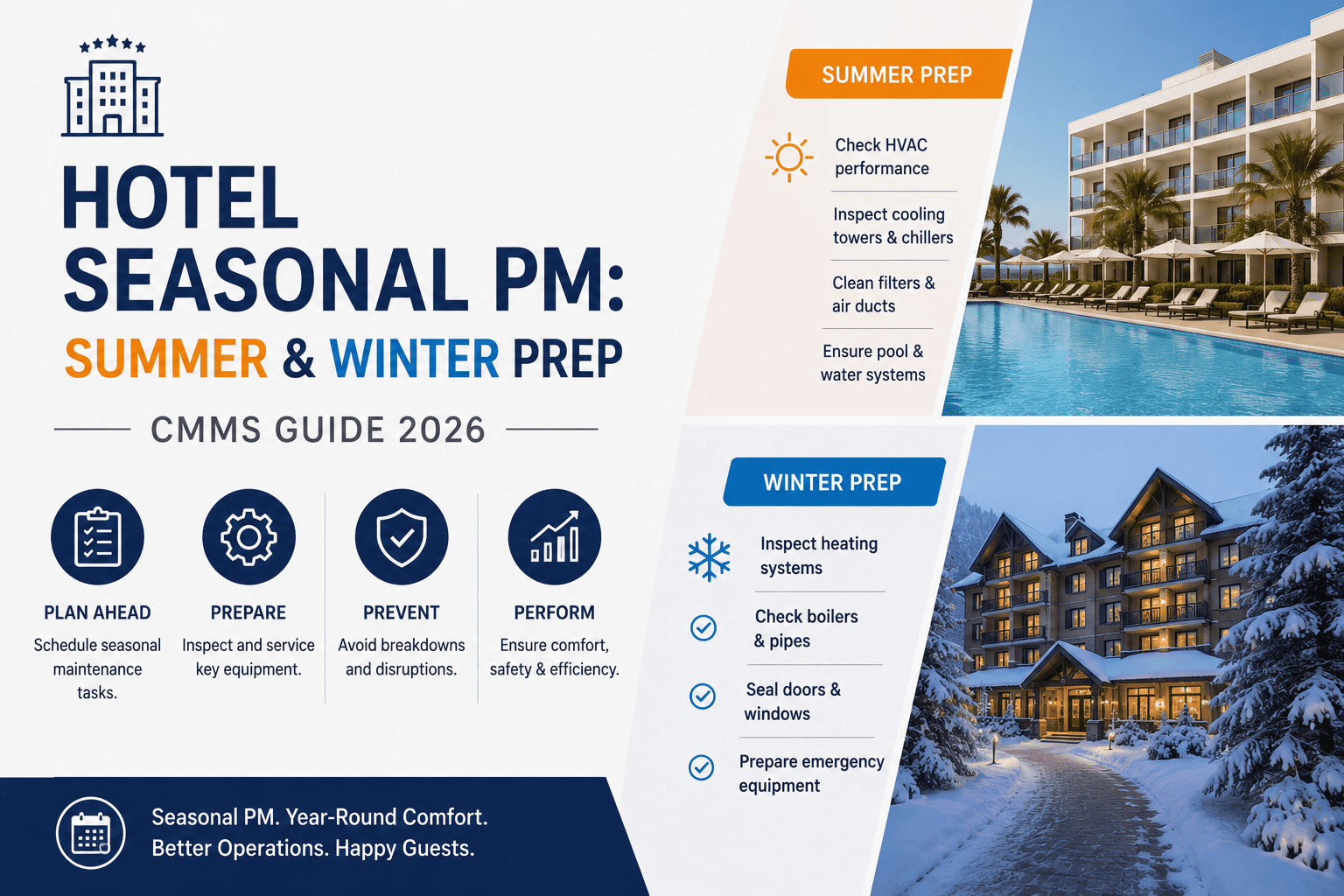
Hotel maintenance is seasonal. Filter usage spikes in summer; boiler parts are critical in winter. Oxmaint analyzes your historical work order data to predict these spikes. If you used 500 filters last July, the system recommends ordering 550 this June to account for growth. This proactive approach ensures you never face a stockout when your revenue is highest.
Frequently Asked Questions About Hotel Spare Parts Inventory
Answers to the most common questions hotel engineering teams ask about transitioning from manual inventory tracking to a CMMS-driven spare parts management system.
How many spare parts should a typical hotel keep in stock?
The ideal inventory size depends on your property size, asset age, and occupancy patterns. As a baseline, a 200-room full-service hotel should maintain 150–250 unique SKUs covering HVAC, plumbing, electrical, and general maintenance categories. The key is not stocking everything — it is stocking the right items. Use ABC analysis to identify the 20% of parts that account for 80% of your usage, and ensure those items never fall below minimum levels.
How does Oxmaint prevent overstocking and dead inventory?
Oxmaint tracks actual consumption by linking every part issued to a specific work order and asset. Over time, the system identifies items with low turnover rates — parts sitting on shelves for 6+ months without being used. These are flagged as potential dead stock so you can reduce quantities or eliminate them entirely. Min-max levels are adjusted automatically based on real usage data, not guesswork.
Can Oxmaint generate purchase orders automatically?
Yes. When any item's on-hand quantity drops below the minimum level you have configured, Oxmaint generates a draft purchase order pre-filled with the vendor name, part number, quantity needed to reach maximum level, and unit pricing from your vendor agreement. The purchaser reviews and approves with a single click. This eliminates the lag between identifying a shortage and placing the order — which is where emergency procurement costs accumulate.
What is the ROI timeline for implementing digital inventory management?
Most hotels see measurable ROI within 60–90 days of full inventory module adoption. The fastest wins come from eliminating emergency procurement markups (200–300% savings per incident) and reducing rush shipping fees. Within six months, hotels typically report 25–40% reduction in total parts spending, primarily driven by right-sized stocking levels and consolidated vendor ordering.
Do we need barcode scanners, or can technicians use their phones?
Technicians can use the Oxmaint mobile app on any smartphone to scan QR codes and barcodes — no dedicated hardware is required. When closing a work order, the technician simply scans the part label or selects it from a dropdown list. Inventory is deducted in real time, and the part cost is automatically allocated to the correct asset and work order for reporting purposes.
Can Oxmaint manage inventory across multiple hotel properties?
Yes. Oxmaint supports multi-property inventory management from a single account. Each property maintains its own storeroom with independent min-max levels and vendor assignments, while group-level dashboards roll up inventory KPIs across all locations. This allows regional managers to identify surplus stock at one property that could be transferred to another instead of placing a new order — reducing total portfolio spending.
Never Run Out of Critical Parts Again
Join hundreds of hoteliers who trust Oxmaint to keep their properties running smoothly. From PTAC capacitors to pool pumps, manage your entire spare parts catalog in one cloud-based system.