Hotel Sustainability and Energy Management Strategies to Reduce Costs and Carbon Emissions
By Mark Strong on March 25, 2026
Energy accounts for 3 to 6 percent of hotel operating costs and 60 percent of a hotel's entire carbon footprint. The hospitality industry must cut absolute carbon emissions by 66% before 2030. That is not a distant goal — it is a six-year operational challenge, and the hotels acting now are cutting costs while their competitors absorb the full financial weight of inefficiency. Sign up free on OxMaint or book a demo to see how the Sustainability Dashboard, Carbon Tracking, and Green Compliance Reporting work together on one platform.
BlogEnergy and Sustainability
Hotel Sustainability and Energy Management Strategies to Reduce Costs and Carbon Emissions
Lower operating costs, meet ESG goals, and achieve green building compliance — with the right data, tracked in one place
Sustainability is no longer a brand positioning exercise. It is a financial, regulatory, and competitive pressure arriving from three directions simultaneously — and managing any one of them without data is already too slow.
Cost Pressure
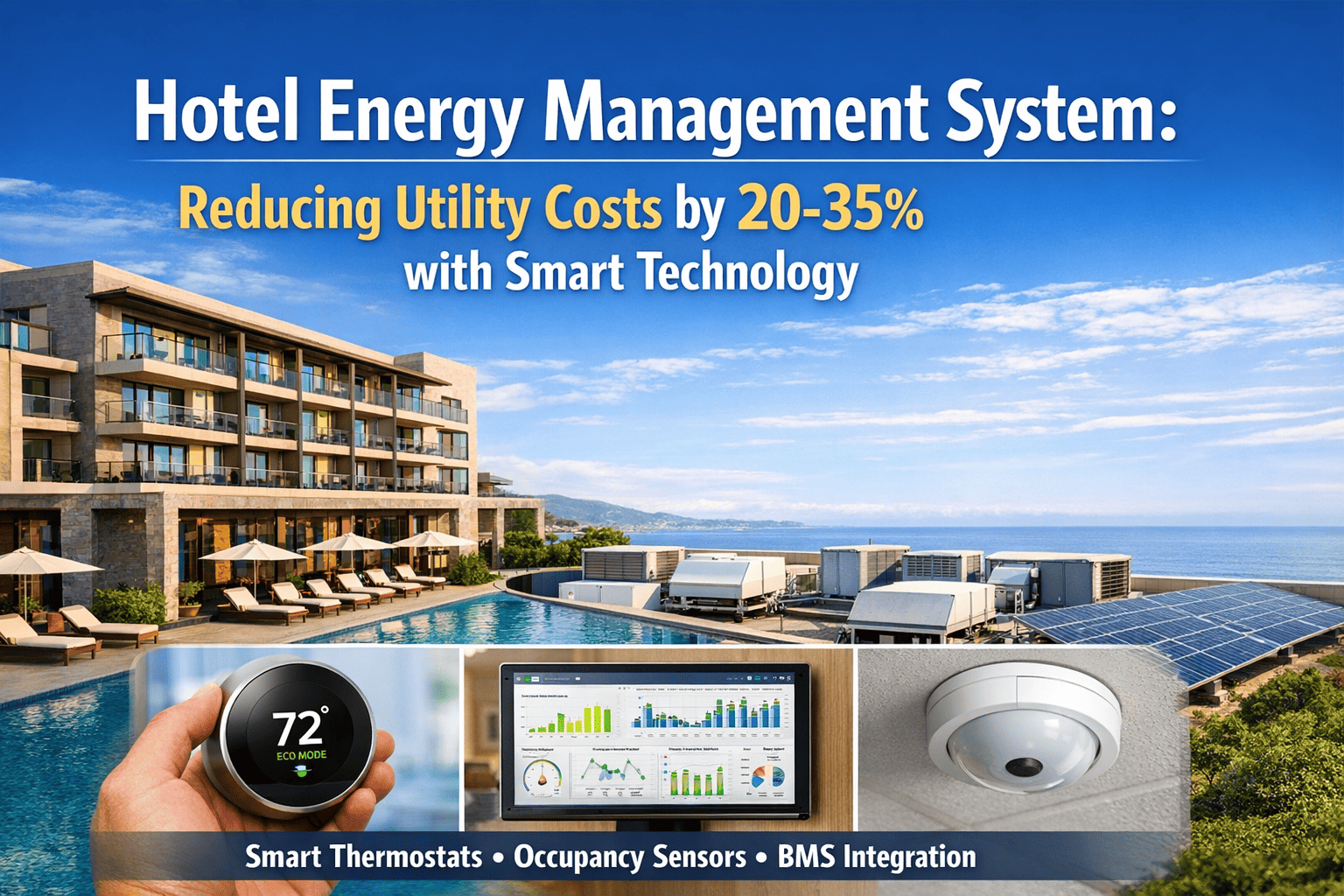
US hotels spend $2,196 per room on energy every year. Properties without active energy management programs absorb this as a fixed cost. Those with monitoring and automation reduce it by 20–35% within the first operational year.
Potential reduction
Up to 35%
Regulatory Pressure
Governments across the EU and UK are mandating sustainability reporting for all commercial properties. Franchise brands are requiring carbon documentation in RFP responses. Properties without structured tracking face audit exposure and brand penalties.
Hotels with net-zero SBTi targets
65%
Guest Pressure
78% of global travelers plan to stay in a sustainable property in 2026. Green Key certified hotels averaged 35% lower carbon footprints than non-certified peers. Sustainability credentials now directly influence booking decisions and ADR premium.
Travelers choosing sustainable stays
78%
Understanding Hotel Emissions: Scope 1, 2, and 3
You cannot reduce what you have not defined — this is where every hotel sustainability program must start
Scope 1
Direct Emissions
Boilers, kitchen fuel, hotel vehicle fleets, refrigerant leaks from HVAC
Fully within your operational control — highest priority for reduction
Scope 2
Indirect Energy
Purchased electricity, district heating or cooling, steam supply
Reduced through energy efficiency, renewable purchasing, and grid sourcing
Hardest to measure — requires supplier data and HCMI-aligned reporting tools
Do you know your hotel's Scope 1, 2, and 3 emissions right now?
OxMaint's Sustainability Dashboard tracks all three emission scopes in real time — giving your team the data needed to report, reduce, and comply. Start your free trial and have your first sustainability report ready within your first week.
Sustainability Dashboard: One View of Your Entire Environmental Footprint
Most hotels track energy, water, and waste in separate spreadsheets — or not at all. The OxMaint Sustainability Dashboard consolidates every environmental KPI your property generates into a single live view, updated as operations happen.
Sustainability Dashboard
March 2026
Energy Use
-23%
vs. last year
Water Usage
-18%
per occupied room
Carbon (tCO2e)
142t
this month
Waste Diverted
61%
from landfill
HVAC Efficiency
82%
Renewable Energy Share
47%
ESG Compliance Score
91%
Unified KPI Tracking
Energy, water, waste, and carbon tracked together — aligned with HCMI and HWMI industry standards.
Real-Time Variance Alerts
Consumption spikes flagged the moment they occur — not discovered weeks later in a utility bill.
Benchmark Comparison
Performance measured against industry benchmarks — so you always know where you stand against comparable properties.
Automated Weekly Reports
Sustainability summaries delivered to GM and ownership automatically — no manual data assembly required.
Section 03
Carbon Tracking: From Utility Bills to Verified Emissions Data
Tracking carbon manually — pulling utility invoices, applying conversion factors, compiling spreadsheets — takes days and produces data that is already weeks old. OxMaint Carbon Tracking automates the full calculation chain, producing verified tCO2e figures across all three scopes continuously.
How OxMaint Carbon Tracking Works
01
Data Ingestion
Utility data, fuel receipts, and IoT sensor readings feed in automatically — eliminating manual data entry across every billing cycle.
02
GHG Conversion
Consumption figures converted to CO2e using GHG Protocol-aligned emission factors — automatically updated when national grid factors change.
03
Scope Attribution
Every emission is tagged to Scope 1, 2, or 3 automatically — giving you a complete and accurate breakdown per reporting period.
04
Report Ready
HCMI-aligned carbon reports generated on demand — for brand audits, franchise compliance, corporate RFPs, and ESG disclosures.
30%
IHG's emissions per room night reduction since 2019 through structured carbon tracking and efficient operations
20%
Average emissions reduction achieved by hotels that completed a full carbon audit and acted on the findings
30,000+
Properties globally using HCMI-aligned frameworks — the standard OxMaint Carbon Tracking is built on
Section 04
Green Compliance Reporting: Audit-Ready Before the Auditor Arrives
Franchise brand inspections, LEED certification reviews, and ESG reporting deadlines all require the same thing: structured, timestamped, verifiable sustainability documentation. Most hotels spend two to four days assembling it manually from paper logs, utility binders, and disconnected systems. OxMaint generates it in minutes.
What Green Compliance Reporting Covers
One export — covering every standard your property is held to
LEED Certification
Energy and water performance data exported in LEED-compatible format. Maintenance logs that demonstrate operational compliance with green building standards — without manual reformatting.
ESG Disclosure
Scope 1, 2, and 3 emissions data structured for ESG reports, investor disclosures, and sustainability indices. Carbon per occupied room and per meeting space hour calculated automatically using HCMI methodology.
Brand Audit Readiness
Franchise brand sustainability reviews require documented maintenance completion, energy targets, and waste diversion rates. OxMaint keeps these records current and exportable on demand — not assembled under pressure two days before the inspector arrives.
Water Conservation Tracking
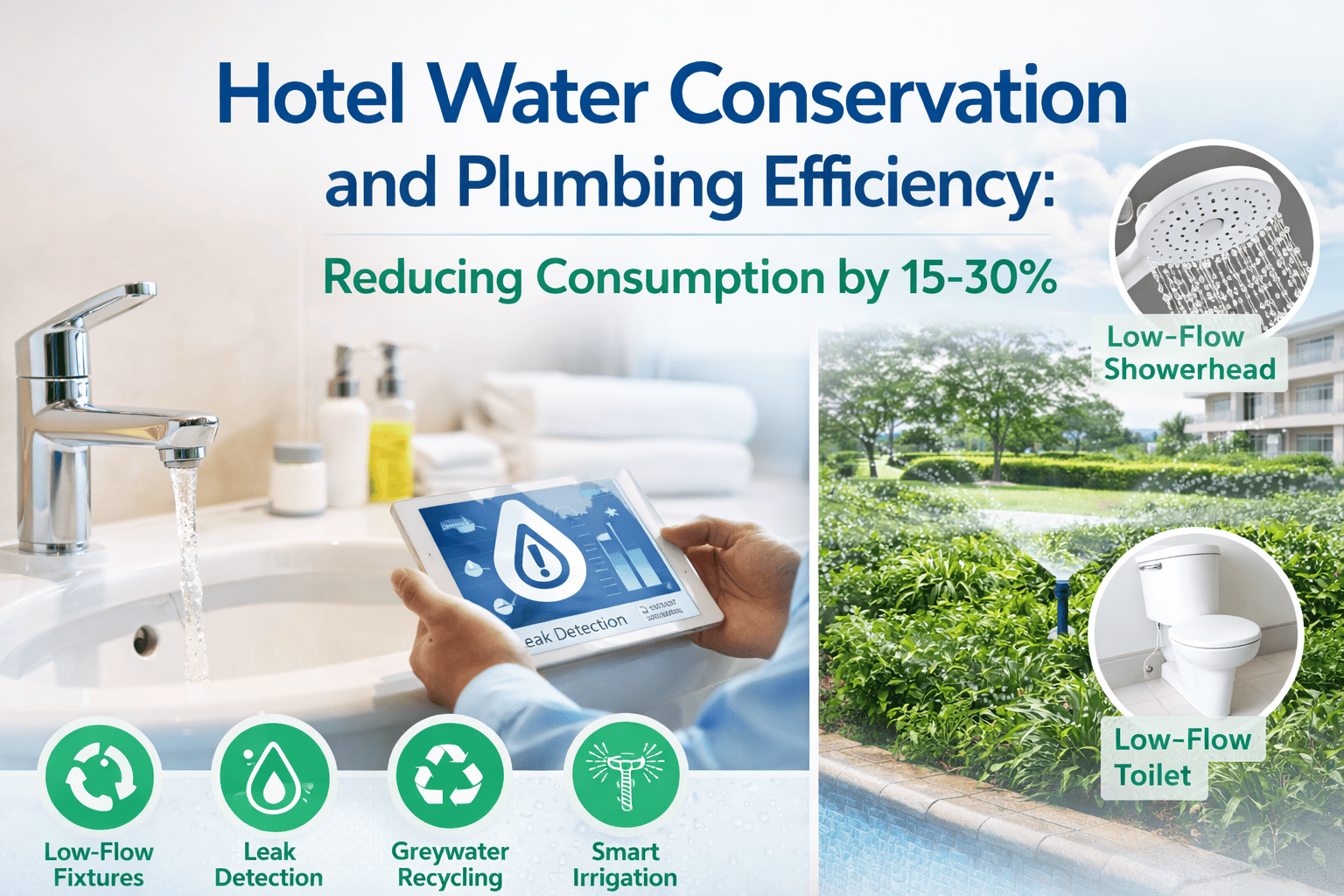
HWMI-aligned water usage tracking per room, per guest night, and by department. Low-flow fixture performance, laundry efficiency, and leak event records maintained automatically throughout the year.
Before OxMaint: 2 days to compile a compliance report from binders and spreadsheets
After OxMaint: 14 minutes to export a complete, photo-documented, timestamped compliance report — ready for any auditor
14 min
Full report generation
Your next audit is closer than you think. Is your compliance data ready?
OxMaint's Green Compliance Reporting keeps your LEED, ESG, and brand audit documentation current automatically — no data assembly sprints, no audit surprises. Start free and export your first compliance report in your first week.
The Financial Case: Sustainability Pays For Itself
Annual Sustainability ROI for a 200-Room Hotel
Conservative estimates across four direct financial impact areas
Energy Cost Reduction
20–35% utility savings from active energy monitoring and HVAC optimization. Based on $2,196 per room annual energy spend across 200 rooms — active management captures the lower bound of documented industry savings.
$52,000
Water Cost Savings
25% water usage reduction through low-flow fixture monitoring, leak detection, and linen reuse program compliance tracking. Water cost savings compound with reduced hot water heating energy costs.
$8,400
Compliance and Penalty Avoidance
Franchise brand sustainability penalties for non-compliant properties range from $5,000 to $40,000 annually. Structured documentation removes the exposure entirely — with 14-minute report generation replacing 2-day manual assembly.
$14,000
ADR Premium from Sustainability Credentials
Green Key certified hotels and LEED-documented properties command measurable ADR premiums. With 78% of travelers prioritizing sustainable stays, visible certification attracts a segment willing to pay more per night.
Variance alerts stop energy waste the moment it starts — not when the monthly bill arrives. Fastest ROI of any sustainability investment.
Up to 35% utility saving
02
Occupancy-Based HVAC Automation
Rooms auto-adjust to eco-mode during vacancy and pre-condition before arrival — Marriott documented 28% energy reduction per guest night this way.
25% HVAC energy cut
03
Water Leak Detection and Monitoring
One prevented water damage event saves between $50,000 and $500,000. Continuous plumbing monitoring through sensors catches leaks before they escalate.
Catastrophic event prevention
04
Structured Carbon Tracking
Hotels that completed a full carbon audit and acted on findings averaged 20% emissions reduction. Measurement is the prerequisite for every reduction strategy.
20% average emission drop
05
Waste Diversion Tracking
Hotels diverting 45% or more of waste from landfill gain measurable certification advantages. Tracking which departments generate what waste reveals the fastest reduction opportunities.
45%+ landfill diversion
Section 06
Frequently Asked Questions
What sustainability reporting standards does OxMaint support?
OxMaint's Carbon Tracking and Green Compliance Reporting are aligned with HCMI (Hotel Carbon Measurement Initiative) and HWMI (Hotel Water Measurement Initiative) — the frameworks used by over 30,000 properties globally and recognized by UNWTO, GSTC, and AHLA. Reports are structured for LEED documentation, franchise brand sustainability reviews, ESG investor disclosures, and corporate RFP responses. Scope 1, 2, and 3 emissions are calculated using GHG Protocol-aligned conversion factors.
How does OxMaint help with energy costs specifically — not just emissions tracking?
The Sustainability Dashboard identifies energy waste in real time through consumption variance alerts — flagging spikes by zone, floor, or system the moment they occur rather than when the monthly utility bill arrives. HVAC efficiency scores, occupancy-matched automation triggers, and recurring waste patterns are surfaced continuously. Properties acting on OxMaint data typically reduce utility spend 20–35% in the first year, based on documented industry benchmarks for active energy monitoring programs.
Can OxMaint help us prepare for a LEED certification review?
OxMaint maintains timestamped, complete records of energy performance, water usage, maintenance completion, and environmental compliance throughout the operational year — not assembled under deadline pressure. Green Compliance Reporting exports documentation in structured formats suitable for LEED review packages. Certification consultants working with OxMaint-connected properties report significantly reduced audit preparation time because the required documentation is already organized and current.
How quickly does OxMaint sustainability tracking go live?
Most hotel properties complete the OxMaint sustainability module setup within 72 hours. The Sustainability Dashboard begins populating with live data from your first operational shift after onboarding. Your first automated sustainability report is generated at the end of your first week — with no manual data entry required from your engineering or management team.
Live in 72 Hours — No IT Project Required
Sustainability is no longer optional. The question is whether your data is ready to prove it.
OxMaint's Sustainability Dashboard, Carbon Tracking, and Green Compliance Reporting give your hotel the tools to reduce energy costs, meet ESG targets, and stay audit-ready — all from one platform, live within 72 hours of signup. Properties that measure, report, and act on sustainability data outperform those that don't — on cost, on guest satisfaction, and on regulatory standing.