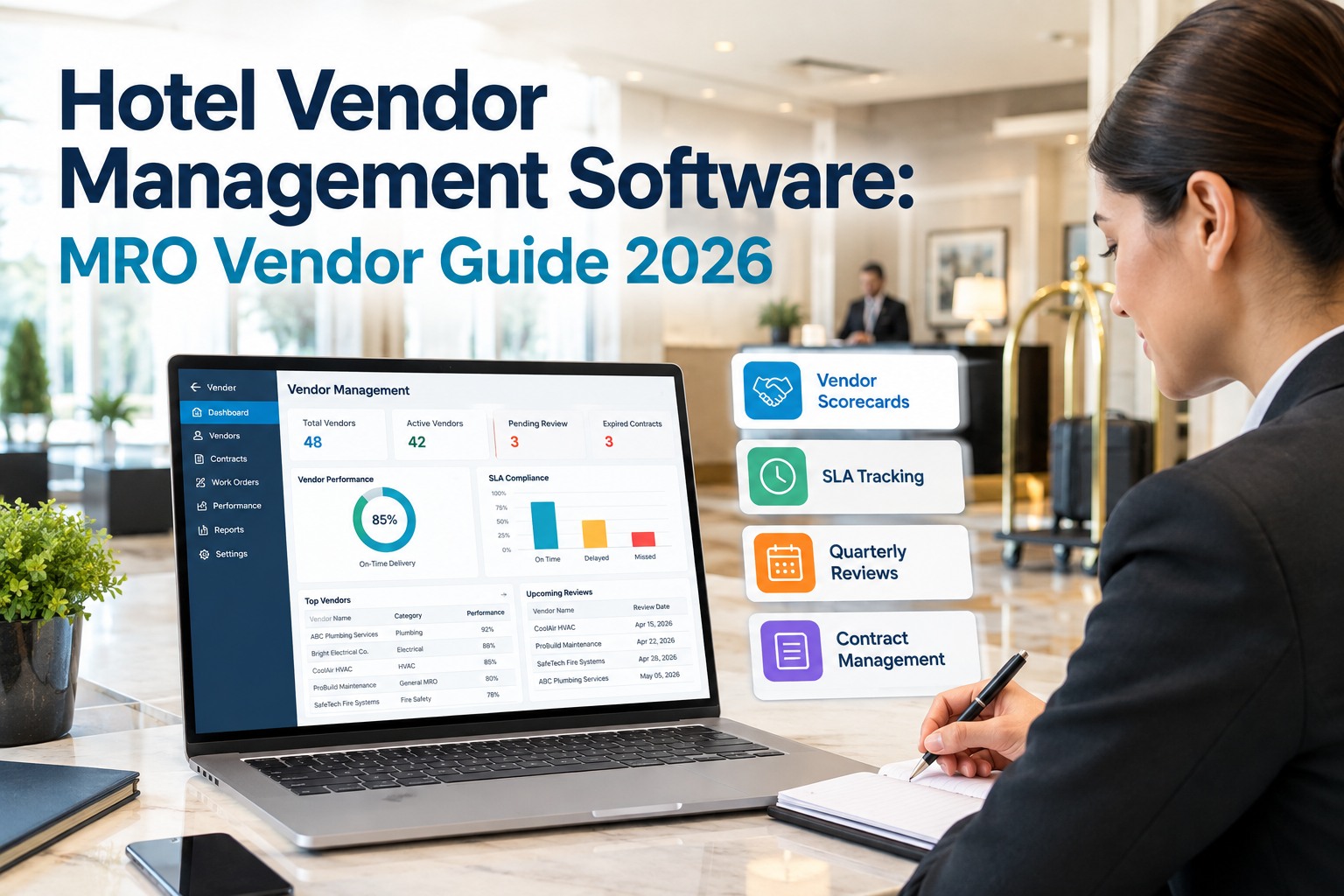
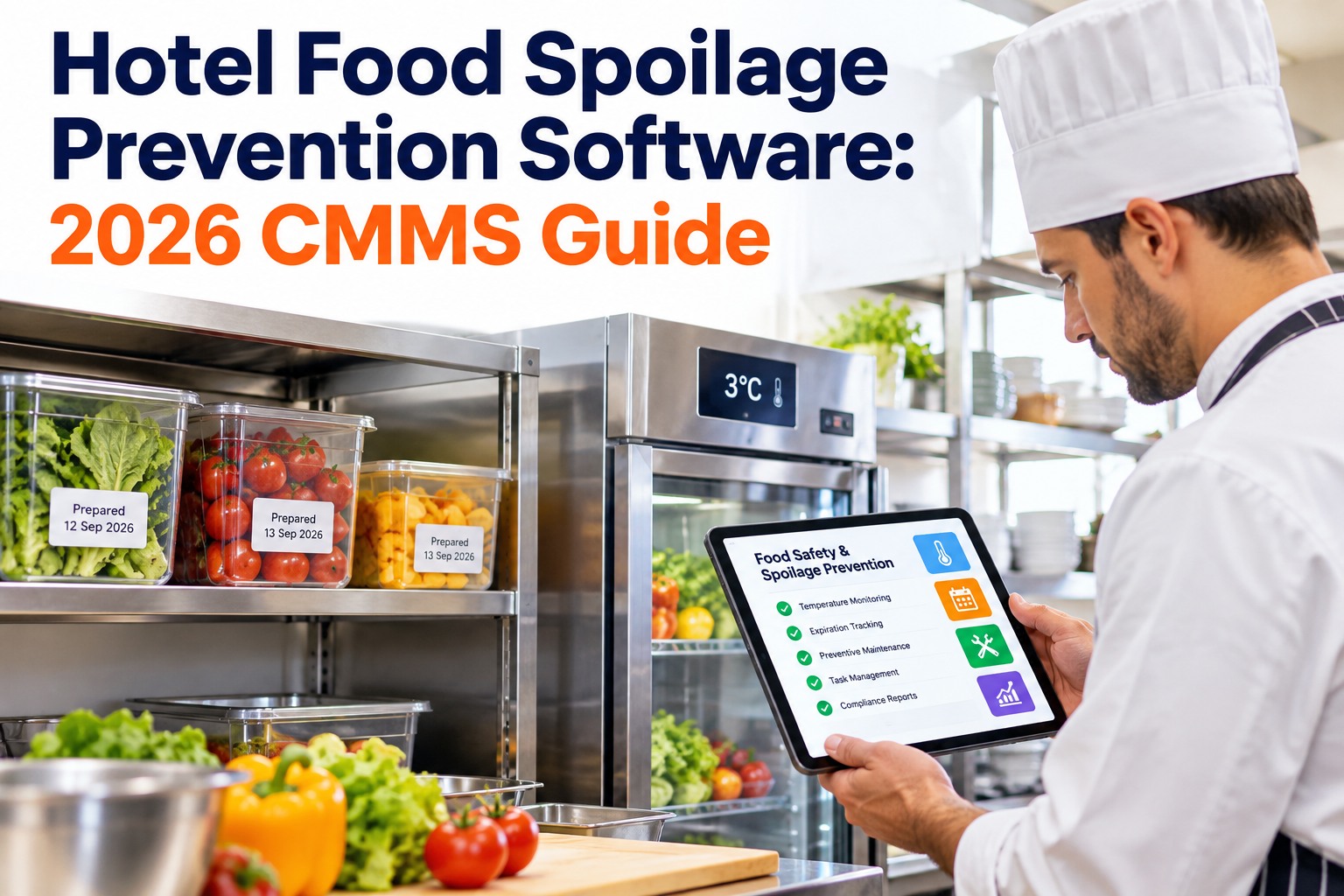
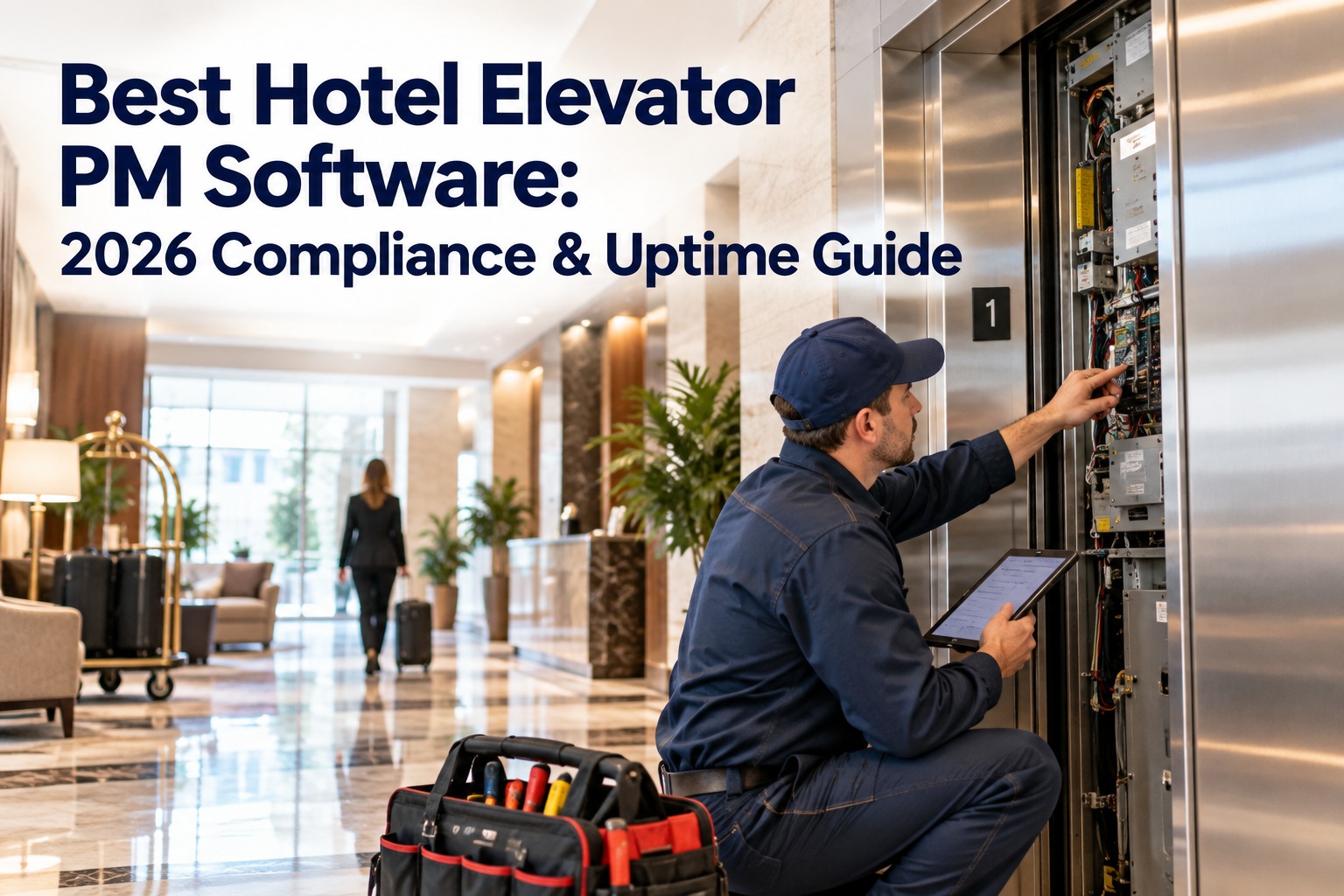
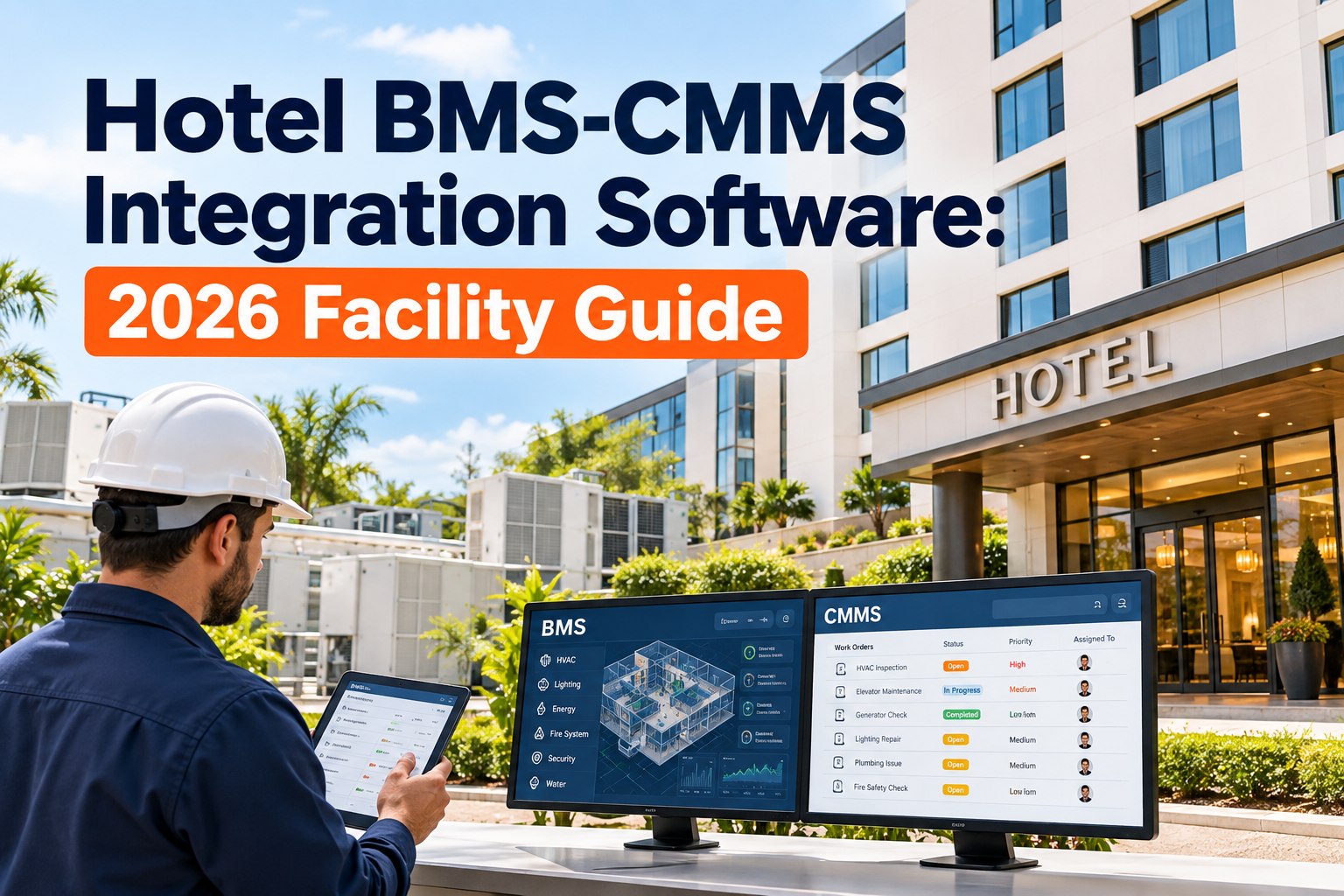
Most hotels don't have a vendor problem — they have a vendor visibility problem. The HVAC contractor whose contract promises a 30-minute emergency response, the elevator company that's supposed to hit quarterly inspections, the electrician who's somehow always "on the way" — without a system tracking actual response times against actual SLAs, hotels are trusting vendor-reported numbers instead of measuring their own. That gap is expensive: hotels routinely lose 12–18% of their annual maintenance budget to uncoordinated vendor activity, redundant trade calls, and rate creep that nobody catches because nobody's comparing invoices against a scorecard. This guide covers what a real MRO vendor management system tracks in 2026 — SLA timers, tiered scorecards, credential compliance, and the quarterly review cadence that turns vendor spend from a black box into a managed line item. Book a Demo to see live vendor scorecards running against your own property's SLA data.
Hospitality · MRO Vendor Management · 2026 Software Guide
Hotel Vendor Management Software: The MRO Vendor Guide for 2026
SLA timers, tiered scorecards, and credential tracking that turn every specialist trade vendor — HVAC, elevators, fire suppression, kitchen refrigeration — into a measured, auditable relationship.
12–18%
Of annual maintenance budget lost to uncoordinated vendor activity and rate creep
67%
Of hotel maintenance leaders name uncoordinated vendors their top compliance risk
≤ 18 min
Average P1 response time at top-quartile properties, timer-verified
15–20%
Typical cost reduction from competitive bidding on jobs over $1,000
What Paper-Based Vendor Tracking Actually Costs You
None of these show up as a single line item — they bleed out across a hundred small gaps that a spreadsheet was never built to catch.
1
SLA Times Are Self-Reported
Without a system clock starting at dispatch, response-time compliance is whatever the vendor's invoice says it was.
2
Redundant Trade Calls
Two vendors get dispatched for the same asset issue because nobody could see the other's open ticket.
3
Expired Credentials Go Unnoticed
Insurance or licensing lapses surface during an audit, not before the vendor's next dispatch.
4
No Objective Renewal Data
Contract renewal decisions run on "Bob is responsive" instead of a real performance record.
The SLA Lifecycle — From Dispatch to Scorecard
A real vendor management system doesn't just log that a vendor was called — it times every stage of the response, automatically, so the scorecard builds itself. Start a free workspace to run this exact lifecycle against your next vendor dispatch.
1
Priority Assigned
System auto-sets priority by asset and guest-impact rules — the SLA clock starts here.
→
2
Vendor Acknowledges
Mobile check-in captures acknowledgment; response time locks against the P1/P2/P3 target.
→
3
Resolution & Sign-Off
Photo proof and parts used logged on completion; the clock stops automatically.
→
4
Scorecard Updates
Compliance, cost, and first-time-fix rate roll into the vendor record in real time.
A 280-Room Resort Found Its "95% Compliant" Vendor Was Actually at 61%
A shared spreadsheet had no automated timestamp to check the vendor's own reporting against. Once OxMaint's SLA monitoring went live, the real compliance number came in at 61% — and switching vendors cut average guest-room HVAC downtime from 6.2 hours to 2.8 hours.
The Vendor Tier Scorecard — Turning Performance Into Contract Terms
SLA data only changes vendor behavior if it's tied to consequences. A tiered scorecard connects the score directly to dispatch priority and contract terms.
Tier 1 — Preferred
Score: 90–100
First-call dispatch · Net-30 terms · Volume rate locked
Tier 2 — Standard
Score: 75–89
Dispatched when Tier 1 unavailable · Net-45 · Standard rate
Tier 3 — Probation
Score: Below 75
90-day improvement plan · No renewal until score recovers
Paper Logs vs. OxMaint — The Vendor Question You Can't Answer Either Way
The Quarterly Review Cadence That Keeps Vendors Honest
Scorecards only work if they're actually used. Top-performing programs build these four habits into every quarter.
Mandatory Platform Use
Every vendor accepts, updates, and invoices work orders through the same system — no side-channel exceptions.
Quarterly Business Reviews
Every vendor sees their own scorecard and discusses improvement — transparency that high performers welcome.
Category Consolidation
One HVAC vendor, one electrical vendor, one plumbing vendor per market — multi-sourcing dilutes leverage.
Competitive Bidding Over $1,000
4–6 vendors invited to bid through the platform on larger jobs, keeping pricing honest through real competition.
"
We managed twelve specialist trade vendors across three properties on a shared spreadsheet, and honestly had no idea which ones were actually worth keeping. The scorecard exposed two vendors we'd renewed every year out of habit that were quietly the slowest and most expensive in their category. Moving to a tiered system and running real bids on the next contract cycle brought our trade spend down without changing a single thing about the work itself.
Director of Engineering · 3-Property Hotel Group
Frequently Asked Questions
What SLA response time should a hotel expect from a vendor?
Top-quartile properties see average P1 (guest-impacting emergency) response times of 18 minutes or less, with 95%+ same-shift resolution on P1/P2 tickets — measured from the moment the ticket is logged, not from when the vendor says they arrived.
How is a vendor scorecard actually calculated?
Scorecards typically weight SLA compliance, first-time-fix rate, and cost variance against contract terms, rolling up into a single score that drives tier placement and dispatch priority.
What happens when a vendor drops to Tier 3?
A Tier 3 vendor typically enters a 90-day improvement plan and is excluded from contract renewal until the score recovers — giving underperformers a defined path to improve rather than an abrupt termination.
Can OxMaint block a vendor with expired insurance automatically?
Yes. Work order assignment is blocked instantly for any vendor with expired credentials or insurance, removing the liability exposure that comes with a manual credential-check process.
Does this work across a multi-property hotel group?
Yes. Regional teams dispatch and compare vendors across every property from one dashboard, with cross-property analytics that surface bottom-quartile vendors faster than a property-by-property review would.
How much can competitive bidding actually save?
Running competitive bids with 4–6 vendors on jobs over $1,000 typically reduces cost by 15–20% through direct price competition, compared to defaulting to the same vendor out of habit.
Stop Trusting Vendor-Reported SLA Numbers — Start Measuring Your Own.
OxMaint times every dispatch, builds every scorecard automatically, and blocks non-compliant vendors before they're ever assigned — one system of record for every specialist trade you rely on.