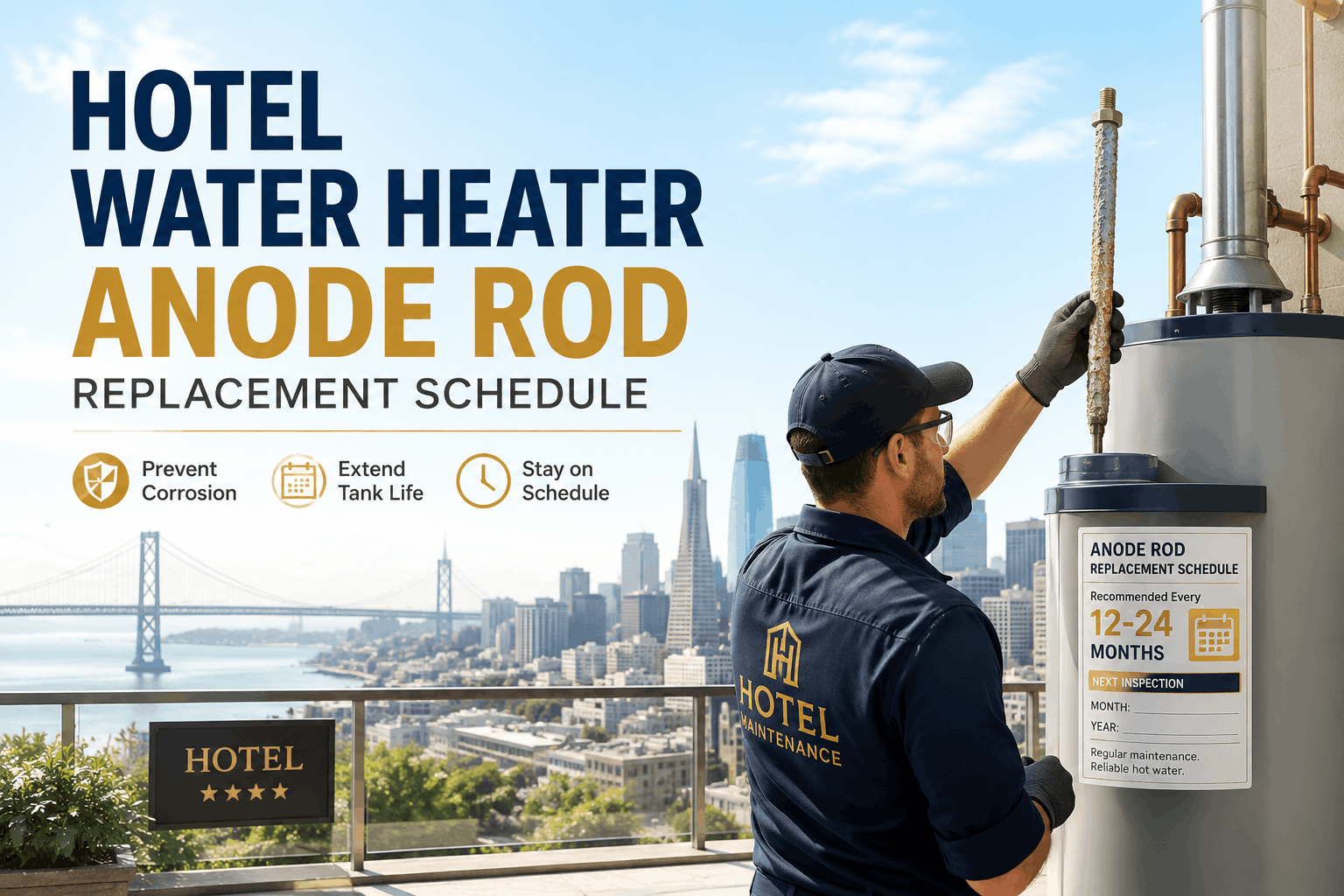
A single failed water heater anode rod can turn a $200 preventive part into a $5,000+ emergency tank replacement — and that disruption means guest rooms offline, housekeeping backups, and negative reviews that linger long after the repair is complete. In commercial hotel operations, water heaters operate 24/7/365, cycling constantly to meet demand for laundry, kitchen sanitization, and multiple guest showers simultaneously. This accelerated duty cycle consumes sacrificial anodes 2–3x faster than residential units. 89% of premature commercial water heater failures trace to anode rod neglect — a gradual deterioration that a scheduled PM programme, documented inspection protocol, and CMMS-tracked maintenance from OxMaint would have flagged months before the leak appeared. If your hotel's capital budget is being drained by tank replacements, your anode rod replacement schedule is the first place to look and the fastest place to fix it.
Hotel Water Heater Anode Rod Replacement Schedule: The 6-6-12 Rule That Prevents Tank Failure
A complete guide to commercial water heater anode rod replacement — sacrificial anode types, water chemistry multipliers, inspection protocol, CMMS maintenance scheduling, and the documented replacement history required to extend tank life from 5 years to 15+ years.
Why Hotel Water Heaters Eat Anode Rods Faster
A sacrificial anode rod is designed to corrode instead of your water heater's steel tank. In residential settings, this takes 3–5 years. In a commercial hotel, the same rod can be fully consumed in 12–18 months. High hot water turnover — laundry, housekeeping, kitchen, guest showers — keeps the tank constantly refilling with fresh, oxygenated water. Each refill introduces new electrolytes that accelerate galvanic corrosion. Water softeners, common in hotels to protect fixtures, actually strip protective mineral films and make water more aggressive toward anodes. And recirculating systems, standard in larger properties, maintain constant tank temperatures above 130°F — every 10°F above 120°F roughly doubles the corrosion rate. OxMaint helps hotels track these variables per property and schedule anode inspections based on actual usage, not calendar guesses.
The 6-6-12 Anode Rod Replacement Protocol for Hotels
The residential rule of "check every 3 years" fails in commercial hospitality. The hotel standard is the 6-6-12 protocol: monthly visual inspections of the tank exterior and T&P valve, anode rod physical inspection every 6 months, and replacement every 6–12 months depending on water chemistry and usage. But calendar-based intervals are just a starting point — actual anode consumption varies dramatically by water hardness, temperature, and draw volume. A 300-room property with a water softener and recirculating system may need anodes every 6 months. A 50-room extended-stay property on soft municipal water might go 18 months. The only way to know is documented, scheduled inspection — not guesswork. OxMaint's CMMS creates a timestamped anode inspection record per water heater, building the historical data that lets you optimise replacement intervals instead of replacing too early or too late.
Without vs. With CMMS: The Real Difference at Year 5
The difference between a water heater that lasts 5 years and one that lasts 15 years is rarely a different brand of tank — it is a different standard of anode documentation and follow-through. Every hotel engineer has seen the same pattern: a tank fails, and the last recorded anode inspection was never entered into any system. What changes with CMMS is whether the anode consumption rate is tracked over time, and whether the next replacement is automatically scheduled based on historical data. OxMaint's CMMS creates a timestamped anode replacement and inspection trail per water heater that supports both prevention and capital planning evidence for replacement budgets.
The Full Hotel Water Heater PM Protocol
Anode rod replacement is the single most important preventive task for water heater longevity, but it is not the only task. A complete commercial water heater PM programme includes monthly T&P valve testing, quarterly sediment flushing, and annual expansion tank pressure checks. Sediment buildup insulates the tank bottom, causing overheating that accelerates anode consumption and leads to tank failure from the opposite end. T&P valve failure turns a small problem into a flood. Each task interacts with the others — a sediment-flushed tank operates cooler and reduces anode load. When any task is missed, the others work harder and fail sooner. OxMaint bundles all water heater PM tasks into a single asset work order template — so no engineer ever has to wonder which task is due when.
We were replacing water heaters at three properties every 5–6 years. After we put every tank on a documented 6-month anode inspection schedule in OxMaint, we found our hard-water properties needed anodes every 8 months and soft-water properties could go 14 months. We stopped guessing. Our oldest tank under this protocol is now 11 years old and still passing inspection.
OxMaint documents every anode inspection, replacement, sediment flush, and T&P test against each water heater asset — building the preventive history that stops corrosion before it starts. Free to start.
12-Month Anode Management Plan for Hotels
Implementing an anode rod programme takes 30–90 days to fully deploy across a portfolio. The fastest route combines establishing baseline inspection intervals, training engineering staff on inspection technique and documentation, and configuring CMMS work orders to auto-generate at 6-month intervals per asset. OxMaint's timestamped inspection records are exactly the documentation needed to prove preventive diligence to ownership and insurers — and they're generated automatically as part of normal CMMS operation.
Frequently Asked Questions
Stop Corrosion Before It Reaches Your Tank Steel
OxMaint turns your anode inspection programme into the documented replacement history that extends water heater life from 5 years to 15+ — and proves preventive diligence to ownership and insurers.