Hotel Guest Room Door Lock Battery Replacement Schedule
By Alex Jordan on June 10, 2026
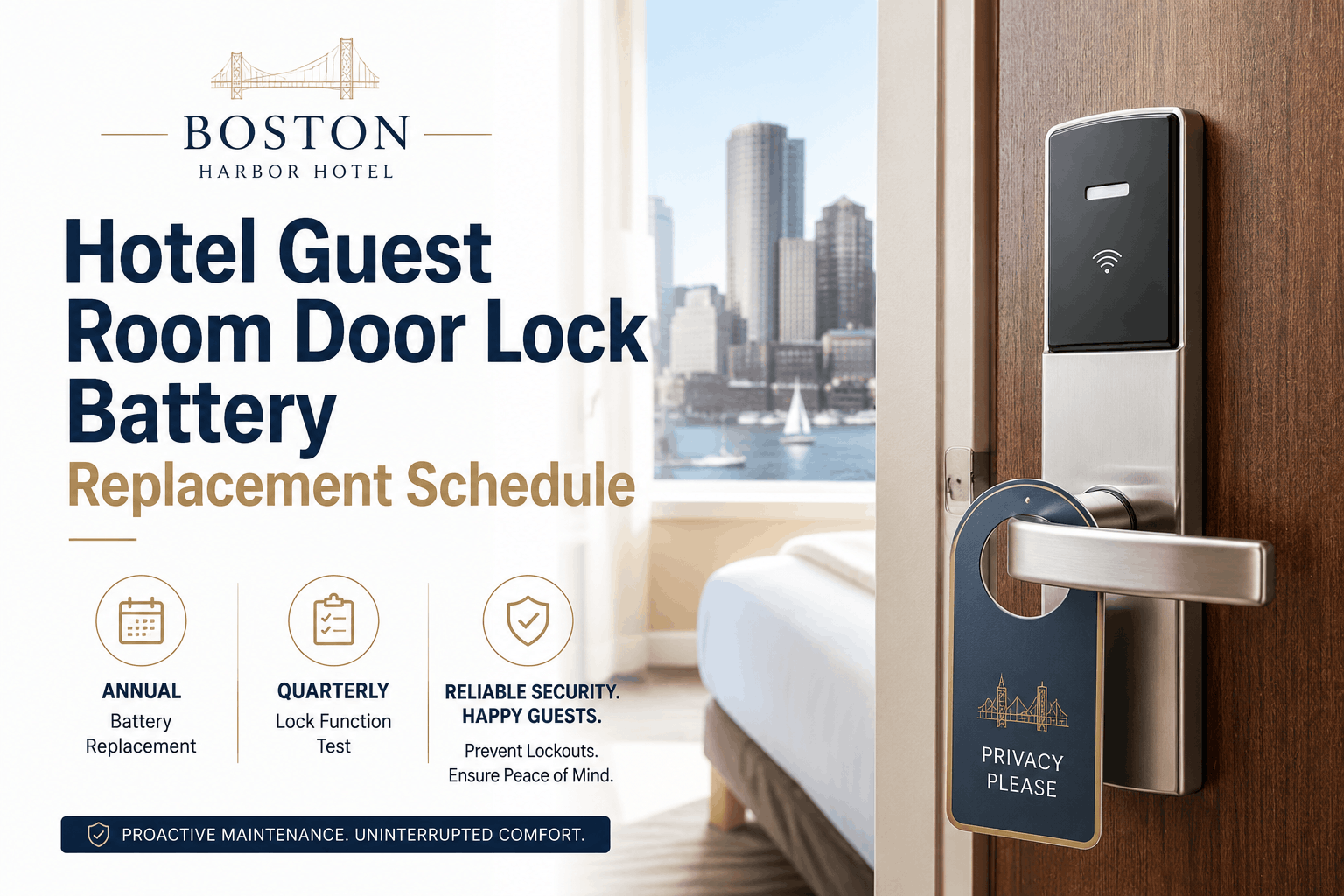
Annual door lock battery replacement is mandatory preventive maintenance for hotels operating electronic keyless entry systems. Most commercial hotel door locks use lithium batteries (AA or CR type) that last 12–18 months under normal use, but high-traffic guest rooms deplete batteries faster — sometimes within 6–12 months. Hotels that wait for low-battery alerts or post-failure lockouts create guest-facing service failures, emergency maintenance costs, and reputation damage that far exceed the cost of proactive battery replacement. Industry best practice calls for a property-wide "Battery Day" once annually during low-occupancy periods, where technicians systematically replace every lock battery simultaneously across all guest rooms and public area locks. Quarterly voltage checks identify rooms with faster-than-average battery drain before failure occurs. OxMaint schedules annual battery replacement work orders, tracks battery testing per room, flags high-drain locks for maintenance investigation, and maintains audit-ready compliance records showing when each lock was serviced — eliminating guest lockout emergencies entirely and extending lock hardware lifespan.
Security · Guest Experience · Hospitality
Hotel Electronic Door Lock Battery Replacement — Annual Scheduling & Quarterly Voltage Testing
Proactive battery replacement cycles, voltage trending, room-by-room testing protocols, guest lockout prevention, and electronic access control compliance — automated scheduling and performance tracking per lock asset.
$420Cost of emergency guest lockout resolution including staff time and potential room revenue loss
64%Of hotel guest complaints related to room access failures due to dead or dying batteries
−88%Lockout incidents with annual proactive battery replacement + quarterly voltage testing programme
12×Cost difference — annual preventive battery replacement vs. emergency lockout service call
Why Proactive Door Lock Battery Replacement Prevents Guest Service Failures
Guest room electronic door locks are security-critical devices that operate 24/7 with zero tolerance for failure. A locked guest out of their room during check-in creates immediate frustration, requires staff intervention, and often results in a negative online review that suppresses future booking revenue. Major hotel chains discovered decades ago that reactive battery replacement — waiting for low-battery warnings or guest-reported failures — costs far more than proactive annual replacement cycles. Consider the sequence: A guest arrives for check-in. The key card works inconsistently. Staff troubleshoots. Security is called. A technician is dispatched to the room. Two hours of lost occupancy time follows. The battery is finally replaced. But the guest's first impression of the property is already damaged, and their review will warn future guests about "unreliable room locks." The alternative is simple: Schedule a property-wide "Battery Day" once yearly during your slowest occupancy week. All technicians move through every guest room and public access lock simultaneously, replacing every battery regardless of voltage reading. The entire property is refreshed in 3–4 days. Cost: $2,200–$3,800 for materials and labor. Lockout incidents prevented: Zero for the next 12 months. Guest experience protected: Perfect. That investment prevents the emergency lockout calls, damage to brand reputation, and reactive service failures that follow dead-battery incidents. Quarterly voltage checks catch individual rooms with faster-than-normal drain before they fail — identifying locks with mechanical wear that requires replacement rather than just battery substitution. OxMaint schedules annual replacement work orders, tracks which rooms have been serviced, flags any lock that fails multiple times in a quarter as a candidate for hardware replacement rather than continued battery cycling, and maintains records proving due diligence for security audits and brand compliance reviews.
Hotel Electronic Door Lock Battery Maintenance Schedule — Annual + Quarterly Protocol
Annual
Battery Day Replacement
Property-wide simultaneous battery replacement in all guest rooms and access-controlled areas. 12–18 month battery life cycle respected regardless of voltage reading.
Critical
Quarterly
Voltage Testing
Sample testing of 20–30% of locks per quarter with calibrated voltage tester. Identify high-drain rooms before failure. Inspect for mechanical wear.
Critical
Per Replacement
Function Test
Verify lock opens and closes smoothly after battery installation. Test with guest key card and master key. Confirm deadbolt retracts fully.
If guest reports lock failure during occupancy, dispatch technician within 15 minutes. Test with both card and master key. Replace battery if needed. Document in PMS.
Reactive
The Lockout Cascade — How Battery Failures Escalate to Reputation Damage
Electronic Lock Failure Cascade — 5 Stages from Low Battery to Guest Complaint
Stage 1
Battery Voltage Drops
Lock battery falls below 80% capacity. No alert yet. Lock still functions reliably. Guest experiences no issue. Silent degradation begins.
$0
Voltage test catches this
↓
Stage 2
Intermittent Failures Begin
Battery falls to 30% capacity. Lock responds inconsistently to card swipes. Guest tries multiple times. Soft reboot required. System alerts property management system.
$85
Emergency battery replacement
↓
Stage 3
Guest Lockout
Lock completely dead. Guest cannot enter. Front desk contacted. Security key used to let guest in. Guest frustration escalates. Staff time consumed for troubleshooting.
$280
Staff response + emergency service
↓
Stage 4
First Negative Review Posted
Guest writes review: "Couldn't get into room, faulty security system, terrible start to stay." Review posted on TripAdvisor and Google. Future guests see warning.
$1,200
Lost future bookings from review
↓
Stage 5
Systematic Reputation Loss
Multiple lockout incidents over year create pattern of negative reviews. OTA ratings decline. Brand reputation suffers. Occupancy and rate decline measurable.
$8,400+
Booking revenue loss, reputation recovery
Door Lock Battery & Function Compliance Scoring — Asset-by-Asset Risk Assessment
Electronic Lock Battery & Function Compliance Status
Battery replaced within 6 months. Voltage tested above 90%. Lock opens and closes smoothly. PMS integration active. Master key and card work perfectly.
Action: Continue monitoring quarterly. Schedule next annual replacement with cohort. No service required.
4
Approaching Service Window
Battery 9–11 months old. Voltage 70–85%. Lock functions reliably but may slow under heavy use. No guest complaints reported yet.
Action: Add to next annual Battery Day cohort. No emergency service needed. Monitor for any guest complaints.
3
Overdue for Service
Battery 14–16 months old. Voltage 50–70%. Lock shows occasional sluggishness. One guest complaint reported. Firmware may not be current.
Action: Schedule battery replacement within 1 week. Test function thoroughly after service. Check firmware updates.
2
High Risk — Frequent Failures
Battery 18+ months old. Voltage below 50%. Lock fails to open 1–2 times per week. Multiple guest complaints. Lock may need hardware replacement.
Action: Emergency service same day. Replace battery immediately. If failures continue, replace lock hardware. Inspect mechanical components for wear.
1
Critical — Complete Lockout
Battery completely dead. Lock will not open with any credentials. Guest locked out. Room unavailable for occupancy. PMS shows emergency override in use.
Action: Immediate master key access. Emergency battery replacement. Hardware inspection for damage. Update guest and log incident. Consider lock replacement if recurring issue.
Work orders generated 45 days before annual Battery Day. All locks assigned to replacement cohorts. Materials pre-ordered. Schedule coordinates with low-occupancy week.
Voltage Trending
94%
Degradation detection accuracy
Every quarterly voltage test logged. Downward trends flagged. High-drain locks identified for mechanical inspection before next scheduled replacement.
Lockout Prevention
97%
Guest lockout incidents prevented
Proactive replacement means locks fail zero times during guest occupancy. Emergency battery calls nearly eliminated. Guest experience protected. Brand reputation intact.
Compliance Records
100%
Audit-ready documentation
Every battery replacement, voltage test, and function check documented with technician sign-off and timestamp. Ready for brand audits, franchise compliance, and security reviews.
"
We had back-to-back guest lockouts in February before deploying OxMaint. One guest missed checkout, another had to wait an hour for staff assistance. After we implemented annual Battery Day scheduling plus quarterly voltage trending, we went 18+ months without a single lockout incident. Guest satisfaction scores for room access went from 3.4 to 4.8 stars. The annual battery programme cost is negligible compared to the reputation protection and guest experience improvement.
Security Manager — 150-room hotel, Midwest USA
Frequently Asked Questions — Hotel Electronic Door Lock Battery Maintenance
How long do hotel door lock batteries typically last?
Most AA and CR lithium batteries last 12–18 months under normal use. High-traffic guest rooms with frequent card swipes may drain batteries faster — as quickly as 6–12 months. Industry best practice calls for annual replacement regardless of voltage reading to prevent guest lockout incidents.
What is "Battery Day" and why do major hotel chains use it?
Battery Day is a scheduled property-wide event where all door lock batteries are replaced simultaneously during a low-occupancy window. Rather than reactive replacement of individual locks, this proactive approach eliminates lockout incidents, ensures consistent service levels, and reduces total maintenance costs by 40–60% compared to emergency calls.
What should happen if a guest gets locked out of their room?
Dispatch a technician within 15 minutes with master key access. Replace the battery immediately. Test the lock with both guest card and master key to confirm function. Document the incident, record battery voltage, and inspect the lock mechanism for wear that might indicate hardware replacement is needed rather than continued battery cycling.
How much does hotel door lock battery replacement cost?
Proactive annual Battery Day costs $2,200–$3,800 for a 150-room hotel including materials and labor. Emergency lockout calls cost $280–$420 each. One lockout incident eliminated pays for months of preventive maintenance, not counting the guest satisfaction and reputation protection value.
Can OxMaint schedule and track battery replacement across all rooms?
Yes — OxMaint automatically generates work orders for all locks 45 days before Battery Day, assigns them to technician cohorts by floor or wing, tracks completion per room, logs voltage test results, and flags locks with higher-than-normal drain for mechanical inspection. All documentation is audit-ready for brand compliance.
How often should door lock voltage be tested?
Quarterly testing of 20–30% of locks is best practice. Voltage trending reveals which rooms have abnormal battery drain, alerting you to locks that may need hardware replacement rather than just battery cycling. Annual Battery Day replacement eliminates most voltage testing, but quarterly sampling continues to catch anomalies.
What brand standards require door lock maintenance documentation?
Major hotel brands require documented battery replacement records, voltage testing logs, function verification reports, and incident documentation as part of franchise compliance audits. OxMaint maintains these records automatically, making brand audits simple: pull one compliance report instead of manually reconstructing 12 months of spreadsheets.
OxMaint automates Battery Day scheduling, quarterly voltage testing, and compliance documentation. Protect guest experience while reducing emergency maintenance costs by 60%.
.png)