Housekeeping quality inspection random sampling is the statistical method brand auditors use to evaluate room cleanliness without checking every room — and hotels that run their own CMMS-based random sampling program consistently outperform on brand audits. A well-designed rotating sample covers 8–12% of rooms per cycle, uses supervisor spot-check protocols, and logs every score in a CMMS so quality trends are defensible and actionable. This guide walks through sampling design, inspector rotation, scoring, and the Start Free Trial-ready OxMaint CMMS setup that turns random spot checks into a documented operational discipline.
Can your next brand audit pass on 8% of rooms?
Brand inspectors don't check every room — they sample. Hotels that run their own rotating random sampling CMMS program catch defects weeks before auditors do, trend quality scores over time, and turn housekeeping inspections from reactive firefighting into a documented, defensible discipline.
How random sampling works for housekeeping quality inspections
A 200-room hotel inspecting every room daily would spend 33+ labor-hours per day on quality checks alone. Random sampling cuts that to under 4 hours while still producing a statistically meaningful quality score — but only if the sample design is sound.
A 180-room select-service property in Phoenix implemented CMMS-based random sampling: 15 rooms per day on a rotating 12-day grid, scored on a 100-point brand rubric. Within 90 days, average quality scores rose from 78.4 to 91.2, the brand audit score moved from "marginal" to "exceeds," and guest complaints about room cleanliness dropped 43%. Total added supervisor time: 2.5 hours per day — less than the cost of one failed audit penalty.
Rotating sample design: the inspector spot-check framework
The biggest sampling error hotels make is convenience selection — inspecting the same "problem" floors or rooms nearest the elevator. A CMMS-based rotating sample eliminates selection bias and ensures every room enters the inspection pool on a predictable, defensible schedule.
Stratified Room Selection
- Divide rooms by floor, wing, and room type (standard, suite, ADA)
- Draw proportional sample: 10% from each stratum, not just one zone
- CMMS auto-generates the daily room list — no supervisor discretion
- Flag "high-risk" rooms (near pool, high-traffic) for 2x sampling frequency
Inspector Rotation Protocol
- Rotate 3 supervisors across 3 zones weekly to prevent scoring drift
- Calibrate scores monthly: all 3 inspect the same 5 rooms, compare deltas
- CMMS logs inspector ID with every score — bias patterns surface in analytics
- Inter-rater reliability target: variance under 5 points on the 100-point scale
Scoring & Defect Logging
- 100-point rubric mapped to brand standards: bathroom, bedding, dust, amenities
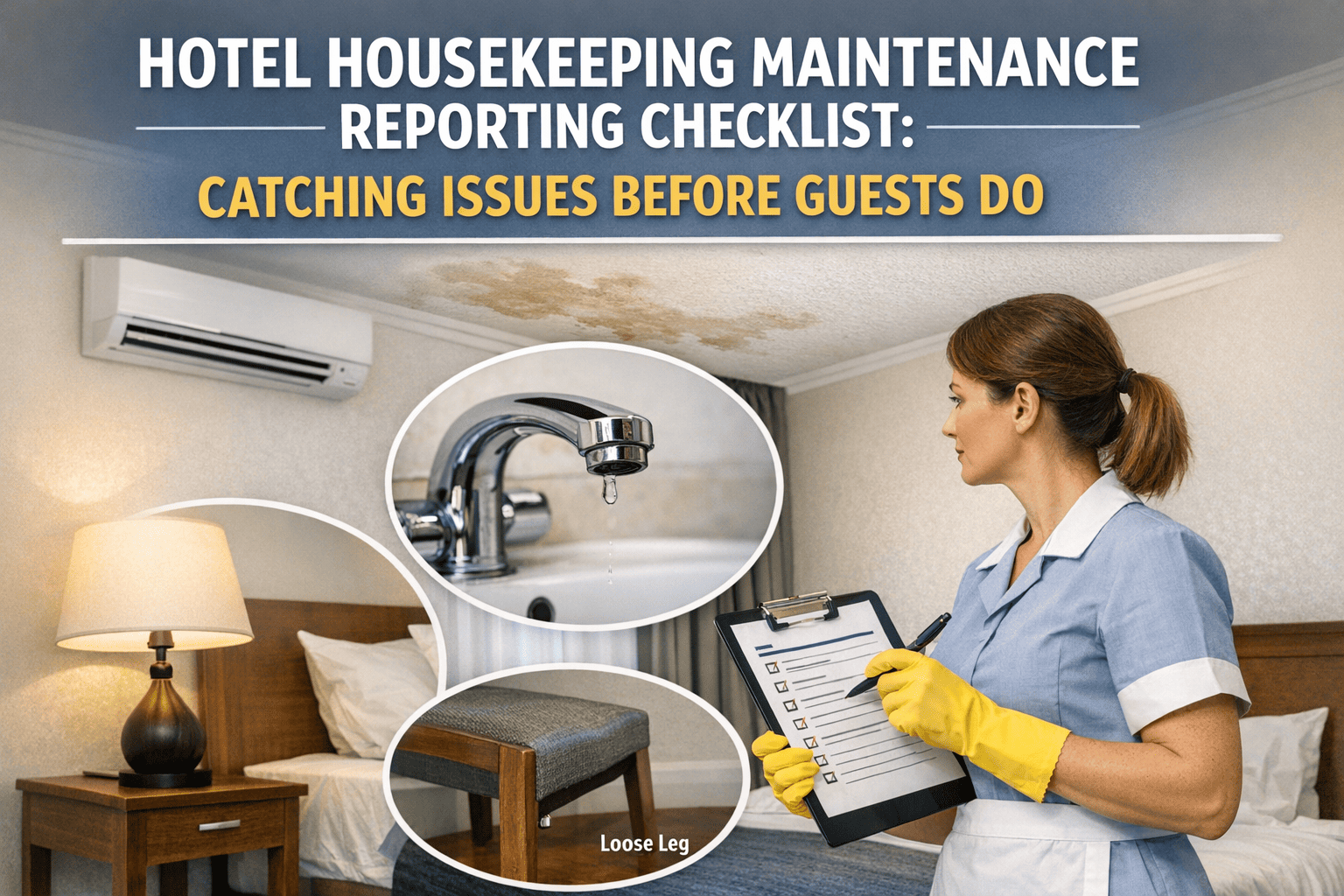
- Each defect photographed and categorized in CMMS — not on paper checklists
- Auto-generate retraining work orders when a room attendant scores below 75
- Trend dashboards show floor-level, attendant-level, and time-of-day patterns
Audit-Ready Documentation
- Every inspection timestamped, geotagged, and linked to the room asset record
- Export 30/60/90-day quality trend reports for brand auditors on demand
- Corrective action trail: defect logged → work order → re-inspection → closed
- Demonstrate "continuous monitoring" — the phrase brand auditors look for
CMMS hotel quality scoring: what to track and why
A CMMS housekeeping quality program is only as good as the metrics it surfaces. These are the five scoring dimensions that separate a defensible quality program from a clipboard checklist — and that OxMaint tracks out of the box.
| Scoring Dimension | What It Measures | Target | CMMS Data Source |
|---|---|---|---|
| Room Quality Index (RQI) | Weighted 100-point score across 8 brand-standard categories | ≥ 90 | Inspection form submissions |
| First-Pass Yield | % of rooms passing inspection with zero rework required | ≥ 85% | Work order re-inspection flags |
| Defect Recurrence Rate | Same defect category in same room within 30 days | ≤ 5% | Defect history per room asset |
| Inspector Concordance | Score variance between supervisors on calibration rooms | ≤ 5 pts | Inspector ID analytics |
| Audit Readiness Score | 30-day rolling RQI trend + documentation completeness | ≥ 88 | Composite dashboard metric |
How OxMaint turns random sampling into audit-ready discipline
OxMaint replaces clipboard inspections and spreadsheet score logs with a CMMS that auto-generates random room samples, scores them against your brand rubric, and trends quality data so you walk into every brand audit with 90 days of documented evidence.
Automated Random Sample Generator
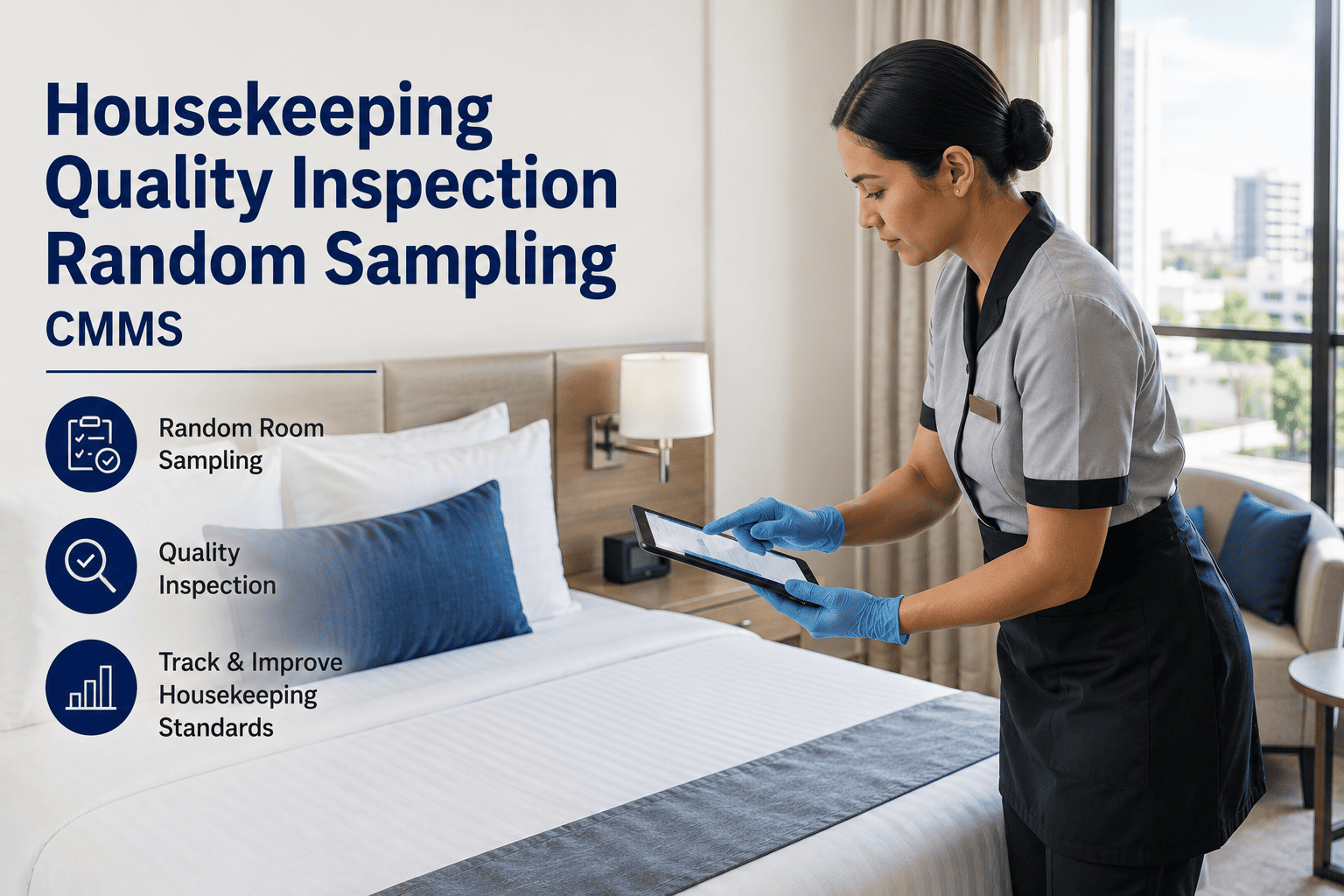
OxMaint draws a stratified random room list daily — by floor, wing, and room type — so no human bias enters selection. Inspectors open the mobile app and see exactly which rooms to check, in what order, with the brand rubric pre-loaded.
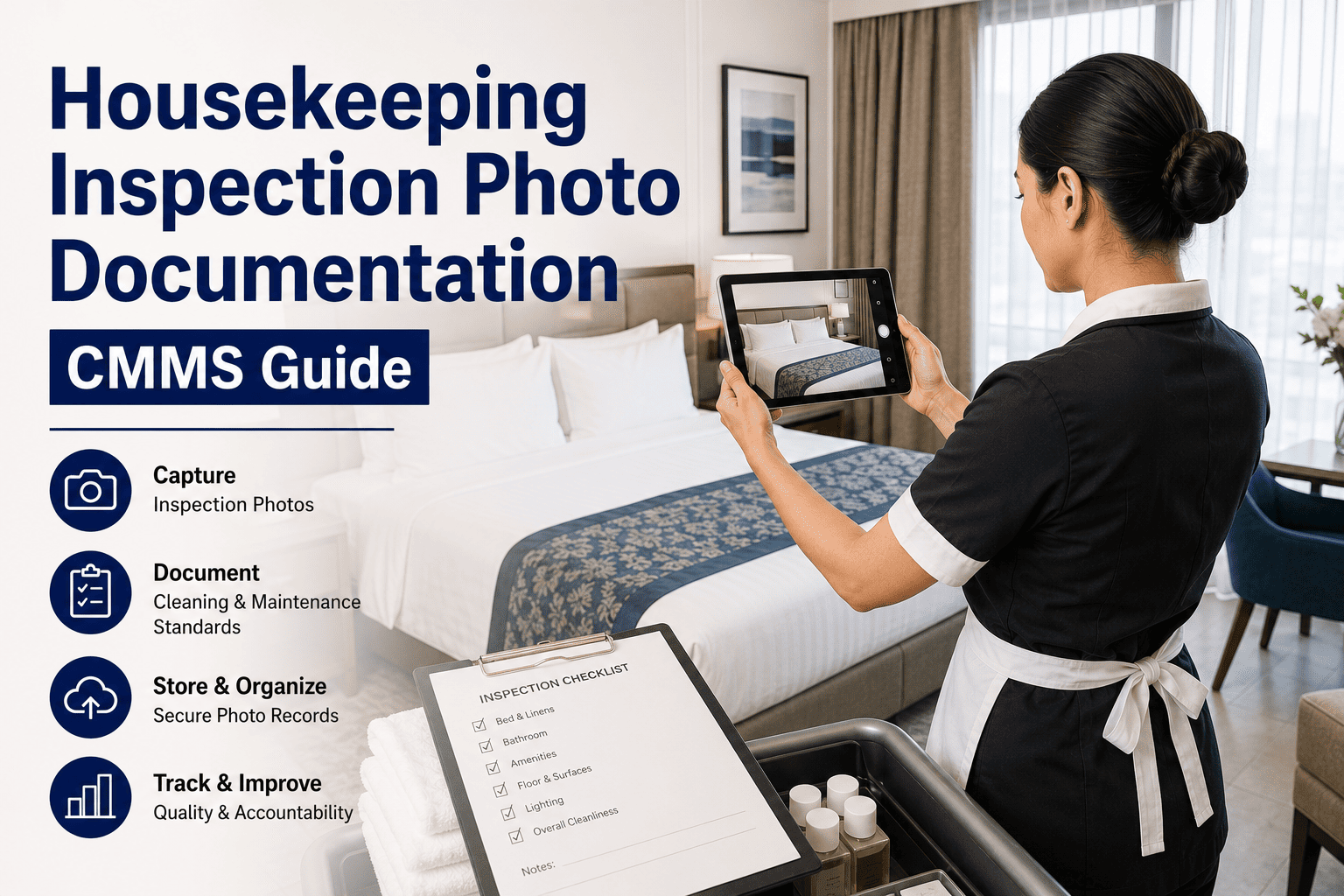
Digital Inspection Forms with Photo Defects
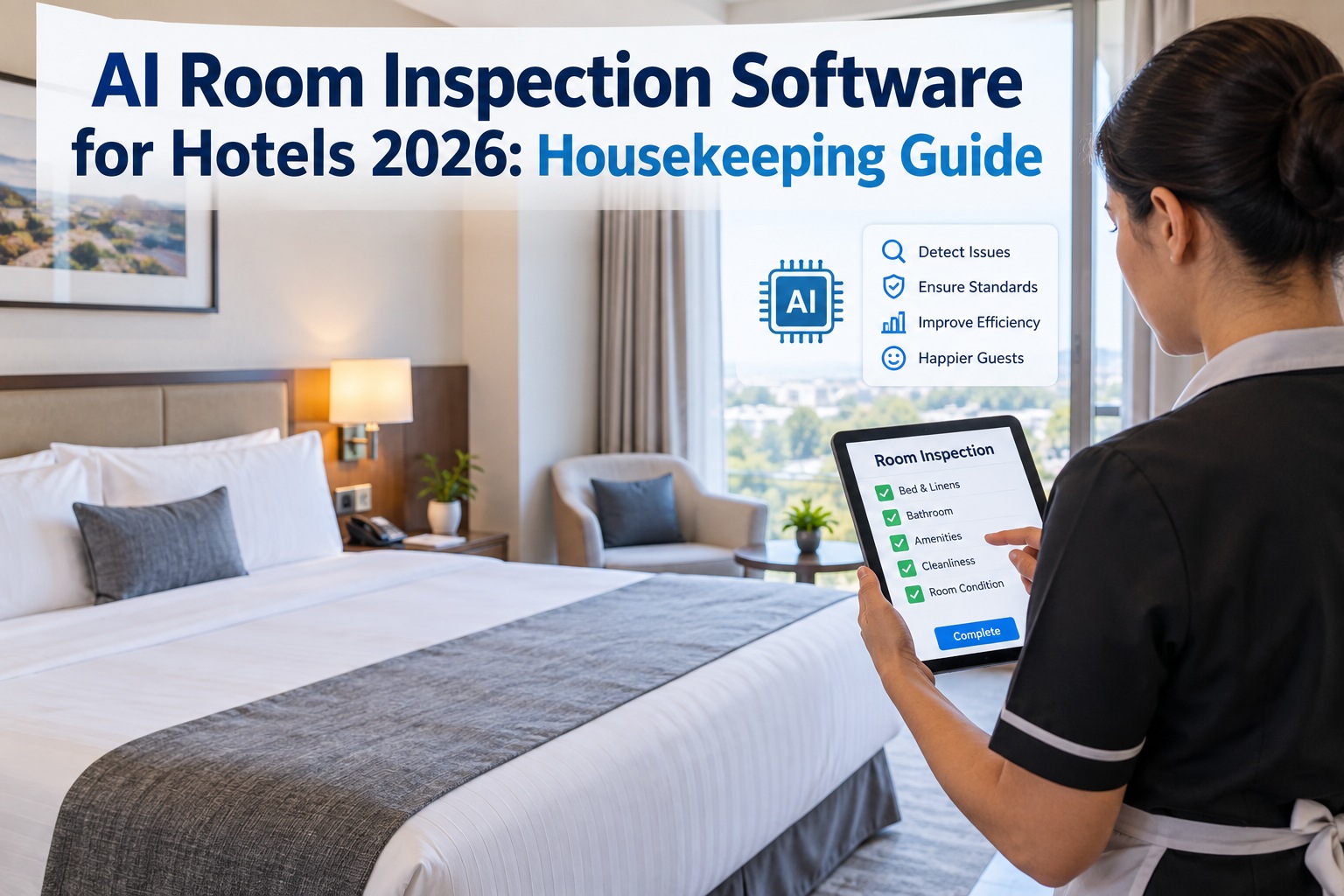
Inspectors score on a 100-point rubric inside the OxMaint mobile app. Every defect gets a photo, a category tag, and an auto-generated corrective work order routed to the room attendant — no paper, no re-keying, no lost data.
Quality Trend Analytics & Dashboards
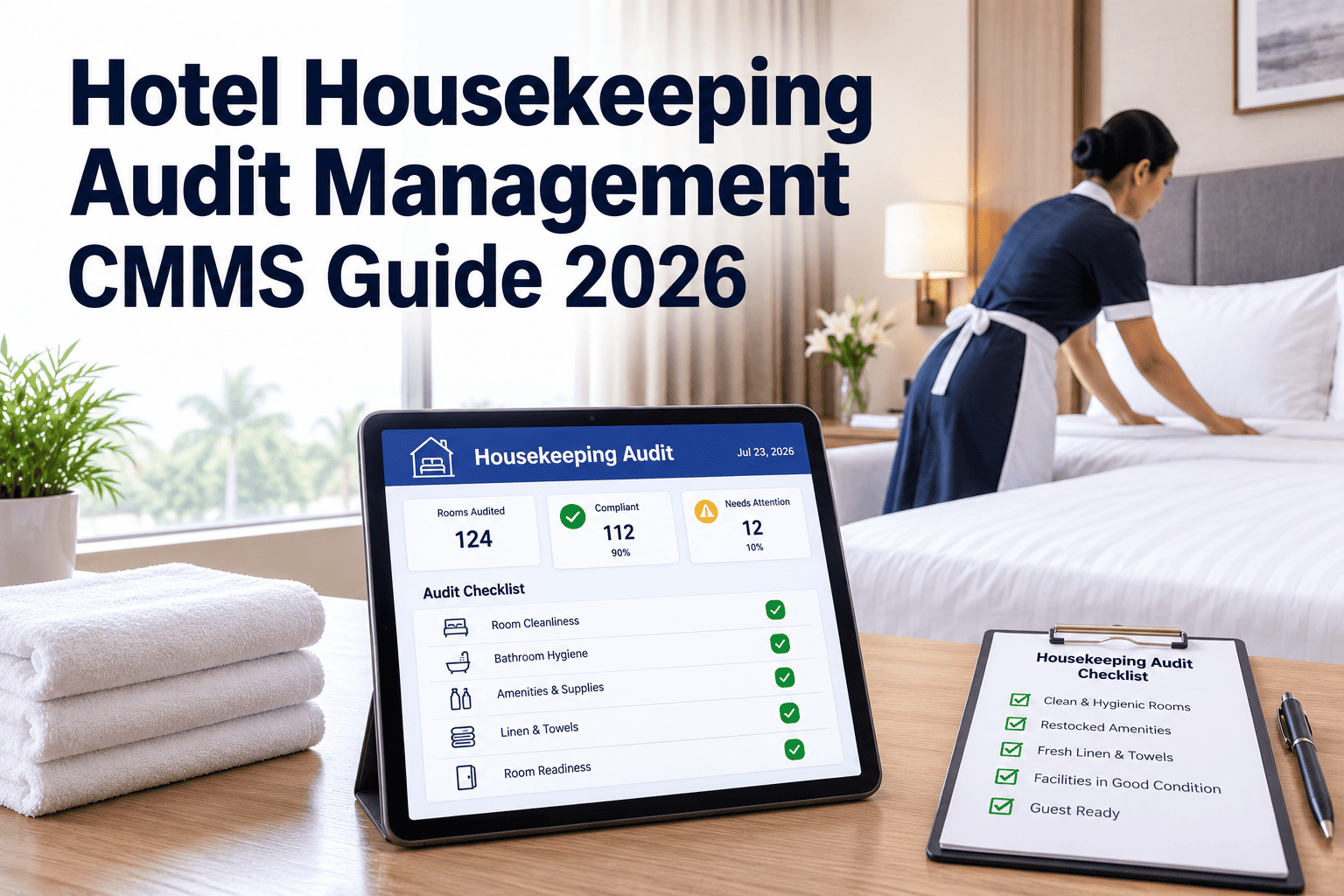
OxMaint rolls daily scores into floor-level, attendant-level, and property-level dashboards. Spot a downward trend on Floor 7 before it becomes a brand-audit finding. Export 30/60/90-day reports in one click when auditors arrive.
Auto-Triggered Retraining Work Orders
When a room attendant's average score drops below 75, OxMaint automatically generates a retraining work order and notifies the executive housekeeper. No manual tracking, no delayed coaching — the CMMS closes the loop between inspection and corrective action.
Setting up CMMS housekeeping sampling in 30 days
A full rotating sample inspection program — stratified room lists, digital scoring, inspector rotation, and trend dashboards — can be live in OxMaint in under 30 days. Here's the rollout timeline properties typically follow.
Asset & Room Setup
Import room inventory into OxMaint as tracked assets. Tag each room by floor, wing, type, and risk level. Configure the 100-point brand rubric as a digital inspection form.
Sample Design & Rotation Rules
Configure the random sample generator: 8–12% of rooms per day, stratified by zone. Set the 12-day rotation so every room is hit. Assign inspector zones and weekly rotation schedule.
Pilot & Calibration
Run the sampling program live for 7 days. All 3 inspectors score the same 5 calibration rooms; review variance in OxMaint analytics. Adjust rubric wording where scores diverge by more than 5 points.
Full Rollout & Dashboard Go-Live
Activate auto-triggered retraining work orders. Share the quality trend dashboard with the GM and executive housekeeper. Begin exporting weekly RQI reports for pre-audit documentation.
See OxMaint run random sampling on your rooms
Book a 30-minute demo and we'll configure a stratified random sample for your property — live — and show you the quality trend dashboard your next brand auditor will want to see.
Housekeeping quality inspection random sampling: common questions
What percentage of rooms should be sampled in a housekeeping quality inspection?
For a 95% confidence level with a 10% margin of error, sample 8–12% of total room inventory per inspection cycle — roughly 15–20 rooms for a 200-room property. Use a rotating 12-day schedule so every room enters the sample pool at least once per cycle. This balance delivers statistically defensible quality scores without overwhelming supervisor labor budgets.
How does a CMMS improve hotel housekeeping sampling over paper checklists?
A CMMS like OxMaint auto-generates the random room list (eliminating selection bias), digitizes the scoring rubric, photographs defects, auto-triggers corrective work orders, and trends scores over time. Paper checklists lose data, can't detect inspector scoring drift, and produce no audit trail. CMMS-based sampling cut documentation time 60% in typical deployments. Start Free Trial to see the difference.
How do you prevent inspector bias in random sampling quality inspections?
Rotate 2–3 supervisors across different zones weekly so no inspector scores the same rooms repeatedly. Run monthly calibration checks: all inspectors score the same 5 rooms, and any variance over 5 points on the 100-point scale triggers rubric retraining. OxMaint logs inspector ID with every score, making bias patterns visible in analytics dashboards.
What is a good Room Quality Index score for brand audit readiness?
Target a rolling 30-day RQI of 90 or above to comfortably pass brand audits. Properties scoring below 85 on their internal sampling program typically score "marginal" or fail brand inspections. Track first-pass yield (target ≥ 85%) and defect recurrence rate (target ≤ 5%) alongside RQI for a complete audit-readiness picture.
How long does it take to implement CMMS housekeeping sampling?
A full rotating-sample inspection program in OxMaint — including room asset setup, digital rubric configuration, random sample generator, inspector rotation, and trend dashboards — goes live in under 30 days. Week 1 is setup, Week 2 is sample design, Week 3 is pilot and calibration, and Week 4 is full rollout with dashboards live.
Start your CMMS housekeeping sampling program today
Join properties using OxMaint to run defensible random sampling, trend quality scores, and walk into brand audits with 90 days of documented evidence — not a clipboard and a hope.
Free 14-day trial · No credit card