When a housekeeper discovers a loose balcony railing at a beachfront resort, the next 15 minutes determine everything. Does that observation become a documented work order with tracked resolution? Or does it become a lawsuit waiting to happen? For modern resorts managing hundreds of rooms, integrating housekeeping operations with a CMMS transforms reactive firefighting into proactive risk management that protects guests, staff, and your bottom line.
The Housekeeping-Maintenance Risk Connection
Housekeeping staff are your property's most valuable early warning system. They enter every room, walk every corridor, and interact with every guest-facing surface daily. A CMMS bridges this gap by transforming observations into actionable maintenance data with full traceability. When maintenance completes repairs, housekeeping gets real-time visibility to know which rooms are guest-ready.
Wet surfaces, loose flooring, worn carpets, poolside areas
$9.99B annual employer costsExposed wiring, smoke detectors, blocked exits, alarms
Leading compliance focusTemperature failures, poor ventilation, mold indicators
15% energy cost impactLoose railings, broken locks, window failures, furniture
$10K FF&E per room/yearLeaks, pressure issues, drain blocks, pool chemistry
Major remediation riskLifting hazards, chemical storage and PPE compliance
Highest injury rate sectorDigital Housekeeping Workflow Integration
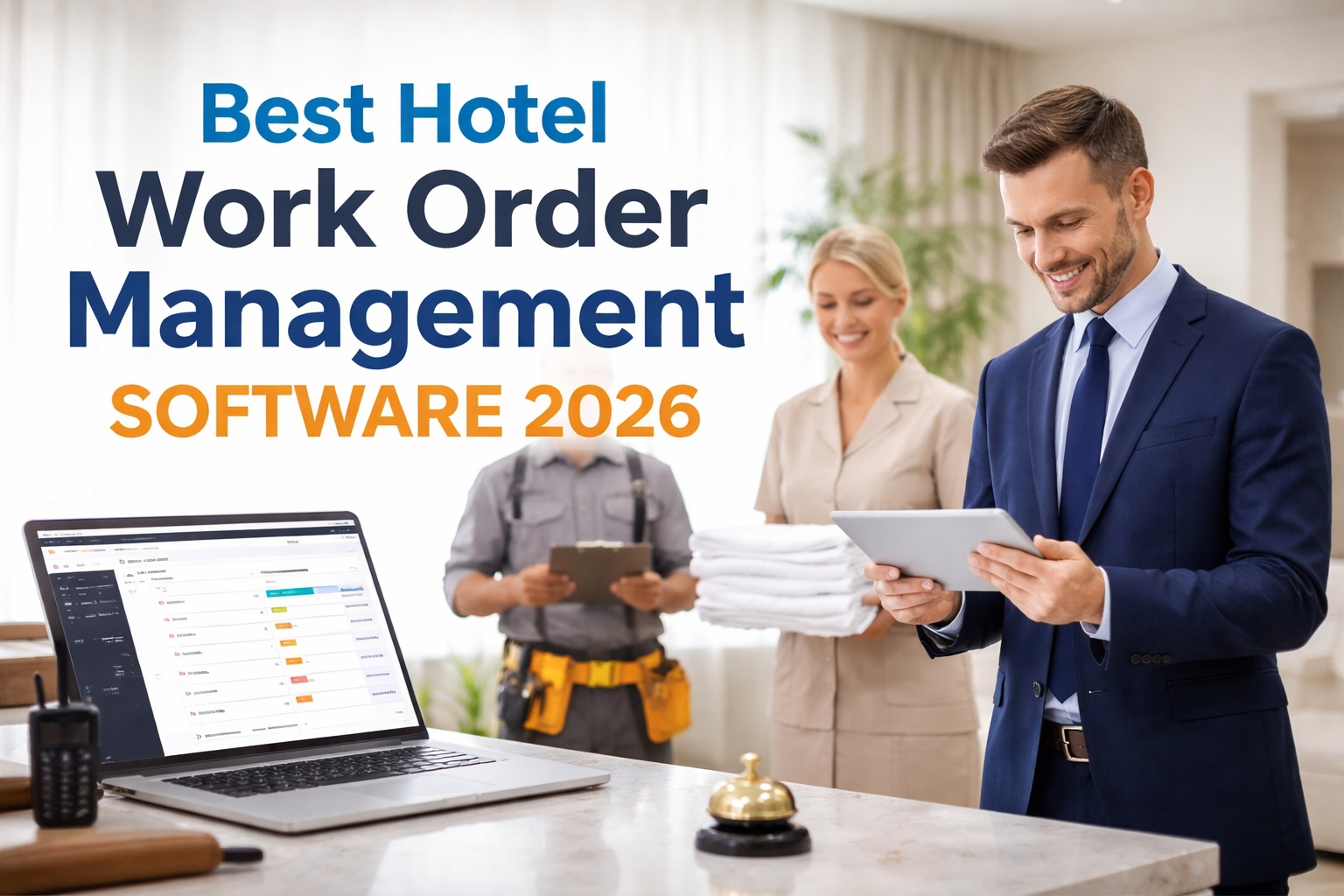
Hotels using digital checklists cut room turnaround time by 20% while improving defect capture rates. The key lies in designing workflows that make hazard reporting faster than ignoring the problem.
Assignment
Mobile app delivers priority-ranked room list. QR scan logs arrival.
3 secSafety Scan
Visual inspection for hazards before cleaning begins.
90 secClean + Check
Digital checklist with maintenance prompts at each zone.
25-35 minDocument
Photo + location tag creates instant prioritized work order.
30 secVerify
Supervisor spot-check confirms quality and open items.
5-10 minRelease
Status syncs to PMS, front desk, and guest app instantly.
InstantReady to transform housekeeping into proactive risk detection? Schedule a demo to see automated hazard-to-work-order conversion.
Risk Scoring Framework
Not all maintenance issues carry equal weight. Effective CMMS risk scoring transforms subjective judgment into systematic prioritization that protects guests while optimizing technician allocation.
Automate Risk Scoring and SLA Tracking
Stop relying on manual prioritization. Let intelligent risk scoring ensure critical issues never wait behind cosmetic repairs.
Predictive Maintenance with IoT Sensors
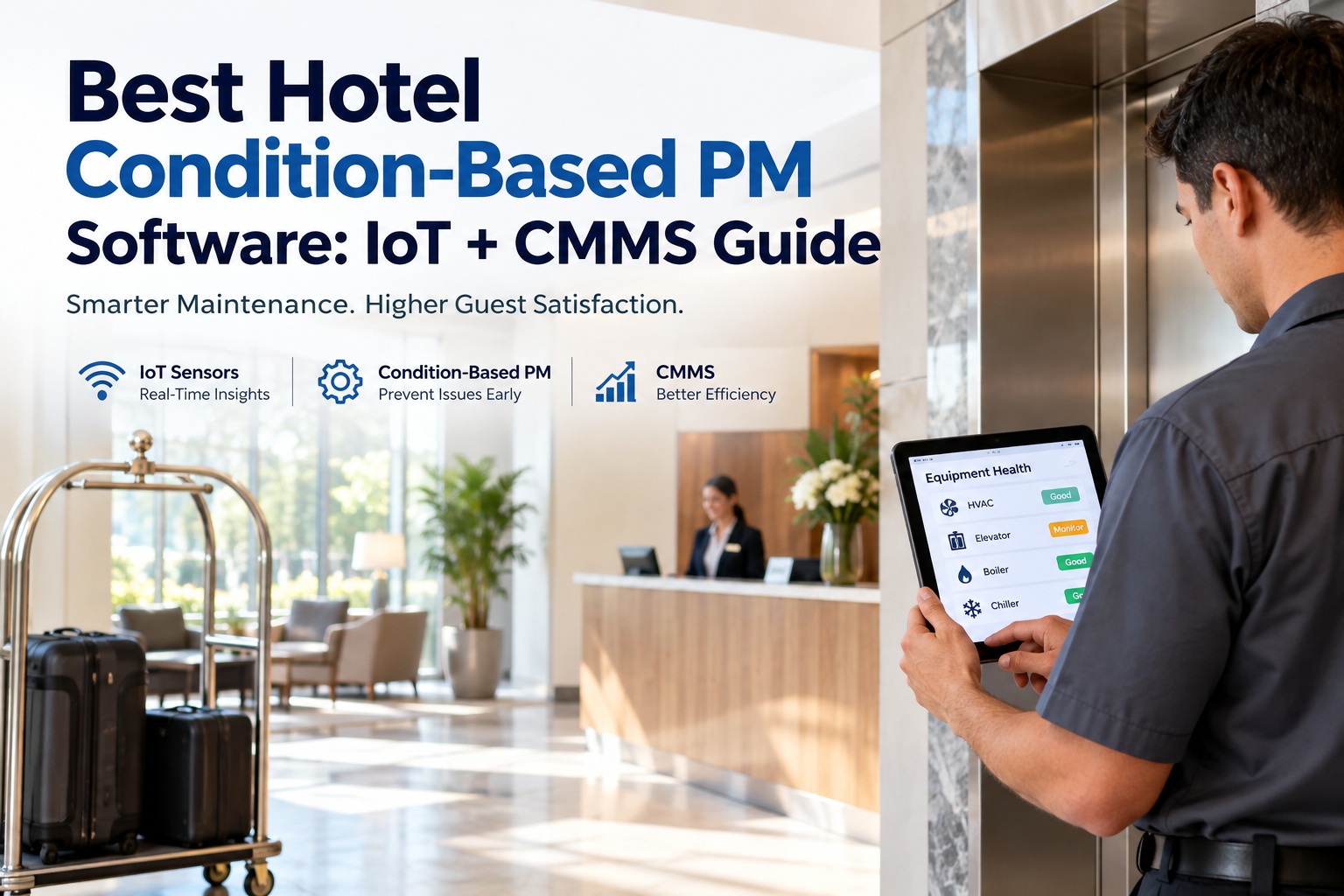
AI-driven predictive maintenance delivers 40% reduction in equipment downtime and 25% decrease in maintenance costs while improving guest satisfaction by 15% through fewer service disruptions.
Start building your predictive maintenance foundation. Create your free Oxmaint account to track asset health data.
Performance Metrics Dashboard
Sources: HFTP Hospitality Finance, Liberty Mutual 2024 Workplace Safety Index
Benchmark your performance against industry standards. Book a consultation to discuss KPI tracking strategies.
12-Week Implementation Roadmap
- Audit current workflows and gaps
- Configure CMMS asset hierarchy
- Establish risk scoring criteria
- Create digital checklist templates
- Deploy to one floor or building
- Train pilot group on reporting
- Test work order routing rules
- Measure baseline metrics
- Expand to all guest areas
- Train all housekeeping staff
- Integrate with PMS system
- Launch compliance calendars
- Analyze 90-day data patterns
- Refine risk scoring rules
- Create management dashboards
- Plan IoT sensor deployment
Close the Loop Between Housekeeping and Maintenance
Your housekeeping team sees everything. Give them the tools to turn observations into action and build competitive advantage.
Conclusion
Integrating housekeeping workflows with CMMS-driven risk assessment transforms how resorts approach facility management. Rather than waiting for guest complaints or equipment failures, forward-thinking properties use every room cleaning as an opportunity for hazard identification and every sensor reading as predictive intelligence. The operational benefits are clear: faster response times, fewer guest-impacting failures, reduced maintenance costs, and stronger compliance posture. In an industry where a single day of room downtime costs over $17,000, the question isn't whether to invest in integrated risk assessment—it's how quickly you can get there.
Frequently Asked Questions
How does integrating housekeeping with CMMS reduce slip-and-fall incidents?
Integration creates immediate hazard-to-work-order pathways that dramatically reduce exposure time. When a housekeeper identifies a wet surface or loose carpet edge, they document the issue with a photo in seconds. The system automatically assigns priority and routes to the appropriate technician. Properties using integrated systems report catching hazards 60-70% faster than those relying on verbal reporting.
What ROI can resorts expect from predictive maintenance?
Research shows predictive maintenance delivers 40% reduction in equipment downtime, 25% decrease in maintenance costs, and 15% improvement in guest satisfaction. Case studies document annual savings of $500,000 to $1.2 million per property. Most properties see positive ROI within 12-18 months of full implementation.
How long does it take to train housekeeping staff on digital reporting?
Initial training requires 2-4 hours per staff member. Most teams achieve proficiency within one week of active use. When staff can document a hazard in 30-60 seconds versus finding a supervisor or filling out paper forms, adoption happens naturally. Properties report hazard reporting rates increase 200-400% within 30 days. Sign up for Oxmaint to access training resources.
What metrics should resorts track for integration success?
Essential metrics include: first response time (under 15 minutes for emergencies), mean time to repair (under 4 hours for guest-impacting issues), PM compliance rate (90%+ is world-class), planned versus reactive ratio (target 70/30), and rooms out of inventory (under 0.5%). Dashboard visibility enables continuous improvement.
How does CMMS documentation protect resorts from liability?
Comprehensive CMMS documentation creates defensible evidence of reasonable care. When every hazard report, work order, and resolution is timestamped with responsible parties, properties can demonstrate systematic risk management. Specific protections include documented proof that hazards were addressed within established timeframes and inspection logs demonstrating compliance with safety regulations.