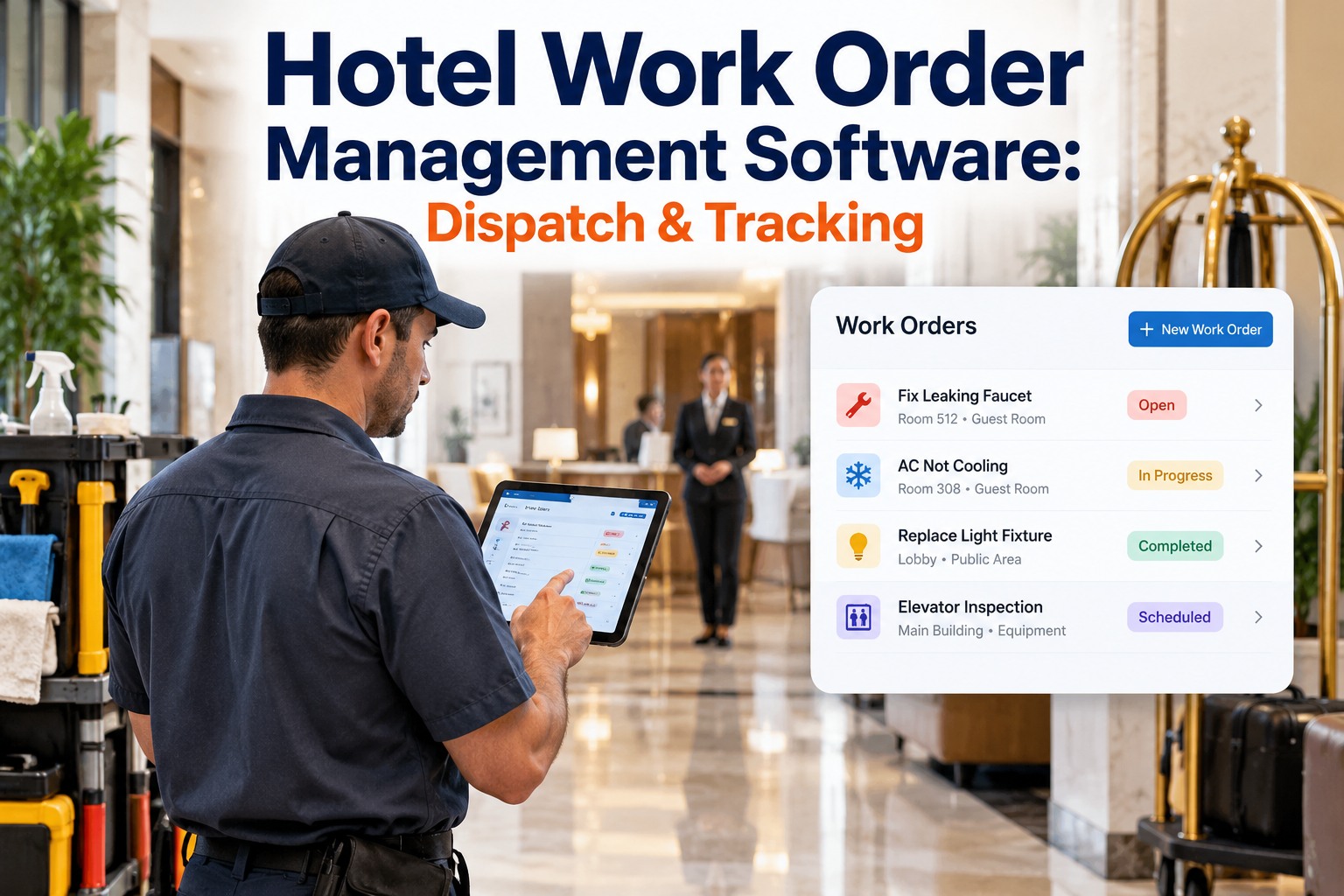
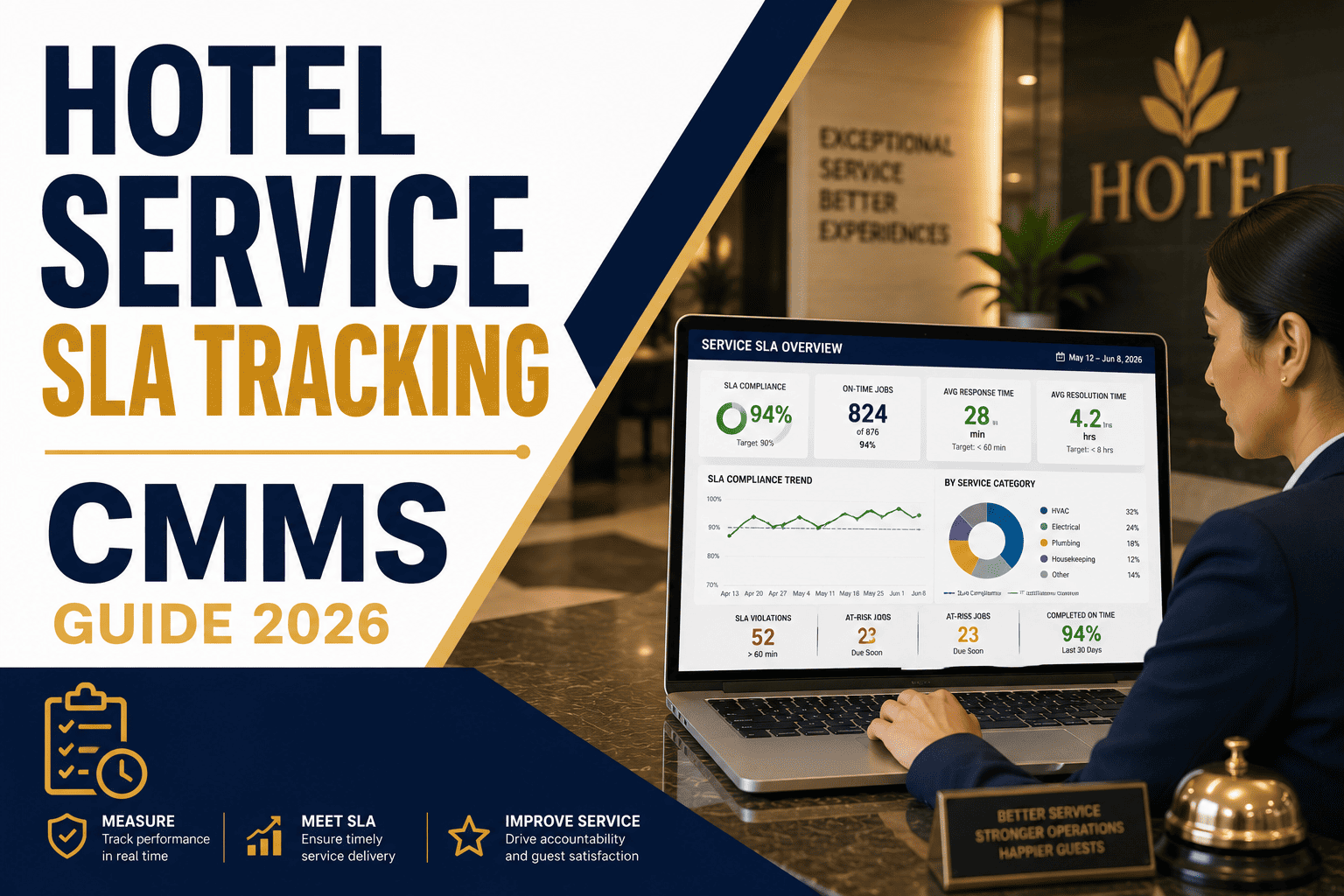
Hotel maintenance teams managing work orders through radio calls, WhatsApp threads, and paper logbooks are not operating a maintenance system — they are operating a memory system. And memory systems fail at 2 AM when a chiller trips, during a sold-out weekend when a guest room has a plumbing fault, and at audit time when the operator asks for SLA performance data from the previous quarter. Structured work order management software converts reactive, invisible maintenance activity into a documented, measurable, and improvable operation — one where the Director of Engineering can see every open request, every overdue SLA, and every repeat failure across the entire property from a single screen. Teams ready to move off spreadsheets and radio can sign up for Oxmaint's Mobile Work Orders platform or book a demo to see the Priority Routing and SLA Tracking configured for their property type.
The Hidden Cost of Unmanaged Hotel Maintenance Requests
Every untracked maintenance request is a data gap that compounds over time. A verbal complaint about a dripping tap, a radio call about a faulty air conditioning unit, a sticky note on the engineering desk about a door that won't close properly — none of these generate the repair record, technician accountability, or repeat-failure pattern that structured work order management provides. After six months, the engineering team is reacting to the same failures repeatedly, the Director of Engineering cannot quantify the department's output, and the GM has no data to distinguish between a poorly performing maintenance programme and a genuinely aging asset base. Engineering directors at properties that have exhausted verbal systems can book a demo to see how Oxmaint's work order engine structures requests from submission through closure, or sign up to deploy mobile work orders for their first property today.
COST OF CHAOS INFOGRAPHICHow Hotel Work Order Management Software Works: End-to-End Flow
Effective work order management covers the full lifecycle from request submission to closed-loop verification — not just the dispatch step. The diagram below shows how Oxmaint's work order engine routes, prioritises, and closes requests across the five stages that convert a maintenance request into a verified, documented resolution. Properties implementing this flow for the first time typically see first-contact resolution rates improve by 40–60% within 60 days. Engineering teams building the business case for structured work order management can sign up to pilot the workflow on a single department before full deployment, or book a demo to walk through the Priority Routing and Escalation Engine configuration for their property's team structure.
From Request to Resolved — Without Radio Calls or Sticky Notes
Oxmaint's Mobile Work Orders, Priority Routing, and SLA Tracking convert hotel maintenance requests into documented, measurable workflows — available on any device, in any department, from day one.
Work Order Priority Framework: SLA Standards by Issue Type
A defensible SLA framework defines response and resolution time commitments by priority tier, asset category, and occupancy status — not as general targets but as property-specific standards that the engineering team is held accountable to in owner reporting. The priority matrix below represents industry-standard SLA benchmarks for full-service hotel operations. Properties implementing this framework for the first time typically discover that their current average response times exceed these benchmarks by 2–4x, which defines exactly where the improvement opportunity lies. Directors ready to measure against these benchmarks can sign up to configure SLA tiers in Oxmaint against their specific property categories, or book a demo to see how the Escalation Engine alerts supervisors when SLA breach is approaching.
Work Order Coverage by Hotel Department
Work order management is not limited to the maintenance team — in a structured system, requests originate from every department and the engineering team's performance is visible to every stakeholder who needs it. The coverage grid below shows how Oxmaint connects request origination, routing, and resolution across the full hotel operation. Multi-property operators who want to see this structure deployed across their portfolio can book a demo to review the cross-department workflow configuration, or sign up and activate department-specific request channels within the first hour of setup.
Work Order Management: Manual vs Software-Driven Performance
| KPI | Oxmaint Work Order System | Manual / Radio-Based System |
|---|---|---|
| Average response time — P2 guest room fault | 14 minutes average. Automated routing eliminates dispatch lag. Technician receives full asset context on mobile at point of assignment. | 68 minutes average. Radio dispatch requires 4–6 handoff steps. Frequent no-acknowledgment events require re-dispatch. |
| First-contact resolution rate | 78% first-contact resolution. Asset history at technician's fingertips reduces return visits. Parts requirement visible before dispatch. | 41% first-contact resolution. No asset history at point of response. Technicians return for parts or correct diagnosis 59% of the time. |
| SLA measurement and reporting | 100% of work orders timestamped at submission, assignment, and closure. SLA compliance calculated automatically and available in real time. | 0% measurable. No timestamp data exists. SLA reporting based on technician recall or shift handover notes — not verifiable. |
| Repeat failure detection | Repeat requests on the same asset within 30 days automatically flagged. Root cause review triggered. Pattern visible within 60 days of deployment. | No visibility. Repeat failures indistinguishable from new requests. Same asset can fail 5 times in a month without pattern detection. |
| Owner / asset manager reporting | Automated monthly performance pack: open WOs, SLA compliance, reactive ratio, CPAR trending. Generated in under 10 minutes. | Manual assembly from shift logs, email threads, and maintenance register. Typically 2–3 days to produce; accuracy not verifiable. |
Measure What You Manage — Starting This Week
Oxmaint deploys Mobile Work Orders, Priority Routing, and SLA Tracking in under 48 hours. No IT project. No integration required. First SLA report generated within 7 days of go-live.
How Oxmaint Solves Hotel Work Order Management
Four operational gaps drive the majority of hotel maintenance performance failures — untracked requests, manual dispatch, unmeasured SLAs, and absence of repeat failure detection. Oxmaint's work order management system addresses each through mobile-first intake, automated priority routing, real-time SLA tracking, and a closed-loop escalation engine that prevents issues from falling through the cracks.
Staff submit requests, technicians receive and complete work orders, and supervisors review and approve — all from the same mobile interface. QR code scanning on any asset opens a pre-populated work order with asset history attached. Offline mode handles areas with limited Wi-Fi coverage. Book a demo to see the mobile workflow in action for your team size.
Every incoming request is automatically categorised P1–P4 and routed to the correct technician based on skill set, location, and current workload. P1 critical requests reach the on-call technician within 60 seconds of submission — no radio calls, no dispatch coordinator required. Routing rules configured once; applied automatically to every subsequent request. Sign up to configure routing rules for your department structure today.
Every work order is timestamped at submission, assignment, start, and closure. SLA compliance is calculated automatically and displayed in real time on the Director of Engineering's dashboard. Monthly SLA performance reports export in owner-ready format without manual assembly — giving engineering leadership the data to demonstrate performance and identify where improvement investment is needed. Book a demo to see the SLA dashboard configured for your property's tier structure.
When a work order approaches its SLA deadline without closure, the Escalation Engine automatically alerts the responsible supervisor and, at the next threshold, the Director of Engineering. Escalation rules are configured by priority tier, department, and time of day — so after-hours critical requests reach the duty manager regardless of whether the engineering shift is staffed. No manual oversight required; no SLA breach goes unnoticed. Sign up to activate the Escalation Engine for your property's on-call structure.
12-Month Performance Results: Structured Work Order Management
Frequently Asked Questions: Hotel Work Order Management Software
QHow quickly can hotel staff start using work order management software?
QWhat is the difference between P1, P2, P3, and P4 work order priority tiers in hotel operations?
QHow does hotel work order software integrate with Property Management Systems (PMS)?
QHow should hotel operators use work order data to build the business case for maintenance investment?
QCan hotel work order software manage contractor and third-party service vendor requests?
From Invisible to Measurable — In Under 48 Hours
Oxmaint's Mobile Work Orders, Priority Routing, SLA Tracking, and Escalation Engine give hotel engineering teams complete visibility over every request, every response, and every resolution — across any property size, from day one.