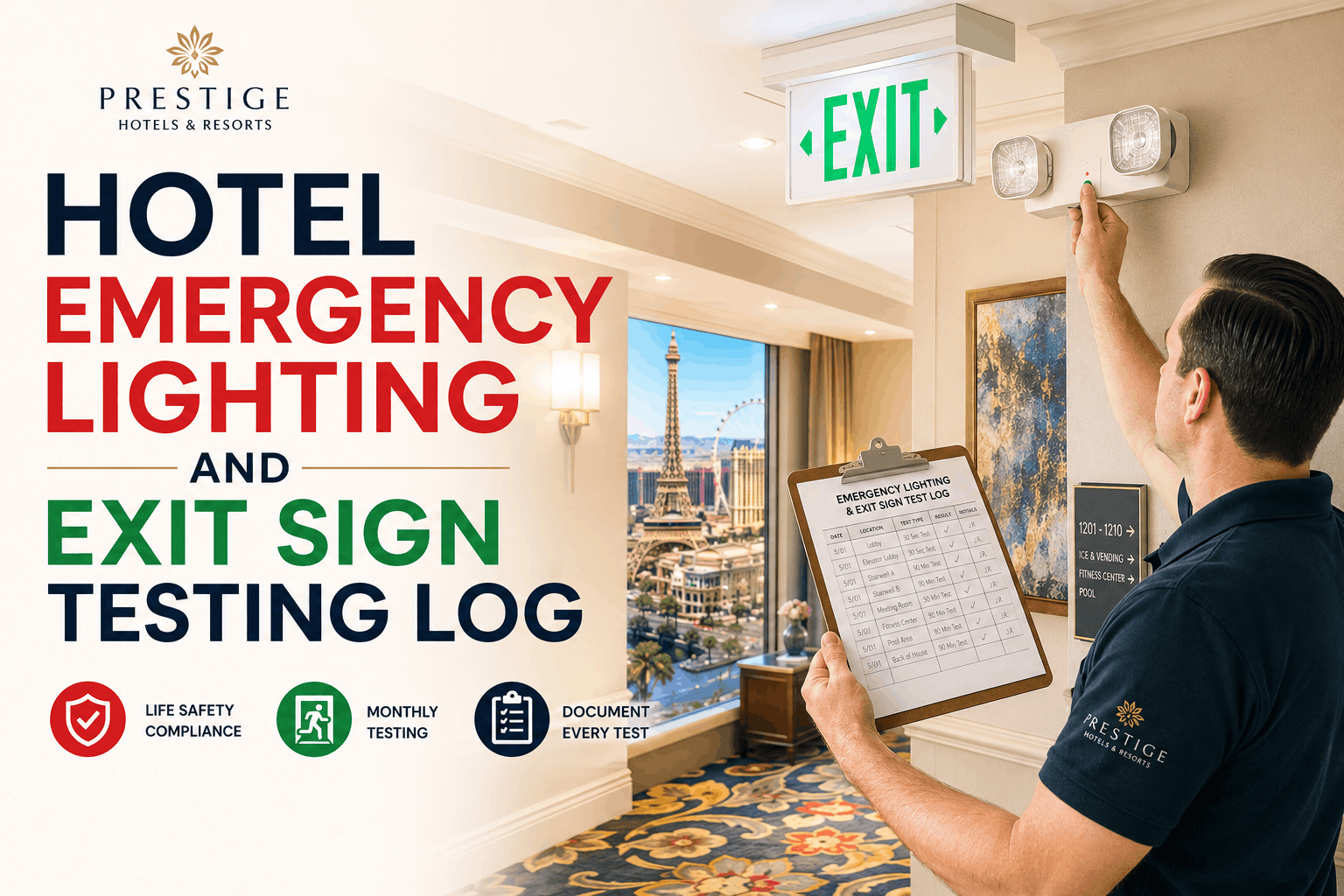
The evacuation drill exposed everything. When the fire alarm triggered at 2:47 PM, 340 employees headed for the stairwells—and found themselves in near-total darkness. Eighteen of 24 emergency lights on floors are 3 through 7 had failed batteries. Exit signs above three emergency doors were completely dark. One employee fell on the stairs; another triggered a panic that backed up the west stairwell for eight minutes. The OSHA investigation that followed found no documentation of emergency lighting inspections for 14 months. Citations totaled $47,000. The building owner faced a $2.3 million lawsuit from the injured employee. Monthly 30-second battery tests and annual 90-minute inspections—requiring perhaps 4 hours of staff time annually—would have prevented everything.
A comprehensive lighting inspection checklist transforms compliance anxiety into operational confidence. When facility teams systematically test emergency lighting, verify illumination levels, and document maintenance activities, buildings stay safe, codes stay satisfied, and liability stays manageable. Properties that implement digital lighting inspection tracking report 95% first-time pass rates on fire marshal inspections and dramatically reduced emergency maintenance calls.
Understanding Lighting Compliance: The Standards That Matter
Lighting compliance spans multiple overlapping codes and standards. OSHA establishes workplace illumination minimums. NFPA 101 (Life Safety Code) mandates emergency lighting performance. IES (Illuminating Engineering Society) provides recommended light levels by space type. Local fire codes add inspection frequency requirements. Understanding these standards helps prioritize your inspection program and ensures nothing falls through the cracks.
NFPA 101 requires minimum 1 foot-candle average along escape routes, measured at floor level during emergency conditions
Emergency lighting must illuminate for minimum 90 minutes on battery backup—tested annually per NFPA 101 Section 7.9
OSHA minimum for general industrial areas; office spaces typically require 30-50 fc for computer work
Fire Marshal Inspection Reality
Fire marshals don't just look at lights—they look at documentation. Monthly test logs, annual inspection reports, and maintenance records must be readily available. Missing documentation triggers violations regardless of whether the lights actually work. Digital tracking creates the audit trail that proves compliance and protects your organization.
Complete Lighting Inspection Checklist
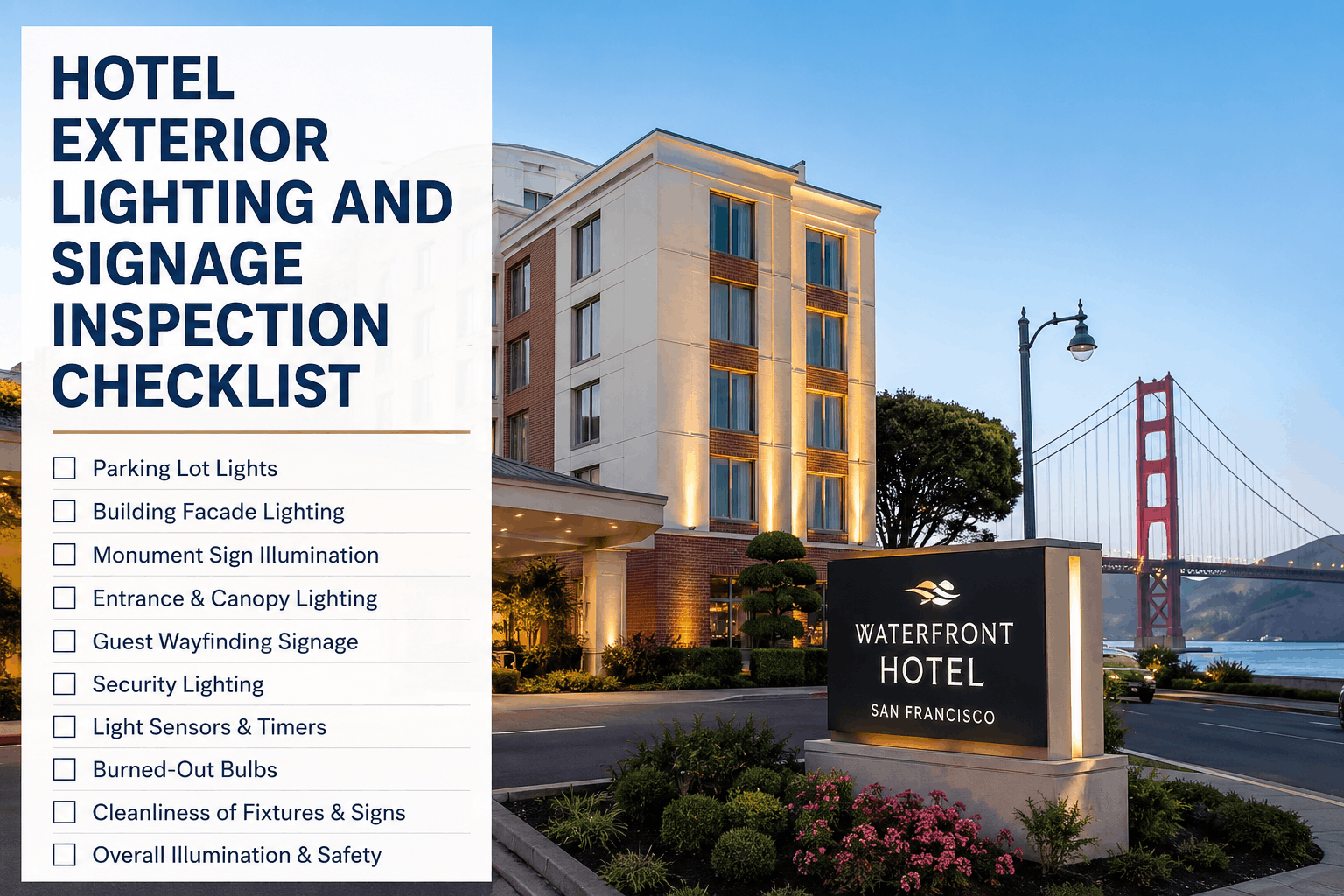
Effective lighting inspection requires systematic coverage of every lighting category in your facility. This checklist covers emergency systems, exit signage, general illumination, exterior lighting, and specialty applications. Work through each section methodically during inspections. When your team can see how digital checklists streamline lighting compliance, inspection documentation becomes automatic instead of burdensome.
Battery-Powered Units
30-second monthly functional test
90-minute annual duration test
Battery condition and age verification
Charging indicator light operation
Lamp/LED brightness and coverage
Exit Signs
All letters/symbols illuminated
Directional arrows correct
Visibility from required distance
Battery backup function (if equipped)
Physical condition and mounting
Why Priority 1:
Emergency lighting failures are the #1 citation during fire marshal inspections—and the #1 liability exposure during actual emergencies
Workspace Lighting
Light level meets OSHA/IES standards
No burned-out lamps/LEDs
Fixtures clean and unobstructed
Diffusers/lenses intact
No flickering or buzzing
Common Areas & Circulation
Stairwell lighting adequate
Corridor illumination uniform
Restroom lighting functional
Elevator lobby brightness
Entry/lobby lighting welcoming
Why Priority 2:
Inadequate workspace lighting causes eyestrain, reduces productivity by 15-20%, and increases slip/trip/fall incidents significantly
Exterior Lighting
Parking lot coverage adequate
Building perimeter illumination
Walkway and entrance lighting
Security camera lighting support
Photocell/timer operation
Specialty Systems
Task lighting at workstations
Hazard area warning lights
Equipment indicator lights
Accent/display lighting
Occupancy sensor function
Why Priority 3:
Exterior lighting failures increase security incidents by 50% and are a leading factor in parking lot liability claims
Document Every Inspection, Pass Every Audit
See how facility managers are using digital checklists to create fire marshal-ready documentation, schedule automated testing reminders, and eliminate compliance gaps.
Light Level Standards by Space Type
Different spaces require different illumination levels for safety and productivity. IES (Illuminating Engineering Society) provides recommended foot-candle levels based on task requirements. Your inspection should verify that light levels meet these standards—not just that fixtures are working. Properties that track light level measurements digitally can identify degradation trends and schedule relamping before complaints arise.
OFFICE SPACES
30-50 foot-candles
General office work
Computer workstations
Conference rooms
Reception areas
Copy/print rooms
Break rooms
Higher levels (50-75 fc) for detailed paper tasks
INDUSTRIAL
20-50 foot-candles
General manufacturing
Assembly areas
Warehouse aisles
Loading docks
Maintenance shops
Quality inspection (100+ fc)
Machine areas require task lighting at point of operation
RETAIL/HOSPITALITY
50-100 foot-candles
Sales floors
Checkout areas
Display cases
Restaurant dining
Hotel lobbies
Fitting rooms
Accent lighting 3-5x ambient for merchandise display
EMERGENCY/EGRESS
1-10 foot-candles
Exit routes: 1 fc min
Stairways: 10 fc
Exit discharge: 1 fc
Hazardous areas: 3 fc
Assembly areas: 2 fc
Medical facilities: 10 fc
NFPA 101 minimums—must be met during power failure
Inspection Frequency Requirements
Different lighting systems require different inspection frequencies based on regulatory requirements and operational criticality. Emergency lighting has strict testing schedules mandated by NFPA. General lighting inspections should balance safety requirements with practical maintenance cycles.
| Lighting System |
Monthly |
Quarterly |
Semi-Annual |
Annual |
| Emergency Lights |
30-sec functional test (NFPA required) |
Visual inspection + documentation review |
Battery condition assessment |
90-min duration test (NFPA required) |
| Exit Signs |
Visual check + 30-sec battery test |
Visibility verification |
Directional accuracy audit |
90-min battery test + replacement eval |
| General Interior |
Visual walkthrough |
Light level measurements |
Deep cleaning + group relamping |
Full audit + energy assessment |
| Exterior Lighting |
Night inspection |
Photocell/timer verification |
Security coverage audit |
Full replacement evaluation |
| Controls/Sensors |
Functional verification |
Sensitivity adjustment |
Programming review |
System optimization audit |
Swipe to see full schedule
Monthly and annual emergency lighting tests are NFPA 101 requirements—missing these creates immediate compliance exposure
Testing Methods and Tools
Effective lighting inspection requires the right tools and techniques. Light meters provide objective measurements. Test buttons verify emergency operation. Documentation tools capture evidence of compliance. Understanding which tools to use—and how to use them—ensures inspections produce defensible results.
Paper Logs vs. Digital Inspection Tracking
Fire marshals and OSHA inspectors don't accept "we think we tested it" as documentation. When they request 12 months of emergency lighting test records, you need dates, results, technician names, and follow-up actions—instantly accessible. Paper systems bury this information in filing cabinets. Digital tracking makes compliance verification instantaneous.
Paper-Based Logs
Test scheduling:
Calendar reminders
Missed test tracking:
Manual review
Audit readiness:
Days of prep
Digital CMMS
Test scheduling:
Auto-generated
Missed test tracking:
Auto-escalation
Audit readiness:
Always ready
95%
first-time fire marshal pass rate
80%
reduction in emergency light failures
$0
compliance fines with proper tracking
Expert Perspective: What Fire Marshals Actually Look For
"I've inspected thousands of buildings, and here's what separates pass from fail: documentation. I can see that your emergency lights work right now—but can you prove they worked last month Three months ago After the power outage in March The buildings that pass every inspection have a system. Digital logs with timestamps, photos of completed tests, automatic scheduling. The ones that failClipboards in maintenance closets with half the boxes checked."
— Fire Safety Inspector, 15 years experience
Monthly Test Records
Fire marshals want to see 12 months of 30-second test records for every emergency light. No gaps, no excuses.
90-Minute Test Proof
Annual duration tests must document start time, end time, and which units failed. Failures require documented follow-up.
Deficiency Correction
When tests reveal failures, inspectors want proof of correction within 30 days. Digital work orders close this loop automatically.
Common Deficiencies: What Inspections Find
Knowing what typically fails helps you focus your inspection program. These deficiencies appear repeatedly in fire marshal reports and OSHA citations. Train your team to look specifically for these issues, and address them proactively before inspectors arrive.
Dead batteries (most common failure)
Reduced runtime (<90 minutes)
Corroded terminals and connections
Swollen or leaking battery packs
Charging circuit failures
Burned-out emergency lamps
Dim or degraded output
Misaimed or blocked coverage
Damaged lenses or reflectors
Wrong lamp type installed
Partially illuminated letters
Incorrect or missing arrows
Obscured by storage/signage
Wrong mounting height
Missing where required
Missing monthly test records
No annual 90-minute test proof
Incomplete repair documentation
No technician signatures/dates
Lost or illegible paper logs
Team Roles for Lighting Inspection Program
Effective lighting inspection distributes responsibility across the facilities team, with clear accountability for testing, documentation, and follow-up. This structure ensures nothing falls through the cracks and compliance stays current year-round.
Program Manager
Facilities Director or Building Manager
Sets inspection schedules and standards
Reviews compliance reports monthly
Manages fire marshal relationships
Lead Technician
Senior Maintenance Technician
Performs monthly emergency tests
Conducts annual 90-minute tests
Documents findings in CMMS
Building Staff
Security & Custodial Personnel
Reports lighting issues immediately
Visual checks during rounds
Assists with annual testing
Compliance Officer
Safety or EHS Manager
Audits documentation quarterly
Coordinates external inspections
Tracks regulatory changes
Never Fail a Lighting Inspection Again
Oxmaint gives facility teams automated inspection scheduling, digital checklists with photo documentation, and instant compliance reports. Protect your building, protect your occupants, protect your compliance status.
Frequently Asked Questions
How often must emergency lights be tested
Per NFPA 101 (Life Safety Code), emergency lights must undergo a 30-second functional test monthly and a 90-minute full-duration test annually. The monthly test verifies that the unit activates when normal power is interrupted. The annual test proves the battery can power the lights for the full 90 minutes required during an actual emergency. Both tests must be documented with dates, technician identification, and results. Missing these tests is the most common fire marshal citation for lighting systems.
What are OSHA lighting requirements for workplaces
OSHA 29 CFR 1910.37 requires emergency exit routes to have adequate lighting for safe evacuation. OSHA 29 CFR 1926.56 establishes minimum illumination levels: 5 foot-candles for general construction areas, 3 foot-candles for general plants and shops, and 30 foot-candles for offices. However, IES (Illuminating Engineering Society) recommendations typically exceed OSHA minimums and are considered industry best practice. Task lighting requirements increase for detailed work—up to 100 foot-candles for precision assembly or inspection tasks.
What happens if emergency lights fail during an inspection
Failed emergency lights during a fire marshal inspection typically result in a written deficiency notice requiring correction within 30-60 days. Repeat violations or serious deficiencies (like no working emergency lights in a stairwell) can result in fines ranging from $2,000 to $70,000 depending on jurisdiction and severity. Buildings may receive conditional occupancy permits or, in extreme cases, evacuation orders until corrections are made. Having documented maintenance records showing proactive testing can mitigate penalties when failures occur.
How long do emergency light batteries last
Emergency light batteries typically last 3-5 years, though this varies by battery type, environmental conditions, and frequency of discharge events. Sealed lead-acid batteries (most common) degrade faster in high-temperature environments. Nickel-cadmium batteries last longer but cost more. The best practice is to replace batteries proactively based on age rather than waiting for failure—a dead battery discovered during a fire marshal inspection becomes an immediate violation. Annual 90-minute tests help identify weakening batteries before complete failure.
What documentation is required for lighting compliance
Complete lighting compliance documentation includes: monthly emergency light test logs showing date, time, and results; annual 90-minute test records; maintenance work orders for repairs and lamp replacements; light level measurements for OSHA-regulated spaces; and certification records if third-party testing is required. Records should be retained for a minimum of 3 years—longer in some jurisdictions. Digital CMMS systems automatically generate compliant documentation from routine inspection entries, eliminating gaps and ensuring audit readiness.
Ready to Implement a Complete Lighting Inspection Program
Join thousands of facility managers using Oxmaint to schedule tests, document inspections, and maintain fire marshal compliance automatically. Start protecting your buildings today.