A VP of Engineering overseeing six full-service hotels in three states receives a call at 9 AM on a Monday. A chiller at Property 4 has failed. He does not know when it was last serviced. He does not know whether the part needed is in stock at that property or if it was used last month at Property 2. He does not know if the same model chiller at Properties 1 and 3 showed any early warning signs last week. He has no way to know any of this — because each property runs its own maintenance log, its own work order process, and its own parts inventory in isolation. He calls each chief engineer individually. The answers he gets are estimates. The decisions he makes are instincts. This is the operational reality for most multi-property hotel maintenance management programs — and it is entirely preventable with a centralized enterprise CMMS.
Multi-Property Hotel Maintenance Management System Guide
How hotel groups, management companies, and portfolio operators centralize engineering operations, standardize maintenance workflows, and gain real-time visibility across every property — without eliminating local autonomy.
Why Property-by-Property Maintenance Management Fails at Portfolio Scale
Managing ten properties as ten independent maintenance programs is not inefficient — it is structurally broken. Each property optimises locally for its own chief engineer's preferences, its own parts stockroom, its own work order format, and its own brand audit preparation timeline. The VP of Engineering sitting above those ten properties has no common data layer to work from. Comparing maintenance performance across properties requires asking ten people the same question and receiving ten different answers in ten different formats. This is not a people problem. It is a systems architecture problem that a hotel enterprise maintenance management system solves structurally rather than culturally.
The four most expensive consequences of siloed multi-property maintenance management are visible in the first 30 days of portfolio-level analysis on any enterprise CMMS implementation: duplicate parts inventory that could be consolidated, engineering staff deployed unevenly while other properties are overstaffed, reactive maintenance spending that a shared asset intelligence layer would have converted to planned PM, and brand audit preparation that consumes 3–5 engineering-supervisor days per property per audit cycle. Sign up to start centralizing your hotel portfolio's maintenance data in Oxmaint — free.
What a Multi-Property Hotel Maintenance System Actually Looks Like
A hotel chain maintenance management platform operates on two simultaneous levels: the property level, where engineers create and close work orders, manage assets, and execute PM schedules; and the portfolio level, where VPs of Engineering, regional directors, and asset managers see aggregated performance data across all properties simultaneously. The architecture is not a shared system that removes local control — it is a federated system where local operations feed a central intelligence layer. Book a demo to see Oxmaint's portfolio architecture in a live multi-property environment.
Six Capabilities That Define an Enterprise Hotel Maintenance Platform
Not every CMMS scales cleanly to multi-property operations. These six capabilities separate a genuine hospitality multi-location maintenance system from a single-property tool with a portfolio filter added as an afterthought. Each capability should be evaluated as a native feature — not a reporting add-on. Sign up to evaluate all six in Oxmaint — free for any portfolio size.
Portfolio-Level Real-Time Dashboard
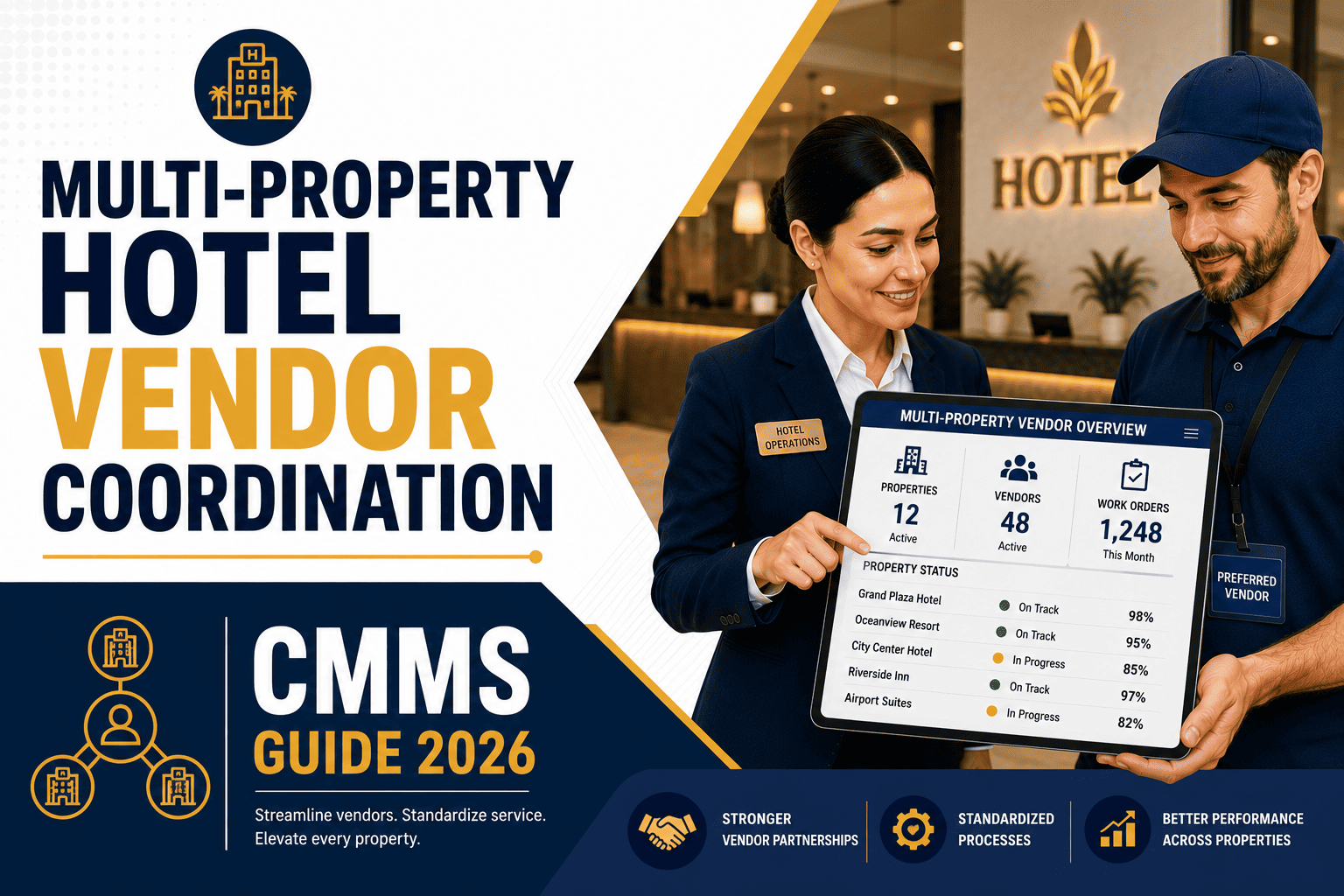
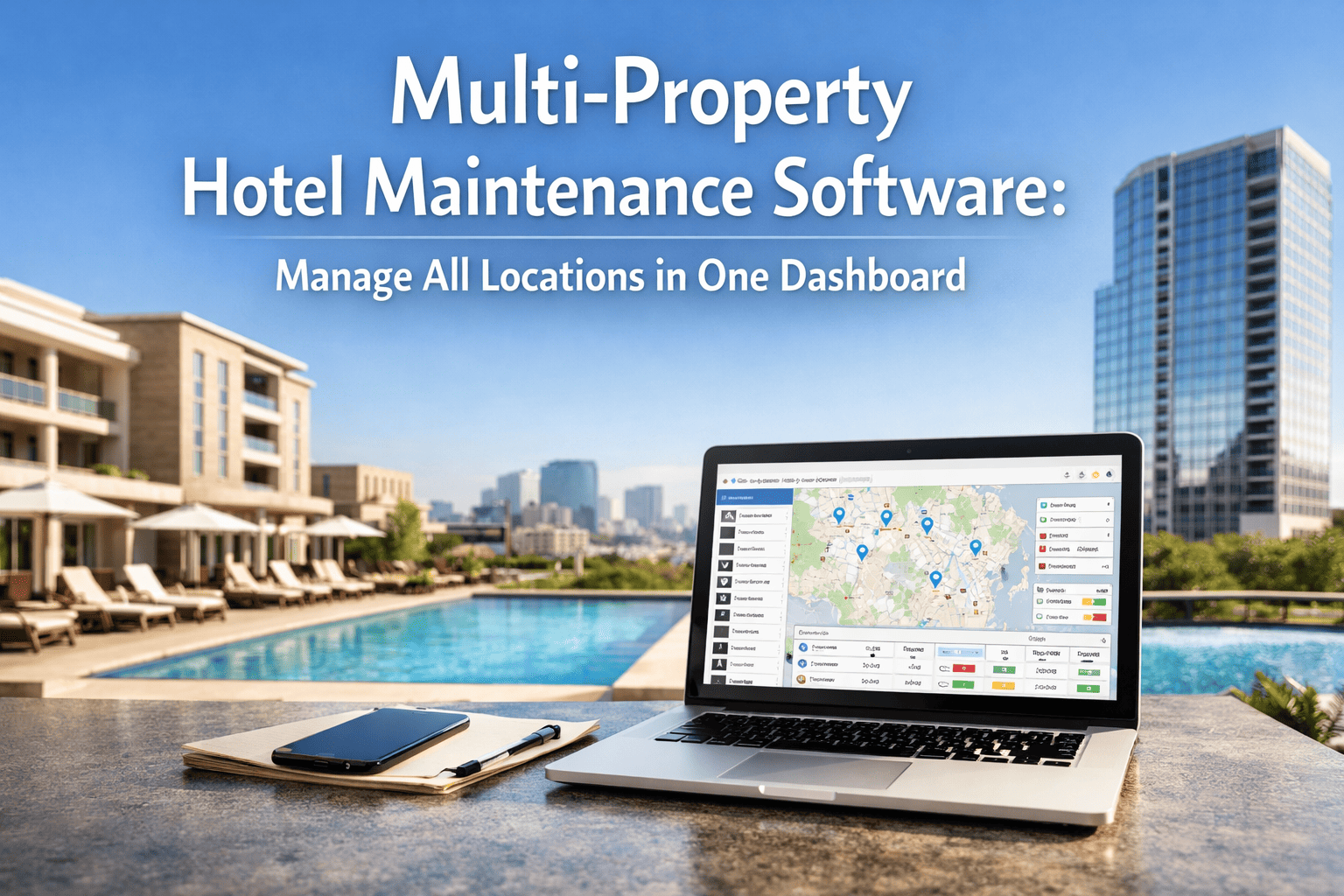
A single view showing every property's open work orders, SLA compliance rate, PM completion percentage, and critical alerts simultaneously — updated in real time without manual consolidation. The portfolio dashboard is the tool that makes a VP of Engineering's Monday morning review a 15-minute data exercise rather than a 2-hour phone call chain.
Cross-Property Asset Benchmarking
Compare maintenance cost per room, reactive work order ratio, and PM compliance across every property in the portfolio. Identify which properties are outliers — spending 40% more per room than the portfolio average — and drill down to the specific asset categories driving the variance. This benchmarking function converts portfolio management from instinct to evidence. Book a demo to see portfolio benchmarking live.
Standardised PM Templates Deployed Across Properties
Create a master PM template — HVAC quarterly inspection, elevator monthly check, fire suppression annual test — and deploy it to all relevant properties simultaneously. Each property executes the PM against its own named assets, but the template, checklist items, and completion standards are identical. Standardized PMs produce comparable compliance records across properties and eliminate the inconsistency that makes portfolio-wide brand audits so labour-intensive. Sign up to build and deploy portfolio PM templates in Oxmaint.
Shared Parts Inventory Intelligence
When Property 4's chief engineer creates a work order for a chiller compressor fault, the system shows whether the required parts are in stock at any property in the portfolio before an emergency procurement order is placed. Properties within reasonable transfer distance can share critical spare parts, reducing combined portfolio parts spend by 28–35% in year one. Shared inventory visibility is the single fastest-payback capability in enterprise hotel maintenance management. Book a demo to see shared inventory intelligence in Oxmaint.
Automated Portfolio Compliance Reporting
Generate a brand audit compliance package for any property — or all properties — on demand. The report pulls PM completion history, work order resolution rates, life safety system inspection records, and SLA compliance data from live Oxmaint records and formats it into the documentation structure that brand standard auditors require. A 10-property compliance report that previously required 40 engineering-supervisor man-days is produced in under two hours from a single dashboard action.
Role-Based Access: Property vs Portfolio vs Executive
Property engineers see their property's work orders. Chief engineers see their property's full operations dashboard. Regional directors see the properties in their region. The VP of Engineering sees the full portfolio. Executives see the metrics dashboard without access to operational detail. Role-based access ensures every person has the information they need to make decisions — and only that information — without manual report generation at each level. Configure portfolio roles in Oxmaint — free to start.
What Changes When You Centralize: Portfolio Performance Comparison
These benchmarks compare hotel portfolio operational metrics before and after implementing a centralized hotel maintenance centralization platform. Data measured at 12 months post-implementation across multi-property hotel groups.
| Operational Metric | Siloed Property-by-Property | Centralised — Oxmaint Enterprise | Portfolio Impact |
|---|---|---|---|
| Portfolio-wide PM completion rate | 61% avg (varies 40–85% by property) | 94% avg (consistent 90–97% across properties) | ↑ 54% |
| Brand audit preparation time (10 properties) | 40 man-days manual compilation | Under 2 hours, automated | ↓ 97% |
| Cross-property parts procurement savings | Zero visibility — each property orders independently | 31% avg reduction from shared inventory intelligence | ↓ 31% cost |
| Maintenance cost per room variance | Up to 3.5× between highest and lowest property | Under 1.4× variance at 12 months | ↓ 60% variance |
| Time for VP to assess full portfolio status | 2–4 hours of calls and emails weekly | 15-minute dashboard review, any time | ↓ 90% time |
| Critical fault cross-property pattern detection | Not possible without manual data consolidation | Automated flag when same fault appears at 2+ properties | New capability |
| Benchmarks from hotel portfolio CMMS implementations. Results vary by portfolio size, baseline process maturity, and property mix. | |||
Swipe horizontally to see all columns on mobile
How Hotel Groups Roll Out Oxmaint Across Multiple Properties
A multi-property rollout does not require a simultaneous cutover across all properties — a sequenced approach reduces risk while generating early data that makes subsequent property launches faster. The milestone tracker below reflects the standard Oxmaint enterprise rollout sequence for a 5–10 property hotel group.
Portfolio Architecture Setup
Configure the enterprise account structure — property hierarchy, role assignments (executive, regional, property), shared PM template library, and cross-property asset category standards. This phase happens once and governs all subsequent property deployments.
Pilot Property Launch (1–2 Properties)
Go live with the highest-complexity property first — typically the flagship or the property with the most active engineering team. Import asset inventory, configure PM schedules, train engineering staff on mobile submission and closure, and run parallel operations for 5 days before full cutover. The pilot property generates the data model that subsequent properties inherit. Book a demo to see the pilot onboarding process for your first property.
Portfolio Rollout (Remaining Properties)
Subsequent property launches use the pilot property's configuration as a template — each takes 2–3 days to go live rather than the pilot's 5–7 days. Properties launch in order of size and complexity. By week 8, all properties in a 5–8 property portfolio are live and generating work order data that feeds the portfolio dashboard. Sign up to start your portfolio rollout in Oxmaint today.
Portfolio Intelligence — First Analysis Cycle
At 60–90 days, sufficient cross-property work order data exists for the first portfolio intelligence analysis: maintenance cost per room by property, top cost-driving asset categories, PM compliance ranking across properties, and shared parts inventory opportunities. This analysis typically identifies $80K–$220K in annualised savings for a 5–8 property portfolio — in the first cycle.
Before Oxmaint, I managed seven properties with seven different maintenance systems and seven different reporting formats. Every Friday I spent three hours assembling something that looked like a portfolio report but was really seven individual summaries stapled together. Within 60 days of the enterprise rollout, I had a single dashboard that showed me everything — which properties were behind on PMs, which had open critical work orders, and which were spending 50% more per room on reactive maintenance than the portfolio average. The Friday report went from three hours to twenty minutes. More importantly, I finally knew what was actually happening.
Frequently Asked Questions
What is a multi-property hotel maintenance management system?
How does centralizing hotel maintenance management reduce costs across a portfolio?
Does centralizing maintenance management reduce property-level autonomy?
How long does it take to roll out an enterprise hotel maintenance system across 5–10 properties?
Can Oxmaint support different brand standards across properties in the same portfolio?
Manage Every Property as One Unified Engineering Program
Oxmaint's enterprise platform gives hotel groups, management companies, and portfolio operators the portfolio-level visibility, standardisation tools, and cross-property intelligence that single-property systems cannot deliver — without a multi-month IT implementation.